Early Humans in Galilee Put Fossils at the Heart of Their Axes
Hundreds of stone handaxes found in the Sakhnin Valley include tools shaped around fossils and geodes, which archaeologists read as evidence of taste rather than function.
איור
הכתבה המלאה עדיין לא נכתבה בעברית, ולכן היא מובאת כאן באנגלית.
Archaeologists working in the Sakhnin Valley in the Lower Galilee, in northern Israel, have recorded hundreds of handaxes (large, carefully shaped stone tools), including more than ten that were deliberately worked so that a fossil or an unusual geological formation sits at the centre of the finished tool. Tel Aviv University announced the findings on Sunday 22 March 2026, and the research has been published in the peer-reviewed journal Tel Aviv: Journal of the Institute of Archaeology of Tel Aviv University.
The work began with a resident rather than a researcher. Muataz Shalata, who lives in the Arab city of Sakhnin and describes himself as a self-taught nature enthusiast, noticed unusual stones scattered across the valley and contacted Professor Ran Barkai of Tel Aviv University, a specialist in early human cultures. Their joint survey revealed what the university called a complex Palaeolithic landscape.
Why a tool with a fossil in it is strange
"Handaxes were the main tool of early humans for more than a million years, used across Africa, Asia, and Europe," Barkai said in the university's announcement. "Finding hundreds here indicates that the Sakhnin Valley was an important hub of human activity, repeatedly attracting groups because of water, game, and an exceptional abundance of high-quality flint."
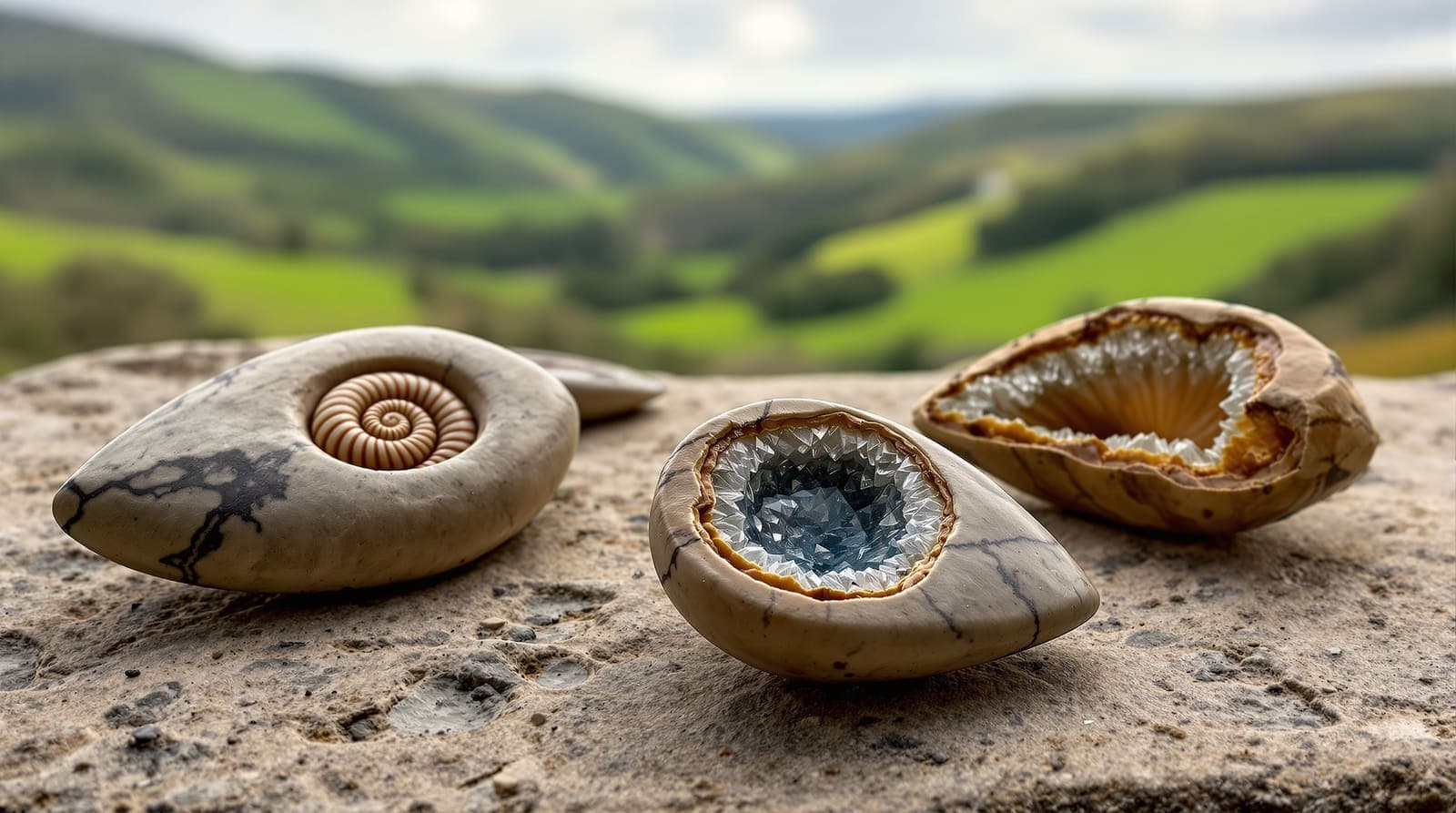
The unusual part is what those toolmakers chose to work with. The valley contains geodes (hollow rocks lined with crystals) and flint nodules containing fossils. "We have discovered more than ten handaxes made from stones containing fossils or special geological formations, with these features deliberately placed at the center of the tool," Barkai said. "Since such stones are harder to shape precisely, it's clear the choice was intentional. The process emphasized the natural feature rather than hiding it."
Knapping (striking or pressing stone to produce sharp edges or a particular shape) is difficult and unforgiving, and an inclusion in the raw material makes it harder still. A fossil at the centre of a handaxe does not cut better. It may cut worse. That is what makes the pattern interesting: the same awkward choice recurs.
Who made them, and when
Tel Aviv University attributes the tools to Homo erectus and places them hundreds of thousands of years ago, describing the concentration of fossil-centred handaxes as effectively without parallel at other sites worldwide. The Jerusalem Post reported the same attribution and noted that the handaxe served as the primary implement of early humans for over a million years. The Times of Israel reported that the assemblage is dated to roughly 500,000 years ago on typological grounds (that is, by the style of the tools) rather than by direct laboratory dating of the deposits.
Elephants, flint and a place worth returning to
The valley's practical attractions were real. It lies close to ancient elephant migration routes, and the handaxes would have been used for cutting and processing large prey. The Times of Israel reported Barkai's view that handaxes were mostly used to butcher large animals, elephants above all. Water, game and high-quality flint together explain why groups came back to the same ground over very long periods.
What the researchers argue is that function does not explain everything found there. The embedded fossils and geological formations would not have made the tools more useful and may have made them less so, yet the same kinds of stone appear again and again. Barkai frames that as meaning-making rather than decoration: "They attributed meaning to fossils and geological formations, seeing them as part of the cosmos. These tools were not just instruments; they were a way of interacting with the world, a reflection of thought and perception."
What is still unclear
The announcement did not give a precise date range for individual finds, and the dating reported elsewhere rests on tool style rather than on dated sediment. It did not say how many separate sites the survey covered, how the material was excavated or recorded, or where the finds are now held. Interpreting a preference in raw material as aesthetic or symbolic intent remains an inference from patterns in stone, not a demonstrated belief.
מקורות וקריאה נוספת
פתחנו ובדקנו כל קישור כאן בזמן כתיבת העמוד. הודעות רשמיות מסומנות ככאלה: זו הגרסה של הגורם עצמו, לא גרסה עצמאית.
- רשמיTel Aviv Universityenglish.tau.ac.ilWorld-Scale Discovery in Northern Israel Reveals Early Humans' Sense of Aesthetics
The university's account of the survey, the attribution to Homo erectus and the journal of publication
- כתבותThe Jerusalem Postjpost.comHandaxes found in Galilee show early humans' appreciation for aesthetics
Homo erectus attribution, elephant migration route and the handaxe's long span of use
- כתבותThe Times of Israeltimesofisrael.comPaleolithic chic: 500,000 years ago, Israel's ancient toolmakers had a taste for sparkle
Typological dating of the assemblage and Barkai on elephant butchery
איך בדקנו את זה
The finds, quotations and circumstances of the discovery are taken from the Tel Aviv University announcement of 22 March 2026 as published in the original release. The attribution to Homo erectus, the typological dating and the elephant-route context were checked against Tel Aviv University's English research page, The Jerusalem Post and The Times of Israel.
מדיניות המקורות והתיקונים שלנו →השבוע מישראל, במייל אחד
הכתבות שהיו חשובות, עם מקורות ובדיקה של מערכת Israel.com. חינם, פעם בשבוע, הסרה בלחיצה אחת.
רשימה אחת, הסרה בלחיצה. קראו את מדיניות הפרטיות שלנו.
עוד במדור ישראל
למדור ישראל →


הכתבות האחרונות
- צה"ל: המעצרים בקבאטיה היו חלק מפעילות רחבה יותר בגדה ביום כיפור
- טראמפ נשא דברים בלי קול אחרי שהרשתות באמריקה השביתו את סיקור הפול
- תקלה בכבל סיבים אופטיים שיבשה טיסות בחוף המזרחי של ארה"ב
- רשתות הטלוויזיה בארה"ב השביתו את מאגר הכתבים בבית הלבן, טראמפ נשא דברים בלי קול
- מאות ליוו בלילה את נתנאל שקרון שנהרג ליד נווה צוף
- מד"א טיפל ב-3,322 איש ביום כיפור; שלושה נהרגו בתאונות דרכים