Israel Railways Wants to See What Lies Beneath Its Own Tracks
A startup's sensors mounted on Israel Railways' railcars build 3D models of buried infrastructure, a blind spot it says makes more than 70 percent of projects run late.
איור
הכתבה המלאה עדיין לא נכתבה בעברית, ולכן היא מובאת כאן באנגלית.
Israel Railways and the Israeli startup Exodigo showed a new artificial-intelligence-driven remote sensing platform for mapping underground infrastructure at the Consumer Electronics Show in Las Vegas, according to the announcement of 8 January 2026.
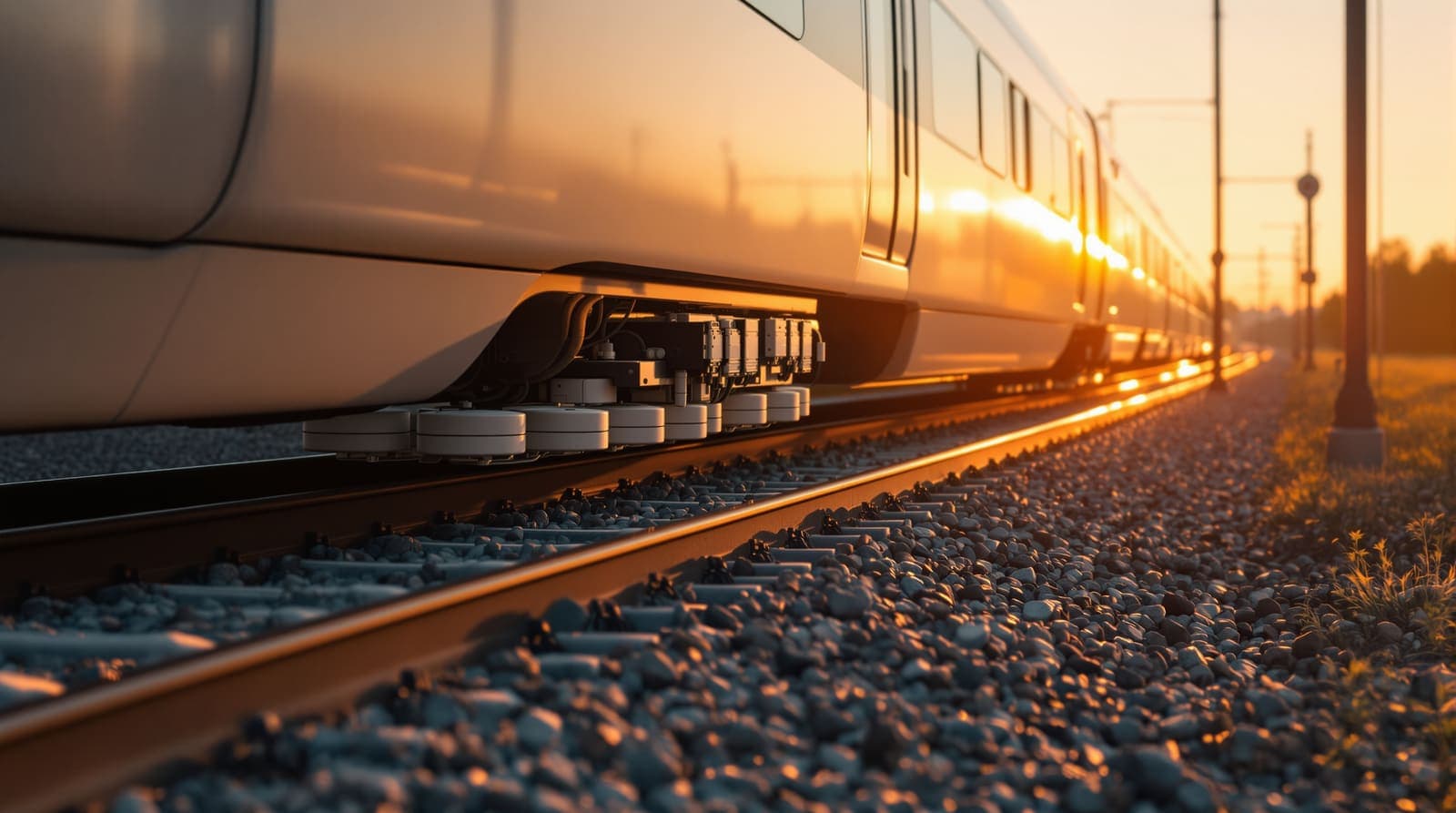
The system has been adapted so that it can be deployed on Israel Railways' own railcars. It creates multi-dimensional digital models intended to give accurate, high-quality information about existing infrastructure, with the aim of streamlining maintenance and development work and minimising disruption to services. Acting chief executive Avi Elmalich said: "The results presented by Exodigo demonstrate significant potential, not only for Israel Railways, but also for railway operators worldwide." Exodigo's chief executive, Jeremy Suard, said the technology allows systematic mapping of rail assets and future AI integration to improve service efficiency.
The problem being solved is expensive and invisible
Nobody knows exactly what is buried under a railway. Utilities, foundations and old works accumulate over a century of construction, and the records are incomplete. Exodigo, which sells subsurface intelligence to infrastructure owners, says on its own website that it uncovers utilities, foundations and geotechnical conditions beneath complex projects "without ever breaking ground", combining multi-sensor fusion, proprietary technology, artificial intelligence and a team of engineers and geophysicists.
The company puts numbers on the cost of getting this wrong. It states that a utility strike happens somewhere in the United States every 62 seconds, that damage-prevention failures waste an estimated 61 billion dollars a year, and that more than 70 percent of projects run late because of preventable underground conflicts. Its published customer list includes transport agencies such as LA Metro, Caltrans and Kansas DOT alongside utilities and international clients.
Why a railcar is a good sensor platform
Surveying a live railway the conventional way means track closures and night shifts: precisely the disruption the system is meant to avoid. Mounting the sensors on rolling stock that is already running the route lets an operator collect subsurface data during ordinary movements rather than shutting a line to do it. That is the operational logic behind adapting the platform for railcars in the first place.
The network it would be mapping
Israel Railways is the state-owned operator of the country's entire heavy rail network, which reference summaries put at roughly 1,511 route kilometres as of 2022, carrying about 69 million passengers in 2019 after decades of growth from a low of 2.5 million a year in 1990, according to sector reference material. Much of that network runs through the densely built coastal plain, where buried services are thickest.
The venue was not incidental either. CES is owned and produced by the Consumer Technology Association and held each January in Las Vegas, according to the show's organisers; it has become a standard shop window for Israeli deep-tech companies looking for international customers.
What the announcement did not say
Neither party disclosed the value or length of the arrangement, how many railcars would carry the sensors, or how much of the network has been surveyed so far. The statement did not describe which sensing methods the platform fuses, nor did it give any accuracy figure for the models it produces. It also did not say whether the deployment is a trial or a full rollout.
מקורות וקריאה נוספת
פתחנו ובדקנו כל קישור כאן בזמן כתיבת העמוד. הודעות רשמיות מסומנות ככאלה: זו הגרסה של הגורם עצמו, לא גרסה עצמאית.
- רשמיExodigoexodigo.comExodigo: underground intelligence for infrastructure
Company's description of its multi-sensor and AI approach and its cost-of-failure figures
- רשמיConsumer Technology Associationces.techCES
Confirms who owns and produces CES and where it is held
- רקעWikipediaen.wikipedia.orgIsrael Railways
State ownership and scope of the operator
- רקעWikipediaen.wikipedia.orgRail transport in Israel
Network length and passenger figures for the network being mapped
איך בדקנו את זה
The partnership, the CES demonstration and both executives' quotes come from the announcement of 8 January 2026 in the original release. Exodigo's technology description and its figures on utility strikes and project delays are taken from the company's own website, and the CES and rail network details were verified separately.
תיאור האירוע עצמו נשען על ההודעה הרשמית ולא אומת באופן עצמאי על ידי Israel.com. במקום שבו ההודעה שותקת, העמוד הזה אומר זאת במקום למלא את החסר.
מדיניות המקורות והתיקונים שלנו →השבוע מישראל, במייל אחד
הכתבות שהיו חשובות, עם מקורות ובדיקה של מערכת Israel.com. חינם, פעם בשבוע, הסרה בלחיצה אחת.
רשימה אחת, הסרה בלחיצה. קראו את מדיניות הפרטיות שלנו.
עוד במדור טכנולוגיה
למדור טכנולוגיה →


הכתבות האחרונות
- צה"ל: המעצרים בקבאטיה היו חלק מפעילות רחבה יותר בגדה ביום כיפור
- טראמפ נשא דברים בלי קול אחרי שהרשתות באמריקה השביתו את סיקור הפול
- תקלה בכבל סיבים אופטיים שיבשה טיסות בחוף המזרחי של ארה"ב
- רשתות הטלוויזיה בארה"ב השביתו את מאגר הכתבים בבית הלבן, טראמפ נשא דברים בלי קול
- מאות ליוו בלילה את נתנאל שקרון שנהרג ליד נווה צוף
- מד"א טיפל ב-3,322 איש ביום כיפור; שלושה נהרגו בתאונות דרכים