IDF says it has cleared Hezbollah tunnel routes on Ali al-Taher Ridge
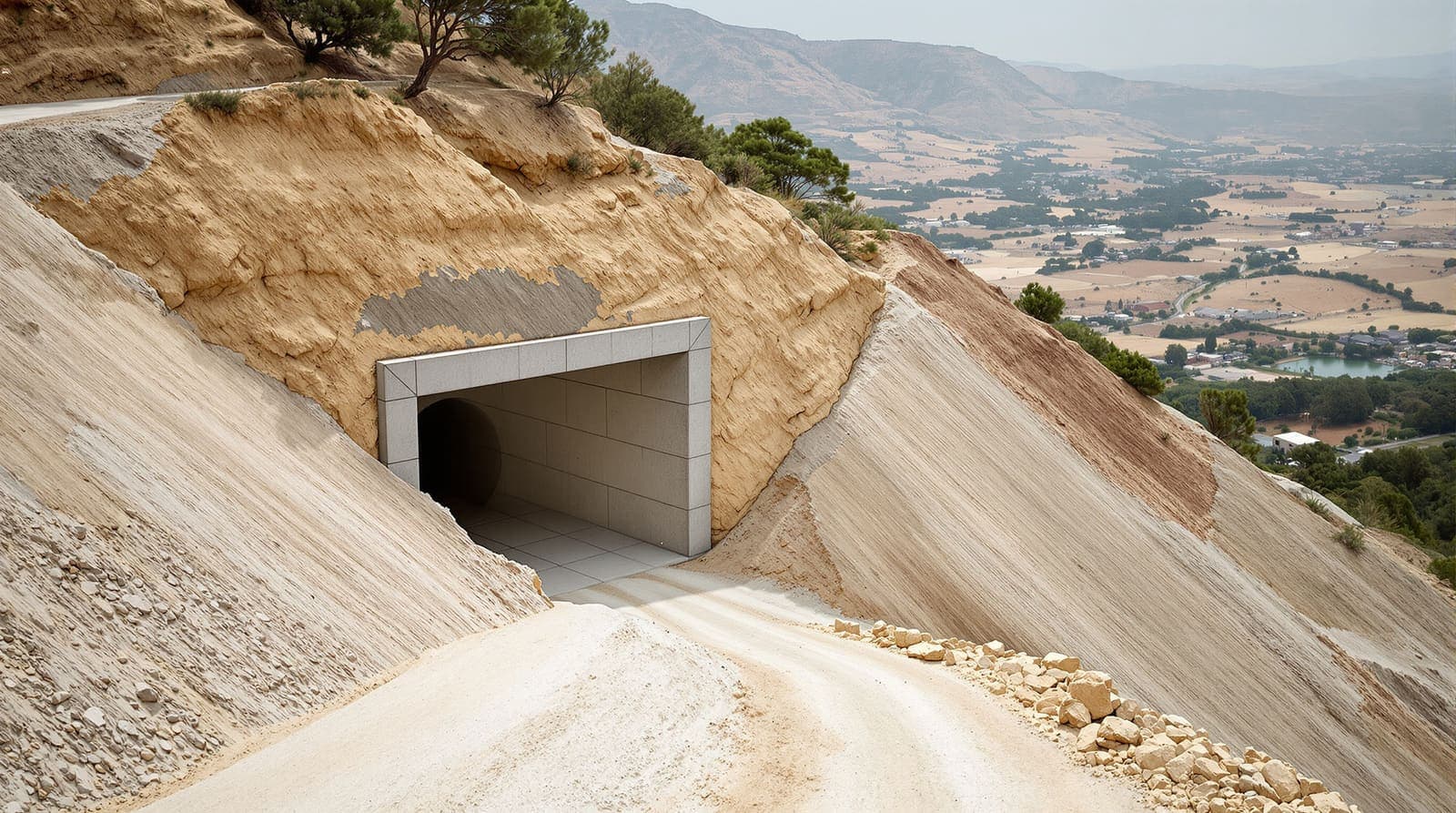
The military says soldiers of the 36th Division took control above and below ground on the southern Lebanese ridge and are now working to destroy two underground routes.
איור
הכתבה המלאה עדיין לא נכתבה בעברית, ולכן היא מובאת כאן באנגלית.
The Israel Defense Forces said it has finished clearing Hezbollah's underground infrastructure in the area of the Ali al-Taher Ridge in Lebanon and is now working to neutralize it. In a statement issued by the IDF spokesperson, the military said soldiers of the 36th Division had operated in recent weeks to clear two underground routes in the ridge area, which the statement placed inside what it called the Security Zone.
According to the IDF spokesperson's announcement, the troops achieved operational control of the ridge both above and below ground and cleared the area of what it described as terrorists, some of whom were killed while others left the area. The Jerusalem Post reported that the clearing followed an operation that had run for months.
מה המקורות פרסמו

⭕️‼️The IDF completed the clearing of Hezbollah’s underground infrastructure in the Ali al-Taher Ridge area & is operating to neutralize it. The terrorists who were present inside the infrastructure carried out terror attacks against Israel & IDF soldiers and were eliminated or Show more
What the IDF says was found underground
In a post published on its English-language account on X, the military described the site as a strategic underground network built over two decades and said it was funded and planned by what it called the Iranian terror regime. The IDF said the network contained command centres, weapons and living quarters, and that fighters who had been inside it carried out attacks against Israel and against Israeli soldiers before being killed or fleeing.
Prime Minister Benjamin Netanyahu also referred to the operation. Speaking about the ridge, he said many operatives had been killed there and that equipment and computers had been removed from the site, according to remarks relayed by the Arabic-affairs monitoring account Abu Ali Express, which tracks and translates Arabic-language and Lebanese reporting for Israeli readers.
Who the 36th Division is
The 36th Division is one of the Israeli army's regular armoured formations and has operated on the northern front. Its involvement, named in the military's own statement, is one of the few operational details the IDF has published about the mission. The statement does not say how many soldiers took part, how long they were on the ridge, or whether they remain there.
The 'Security Zone' and the tunnel question
The term Security Zone, as used in the IDF statement, refers to the area of southern Lebanon in which Israeli forces have continued to operate. The military's framing of the ridge as lying within that zone signals that it treats the position as one it can enter and hold rather than raid, though the statement itself does not spell out the arrangement.
Underground infrastructure has been the central military problem in both of Israel's recent campaigns. Hezbollah, the Lebanese Shia movement and armed group backed by Iran, has built fortified positions and tunnel systems in the south of the country. Clearing such a route and then neutralizing it are described by the IDF as two separate stages: the first involves entering and searching the passage, the second involves destroying it. The military's wording indicates the second stage was still under way when the announcement was made.
The Iranian dimension and holiday warnings
The operation was announced against a backdrop of exchanges over Iran. Ynet reported that Iranian statements had warned that a full assault on Ali al-Taher would draw a powerful response, while senior Israeli figures said they had no indication of any imminent Iranian move, telling the outlet they had not heard of such an intention.
Ynet also reported that Defence Minister Israel Katz, speaking at a conference held by the outlet, cautioned that Tehran has a pattern of striking during Jewish holidays. In the same report, Netanyahu was quoted saying that the fall of the Iranian government was within reach, and United States Vice President JD Vance was reported as saying there would be no talks with Iran unless it stopped firing. These positions are reported as statements by the people who made them and not as assessments confirmed by any other body.
How Lebanese and Hezbollah-facing coverage read it
Abu Ali Express, writing before the military statement circulated, said the Ali al-Taher episode appeared to be over and that Hezbollah was beginning to absorb that, in a short post on its Telegram channel. That is a monitoring account's reading rather than a Hezbollah statement.
What the reports do not say
None of the material gives a number of Hezbollah operatives killed, a number of Israeli casualties, or the length of the two underground routes. Netanyahu spoke of many operatives killed without giving a figure, and the IDF statement does not quantify it either. There is no Hezbollah or Lebanese government response in the material, and no independent confirmation that the routes have been destroyed as opposed to searched. The reports do not say when neutralization is expected to finish, whether Israeli troops will stay on the ridge, or what was on the computers Netanyahu said were removed. The claim that the network was built over two decades with Iranian funding and planning rests on the IDF's account alone.
מקורות וקריאה נוספת
פתחנו ובדקנו כל קישור כאן בזמן כתיבת העמוד. הודעות רשמיות מסומנות ככאלה: זו הגרסה של הגורם עצמו, לא גרסה עצמאית.
- רשמיidft.meIDF spokesperson
- רשמיidfx.comIDF on X
- כתבותyediothynet.co.ilYnet
- כתבותjpostjpost.comThe Jerusalem Post
- כתבותabualiexpresst.meAbu Ali Express
- כתבותabualiexpresst.meAbu Ali Express
- כתבותabualiexpresst.meAbu Ali Express
איך בדקנו את זה
The completion of the clearing and the role of the 36th Division come from the IDF spokesperson's own statements on Telegram and X; The Jerusalem Post reported the operation had run for months, and Ynet reported the surrounding Iranian and Israeli statements. Claims about the network's construction, funding and contents are attributed to the IDF alone and have not been independently verified.
מדיניות המקורות והתיקונים שלנו →השבוע מישראל, במייל אחד
הכתבות שהיו חשובות, עם מקורות ובדיקה של מערכת Israel.com. חינם, פעם בשבוע, הסרה בלחיצה אחת.
רשימה אחת, הסרה בלחיצה. קראו את מדיניות הפרטיות שלנו.
עוד במדור ביטחון
למדור ביטחון →

הכתבות האחרונות
- טראמפ נשא דברים בלי קול אחרי שהרשתות באמריקה השביתו את סיקור הפול
- תקלה בכבל סיבים אופטיים שיבשה טיסות בחוף המזרחי של ארה"ב
- רשתות הטלוויזיה בארה"ב השביתו את מאגר הכתבים בבית הלבן, טראמפ נשא דברים בלי קול
- צה"ל תקף מטרות חמאס בעזה אחרי שכלי הנדסי נפגע ממטען
- ארה"ב נערכת להטיל סנקציות שיחסמו את בית הדין בהאג מעסקאות בדולרים
- כלי הנדסי של צה"ל נפגע ממטען סמוך לקו הצהוב ברצועה