IDF to cap reserve call-ups at 58 days and cut security battalions in 2027
Chief of Staff Eyal Zamir has set 2027 plans that shorten reserve duty and free regular units for longer training as the war winds down, the military says.
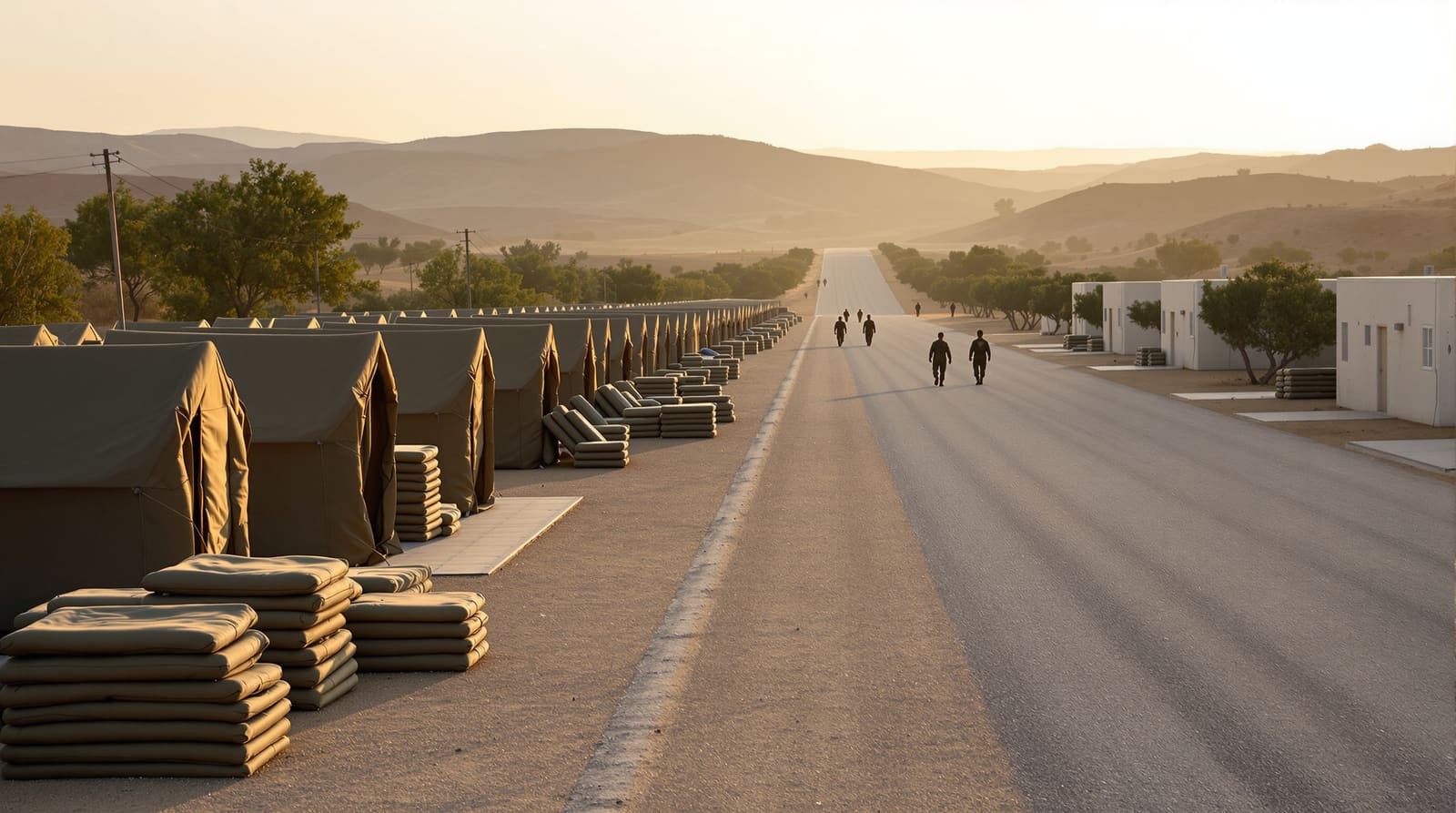
איור שנוצר בבינה מלאכותית, לא צילום של האירועים.
הכתבה המלאה עדיין לא נכתבה בעברית, ולכן היא מובאת כאן באנגלית.
The Israel Defense Forces (IDF) intends to shorten the time reservists spend in uniform next year, capping call-ups at a maximum of 58 days, and to lower the number of battalions it keeps on security missions across all of its fronts. Emanuel Fabian, military correspondent for The Times of Israel, reported the plans on X, citing the military, which tied the change to the war winding down. According to that report, fewer battalions on security duty will give units room for longer periods of training.
The decisions came out of a meeting held earlier this week in which the IDF Chief of Staff, Lt. Gen. Eyal Zamir, laid out with senior officers the guiding principles for the military's 2027 "combat chart." The Hebrew news site Ynet flagged the move in a brief alert, saying the chief of staff had decided on a reduction in reserve days and in the number of battalions. The Times of Israel summarised the plan in its live blog as shorter reserve duty alongside more training for standing forces in 2027.
מה המקורות פרסמו

With the war winding down, the IDF says it plans to reduce the number of battalions assigned to security missions on all fronts, allowing for longer training periods. It also plans to reduce the number of days reservists are called up for, to a maximum of 58 days. Earlier this Show more
What the chief of staff decides
The chief of staff is the most senior officer in the IDF and commands all of its branches. In Hebrew the post is known as the Ramatkal, the term Ynet used in its alert. Decisions about how many units are deployed, where, and for how long sit with the military's top command, which is why the announcement was framed around a meeting Zamir convened with senior officers rather than a government decision.
What the "combat chart" is
The "combat chart" is the military's annual framework for how its forces will be used over the coming year. According to the IDF, as relayed by Fabian, the document is the foundation on which the military plans and deploys its forces; the available text of the report breaks off at that point. In practical terms, it sets out how the army balances operational missions against training and rest, and how heavily it leans on reservists to fill gaps that standing units cannot cover alone.
Why reserve duty matters in Israel
Reserve service, known in Hebrew as miluim, is a central feature of Israeli life. Reservists are civilians who return to their units for set periods, leaving jobs, studies and families behind while they serve. During prolonged fighting, reservists have been called up for long stretches, a burden that weighs on households, employers and the wider economy. A cap on the number of days a reservist can be summoned therefore has direct consequences well beyond the army itself.
השבוע בישראל בחמש ידיעות, בכל יום שישי
מקורות ובדיקה של מערכת Israel.com, עם זמני השבת. חינם, ואפשר להפסיק בלחיצה אחת.
רשימה אחת, הסרה בלחיצה. הפרטים במדיניות הפרטיות שלנו.
Standing forces, by contrast, are the units made up of conscripts and career soldiers who serve full time. The plan described in the reports shifts the balance: fewer battalions tied down in ongoing security missions, and more time for those forces to train. The Times of Israel headline presents the two changes as linked, with lighter reserve demands going hand in hand with expanded training for the standing army.
How this fits the current moment
The IDF's own explanation, as relayed by Fabian, is that the war is winding down. The reports do not set out which deployments will be scaled back on which front, only that the cut in battalions covers security missions on every front. The 58-day figure is described as a maximum; the reports give no average or typical figure.

איור
Both organisations reporting the decision published within minutes of each other on the same afternoon, and their accounts are consistent: Ynet's alert points to cuts in reserve days and battalion numbers, and The Times of Israel's reporting adds the cap, the training rationale and the link to the 2027 planning framework.
What the reports do not say
The reports do not say how many battalions will be withdrawn from security missions, nor how the new 58-day ceiling compares with the number of days reservists have been called up for until now. They do not explain when in 2027 the changes take effect, how the army will cover any gaps left by fewer deployed units, or whether the plan requires approval or funding from outside the military. No reaction from the government, reservist groups or the Defense Ministry has been reported, and the full text of the IDF statement describing the combat chart is not available in the material.
להמשך קריאה
למדור ביטחון →
איור
ביטחון
הרמטכ"ל אירח את מפקד סנטקום בקריה, איראן במוקד השיחות

איור
ביטחון
ספינה של חברת הנפט הממשלתית של איחוד האמירויות נפגעה במצר הורמוז, אדם אחד נעדר
איור
ביטחון
צה"ל: הושמד תוואי תת-קרקעי של חיזבאללה עם חדרי פיקוד באזור הר דב
צילום ארכיון
ביטחון
כ"ץ: צה"ל יישאר באזורי הביטחון בלבנון, בסוריה ובעזה וערוך לכבוש שטחים נוספים
מקורות וקריאה נוספת
פתחנו ובדקנו כל קישור כאן בזמן כתיבת העמוד. הודעות רשמיות מסומנות ככאלה: זו הגרסה של הגורם עצמו, לא גרסה עצמאית.
- כתבותyediotht.meYnet alerts
- כתבותtoitimesofisrael.comThe Times of Israel
- כתבותtoit.meEmanuel Fabian, Times of Israel military correspondent
- כתבותtoix.comEmanuel Fabian on X
איך בדקנו את זה
The decision was reported by Ynet and by The Times of Israel, including its military correspondent Emanuel Fabian, who attributed the details to the IDF. The 58-day cap and the training rationale appear only in The Times of Israel's reporting; we have not independently verified the plan.
מדיניות המקורות והתיקונים שלנו →השבוע בישראל, במייל אחד
הכתבות החשובות, עם מקורות ואחרי בדיקה של מערכת Israel.com. חינם, פעם בשבוע, ואפשר להפסיק בלחיצה אחת.
רשימה אחת, הסרה בלחיצה. הפרטים במדיניות הפרטיות שלנו.
הכתבות האחרונות
איור

צילום ארכיון

איור

צילום ארכיון
איור

איור