How Iran Turned Chatbots Into a Weapon Against Israel
Israeli researchers say Tehran is using artificial intelligence to fake crowds, forge personas and speed up hacking, and that nobody can reliably detect it.
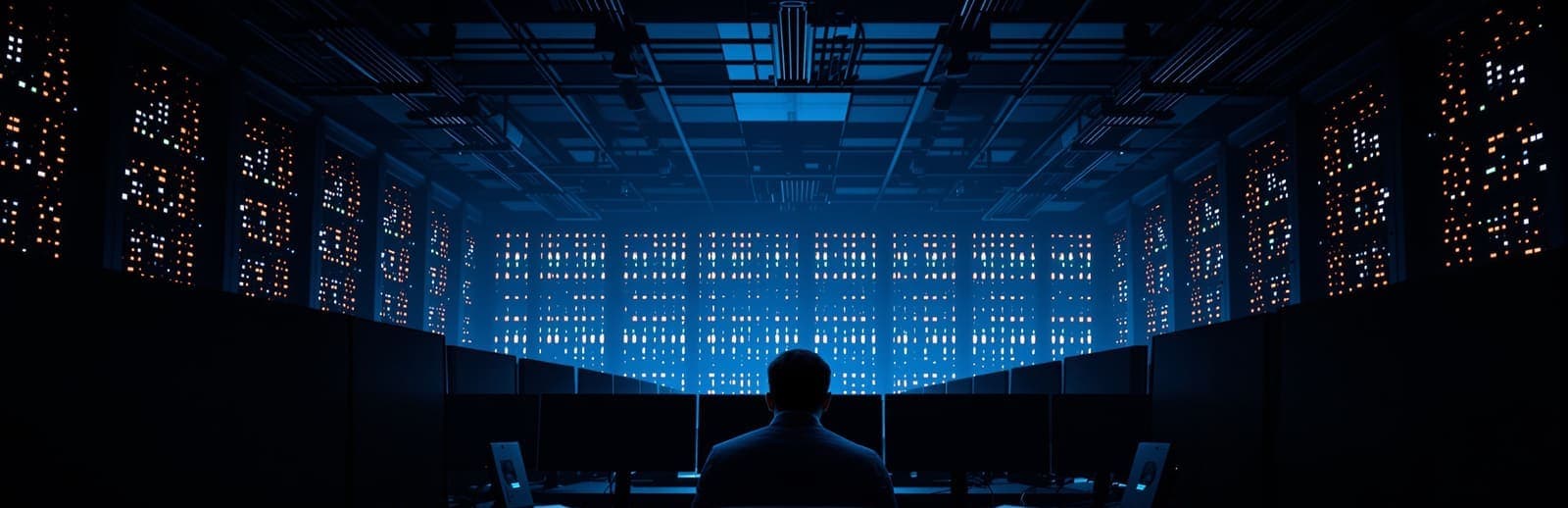
איור
הכתבה המלאה עדיין לא נכתבה בעברית, ולכן היא מובאת כאן באנגלית.
Iran is pushing artificial intelligence into its covert influence work against Israel and Western societies, according to specialists who spoke to The Press Service of Israel (TPS-IL), the Israeli news agency whose report this account is drawn from. The shift, they said, is less about new goals than about new tools: fake personas that read as real people, fluent output in several languages at once, and a volume of material that human operators alone could not sustain.
What makes the change consequential, the analysts told TPS-IL, is what surrounds it. Tehran has been suppressing widespread anti-government protests at home while simultaneously writing artificial intelligence into national policy. “There is no ability today to systematically identify AI-driven influence campaigns,” said Danny Citrinowicz, a senior researcher in the Iran and Shi’ite Axis Programme at the Institute for National Security Studies (INSS) in Tel Aviv, who spent 25 years in Israeli defence intelligence, including as head of its Iran branch. He said the regime uses the technology to manufacture an impression of broad public support, inflating the apparent size of crowds in photographs and casting protesters as rogue actors. “People are being killed in the streets,” he told TPS-IL. “But when everything is shut down inside Iran, AI makes it easier to convince outside audiences.”
Why Tehran wrote AI into state policy
The interest is not confined to freelance hackers. An analysis published in December 2025 by the Jerusalem Institute for Strategy and Security (JISS), written by Dr Avi Davidi and cited throughout the TPS-IL report, traces the drive to the top of the Iranian system. It records that Supreme Leader Ayatollah Ali Khamenei called artificial intelligence a national strategic priority in April 2025, warning that Iran must become a developer rather than a consumer of the technology. JISS dates parliament’s approval of a National Artificial Intelligence Document to June 2024 and the creation of a National AI Organisation under the president’s office to October 2025, and notes that Islamic Revolutionary Guard Corps (IRGC) commanders have spoken publicly about folding AI into weapons and targeting systems.
The Iranian operations Western companies have already named
Some of the activity is documented by the companies whose products are being used. An Iranian influence network tracked as Storm-2035 was shut out of ChatGPT by OpenAI in August 2024 after it used the tool to generate articles and social-media comments in English and Spanish, spread across a dozen accounts on X, one Instagram account and five websites dressed up as ordinary news outlets. The material covered the Gaza war, the United States presidential race, Venezuelan politics and Scottish independence, padded out with fashion and beauty posts to look authentic. OpenAI said at the time it had seen no sign the content reached a meaningful audience.
A second cluster, tracked by Google as APT42 and assessed by Mandiant in May 2024 to work on behalf of the IRGC Intelligence Organisation, specialises in impersonation rather than volume. Google’s researchers describe weeks of patient correspondence with targets in journalism, academia and human-rights work, typo-squatted domains imitating outlets including The Washington Post and The Jerusalem Post, fake Google and Microsoft login pages, and techniques for defeating two-factor authentication. Davidi’s analysis adds a third group, the IRGC-linked CyberAv3ngers persona, which he reports has used generative tools to research vulnerabilities and speed up reconnaissance against industrial control systems rather than to invent new attack methods.
OpenAI and Google Cloud did not respond to queries from TPS-IL.
An Israeli election year raises the stakes
Citrinowicz said Iranian influence work intensified after the Hamas attack of 7 October 2023, and that AI has closed the language and cultural gaps that once made such campaigns easy to spot. “Everything we’ve seen, from phone hacking to covert social media campaigns, follows the same logic,” he said. “The goal is to weaken Israeli society internally.” Israel is due to vote in a general election by the end of October; the ballot is scheduled for 27 October 2026, at the end of the first Knesset since 1988 to serve a full four-year term. State Comptroller Matanyahu Englman has already described Israel’s preparations against foreign interference in that vote as deficient.
Not everyone in the TPS-IL report was equally alarmed. Alex Grinberg, an Iran researcher at JISS, argued that ideological blind spots keep exposing Iranian operations: “Their demonisation of Israel prevents them from fully understanding Israeli society, often exposing their influence campaigns.” Moran Alaluf, an independent researcher on Iran, called AI a force-multiplier and said Tehran is likely pursuing independent capabilities with China and Russia while exploiting Western tools in the meantime. Dr Daniel Cohen of the Abba Eban Institute at Reichman University framed the next phase differently again: “This is going to be a war over knowledge itself. The Iranians will try to plant messages inside the sources that train AI models.”
Israel’s National Cyber Directorate told TPS-IL it works “around the clock” on cyber threats, and that “ultimately, public awareness is the first line of defence against influence operations, with or without AI.”
What is still unclear
The report gives no estimate of how many Iranian AI-assisted accounts or campaigns are currently running against Israel, and no figure for how much of the online material aimed at Israeli audiences is machine-generated. It does not say whether any specific Israeli election-related operation has been detected, only that experts consider one likely. Nor does it quantify the claim, repeated by several of the researchers, that the scale of Iranian activity inside Israel is far greater than abroad.
מקורות וקריאה נוספת
פתחנו ובדקנו כל קישור כאן בזמן כתיבת העמוד. הודעות רשמיות מסומנות ככאלה: זו הגרסה של הגורם עצמו, לא גרסה עצמאית.
- רשמיInstitute for National Security Studiesinss.org.ilDanny Citrinowicz
Confirms the researcher's role and intelligence background
- כתבותThe Hacker Newsthehackernews.comOpenAI Blocks Iranian Influence Operation Using ChatGPT
Details of the Storm-2035 account takedown, languages and topics
- כתבותGoogle Cloud / Mandiantcloud.google.comUncharmed: Untangling Iran's APT42 Operations
APT42 attribution to the IRGC and its credential-phishing tradecraft
- רקעJerusalem Institute for Strategy and Securityjiss.org.ilIran and the Artificial Intelligence Revolution
Dr Avi Davidi's December 2025 analysis, the basis for the AI-policy and threat-group claims
- רקעWikipediaen.wikipedia.org2026 Israeli legislative election
Date of the coming Knesset election
איך בדקנו את זה
The expert quotes and assessments are as published by The Press Service of Israel on 19 January 2026. The Iranian AI policy timeline comes from the Jerusalem Institute for Strategy and Security analysis of December 2025; the Storm-2035 and APT42 details were checked against reporting on OpenAI's takedown and Google Cloud's own threat-intelligence write-up.
מדיניות המקורות והתיקונים שלנו →השבוע מישראל, במייל אחד
הכתבות שהיו חשובות, עם מקורות ובדיקה של מערכת Israel.com. חינם, פעם בשבוע, הסרה בלחיצה אחת.
רשימה אחת, הסרה בלחיצה. קראו את מדיניות הפרטיות שלנו.
עוד במדור ביטחון
למדור ביטחון →

הכתבות האחרונות
- טראמפ נשא דברים בלי קול אחרי שהרשתות באמריקה השביתו את סיקור הפול
- תקלה בכבל סיבים אופטיים שיבשה טיסות בחוף המזרחי של ארה"ב
- רשתות הטלוויזיה בארה"ב השביתו את מאגר הכתבים בבית הלבן, טראמפ נשא דברים בלי קול
- צה"ל תקף מטרות חמאס בעזה אחרי שכלי הנדסי נפגע ממטען
- ארה"ב נערכת להטיל סנקציות שיחסמו את בית הדין בהאג מעסקאות בדולרים
- כלי הנדסי של צה"ל נפגע ממטען סמוך לקו הצהוב ברצועה