Interceptors fired at northern Israel target the IDF now calls a false identification
Sirens sent residents of four communities near the Lebanese border to shelters overnight before the military said the suspected drone was misidentified.
איור
הכתבה המלאה עדיין לא נכתבה בעברית, ולכן היא מובאת כאן באנגלית.
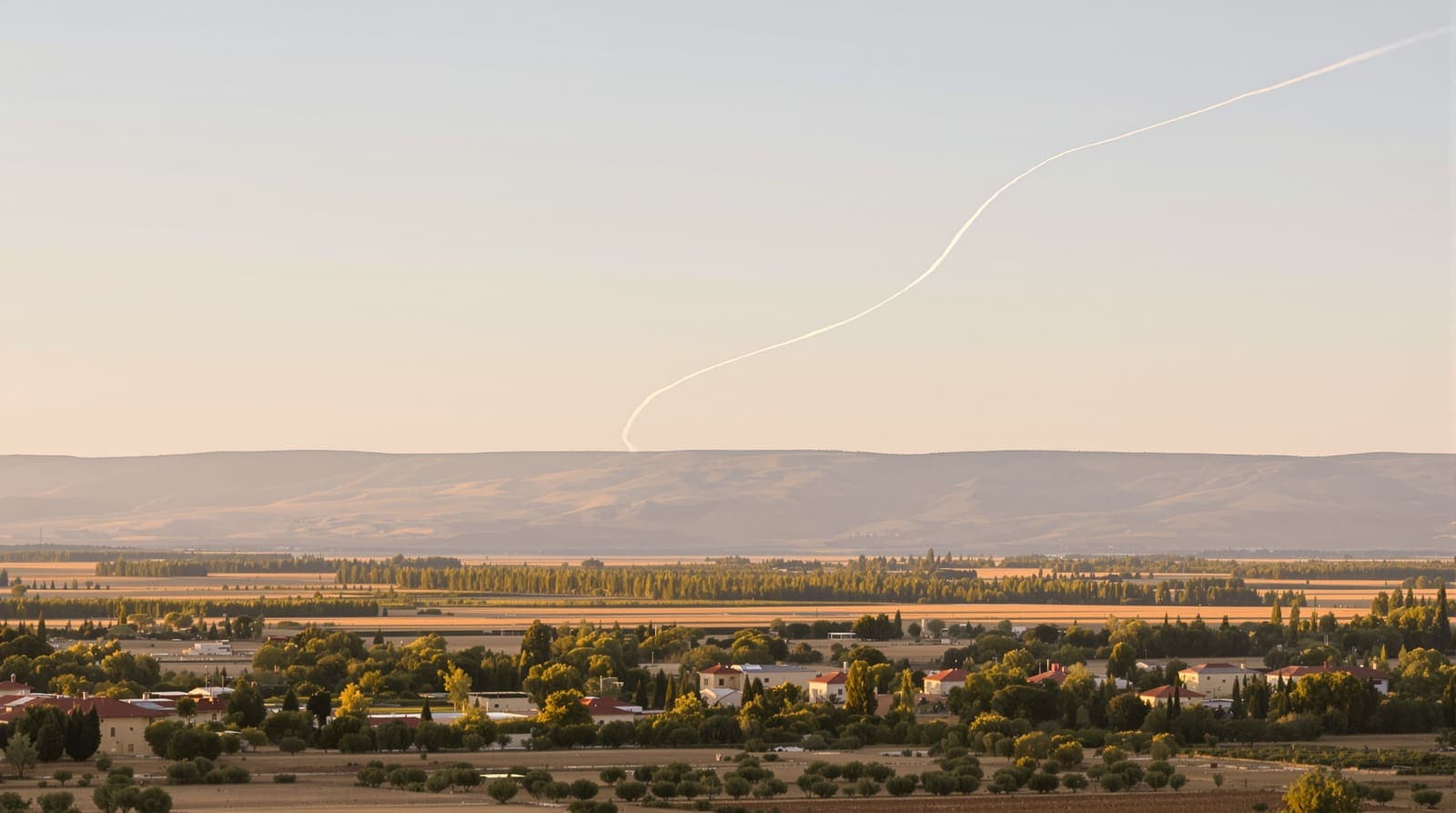
Sirens warning of a hostile aircraft infiltration sounded overnight in communities along Israel's northern border, and the Israel Defense Forces (IDF) said interceptor missiles were fired at what it described as a suspicious aerial target that had likely crossed into Israeli territory from Lebanon. In a statement issued as the incident was still unfolding, the IDF spokesperson said the results of the interception were under review and that no injuries were reported.
Several hours later the military revised its account. An initial assessment, the spokesperson said, indicated that interceptors had likely been launched toward a false target. Emanuel Fabian, the military correspondent for the Times of Israel, reported that the military characterised the object identified over the Lebanese border as a "false identification," and that the initial sirens were therefore false alarms.
מה המקורות פרסמו

Sirens sounded overnight in several northern border communities due to a “suspicious aerial target" that likely crossed from Lebanon into Israeli territory, according to the military. Interceptor missiles were launched at the suspected drone, and the results of the attempted Show more
What the alerts said, and where
The warnings were relayed by the Home Front Command, the IDF body responsible for civilian protection, which pushes alerts to mobile phones and public sirens by locality. Its overnight messages listed the alert category as hostile aircraft infiltration, the wording Israel uses for drones and other aerial vehicles rather than for rockets, and instructed residents to enter a protected space immediately.
According to the relayed alerts, the first warnings at 4:24 covered Kfar Yuval and Maayan Baruch, followed at 4:25 by HaGoshrim. A minute later, at 4:26, a separate alert for rocket and missile fire was issued for Dafna and HaGoshrim, with a stated warning time of 15 seconds. The IDF spokesperson said those missile and rocket alerts were triggered by the interception attempts themselves, a known effect in Israel's warning system, where the launch of an interceptor can generate the same public alert as an incoming projectile. At 4:39 the Home Front Command declared the incident over and told those in shelters they could leave.
The communities involved
All four localities named in the alerts sit in the Upper Galilee, in the strip of Israeli territory closest to the Lebanese border. Fabian reported that the affected communities are near Kiryat Shmona, the largest town in the area and the one most often named in reporting on cross-border incidents. Kfar Yuval, Maayan Baruch, HaGoshrim and Dafna are small agricultural communities, kibbutzim and moshavim, of the kind that make up most of the settlement pattern along the border.
The Home Front Command alerts classified them under the zone label it uses for the border strip, translating roughly as the confrontation line area. That designation matters practically: warning times there are measured in seconds rather than minutes, which is why the alert for Dafna and HaGoshrim specified 15 seconds, and why the standing instruction is to move to a protected space without waiting for further information.
Why a drone alert plays out this way
Aerial infiltration alerts follow a different logic from rocket alerts. A rocket's trajectory can be calculated quickly and the impact area predicted; a small, slow aircraft can loiter, change course, or turn out to be something else entirely, which is why the military's first statements on such events are typically short and marked as under review. In this case the sequence was visible in public: an initial report naming a single community, then a broader statement describing interceptor launches and a target that had probably come from Lebanon, then an assessment that there had been no hostile aircraft at all.
The IDF spokesperson's own wording moved in stages, from a suspicious aerial target to a likely false target. Fabian's report went further in plain terms, saying the object was not an enemy drone. The two accounts are consistent in direction, but the military's published assessment is framed as preliminary.
What the reports do not say
None of the material identifies what the radar picture actually was, or explains what produced the false identification. The reports do not say how many interceptors were fired, what type they were, or where any interceptor debris came down. They do not say whether any actor in Lebanon was involved, and no group is named in connection with the event.
There is no information on damage, on whether schools or workplaces in the affected communities were disrupted the following morning, or on how many residents were in shelters during the alert. The military has not published a final assessment beyond the initial one, and the reports do not indicate whether a further review is expected or when. All the substantive claims about the target and the interceptions rest on statements from the IDF spokesperson; the alert times and the list of communities come from the Home Front Command relay.
מקורות וקריאה נוספת
פתחנו ובדקנו כל קישור כאן בזמן כתיבת העמוד. הודעות רשמיות מסומנות ככאלה: זו הגרסה של הגורם עצמו, לא גרסה עצמאית.
- רשמיidft.meIDF spokesperson
- רשמיidft.meIDF spokesperson
- רשמיidft.meIDF spokesperson
- כתבותtoit.meEmanuel Fabian, Times of Israel military correspondent
- כתבותtoit.meEmanuel Fabian, Times of Israel military correspondent
- כתבותoref-relayt.meHome Front Command alerts (relay)
- כתבותoref-relayt.meHome Front Command alerts (relay)
- כתבותoref-relayt.meHome Front Command alerts (relay)
- כתבותoref-relayt.meHome Front Command alerts (relay)
- כתבותoref-relayt.meHome Front Command alerts (relay)
- כתבותtoix.comEmanuel Fabian on X
- כתבותtoix.comEmanuel Fabian on X
- כתבותfddx.comJoe Truzman, FDD
איך בדקנו את זה
The sequence of alerts comes from Home Front Command messages relayed publicly; all statements about the target, the interceptor launches and the later false identification are attributed to the IDF spokesperson, with the Times of Israel's military correspondent reporting the same account. Israel.com has not independently verified what triggered the alert.
מדיניות המקורות והתיקונים שלנו →השבוע מישראל, במייל אחד
הכתבות שהיו חשובות, עם מקורות ובדיקה של מערכת Israel.com. חינם, פעם בשבוע, הסרה בלחיצה אחת.
רשימה אחת, הסרה בלחיצה. קראו את מדיניות הפרטיות שלנו.
עוד במדור ביטחון
למדור ביטחון →

הכתבות האחרונות
- טראמפ נשא דברים בלי קול אחרי שהרשתות באמריקה השביתו את סיקור הפול
- תקלה בכבל סיבים אופטיים שיבשה טיסות בחוף המזרחי של ארה"ב
- רשתות הטלוויזיה בארה"ב השביתו את מאגר הכתבים בבית הלבן, טראמפ נשא דברים בלי קול
- צה"ל תקף מטרות חמאס בעזה אחרי שכלי הנדסי נפגע ממטען
- ארה"ב נערכת להטיל סנקציות שיחסמו את בית הדין בהאג מעסקאות בדולרים
- כלי הנדסי של צה"ל נפגע ממטען סמוך לקו הצהוב ברצועה