Iranian agency reports explosions near Jask and the port of Sirik
Iran's Fars news agency reported blasts heard around Jask in the country's south and in the port city of Sirik, on the coast facing the Strait of Hormuz.
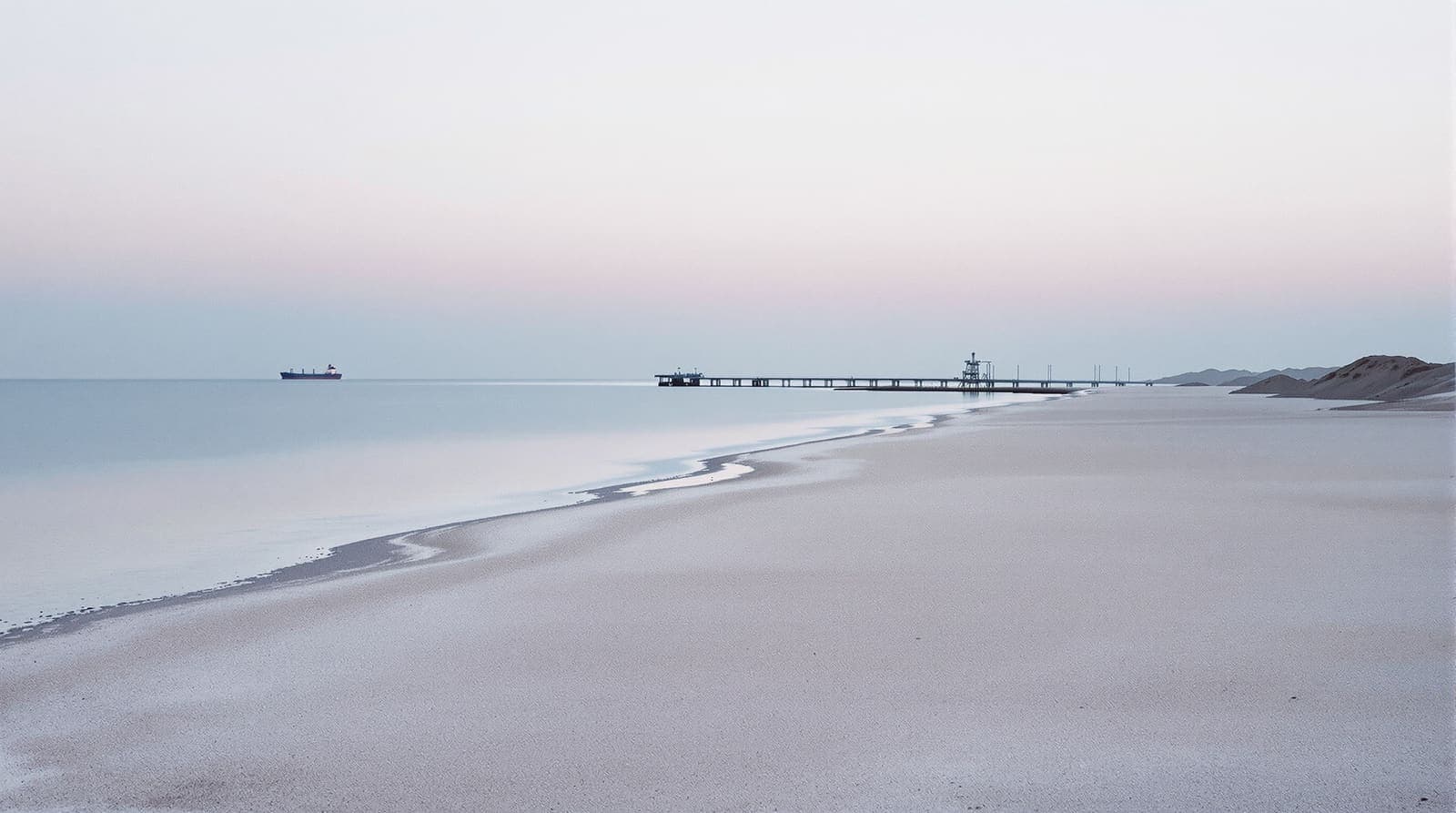
איור
הכתבה המלאה עדיין לא נכתבה בעברית, ולכן היא מובאת כאן באנגלית.
Iran's semi-official Fars news agency reported that the sound of explosions was heard in the area of Jask, on the country's southern coast, according to the Israeli Arabic-affairs channel Abu Ali Express, which cited the Fars report and described the area as lying close to the line of the blockade imposed on Iran by the United States. A later item from Israel's N12 news division, credited to correspondent Sapir Lipkin, said Fars was also reporting explosions in the port city of Sirik.
Separately, Israel's Ynet issued an alert saying there were reports inside Iran of the echoes of explosions in the Strait of Hormuz. The Jerusalem Post published a report headlined on projectiles striking several areas in Sirik, in southern Iran, attributing the account to a report rather than to its own reporting on the ground. None of the four accounts gives a cause, an origin for the projectiles, or any account of damage or casualties.
מהשטח

Several areas in Sirik, southern Iran, were hit by projectiles on Wednesday, Iranian state media reported. jpost.com/israel-news/ar…
Where Jask and Sirik are
Jask is a coastal town in Hormozgan province, on the Gulf of Oman side of Iran's southern shoreline, outside the narrowest point of the Strait of Hormuz. Sirik lies along the same stretch of coast, closer to the strait itself. Both sit on the waterway through which a large share of the world's seaborne crude oil passes, and both have been named in past reporting on Iran's naval and oil-export infrastructure. The reports here place the explosions in that coastal belt rather than in Iran's interior or in Tehran.
What Fars is
Fars is an Iranian news agency generally described as semi-official and close to the country's security establishment. In practice it is often the first Iranian outlet to acknowledge that blasts have been heard in a given area, and Israeli and international media routinely relay those short items before any official Iranian military or government statement is issued. That is the chain here: the Hebrew-language accounts are relaying Fars, not reporting independently from Hormozgan.
The blockade reference
Abu Ali Express described Jask as being near the line of a blockade imposed by the United States on Iran. That framing appears in only one of the four reports, and none of the others describes an American blockade or connects the explosions to it. The Jerusalem Post's own illustrative photograph caption refers to a US-Israeli conflict with Iran, and the picture is labelled as illustrative rather than as an image of these events. Readers should treat the blockade detail as the characterisation of a single channel citing an Iranian agency.
Where the accounts differ
The four reports do not describe the same thing in the same terms. Fars, as relayed in Hebrew, speaks of explosions being heard, which is a description of sound rather than of confirmed impacts. Ynet's alert similarly refers to reported echoes of explosions, and places them at the Strait of Hormuz rather than at a named town. The Jerusalem Post goes further, referring to projectiles hitting several areas in Sirik. Whether the events at Jask and at Sirik are one incident or two separate ones is not stated anywhere in the material. The timestamps on the items also spread across several hours, with the Abu Ali Express post appearing earliest and the Jerusalem Post item last.
What the reports do not say
No report identifies who or what caused the explosions. There is no Iranian military or government statement in the material, no claim of responsibility, and no comment from the Israel Defense Forces or from any American authority. The reports give no figure for casualties, no assessment of damage, and no indication of whether civilian, military or energy infrastructure was affected. They do not say how many explosions were heard, over what period, or how far from the two named towns. They also do not say whether shipping through the Strait of Hormuz was affected in any way. Until an official account is issued, the events remain as they are described: sounds and reported impacts along a stretch of Iran's southern coast, attributed to an Iranian news agency and relayed by others.
מקורות וקריאה נוספת
פתחנו ובדקנו כל קישור כאן בזמן כתיבת העמוד. הודעות רשמיות מסומנות ככאלה: זו הגרסה של הגורם עצמו, לא גרסה עצמאית.
- כתבותyediotht.meYnet alerts
- כתבותjpostjpost.comThe Jerusalem Post
- כתבותabualiexpresst.meAbu Ali Express
- כתבותkeshett.meN12
איך בדקנו את זה
All four accounts trace back to Iranian reporting, chiefly the semi-official Fars news agency, relayed by Ynet, N12, Abu Ali Express and The Jerusalem Post; none of them reflects independent verification on the ground, and the description of projectiles striking Sirik appears in only one report.
מדיניות המקורות והתיקונים שלנו →השבוע מישראל, במייל אחד
הכתבות שהיו חשובות, עם מקורות ובדיקה של מערכת Israel.com. חינם, פעם בשבוע, הסרה בלחיצה אחת.
רשימה אחת, הסרה בלחיצה. קראו את מדיניות הפרטיות שלנו.
עוד במדור ביטחון
למדור ביטחון →
הכתבות האחרונות
- טראמפ נשא דברים בלי קול אחרי שהרשתות באמריקה השביתו את סיקור הפול
- תקלה בכבל סיבים אופטיים שיבשה טיסות בחוף המזרחי של ארה"ב
- רשתות הטלוויזיה בארה"ב השביתו את מאגר הכתבים בבית הלבן, טראמפ נשא דברים בלי קול
- צה"ל תקף מטרות חמאס בעזה אחרי שכלי הנדסי נפגע ממטען
- ארה"ב נערכת להטיל סנקציות שיחסמו את בית הדין בהאג מעסקאות בדולרים
- כלי הנדסי של צה"ל נפגע ממטען סמוך לקו הצהוב ברצועה