Israel Builds a Mars Simulator in the Negev for 100 Million Shekels
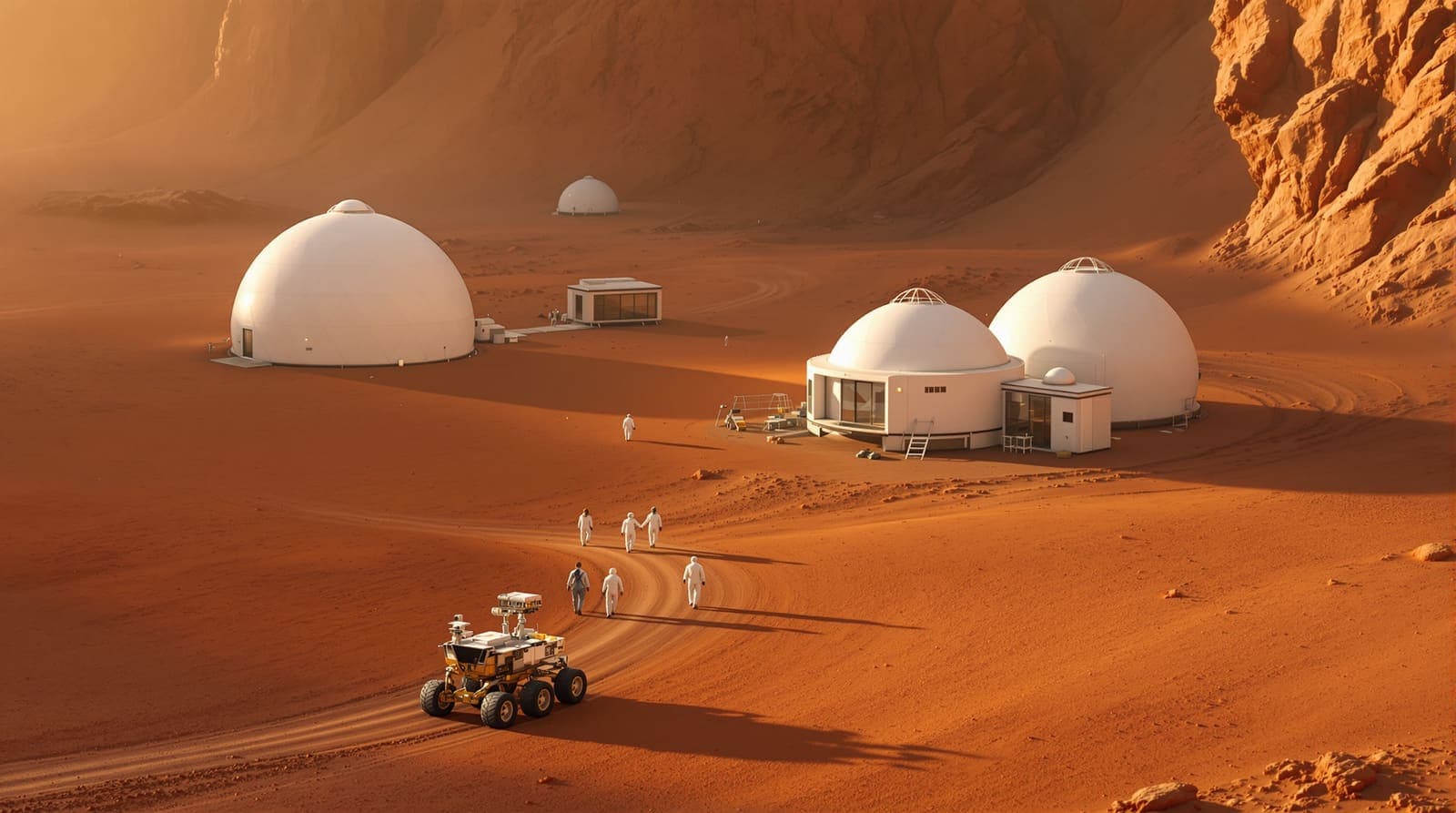
A new "Space City" campus opened at Mitzpe Ramon with Martian-surface laboratories, a mission control room and a robotics centre run with NVIDIA.
איור
הכתבה המלאה עדיין לא נכתבה בעברית, ולכן היא מובאת כאן באנגלית.
A project called Space City was formally launched at Mitzpe Ramon, a small town on the edge of the Ramon Crater in Israel's southern Negev desert, in the first week of February 2026. The investment is about 100 million shekels, or roughly $32 million, and the campus was announced as a strategic collaboration involving the Ministry of Innovation and Science and the Israel Space Agency.
The campus includes simulation laboratories reproducing conditions on the surface of Mars, a control room for managing space missions, and an innovation centre run in collaboration with the chip company NVIDIA. The ministry said the project would position Israel as a player in the global space economy while exploiting the particular geography of the Negev. Planned facilities also include a robotics and artificial intelligence laboratory developed with NVIDIA's Inception programme for startups, and an accelerator called EXPAND for Israeli deep-technology and space companies, with guaranteed investment of millions of dollars a year.
Why a crater in the desert doubles as another planet
The choice of site is not decorative. Makhtesh Ramon, the erosion crater beside the town, has been used before as a stand-in for Mars: the Austrian Space Forum ran its AMADEE-20 analogue mission there in 2021 in cooperation with the Israel Space Agency, sending six analogue astronauts from six countries into three weeks of isolation to run experiments designed by researchers at more than a dozen universities. The mission's director told The Times of Israel that the crater had “geological and ecological twins on Mars”. Rust-coloured rock, extreme dryness, wide temperature swings and almost no light pollution let engineers test rovers, autonomous systems and life-support hardware on Earth before committing them to a launch.
The market this is aimed at
The global space economy was worth about $630 billion in 2023 and is projected to reach $1.8 trillion by 2035, according to research the World Economic Forum published with McKinsey & Company in April 2024, with most of the growth coming from satellite communications, positioning and navigation, and Earth observation rather than from crewed exploration. That is the commercial logic behind a campus built around simulation, robotics and mission operations: those are services that can be sold to other people's space programmes.
Who is paying
The Jerusalem Post reported that the 100 million shekels comes from a mix of public and private sources, including the Israel Innovation Authority, the Israel Space Agency and bodies within the Ministry of Economy and Industry, alongside philanthropic funders, and that NVIDIA's role is as a technology partner on the robotics and simulation laboratories rather than as a cash investor. Ynetnews described the same funding structure and reported that the campus is also planned to include an academic complex and an international conference centre.
What the announcement did not say
The statement supplied breaks off mid-sentence in its list of partners and does not name the private company operating the campus or the philanthropic funders behind it. It gives no timetable for when the laboratories, control room or accelerator become operational, no staffing figures, and no indication of how the EXPAND programme's “guaranteed investments of millions of dollars each year” are funded or for how long.
מקורות וקריאה נוספת
פתחנו ובדקנו כל קישור כאן בזמן כתיבת העמוד. הודעות רשמיות מסומנות ככאלה: זו הגרסה של הגורם עצמו, לא גרסה עצמאית.
- כתבותThe Jerusalem Postjpost.comMitzpe Ramon to become Israel's 'Space City'
Funding sources, facilities and NVIDIA's advisory role
- כתבותYnetnewsynetnews.comMitzpe Ramon launches Space City campus with Nvidia partnership
Second account of the funding mix and planned campus facilities
- כתבותThe Times of Israeltimesofisrael.comAstronauts 'touch down' in Negev's Ramon Crater after mission to 'Mars'
Prior use of the Ramon Crater as a Mars analogue site with the Israel Space Agency
- נתוניםWorld Economic Forumweforum.orgSpace Economy Set to Triple to $1.8 Trillion by 2035
Size and projected growth of the global space economy
איך בדקנו את זה
The investment figure, the partners named and the description of the facilities are from the Ministry of Innovation and Science announcement of February 2026 as supplied, and match reports in the Jerusalem Post and Ynetnews. The Ramon Crater's history as a Mars analogue site and the size of the global space economy are sourced to the Times of Israel and the World Economic Forum.
מדיניות המקורות והתיקונים שלנו →השבוע מישראל, במייל אחד
הכתבות שהיו חשובות, עם מקורות ובדיקה של מערכת Israel.com. חינם, פעם בשבוע, הסרה בלחיצה אחת.
רשימה אחת, הסרה בלחיצה. קראו את מדיניות הפרטיות שלנו.
עוד במדור כלכלה
למדור כלכלה →


הכתבות האחרונות
- צה"ל: המעצרים בקבאטיה היו חלק מפעילות רחבה יותר בגדה ביום כיפור
- טראמפ נשא דברים בלי קול אחרי שהרשתות באמריקה השביתו את סיקור הפול
- תקלה בכבל סיבים אופטיים שיבשה טיסות בחוף המזרחי של ארה"ב
- רשתות הטלוויזיה בארה"ב השביתו את מאגר הכתבים בבית הלבן, טראמפ נשא דברים בלי קול
- מאות ליוו בלילה את נתנאל שקרון שנהרג ליד נווה צוף
- מד"א טיפל ב-3,322 איש ביום כיפור; שלושה נהרגו בתאונות דרכים