Israel to fund 15,000 security rooms within 9 km of Lebanon border
A joint government statement says homeowners in 89 frontline communities can apply from 15 September 2026 for grants of up to NIS 182,000 to build reinforced rooms.
איור
הכתבה המלאה עדיין לא נכתבה בעברית, ולכן היא מובאת כאן באנגלית.
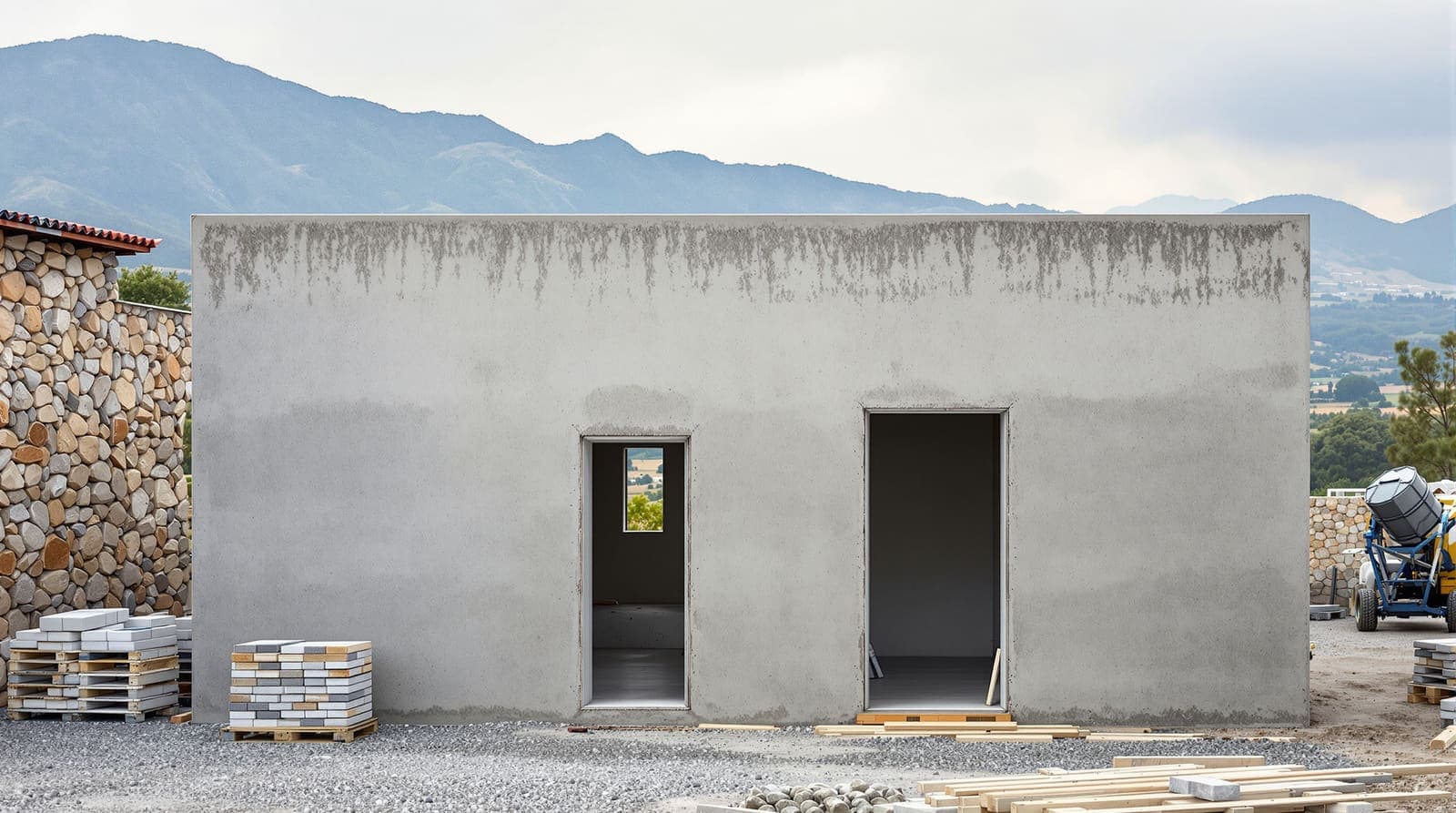
Israel is widening a state-funded home fortification programme in its far north, with grants of up to NIS 182,000 for eligible homeowners who build a reinforced security room in their house. In a joint statement, the Prime Minister's Office, the Ministry of Defense, the Ministry of Construction and Housing and the Israel Defense Forces Home Front Command said the expanded project will cover communities designated as frontline communities within a range of up to 9 km from the border with Lebanon.
The statement said the online system is expected to open for residents to submit applications on 15 September 2026, and that the expansion follows a government decision taken on 2 June 2026. More than 15,000 reinforced security rooms are expected to be built across 89 communities under the plan, alongside a separate, centrally managed effort covering roughly 11,000 apartments in multi-family residential buildings.
מהשטח

The Israeli army has blown up several homes and villages in southern Lebanon in violation of a ceasefire. It says its attacks are a response to a Hezbollah explosive drone beyond the ‘Yellow Line’, an area Israel has claimed as a ‘security zone’ inside Lebanese territory.
What a reinforced security room is
Israeli building regulations require new homes to include a reinforced protected space, a room built with thickened concrete walls, a steel-framed door and a sealed window, designed to shelter occupants from rocket, missile and drone fragmentation. In areas close to a hostile border, warning times can be too short for residents to reach a public shelter, so protection inside the home is the operative form of civil defence. Older housing in northern towns and villages, much of it built before the requirement existed, often has no such room, which is the gap the grant programme is intended to close.
Who runs the programme
Three bodies named in the statement have distinct roles. The Home Front Command is the IDF formation responsible for civilian protection inside Israel: it sets shelter standards, issues public guidance and runs search and rescue in the event of strikes on populated areas. The Ministry of Defense administers the funding and the eligibility rules. The Ministry of Construction and Housing, working with the Urban Renewal Authority, a government body that oversees the redevelopment and upgrading of older housing stock, will carry out the fortification of apartment buildings in a centralised way rather than through individual applications.
The scale and the budget
According to the government statement, the multi-family component spans approximately 11,000 housing units with a budget of approximately NIS 4.2 billion. Homeowners in eligible communities can instead use what the statement calls the self-implementation track, receiving a grant of up to NIS 182,000 to build the room themselves.
The 9 km programme builds on a narrower one already under way. The statement said approximately 3,000 reinforced security rooms are being advanced within a range of up to one kilometre from the border, and that more than half of those have already been completed or are in the handover stages. The government also listed other northern civil defence work: fortification completed in more than 335 educational institutions, 1,600 additional portable shelters deployed, and more than 600 public shelters renovated.
Why the northern border
Communities along Israel's frontier with Lebanon sit within short range of Hezbollah's rocket and anti-tank missile arsenal, and the strip closest to the border has been the focus of Israeli civil defence planning for years. Distance from the border is the organising principle of the programme: the one-kilometre band was addressed first, and the new decision extends eligibility outward to 9 km, where warning times are longer but still measured in seconds to a small number of minutes. The statement describes the communities in the expanded band as frontline communities, a formal designation that carries entitlements under the plan.
What happens next for applicants
The government said the Ministry of Defense and the Home Front Command will publish the full criteria, the list of eligible communities, the dates and procedures for submitting applications, and the timelines for using the grants. Until that publication, residents cannot confirm from the statement alone whether a particular locality is included.
What the statement does not say
The announcement leaves several points open. It does not list the 89 communities, nor does it say how a community's distance from the border is measured or how the frontline designation is decided. It does not give a total budget for the self-implementation track, only the per-household ceiling, and it does not say what happens if construction costs exceed that ceiling. No completion date is given for the 15,000 rooms or for the apartment-building works, and the statement does not set out how long residents will have to apply after the system opens.
It also does not describe the approval process, who inspects the finished rooms, or whether renters and homeowners' associations have any route to the funding. Because this account rests on a single government publication, the operational details will only become checkable when the Ministry of Defense and the Home Front Command release the criteria they have promised.
מקורות וקריאה נוספת
פתחנו ובדקנו כל קישור כאן בזמן כתיבת העמוד. הודעות רשמיות מסומנות ככאלה: זו הגרסה של הגורם עצמו, לא גרסה עצמאית.
- רשמיgov.ilgov.ilIsraeli government press release
איך בדקנו את זה
All figures and dates here come from a single joint statement published by the Prime Minister's Office, the Ministry of Defense, the Ministry of Construction and Housing and the IDF Home Front Command; no independent confirmation of the programme's scope or timeline is available, and the detailed criteria have not yet been published.
תיאור האירוע עצמו נשען על ההודעה הרשמית ולא אומת באופן עצמאי על ידי Israel.com. במקום שבו ההודעה שותקת, העמוד הזה אומר זאת במקום למלא את החסר.
מדיניות המקורות והתיקונים שלנו →השבוע מישראל, במייל אחד
הכתבות שהיו חשובות, עם מקורות ובדיקה של מערכת Israel.com. חינם, פעם בשבוע, הסרה בלחיצה אחת.
רשימה אחת, הסרה בלחיצה. קראו את מדיניות הפרטיות שלנו.
עוד במדור ביטחון
למדור ביטחון →
הכתבות האחרונות
- טראמפ נשא דברים בלי קול אחרי שהרשתות באמריקה השביתו את סיקור הפול
- תקלה בכבל סיבים אופטיים שיבשה טיסות בחוף המזרחי של ארה"ב
- רשתות הטלוויזיה בארה"ב השביתו את מאגר הכתבים בבית הלבן, טראמפ נשא דברים בלי קול
- צה"ל תקף מטרות חמאס בעזה אחרי שכלי הנדסי נפגע ממטען
- ארה"ב נערכת להטיל סנקציות שיחסמו את בית הדין בהאג מעסקאות בדולרים
- כלי הנדסי של צה"ל נפגע ממטען סמוך לקו הצהוב ברצועה