Lebanese media report Israeli strikes on Tulin and nearby villages
Reports from Lebanon describe Israeli strikes on villages in the south of the country, including Tulin, with no Israeli military statement cited so far.
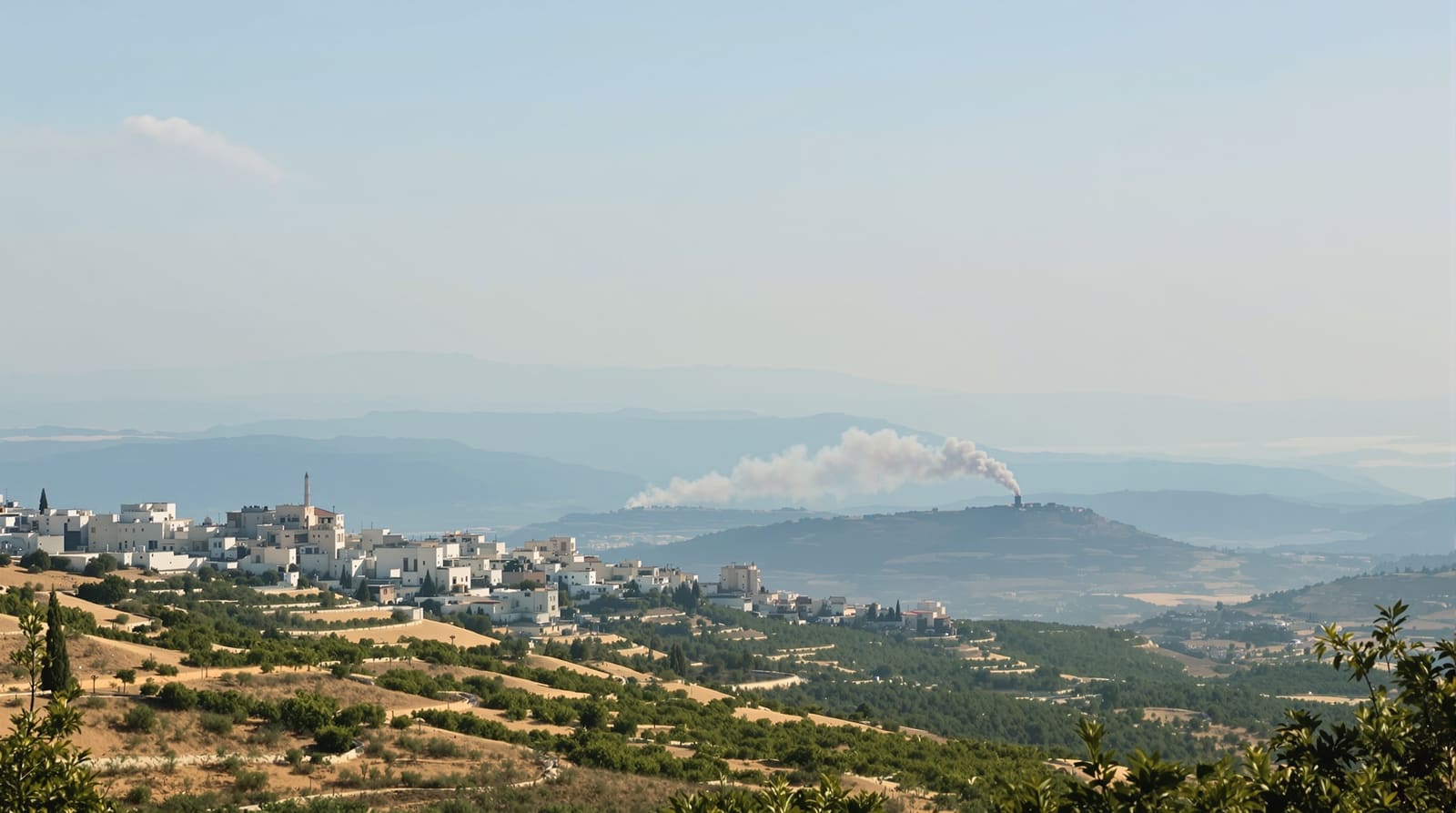
איור שנוצר בבינה מלאכותית, לא צילום של האירועים.
הכתבה המלאה עדיין לא נכתבה בעברית, ולכן היא מובאת כאן באנגלית.
Israeli strikes hit several villages in southern Lebanon on Tuesday morning, according to Lebanese media reports relayed by four Israeli news outlets. The Israel Defense Forces (IDF), Israel's military, had not been quoted in any of the reports confirming or describing the strikes at the time they were published.
The first word came from the Ynet alerts channel, which said there were reports in Lebanon of strikes in the country's south, without naming locations. Later reports added detail. Abu Ali Express named three villages where it said the IDF had carried out strikes that morning: Qabrikha, Tulin and Kfar Tibnit. News.co.il, citing reports from Lebanon, said the IDF was striking Hezbollah terror infrastructure in the village of Tulin.
What each outlet reported
The accounts overlap but are not identical. All four describe Israeli strikes in southern Lebanon on the same morning, and Tulin is the one village named in more than one report. Beyond that, each outlet carried a different level of detail.
- Ynet alerts, the breaking-news feed of the Israeli news site Ynet, reported only that strikes were being reported in southern Lebanon.
- The Times of Israel said Lebanese media were describing Israeli strikes and blasts inside what it called the IDF's southern buffer zone. Its report is the only one to mention blasts as well as strikes.
- Abu Ali Express, a Hebrew-language Telegram channel that follows Arab media and regional security news, listed Qabrikha, Tulin and Kfar Tibnit.
- News.co.il named Tulin alone and described the target as Hezbollah infrastructure, a characterisation it attributed to reports in Lebanon.
None of the outlets reported casualties or damage, and none quoted a Lebanese official or a named Lebanese outlet as its original source.
Who Hezbollah is
Hezbollah is a Lebanese Shiite Muslim movement that operates both as a political party and as an armed group, and it has long fought Israel along their shared border. Israel regards its military wing as a terrorist organisation. When Israeli outlets use the phrase "terror infrastructure", as News.co.il did here, they are generally echoing the language the Israeli military uses for weapons sites, launch positions, tunnels and similar facilities it says belong to the group. In this case the phrase was attributed to reports from Lebanon rather than to an IDF statement.
השבוע בישראל בחמש ידיעות, בכל יום שישי
מקורות ובדיקה של מערכת Israel.com, עם זמני השבת. חינם, ואפשר להפסיק בלחיצה אחת.
רשימה אחת, הסרה בלחיצה. הפרטים במדיניות הפרטיות שלנו.
The buffer zone
The Times of Israel placed the strikes within the IDF's southern buffer zone, meaning an area of southern Lebanon close to the Israeli border where Israel's military maintains a security presence. The other three reports did not use the term, and the outlets differ on how many and which villages were affected. Israeli strikes and demolitions in this border area have been reported repeatedly, and they are often first described by Lebanese media before the Israeli military comments, if it comments at all.
How these reports emerge
Much early information about Israeli military activity in Lebanon reaches Israeli audiences this way: Lebanese television, websites or local residents report an explosion or an aircraft strike, and Israeli news channels and Telegram feeds relay it, often within minutes. Those relays are flagged as reports from Lebanon, which is how all four outlets framed this event. The IDF sometimes issues its own account afterwards, naming the target and the reason for the strike, and sometimes does not.
איור
הכתבה הבאה ביטחון
תושבים בדרום לבנון צילמו את צה"ל ממלכד מבנים בכפר Zawtar al-Sharqiya
For readers outside the region, the practical point is that a report of this kind establishes that strikes were reported on the Lebanese side, not yet what was hit or why. The description of the target in Tulin as Hezbollah infrastructure comes from a single relayed report.
What the reports do not say
No IDF statement on the strikes was cited by any of the four outlets, so Israel's account of the targets has not been reported. None of the reports gives any figure for casualties or describes damage. They also do not agree on scope: one outlet names three villages, another names only Tulin, and the Times of Israel refers to strikes and blasts in the buffer zone without, in the material available, naming villages. The original Lebanese outlets behind the reports are not identified.
להמשך קריאה
למדור ביטחון →


אפשר לראות את Israel.com ראשון בכתבות המובילות של Google.הוספה כמקור מועדף ב־Google
מקורות וקריאה נוספת
פתחנו ובדקנו כל קישור כאן בזמן כתיבת העמוד. הודעות רשמיות מסומנות ככאלה: זו הגרסה של הגורם עצמו, לא גרסה עצמאית.
- כתבותyediotht.meYnet alerts
- כתבותtoitimesofisrael.comThe Times of Israel
- כתבותabualiexpresst.meAbu Ali Express
- כתבותnewssilt.meNews.co.il
איך בדקנו את זה
Four Israeli outlets relayed Lebanese reports of Israeli strikes in southern Lebanon; the list of three villages comes from Abu Ali Express alone, and the Hezbollah infrastructure description from News.co.il alone. We have not independently verified the strikes, and no IDF confirmation was reported.
מדיניות המקורות והתיקונים שלנו →השבוע בישראל, במייל אחד
הכתבות החשובות, עם מקורות ואחרי בדיקה של מערכת Israel.com. חינם, פעם בשבוע, ואפשר להפסיק בלחיצה אחת.
רשימה אחת, הסרה בלחיצה. הפרטים במדיניות הפרטיות שלנו.
הכתבות האחרונות

צילום ארכיון
צילום ארכיון

איור
איור

מתוך הסרטון
צילום ארכיון