Turkey, Iraq and Pakistan resist US push to close land borders with Iran
The New York Times reports that weeks of US lobbying failed to persuade Iran's neighbours to shut overland crossings, as they fear the cost to their own economies.
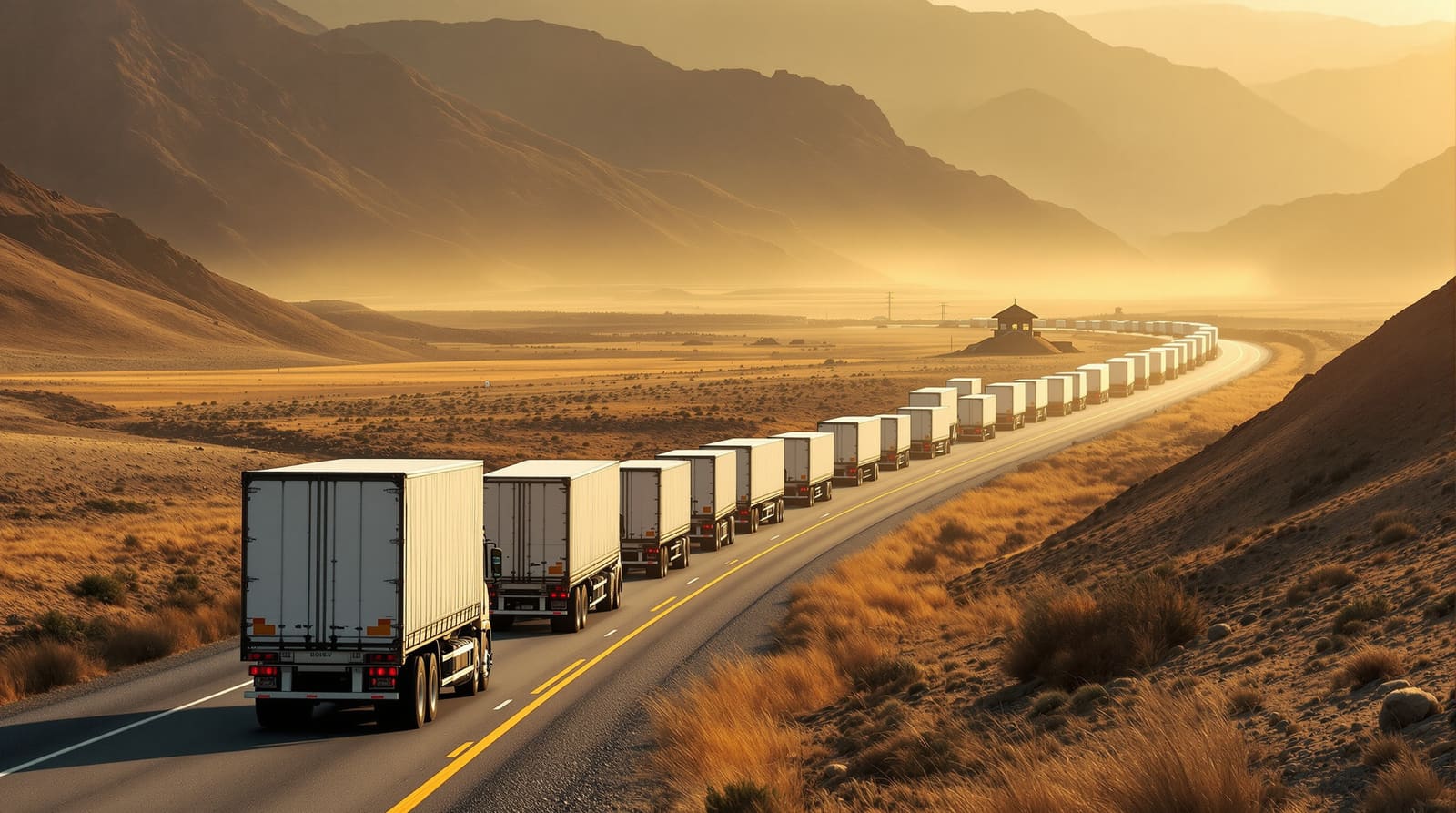
איור שנוצר בבינה מלאכותית, לא צילום של האירועים.
הכתבה המלאה עדיין לא נכתבה בעברית, ולכן היא מובאת כאן באנגלית.
A US effort to persuade countries bordering Iran to close their land crossings with it has not succeeded, according to a report in The New York Times that was relayed by Israeli outlets on Thursday morning. News.co.il reported, citing the American newspaper, that senior US officials spent weeks trying to convince Iran's neighbours to shut those crossings, without result.
The countries named are Turkey, Iraq and Pakistan. Ynet reported, also citing The New York Times, that these states are opposed to playing an active role in widening the economic blockade on Tehran so that it also covers trade over land. People familiar with the matter told the newspaper that the neighbouring states fear such a step would harm them as well.
What the neighbours are worried about
Both Israeli outlets describe the same core concern: that closing the borders would not only squeeze Iran but would also hurt the countries doing the closing. According to the News.co.il summary of the Times report, Turkey, Iraq and Pakistan fear the move would damage them economically, socially and politically to a degree comparable to the damage it would do to Tehran. The same summary says these governments are showing growing reluctance in the face of the pressure Washington is applying.
Ynet's account frames the issue more narrowly, focusing on the economic effect and on the neighbours' unwillingness to take an active part in the measure. Neither outlet quotes any official from Ankara, Baghdad or Islamabad by name, and the reasoning attributed to these governments comes from unnamed people who spoke to The New York Times.
Where these countries sit
For readers less familiar with the map, Iran shares land borders with several states, and the three named in the report cover a large share of its overland frontier. Turkey lies to Iran's northwest, Iraq to its west, and Pakistan to its southeast. Each has road links and border crossings with Iran that carry goods and people in both directions, which is why closing them would affect communities and traders on both sides of the line, not only inside Iran.
השבוע בישראל בחמש ידיעות, בכל יום שישי
מקורות ובדיקה של מערכת Israel.com, עם זמני השבת. חינם, ואפשר להפסיק בלחיצה אחת.
רשימה אחת, הסרה בלחיצה. הפרטים במדיניות הפרטיות שלנו.
Iraq in particular has close political and economic ties with its eastern neighbour, while Turkey and Pakistan both conduct cross-border trade with Iran. The reports do not detail the volume of that trade or which specific crossings Washington wanted closed.
Why land trade matters to a blockade
Ynet's wording describes the US aim as extending an existing economic blockade on Iran into the domain of overland commerce. That framing implies the pressure already in place does not fully cover goods moving across Iran's land borders, and that Washington sees those routes as a gap. Sealing them would require the cooperation of the governments on the other side, which is the cooperation the Times report says has not been forthcoming.
צילום ארכיון
For Israel, which regards Iran as its principal adversary, the effectiveness of international economic pressure on Tehran is a matter of close attention, and Israeli media picked up the Times report within hours of its appearance. Neither Israeli outlet reported any Israeli government reaction.
How the story reached Israeli readers
Both reports used here are Hebrew-language summaries of the original New York Times article rather than independent reporting. News.co.il published a brief item on its Telegram channel, and Ynet ran a short account shortly afterwards. The two summaries agree on the main points: the countries involved, the failure of the US effort and the neighbours' fear of being harmed themselves. News.co.il adds that the US push lasted weeks and that the concerns are social and political as well as economic; Ynet attributes the information specifically to people involved in the matter who spoke to the newspaper.
What the reports do not say
The summaries do not name the US officials who made the approaches, and they do not include any public response from the White House, the State Department, or the governments of Turkey, Iraq or Pakistan. They do not say whether Washington plans further steps, whether any partial measures were agreed with any of the three countries, or whether other states bordering Iran were also approached. The original New York Times article was not among the material available for this report, so details it may contain beyond these summaries are not reflected here.
להמשך קריאה
למדור ביטחון →


מקורות וקריאה נוספת
פתחנו ובדקנו כל קישור כאן בזמן כתיבת העמוד. הודעות רשמיות מסומנות ככאלה: זו הגרסה של הגורם עצמו, לא גרסה עצמאית.
- כתבותnewssilt.meNews.co.il
- כתבותyediothynet.co.ilYnet
איך בדקנו את זה
The event was reported by News.co.il and Ynet, both relaying a New York Times report that we have not reviewed directly. The detail that concerns are social and political as well as economic, and that the effort lasted weeks, appears only in the News.co.il summary.
מדיניות המקורות והתיקונים שלנו →השבוע בישראל, במייל אחד
הכתבות החשובות, עם מקורות ואחרי בדיקה של מערכת Israel.com. חינם, פעם בשבוע, ואפשר להפסיק בלחיצה אחת.
רשימה אחת, הסרה בלחיצה. הפרטים במדיניות הפרטיות שלנו.
הכתבות האחרונות
איור

צילום ארכיון
איור

איור

צילום ארכיון
איור