Iran puts ballistic missiles on public display in Tehran and Bandar Abbas
Khorramshahr, Kheibar Shekan and Zolfaghar missiles went on show in two Iranian cities, marking 15 years since the death of the man called the father of Iran's missile programme.
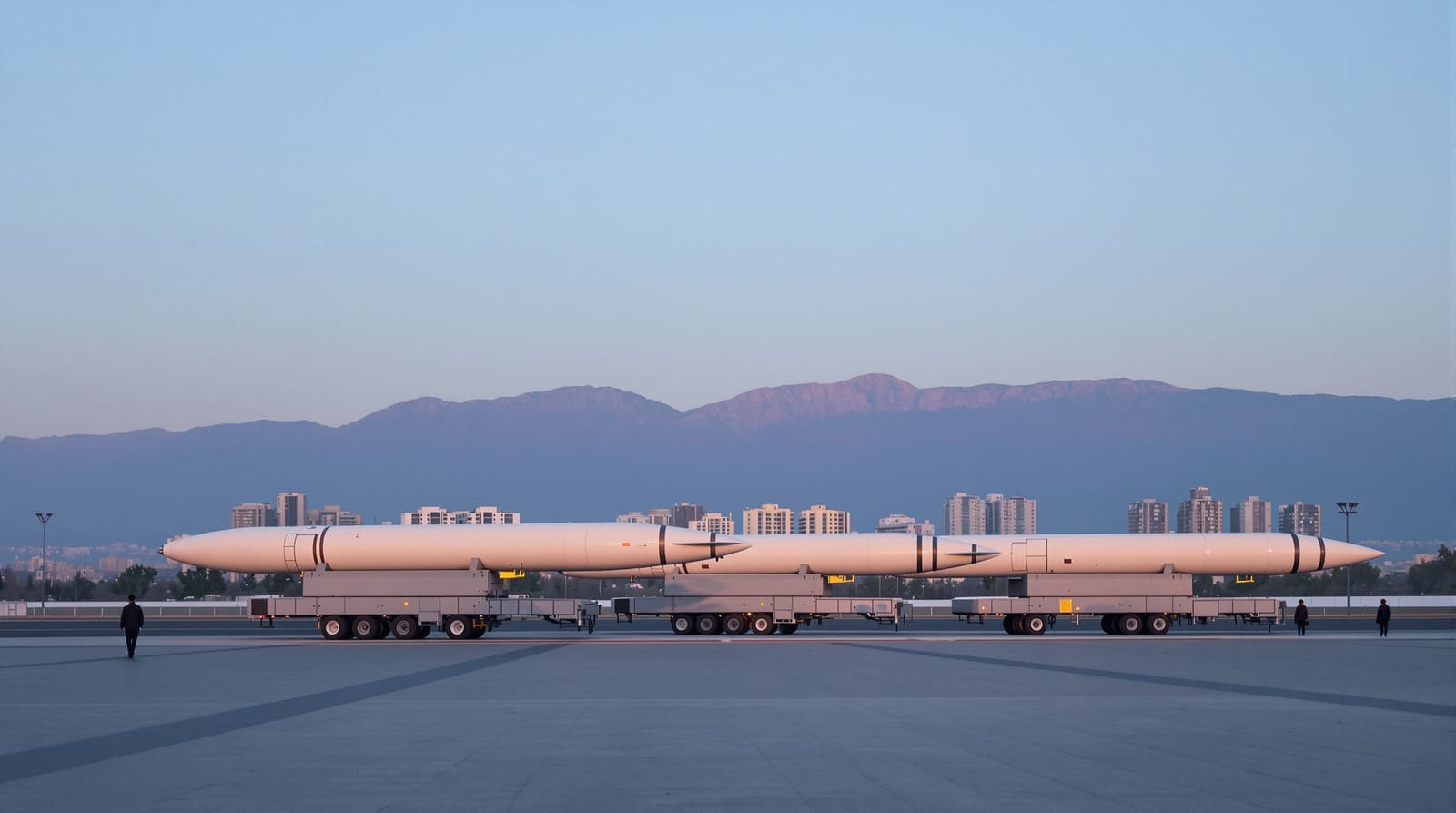
איור שנוצר בבינה מלאכותית, לא צילום של האירועים.
הכתבה המלאה עדיין לא נכתבה בעברית, ולכן היא מובאת כאן באנגלית.
Iran placed several of its ballistic missiles on public view in two cities on Thursday evening, according to Israeli Telegram outlets that follow the Iranian and Arab media. Abu Ali Express reported that Khorramshahr and Kheibar Shekan missiles were being shown to crowds in Tehran, the capital, while Zolfaghar missiles were on display in the port city of Bandar Abbas in the country's south.
Both reports tie the displays to an anniversary. News.co.il described the event as a show of strength staged to mark 15 years since the death of Tehrani Moghaddam, whom it called the chief architect and father of Iran's ballistic missile programme. Abu Ali Express gave the same occasion, naming him Mohammad Tehrani Moghaddam and describing the day as the 15th anniversary of his death.
Where the missiles were shown
The two locations named in the reports sit at opposite ends of the country's political and geographic map. Tehran is the seat of government and the setting for most of Iran's official ceremonies. Bandar Abbas is a port on Iran's southern coast, and Abu Ali Express noted that it lies close to Hormuz, the narrow strait that links the Persian Gulf with the open sea and through which a large share of regional shipping passes.
Putting missiles on show in a city near the strait carries a different message from a display in the capital, since it places the weapons within sight of a maritime route watched closely by Iran's neighbours and by foreign navies. Neither report, however, says whether the Bandar Abbas display was aimed at any particular audience, or describes its scale.
The missiles named
The reports identify three missile types by name, and give no technical details about any of them:
השבוע בישראל בחמש ידיעות, בכל יום שישי
מקורות ובדיקה של מערכת Israel.com, עם זמני השבת. חינם, ואפשר להפסיק בלחיצה אחת.
רשימה אחת, הסרה בלחיצה. הפרטים במדיניות הפרטיות שלנו.
- Khorramshahr, shown in Tehran
- Kheibar Shekan, shown in Tehran
- Zolfaghar, shown in Bandar Abbas
All three belong to the ballistic missile arsenal that Iran has developed domestically and frequently features in parades and exhibitions. Israel regards that arsenal as a central threat, which is why public displays of this kind draw attention from Israeli outlets that monitor Iranian media. The reports do not say how many missiles of each type were exhibited, or whether any new variant was unveiled.
The man being commemorated
Tehrani Moghaddam is remembered in Iran as the founding figure of its ballistic missile effort, a title both outlets used. The reports refer to him only by that role and by the anniversary; they do not describe the circumstances of his death or his specific contributions to the programme. The commemoration framing matters because it presents the displays as a memorial event rather than as a reaction to any current development, and neither outlet links the evening to a specific political or military situation.
צילום ארכיון
הכתבה הבאה ביטחון
טראמפ: מלחמה חדשה עם איראן לא סבירה אם טהרן תחתום על הסכם חזק
How the event was reported
Both accounts come from Hebrew-language Telegram channels. Abu Ali Express is a widely followed Israeli channel that tracks Arab and Iranian affairs, and News.co.il is an Israeli news service that also publishes through Telegram. The two posts are short and agree on the core facts: missiles were displayed publicly, the occasion was the 15th anniversary of Tehrani Moghaddam's death, and he is regarded as the father of the programme. Only Abu Ali Express names the specific missiles and the two cities. News.co.il characterised the evening as a display of muscle, a description that is the outlet's own framing.
What the reports do not say
Neither report cites an Iranian official statement or names the Iranian body that organised the displays, such as the armed forces or the Islamic Revolutionary Guard Corps. They give no figures for attendance or for the number of missiles shown, offer no photographs or video in the text, and do not report any Israeli or international response to the event.
להמשך קריאה
למדור ביטחון →
צילום ארכיון
ביטחון
ראש מערך הביטחון של איראן, מוחסן רזאי, מסר לפוטין מכתב מטהרן
איור
ביטחון
קטאר: ארה"ב ואיראן עדיין מחליפות הצעות, ובטהרן צופים מלחמה, לפי דיווחים

צילום ארכיון
פוליטיקה
ואנס אופטימי לגבי הסכם עם איראן, והמתווכים הקטארים עזבו את טהרן
איור
פוליטיקה
המתווכים הקטארים חזרו לטהרן עם טיוטת הסכם אפשרי בין ארה"ב לאיראן
מקורות וקריאה נוספת
פתחנו ובדקנו כל קישור כאן בזמן כתיבת העמוד. הודעות רשמיות מסומנות ככאלה: זו הגרסה של הגורם עצמו, לא גרסה עצמאית.
- כתבותabualiexpresst.meAbu Ali Express
- כתבותnewssilt.meNews.co.il
איך בדקנו את זה
The displays and the anniversary were reported by two Israeli Telegram outlets, Abu Ali Express and News.co.il; the missile types and the two cities come from Abu Ali Express alone. We have not seen an Iranian official statement and have not independently verified the details.
מדיניות המקורות והתיקונים שלנו →השבוע בישראל, במייל אחד
הכתבות החשובות, עם מקורות ואחרי בדיקה של מערכת Israel.com. חינם, פעם בשבוע, ואפשר להפסיק בלחיצה אחת.
רשימה אחת, הסרה בלחיצה. הפרטים במדיניות הפרטיות שלנו.
הכתבות האחרונות
צילום ארכיון
איור

איור
צילום ארכיון

צילום ארכיון
צילום ארכיון