Iraq's prime minister fires nine officials over oil smuggling in Jurf al-Sakher
Ali al-Zaidi ordered dismissals and court referrals after a probe in an area held by Kataeb Hezbollah, a move one analysis frames as a test of Baghdad's authority.
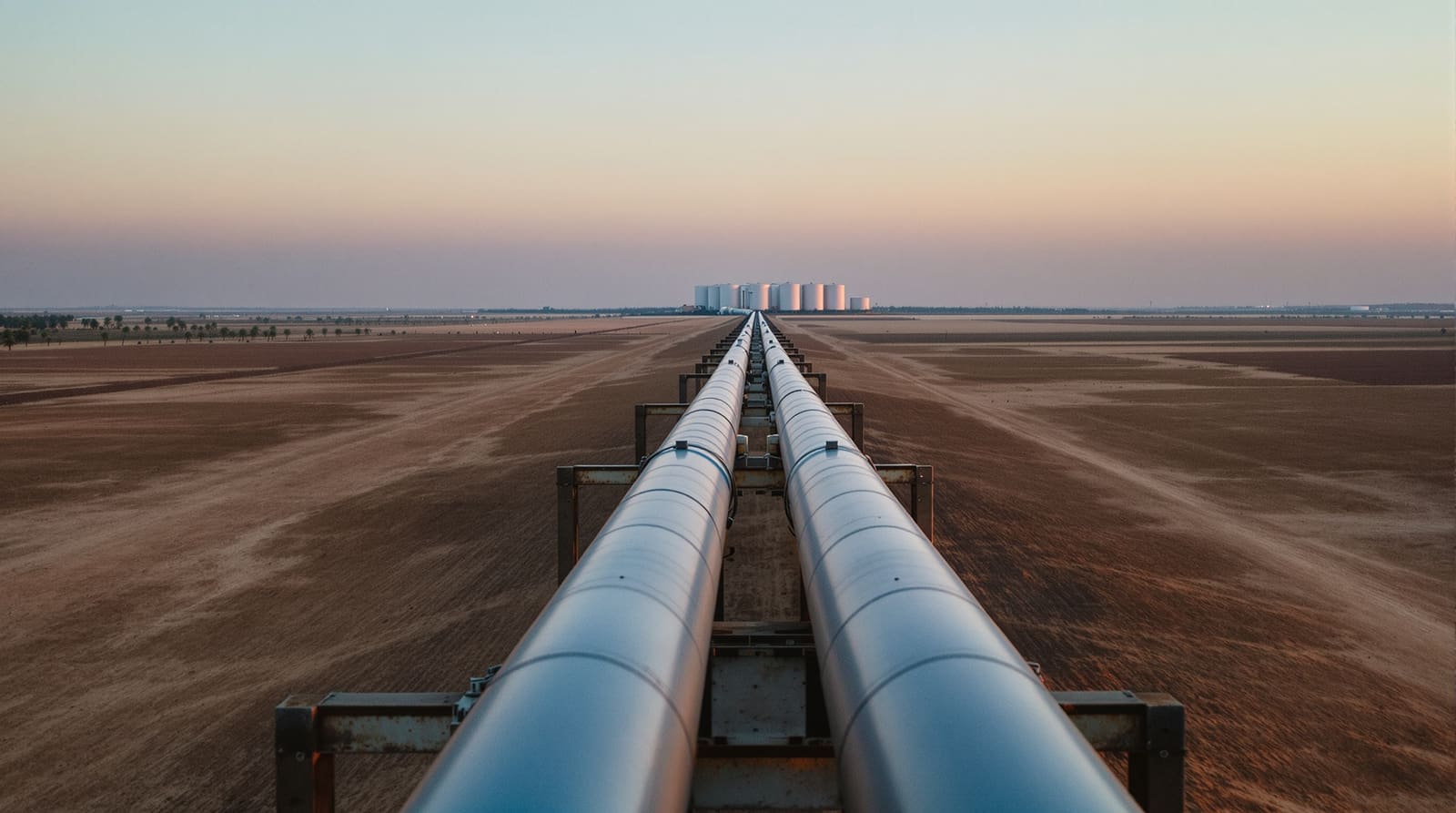
איור שנוצר בבינה מלאכותית, לא צילום של האירועים.
הכתבה המלאה עדיין לא נכתבה בעברית, ולכן היא מובאת כאן באנגלית.
Iraqi Prime Minister Ali al-Zaidi has removed nine officials from their posts after an investigation into alleged oil smuggling in Jurf al-Sakher, an area controlled by the Iran-backed armed group Kataeb Hezbollah, The Times of Israel reported. Those dismissed include people working in the security and oil sectors.
According to Sabah al-Numan, the prime minister's military spokesman, Zaidi also instructed that everyone accused of taking part in the smuggling be handed over to the judiciary. Numan said this followed from "the investigation's findings". He did not name any of the suspects or the officials who lost their jobs.
מהשטח

Iraq has deployed security forces and launched a high-level probe into alleged oil smuggling in Jurf Al-Sakhar, a strategic stronghold controlled by the Iran-backed militia Kataib Hezbollah. ✍️ @sfrantzman jpost.com/middle-east/ar…
Who controls Jurf al-Sakher
Both reports describe Jurf al-Sakher as a stronghold of Kataeb Hezbollah, sometimes transliterated as Kataib Hezbollah. The group is a Shiite militia in Iraq that is backed by Iran. The Times of Israel refers to it as a terror group; The Jerusalem Post, in the photo material accompanying its piece, calls it an armed group. The two outlets also spell the place name differently, as Jurf al-Sakher and Jurf Al-Sakhar respectively.
Kataeb Hezbollah is distinct from the Lebanese organisation Hezbollah, though both share a name and an alignment with Tehran. Imagery published by The Jerusalem Post links the group's members to the Hashd al-Shaabi, an Arabic name usually rendered in English as the Popular Mobilization Forces, the umbrella of armed factions that operate in Iraq alongside the state.
A test of Baghdad's reach
An analysis in The Jerusalem Post framed the smuggling probe as a test of how far the central government in Baghdad can assert power over Iran-backed militias. The significance for readers outside Iraq lies there: the dismissals concern officials in an area where an armed faction, rather than the state alone, holds sway.
השבוע בישראל בחמש ידיעות, בכל יום שישי
מקורות ובדיקה של מערכת Israel.com, עם זמני השבת. חינם, ואפשר להפסיק בלחיצה אחת.
רשימה אחת, הסרה בלחיצה. הפרטים במדיניות הפרטיות שלנו.
The move comes against a backdrop of military pressure on the group. Photo captions in both reports refer to Kataeb Hezbollah fighters killed in airstrikes. The Times of Israel's image showed a funeral for a fighter killed in a US airstrike in Basra province on April 8, 2026. The Jerusalem Post's image showed members of the group mourning fighters who died when a strike hit one of the Hashd al-Shaabi's bases, located close to al-Qaim, a district in western Iraq by the border with Syria. That caption set the strike within the wider conflict pitting the United States and Israel against Iran.
What is known about the smuggling
The material released so far is limited to the outcome of the investigation. The reports do not say how much oil was involved, where it was being moved, who profited, or how long the alleged operations had run. They also do not specify whether the dismissed officials are accused of involvement themselves or were removed for failures of oversight.

איור
The regional picture
Kataeb Hezbollah is one of several Iraqi factions aligned with Tehran. Both reports on the dismissals were carried by Israeli outlets, and The Jerusalem Post's analysis focused specifically on what the probe reveals about the balance of power between Baghdad and the militias operating on Iraqi soil.
What the reports do not say
Neither report identifies the nine dismissed officials or the suspects referred to the courts, and neither says what charges they may face. No response from Kataeb Hezbollah has been reported. The volume and value of the smuggled oil, and how the investigation was carried out, remain undisclosed.
להמשך קריאה
למדור חירום →


מקורות וקריאה נוספת
פתחנו ובדקנו כל קישור כאן בזמן כתיבת העמוד. הודעות רשמיות מסומנות ככאלה: זו הגרסה של הגורם עצמו, לא גרסה עצמאית.
- כתבותtoitimesofisrael.comThe Times of Israel
- כתבותjpostjpost.comThe Jerusalem Post
איך בדקנו את זה
The dismissals and the court referrals were reported by The Times of Israel, citing the prime minister's military spokesman Sabah al-Numan; The Jerusalem Post published an analysis of the same probe. We have not independently verified the details, and the specifics of the decision rest on the spokesman's statement.
מדיניות המקורות והתיקונים שלנו →השבוע בישראל, במייל אחד
הכתבות החשובות, עם מקורות ואחרי בדיקה של מערכת Israel.com. חינם, פעם בשבוע, ואפשר להפסיק בלחיצה אחת.
רשימה אחת, הסרה בלחיצה. הפרטים במדיניות הפרטיות שלנו.
הכתבות האחרונות

איור

איור
צילום ארכיון
צילום ארכיון
צילום ארכיון
איור