Netanyahu and Katz Order a Beirut Strike on Hezbollah's Radwan Chief
Israel's leaders said they had approved an attack on Radwan Force commander Malek Balout in the Lebanese capital, but gave no result at the time of the announcement.
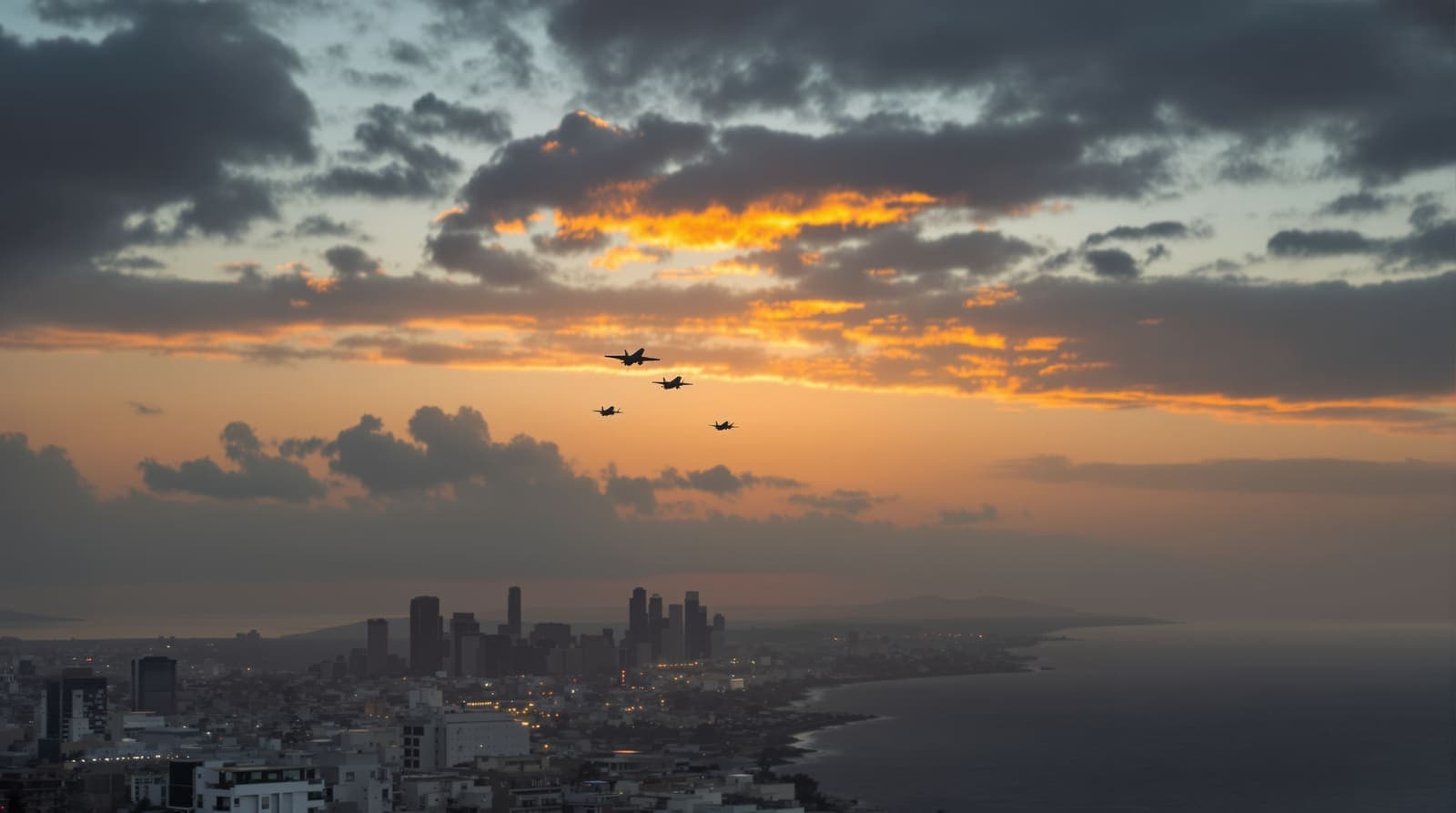
איור
הכתבה המלאה עדיין לא נכתבה בעברית, ולכן היא מובאת כאן באנגלית.
Prime Minister Benjamin Netanyahu and Defence Minister Israel Katz said in a joint statement that, with their approval, the Israel Defense Forces had attacked Malek Balout, the commander of Hezbollah's Radwan Force, in Beirut, with the aim of killing him. The statement was issued on 6 May 2026.
The Radwan operatives under Balout's command were responsible for firing at Israeli communities and harming Israeli soldiers, the two men said. "No terrorist has immunity, Israel's long arm will catch every enemy and murderer," the statement said, adding that they had "promised to bring security to the residents of the North, this is how we do it and this is how we will do it!" At the time the statement went out, there was no word on the results of the attack.
What the Radwan Force is
Radwan is Hezbollah's elite ground formation. It was created after the 2006 Second Lebanon War as part of an effort to professionalise the organisation's military wing and give it offensive capability, and it is named after the nom de guerre of Imad Mughniyeh, a Hezbollah commander killed in 2008. The Jerusalem Post's explainer describes its role as ground warfare, including infiltrating Israeli territory, seizing positions and mounting targeted strikes, with the unit deployed near the Israeli border and heavily blooded in Syria.
That is the unit Israeli officials have repeatedly said was tasked with a cross-border invasion of the Galilee, which is the reference behind the statement's language about protecting northern residents.
A strike inside a ceasefire
The attack came under a truce, not in open war. A United States-brokered cessation of hostilities between Israel and Lebanon took effect on 17 April 2026 for an initial ten days, after the first direct talks between the two states in decades; Netanyahu said at the time that Israeli troops would not withdraw and would hold a ten-kilometre security zone in southern Lebanon. The arrangement was extended repeatedly through the spring, by three weeks on 23 April and by 45 days on 15 May, with Hezbollah never a signatory.
Crucially, the framework preserved Israel's stated right to act in self-defence against threats it considered imminent or ongoing. Euronews reported that the Beirut strike, which hit Ghobeiri in the southern suburbs on the night of 6 to 7 May, was the first on that area in nearly a month, and that a Hezbollah source identified the casualty as "Malek Ballout, the operations commander in the Radwan force". The Lebanese health ministry reported at least eleven other people killed in strikes elsewhere in southern and eastern Lebanon.
What followed the announcement
The following day the Israeli military said the target had been killed. The Jerusalem Post reported that the IDF confirmed on 7 May that it had killed the commander of the Radwan Force in the 6 May strike, describing him as the most senior member of the unit killed since November 2025 and saying he had directed dozens of attacks on Israeli troops in southern Lebanon, including anti-tank missile fire and roadside bombs, while working to rebuild Radwan's capabilities. The same report said two other senior Hezbollah figures were killed in the strike. It gave the commander's name as Ahmad Ghaleb Balout, where the Israeli leaders' statement had called him Malek Balout; the accounts agree on the post he held rather than on the name.
What is still unclear
The Israeli statement itself claimed no result, and offered no evidence for the attacks it attributed to Balout's men. It did not say what was struck, at what hour, or whether there were other casualties. Hezbollah's own account of the strike and the Lebanese government's response are not part of the Israeli statement, and Israel.com has not independently verified either the target or the outcome.
מקורות וקריאה נוספת
פתחנו ובדקנו כל קישור כאן בזמן כתיבת העמוד. הודעות רשמיות מסומנות ככאלה: זו הגרסה של הגורם עצמו, לא גרסה עצמאית.
- כתבותPBS NewsHourpbs.orgIsrael and Lebanon begin 10-day ceasefire after reaching agreement
Start date and terms of the April 2026 truce, including Israel's 10km zone
- כתבותEuronewseuronews.comSenior Hezbollah commander killed by Israel in Beirut suburbs
Location and timing of the Beirut strike and Hezbollah's naming of the casualty
- כתבותJerusalem Postjpost.comIDF confirms killing of Hezbollah Radwan commander in Beirut
IDF confirmation on 7 May 2026 that the Radwan commander was killed
- רקעJerusalem Postjpost.comInside Hezbollah's elite Radwan Force: Structure, strategy, and operations
Origin, naming and mission of the Radwan Force
- רקעWikipediaen.wikipedia.org2026 Israel-Lebanon ceasefire
Timeline of the truce and its successive extensions
איך בדקנו את זה
The approval of the strike, the target's name and role, and the quoted lines are taken from the Netanyahu-Katz statement of 6 May 2026, which itself reported no outcome. The Radwan Force background, the ceasefire framework and the subsequent Israeli confirmation are researched from Jerusalem Post, PBS, Euronews and reference sources published in April and May 2026.
מדיניות המקורות והתיקונים שלנו →השבוע מישראל, במייל אחד
הכתבות שהיו חשובות, עם מקורות ובדיקה של מערכת Israel.com. חינם, פעם בשבוע, הסרה בלחיצה אחת.
רשימה אחת, הסרה בלחיצה. קראו את מדיניות הפרטיות שלנו.
עוד במדור ביטחון
למדור ביטחון →

הכתבות האחרונות
- טראמפ נשא דברים בלי קול אחרי שהרשתות באמריקה השביתו את סיקור הפול
- תקלה בכבל סיבים אופטיים שיבשה טיסות בחוף המזרחי של ארה"ב
- רשתות הטלוויזיה בארה"ב השביתו את מאגר הכתבים בבית הלבן, טראמפ נשא דברים בלי קול
- צה"ל תקף מטרות חמאס בעזה אחרי שכלי הנדסי נפגע ממטען
- ארה"ב נערכת להטיל סנקציות שיחסמו את בית הדין בהאג מעסקאות בדולרים
- כלי הנדסי של צה"ל נפגע ממטען סמוך לקו הצהוב ברצועה