Lebanese channels report Israeli air strikes on Tebnine and Qantara
Lebanese media say Israeli aircraft struck two villages in southern Lebanon, with one Israeli outlet adding Hezbollah targets and a bridge were hit.
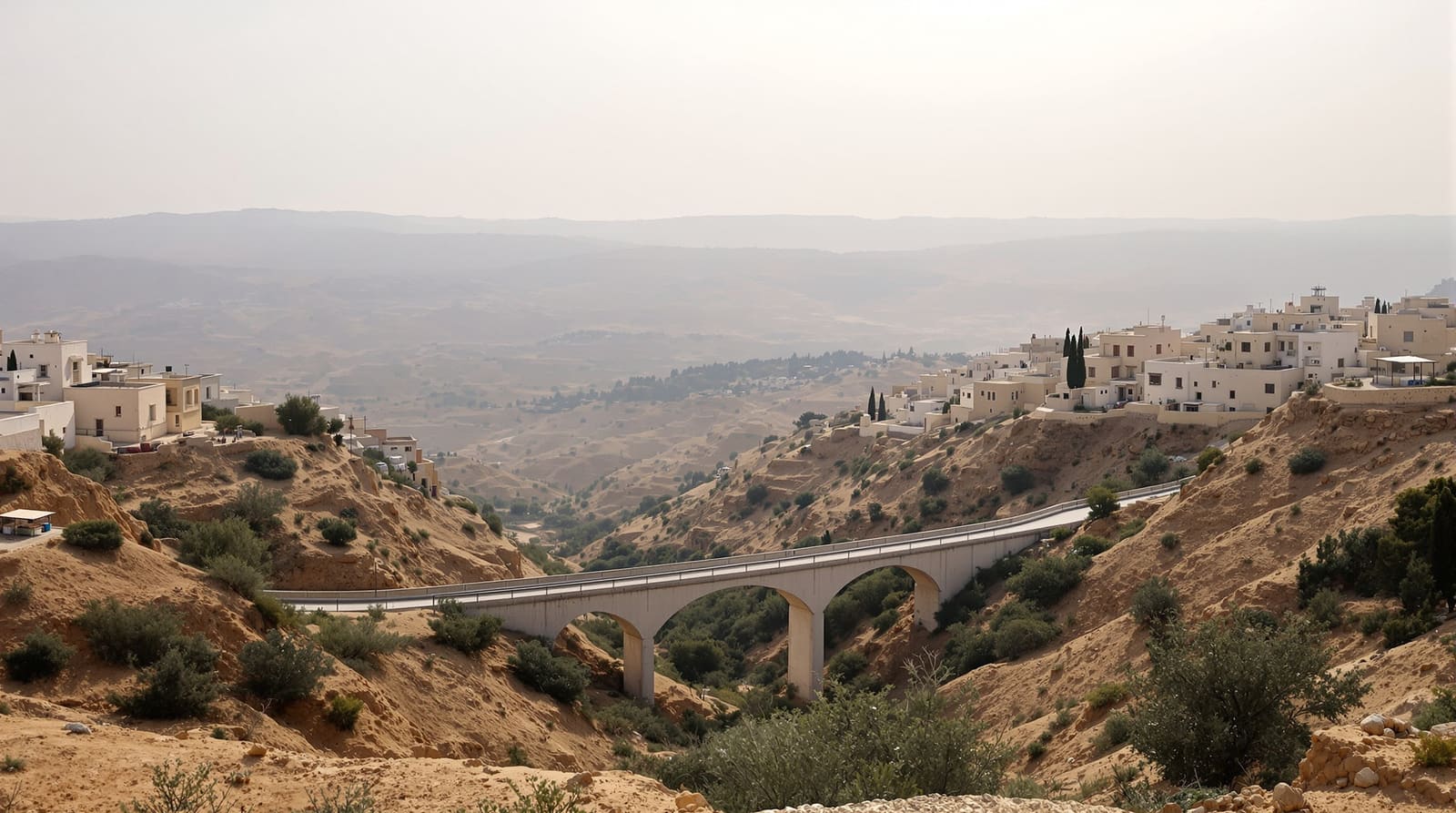
איור שנוצר בבינה מלאכותית, לא צילום של האירועים.
הכתבה המלאה עדיין לא נכתבה בעברית, ולכן היא מובאת כאן באנגלית.
Israeli aircraft were carrying out strikes on the villages of Tebnine and Qantara in southern Lebanon, according to Lebanese television channels, whose reports were relayed by several Israeli news services. The accounts describe the attacks as under way at the time they were published, and none of them includes an Israeli military statement confirming the operation.
Abu Ali Express, an Israeli channel that monitors Arab media, reported that Lebanese outlets said Israeli Air Force jets were attacking in the two villages. News.co.il carried the same Lebanese reports and described the targets as belonging to Hezbollah, adding that according to some accounts, part of a crossing bridge in Qantara had been struck. Earlier, Ynet's alerts service reported, citing reports in Lebanon, that the Israel Defense Forces were striking in the south of the country, without naming locations.
Where the strikes were reported
Both villages lie in southern Lebanon, the region bordering northern Israel. The Hebrew reports render the first village's name in a form that English sources usually spell Tebnine; transliterations of Lebanese place names vary between Hebrew, Arabic and English, so readers may see it written differently elsewhere. The second location is Qantara, which News.co.il describes as a village in the same area.
The detail about a bridge is the only description in the material of what was physically hit. News.co.il attributed it to some of the reports it had seen rather than presenting it as established, and neither of the other two Israeli outlets mentioned it. The reports give no information about the size of the bridge, what route it served or how badly it was damaged.
Who is said to be involved
The Israel Defense Forces, usually shortened to IDF and known in Hebrew as Tzahal, is Israel's military. Its air arm, the Israeli Air Force, is the branch named in the Lebanese reports as carrying out the attacks. The IDF typically announces strikes in Lebanon through its spokesperson's unit, sometimes after the fact; no such announcement appears in the material available.
השבוע בישראל בחמש ידיעות, בכל יום שישי
מקורות ובדיקה של מערכת Israel.com, עם זמני השבת. חינם, ואפשר להפסיק בלחיצה אחת.
רשימה אחת, הסרה בלחיצה. הפרטים במדיניות הפרטיות שלנו.
Hezbollah is the Lebanese Shiite movement that operates both as a political party and as an armed force, and it has fought Israel repeatedly across the border. When Israel strikes in southern Lebanon, it generally describes the targets as Hezbollah infrastructure or personnel. In this case, the identification of the targets as Hezbollah sites comes from News.co.il's summary of Lebanese media, not from either army or from Hezbollah itself.
How the reports differ
The three Israeli outlets agree on the basic claim: that Lebanese sources were reporting Israeli strikes in southern Lebanon. They differ in how much they add. Ynet's alert was the briefest, attributing the strikes to the IDF in general terms and giving no place names. Abu Ali Express named the two villages and specified aircraft. News.co.il went further, describing the targets as Hezbollah's and mentioning the bridge.

איור
All three reports are explicitly second hand. Each attributes the information to Lebanese channels or to reports in Lebanon, and none claims its own confirmation from the Israeli military, from Lebanese officials or from people on the ground. Readers should treat the account as what Lebanese media were reporting at the time, rather than as a confirmed record of what happened.
How this fits a familiar pattern
Reports of this kind, in which Lebanese outlets announce Israeli strikes before any official Israeli comment and Israeli channels then relay those reports in Hebrew, are a common first stage of coverage of Israeli military activity in Lebanon. Details such as the precise targets, the extent of damage and whether anyone was hurt often emerge later, from military statements, Lebanese authorities or local reporting.
What the reports do not say
None of the reports includes any statement from the IDF confirming or explaining the strikes, or any response from Hezbollah or the Lebanese government. They give no information on casualties or damage beyond the single unconfirmed mention of a bridge in Qantara, and they do not say what prompted the strikes or whether further action followed.
להמשך קריאה
למדור ביטחון →
איור
ביטחון
צה"ל מקיים תרגיל בגליל ובאזור באר שבע עד רביעי בערב

איור
ביטחון
השב"כ חקר את העיתונאי עבד אבו שחאדה על שיעור ההצבעה בחברה הערבית

צילום ארכיון
ביטחון
טראמפ מסכים עם ואנס שהמלחמה באיראן עלתה לרפובליקנים בבחירות האמצע
איור
ביטחון
צה"ל: כוחות ירו בחשוד שאחז בבקבוק תבערה ליד זבאבדה, וואפ"א: מדובר בנער בן 13
מקורות וקריאה נוספת
פתחנו ובדקנו כל קישור כאן בזמן כתיבת העמוד. הודעות רשמיות מסומנות ככאלה: זו הגרסה של הגורם עצמו, לא גרסה עצמאית.
- כתבותyediotht.meYnet alerts
- כתבותabualiexpresst.meAbu Ali Express
- כתבותnewssilt.meNews.co.il
איך בדקנו את זה
Ynet, Abu Ali Express and News.co.il all relayed Lebanese reports of Israeli strikes in southern Lebanon; the village names come from two of them. The Hezbollah targets and the bridge detail are attributed to News.co.il's account of Lebanese media alone, and no outlet reported independent or official confirmation.
מדיניות המקורות והתיקונים שלנו →השבוע בישראל, במייל אחד
הכתבות החשובות, עם מקורות ואחרי בדיקה של מערכת Israel.com. חינם, פעם בשבוע, ואפשר להפסיק בלחיצה אחת.
רשימה אחת, הסרה בלחיצה. הפרטים במדיניות הפרטיות שלנו.
הכתבות האחרונות

צילום ארכיון

איור
איור

צילום ארכיון

צילום ארכיון