1956 Sinai Campaign archive shows Ben-Gurion wishing Gaza 'swallowed by the sea'
Israel's Defense Ministry has opened thousands of records from the 1956 war to mark its 70th anniversary, including Ben-Gurion's private words on Gaza and a warning about future wars.
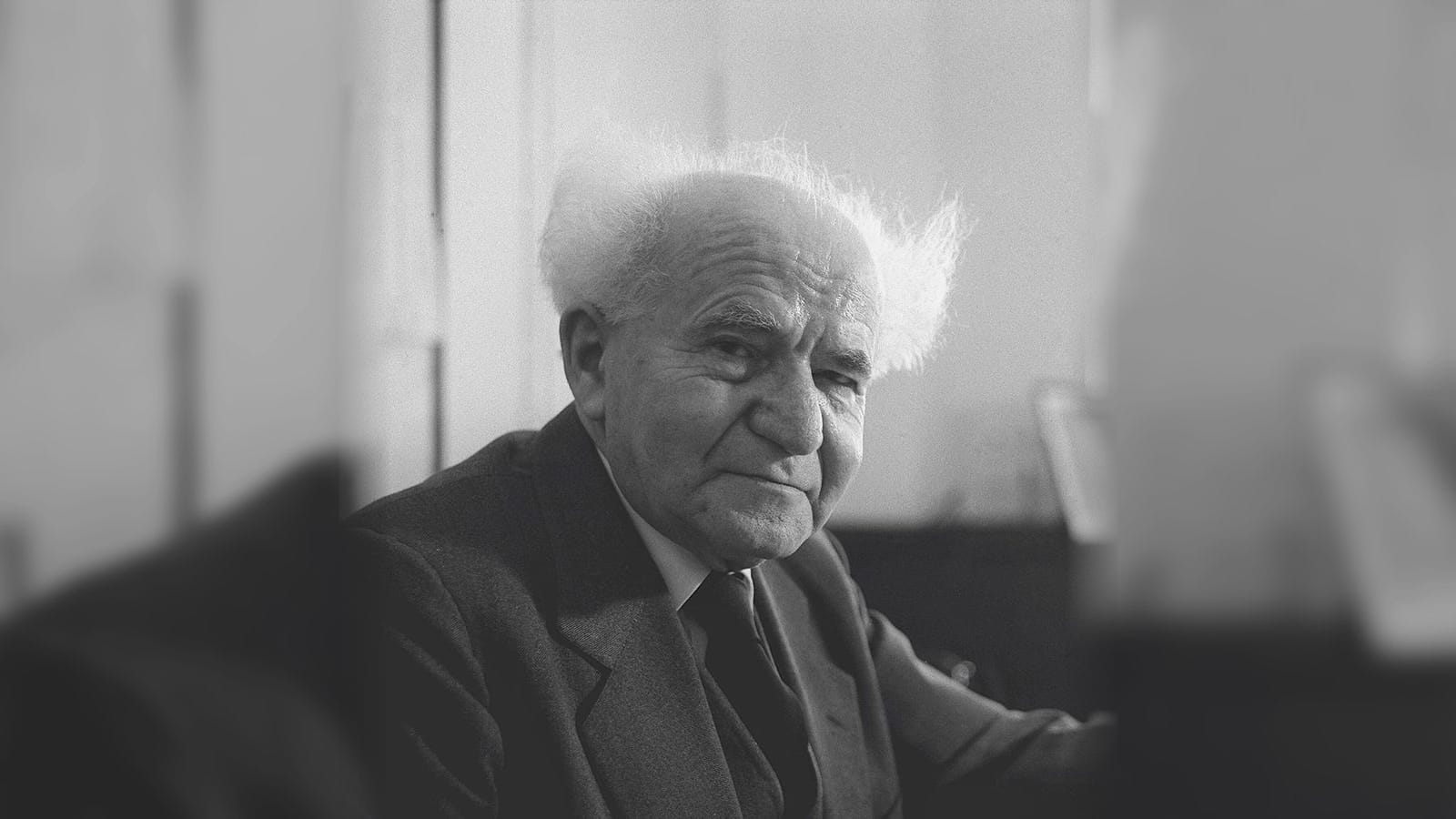
David Ben-Gurion. צילום ארכיון: Fritz Cohen, נחלת הכלל, מתוך ויקישיתוף.
הכתבה המלאה עדיין לא נכתבה בעברית, ולכן היא מובאת כאן באנגלית.
Israel's Ministry of Defense has released thousands of historical archive items from the 1956 Sinai Campaign, known in Israel as Operation Kadesh, to mark 70 years since the war. According to N12, citing the IDF Archive in the Ministry of Defense, the material sits on a new dedicated website holding more than 4,500 photographs, documents and maps, a large share of which are being made public for the first time.
Among the newly opened records are remarks by David Ben-Gurion, then both prime minister and defense minister, about the Gaza Strip. N12 reported that he told a cabinet meeting on the eve of the operation that Israel had to take the territory, adding that if he believed in miracles, he would want it to be swallowed by the sea. The Jerusalem Post also led its coverage with the remark.
What the new archive contains
The IDF Archive is the official repository of records of the Israel Defense Forces (IDF) and operates within the Ministry of Defense. According to the archive material cited by N12, the new site documents the preparations for the war, the discussions and decisions taken at political and military level, the fighting itself and what followed. It also includes information on 149 commanders whom the archive describes as part of the founding command structure of the IDF.
Ynet reported that the release includes thousands of documents together with maps, photographs and other items.
The Sinai Campaign and Ben-Gurion
The Sinai Campaign was the war Israel fought against Egypt in the autumn of 1956, centred on the Sinai Peninsula, the Egyptian desert territory that borders Israel to the south-west, and on the Gaza Strip, the coastal territory along the Mediterranean that was then under Egyptian control. The Hebrew name, Operation Kadesh, is the one most often used in Israel. A photograph published by The Jerusalem Post shows Ben-Gurion visiting IDF soldiers during the operation on November 11, 1956.
השבוע בישראל בחמש ידיעות, בכל יום שישי
מקורות ובדיקה של מערכת Israel.com, עם זמני השבת. חינם, ואפשר להפסיק בלחיצה אחת.
רשימה אחת, הסרה בלחיצה. הפרטים במדיניות הפרטיות שלנו.
Ben-Gurion led Israel through its early years and at the time held both the premiership and the defense portfolio, which is why his statements in the archive carry weight on both the political and the military side of the decision to go to war.
His remarks on Gaza and on the next war
Ynet framed its report around how closely the issues Ben-Gurion raised resemble debates in Israel in 2026. It described his opposition to annexing the Gaza Strip despite the suffering in the communities near the Gaza border, known in Hebrew as the Otef, or Gaza envelope. Ynet also said the records show him translating the moral cost of such a step into a diplomatic one, and raising the prospect of an arms embargo.

צילום ארכיון
A second document, according to N12, contains a warning about a future conflict. In it Ben-Gurion said that Tel Aviv and Haifa would be bombed and that people would be killed, and he stressed that the victims would not be soldiers but women and children. Ynet described the same passage as a prophecy that in the next war Tel Aviv and Haifa would come under bombardment.
Where the reports differ
The reports do not agree on the setting of the Gaza remark. N12 places it at a cabinet meeting held on the eve of the operation. Ynet describes the documentation as a record of a conversation between the prime minister and IDF officers. It is not clear from the reports whether these are two separate occasions or two descriptions of the same one.
There is also a difference of emphasis. N12 quotes Ben-Gurion saying Israel had to take Gaza, while Ynet highlights his opposition to annexing it. The two are not necessarily in conflict, since taking territory in a military operation and formally annexing it are different steps, but the reports available do not set out how he reconciled them.
What the reports do not say
The reports do not give the date of the cabinet meeting or the officers' conversation, do not publish the full text of either document, and do not say what proportion of the 4,500-plus items had previously been classified. None of them reports any reaction to the release from the government or from historians.
להמשך קריאה
למדור ביטחון →משפט ופלילים
בן גביר עומד מאחורי הטענה שהמפכ"ל דני לוי "רוצה לראות דם"
צילום ארכיון
פוליטיקה
נתניהו נפגש עם בן גביר כדי לסכל ממשלת מיעוט של גוש השינוי

צילום ארכיון
ביטחון
צה"ל ושב"כ מודיעים על חיסול מפקד חמאס שהחזיק בשבי את עומר שם טוב
איור
ביטחון
צה"ל והשב"כ: שישה מחבלים נהרגו בשלוש תקיפות באזור חאן יונס
מקורות וקריאה נוספת
פתחנו ובדקנו כל קישור כאן בזמן כתיבת העמוד. הודעות רשמיות מסומנות ככאלה: זו הגרסה של הגורם עצמו, לא גרסה עצמאית.
- כתבותyediothynet.co.ilYnet
- כתבותjpostjpost.comThe Jerusalem Post
- כתבותkeshett.meN12
- כתבותkeshett.meN12
איך בדקנו את זה
The release and Ben-Gurion's Gaza remark were reported by Ynet, The Jerusalem Post and N12, with N12 citing the IDF Archive in the Ministry of Defense. The figures of 4,500 items and 149 commanders come from N12's posts alone, and the reports differ on whether the Gaza remark was made at a cabinet meeting or in talks with officers.
מדיניות המקורות והתיקונים שלנו →השבוע בישראל, במייל אחד
הכתבות החשובות, עם מקורות ואחרי בדיקה של מערכת Israel.com. חינם, פעם בשבוע, ואפשר להפסיק בלחיצה אחת.
רשימה אחת, הסרה בלחיצה. הפרטים במדיניות הפרטיות שלנו.
הכתבות האחרונות
איור

איור

צילום ארכיון
איור

איור
איור