Iran's Revolutionary Guards say two tankers struck mines in Hormuz
Iranian state TV quoted the Guards' navy as saying two oil tankers exploded and burned in the strait, a claim not yet confirmed by any other party.
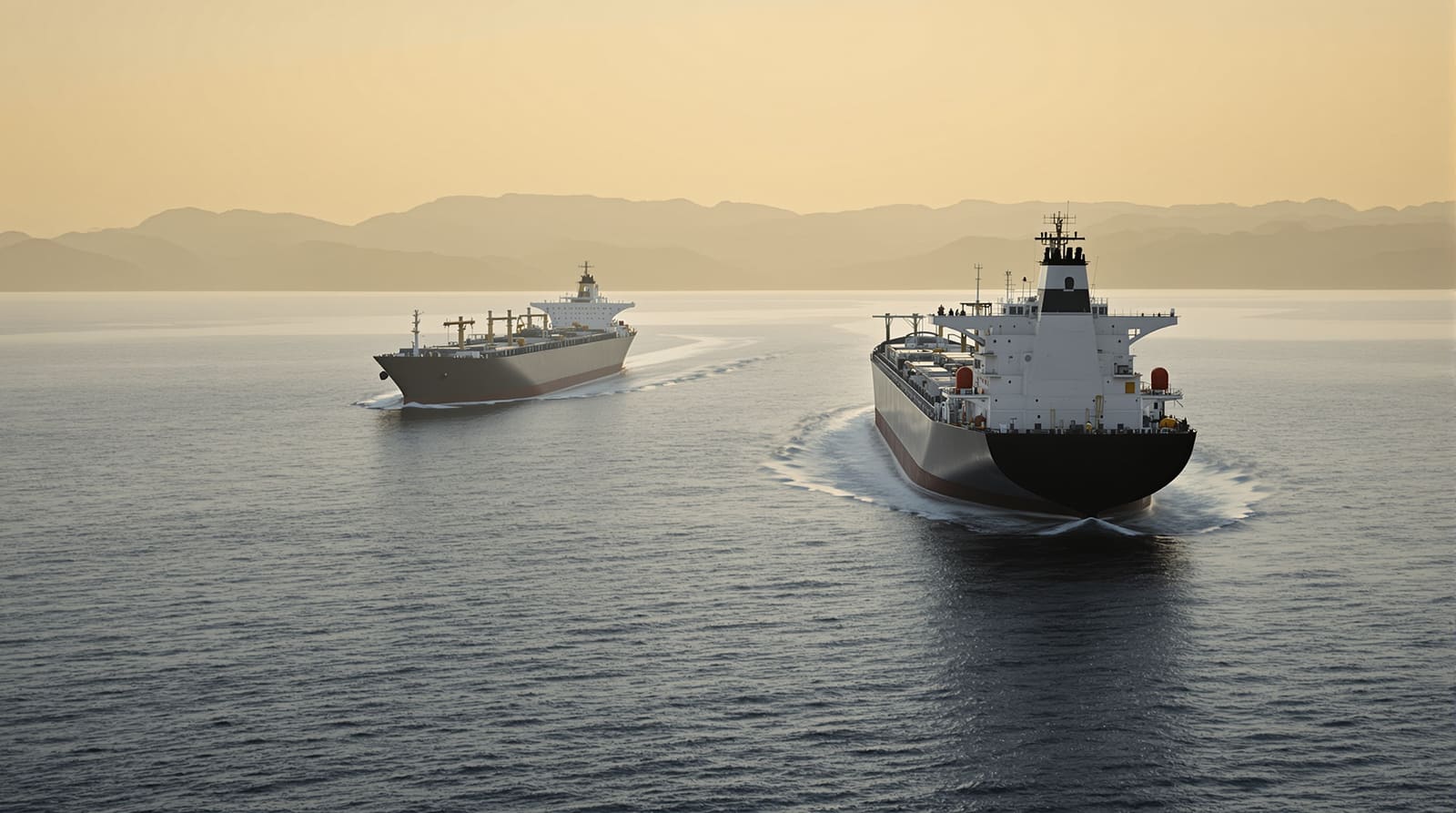
איור שנוצר בבינה מלאכותית, לא צילום של האירועים.
הכתבה המלאה עדיין לא נכתבה בעברית, ולכן היא מובאת כאן באנגלית.
Iran's Islamic Revolutionary Guard Corps (IRGC) says two oil tankers blew up and caught fire after running into sea mines in the Strait of Hormuz. According to The Times of Israel, which cited Iranian state television, the naval arm of the Guards said the vessels had been trying to pass through the strait without first coordinating their transit with the Iranian authorities.
The Iranian statement, as relayed by state TV, offered nothing beyond that core claim. Israeli news site Ynet also carried the Guards' account in a breaking-news alert, quoting the force as saying 2 tankers hit mines in Hormuz and went up in flames. Both Israeli reports were published in the evening, within minutes of each other, and both attribute the information to the IRGC alone.
מהשטח

Iran's IRGC says two tankers hit sea mines in Hormuz reut.rs/4t2VhzN
Who is making the claim
The IRGC is a powerful military force in Iran that exists alongside, and separately from, the country's regular army. It answers to Iran's top leadership and has its own ground, air and naval branches. Its navy is the force most closely associated with Iranian activity in the waters of the Gulf, and it is that naval branch that issued the statement on the tankers.
Because the account comes from an Iranian military body and was broadcast by Iranian state media, it should be read as Iran's version of events. Neither of the reports we have seen cites shipowners, crews, insurers, maritime security agencies or any other government confirming that the incident took place as described.
Why the Strait of Hormuz matters
The Strait of Hormuz is a narrow sea passage between Iran to the north and Oman to the south. It connects the Persian Gulf with the Gulf of Oman and, beyond it, the open ocean. Tankers carrying oil and gas from Gulf producers pass through it on their way to world markets, which is why any incident there draws attention from governments, energy traders and shipping firms well beyond the region.
השבוע בישראל בחמש ידיעות, בכל יום שישי
מקורות ובדיקה של מערכת Israel.com, עם זמני השבת. חינם, ואפשר להפסיק בלחיצה אחת.
רשימה אחת, הסרה בלחיצה. הפרטים במדיניות הפרטיות שלנו.
Iran borders the strait along its entire northern side, and the possibility of Iranian forces disrupting traffic there has long been a concern for Gulf states and Western navies. Sea mines are one of the tools most often discussed in that context, since they can make a confined waterway dangerous for commercial ships.
The question of coordination
The most notable element of the IRGC's statement is its framing. In the version relayed by state TV, the tankers were hit while crossing without having arranged their passage with Iran. That wording presents Iranian approval as a condition for safe transit through the strait.
איור
הכתבה הבאה ביטחון
The reports do not explain what such coordination would involve, whether Iran has announced a requirement of this kind to shipping companies, or how other states regard it. They also do not say who laid the mines the tankers are said to have struck. Readers should treat the link between the lack of coordination and the explosions as a claim made by the IRGC, not as an established sequence of events.
How Israeli media covered it
Israeli outlets follow Iranian military activity closely, given the long hostility between the two countries, and both reports here appeared as short items in rolling news feeds rather than full articles. The Times of Israel item ran in its live blog alongside other regional developments of the day. Ynet's alert pointed readers to a fuller flash report on its website, which was not part of the material available to us.
What the reports do not say
- The names, flags, owners and destinations of the two tankers have not been given.
- There is no information on the crews, including whether anyone was hurt or killed, or whether the fires were brought under control.
- The exact location of the incident within the strait has not been specified.
- No shipping company, maritime authority or foreign government has been reported as confirming or disputing the IRGC's account.
- The reports do not say who placed the mines or when.
- It is not clear what form of coordination Iran says ships must arrange before transiting.
להמשך קריאה
למדור ביטחון →

מקורות וקריאה נוספת
פתחנו ובדקנו כל קישור כאן בזמן כתיבת העמוד. הודעות רשמיות מסומנות ככאלה: זו הגרסה של הגורם עצמו, לא גרסה עצמאית.
- כתבותyediotht.meYnet alerts
- כתבותtoitimesofisrael.comThe Times of Israel
איך בדקנו את זה
The Times of Israel and Ynet both reported the claim, each attributing it solely to Iran's Revolutionary Guards via Iranian state TV. We have no independent confirmation that the tankers were hit, and no details on the ships or crews.
מדיניות המקורות והתיקונים שלנו →השבוע בישראל, במייל אחד
הכתבות החשובות, עם מקורות ואחרי בדיקה של מערכת Israel.com. חינם, פעם בשבוע, ואפשר להפסיק בלחיצה אחת.
רשימה אחת, הסרה בלחיצה. הפרטים במדיניות הפרטיות שלנו.
הכתבות האחרונות
איור
איור

איור
איור

צילום ארכיון

צילום ארכיון