Supreme Court president says settler rioters in Burqa act like militias
Hearing a petition from Palestinians in Burqa, Israel's top judge demanded the army and police explain how they will stop attacks by outpost residents.
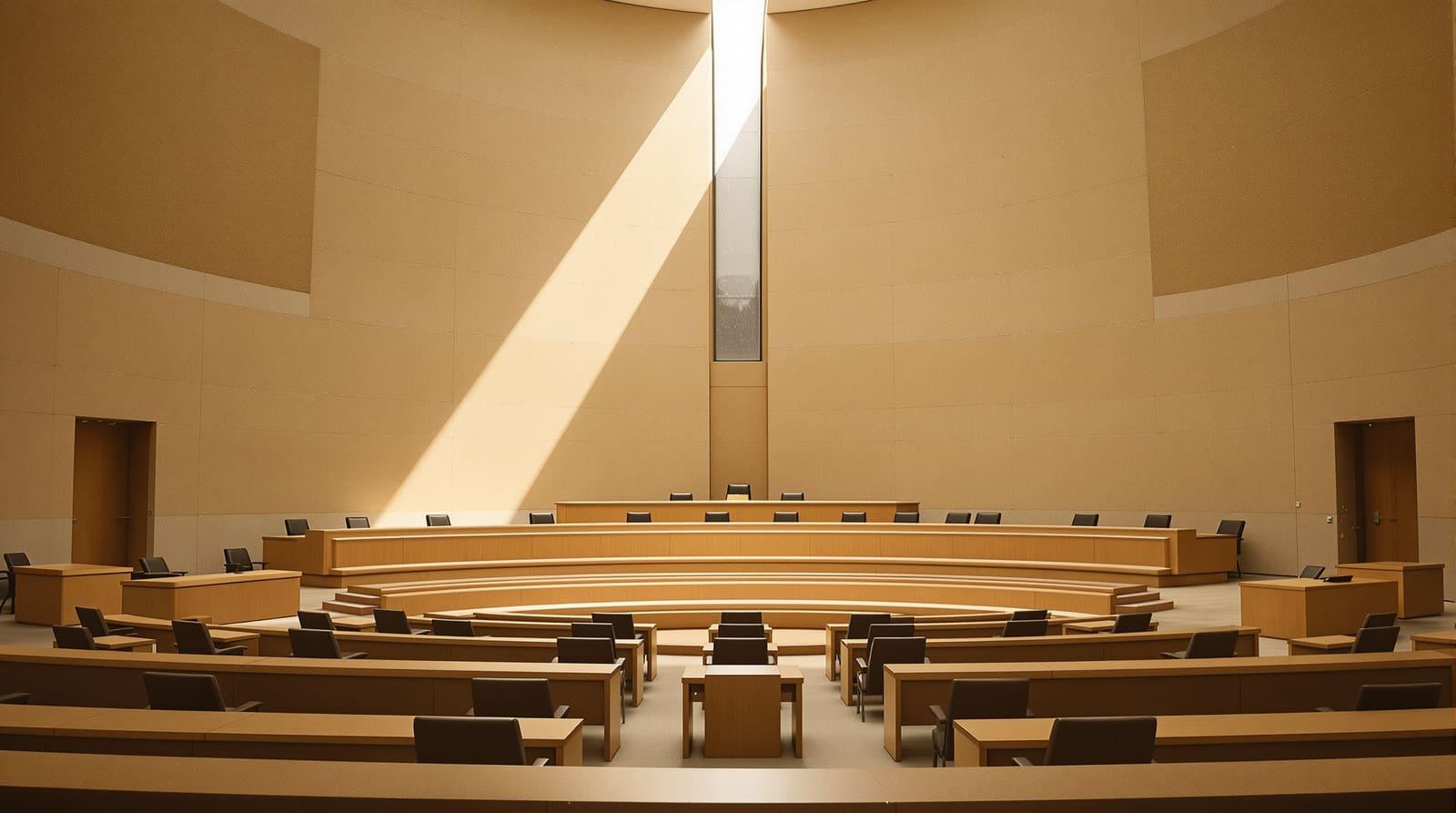
איור שנוצר בבינה מלאכותית, לא צילום של האירועים.
הכתבה המלאה עדיין לא נכתבה בעברית, ולכן היא מובאת כאן באנגלית.
The president of Israel's Supreme Court sharply criticised the Israel Defense Forces (IDF) and the police over violence by Jewish settlers in the West Bank, during a hearing on a petition brought by Palestinians from the village of Burqa. Ynet reported that the petitioners say they have suffered systematic violence from residents of nearby outposts, and that Justice Amit questioned how the enforcement authorities allow such a widespread phenomenon to take place in plain sight.
According to Ynet, the judge described the attackers as rioters who operate like militias while the security forces watch, saying they break in, beat people brutally, injure, steal, set fires and cause destruction. He demanded that the head of the army's Central Command and the commander of the police's Judea and Samaria district explain what they intend to do to fulfil their duty. The Times of Israel reported that he called the settler violence a "desecration of God's name" and a "threat to Zionist vision" that "fuels antisemitism".
The court and the hearing
Israel's Supreme Court has two roles. It is the country's highest court of appeal, and when it sits as the High Court of Justice, known in Hebrew by the acronym Bagatz, it hears petitions directly against state bodies, including the army and the police. Palestinians living in the West Bank can petition it over the conduct of Israeli authorities, which is how a case from Burqa came before the court.
The court's president presides over the institution as a whole. In this hearing, the reports say, his remarks were directed not at the settlers themselves, who were not the respondents described in the coverage, but at the bodies responsible for law enforcement in the area. A brief alert from Ynet's news alerts channel framed the episode as harsh criticism of the IDF by the High Court, quoting the line that Jewish violence in the area happens before the army's eyes.
Who is responsible for enforcement
The two officers the judge named reflect how security is divided in the West Bank. The IDF's Central Command is the regional command whose general, holding the rank known in Hebrew as aluf, carries military responsibility for the territory. The Israel Police runs a separate Judea and Samaria district, referred to in Hebrew by the acronym Shai, which handles policing of Israeli civilians there. "Judea and Samaria" is the official Israeli term for the West Bank, and the Ynet alert used its Hebrew abbreviation.
השבוע בישראל בחמש ידיעות, בכל יום שישי
מקורות ובדיקה של מערכת Israel.com, עם זמני השבת. חינם, ואפשר להפסיק בלחיצה אחת.
רשימה אחת, הסרה בלחיצה. הפרטים במדיניות הפרטיות שלנו.
By asking both commanders to set out their plans, the judge addressed the military and the civilian police together, rather than treating the issue as belonging to one of them alone.
Outposts and settler violence
The petition concerns residents of outposts. In Israeli usage, an outpost is a settlement point established in the West Bank without formal government approval, as distinct from authorised settlements. The petitioners, according to Ynet, describe repeated violence by people living in such outposts near Burqa, rather than a single incident.
איור
הכתבה הבאה משפט ופלילים
העליון הורה על משפט חוזר לגינקולוג שהורשע באונס, בשל טעות של שופטיו
Violence by Jewish settlers against Palestinians is a long-running subject of legal challenges, international criticism and debate inside Israel, and petitions to the High Court are one of the routes Palestinians use to press the authorities to act. What stands out in this hearing is the language from the bench: the reports describe the head of the judiciary using militia imagery and religious terms to describe the attacks.
The religious and political language
The phrase "desecration of God's name" reported by The Times of Israel is the English rendering of the Hebrew concept hillul Hashem, a term from Jewish tradition for conduct by Jews that brings disgrace on God and on the Jewish people. Its use by a senior judge carries weight with religious and traditional Israelis, including many in the settler community.
The Times of Israel also reported that he linked the violence to a threat to the Zionist vision and to rising antisemitism, tying events in the West Bank to Israel's founding ideals and to the position of Jews abroad. Ynet's account focused instead on the operational demand: that the army and police explain what they will do.
What the reports do not say
None of the reports gives a response from the IDF, the Israel Police or the two commanders named, and none says whether the court set a deadline or issued a formal order requiring their answers. The coverage does not detail specific incidents cited in the Burqa petition, identify the petitioners or say which outposts are involved. The Times of Israel's account is available only as a headline in the material, so the full context of the remarks it quotes is not set out.
להמשך קריאה
למדור משפט ופלילים →
איור
משפט ופלילים
ארה"ב בוחנת את פסיקת בית הדין בהאג נגד מיאנמר, ובישראל שוקלים את ההשלכות
איור
משפט ופלילים
דנה אולמרט מתלוננת על מעצר אלים בתל אביב, המשטרה טוענת שתקפה שוטרים

איור
משפט ופלילים
ש"ס ויהדות התורה מקדמות חוקים לעצירת מעצרי בני ישיבות עד הקמת ממשלה חדשה
איור
משפט ופלילים
הכנסת תצביע ביום רביעי על ועדת חקירה ל-7 באוקטובר ועל מעצרי חרדים שלא התגייסו
אפשר לראות את Israel.com ראשון בכתבות המובילות של Google.הוספה כמקור מועדף ב־Google
מקורות וקריאה נוספת
פתחנו ובדקנו כל קישור כאן בזמן כתיבת העמוד. הודעות רשמיות מסומנות ככאלה: זו הגרסה של הגורם עצמו, לא גרסה עצמאית.
- כתבותyediothynet.co.ilYnet
- כתבותyediotht.meYnet alerts
- כתבותtoitimesofisrael.comThe Times of Israel
איך בדקנו את זה
The hearing and the judge's criticism were reported by Ynet, in an article and a news alert, and by The Times of Israel. The religious and Zionist phrasing is attributed only to The Times of Israel's headline, and the militia remarks and demands to the commanders only to Ynet.
מדיניות המקורות והתיקונים שלנו →השבוע בישראל, במייל אחד
הכתבות החשובות, עם מקורות ואחרי בדיקה של מערכת Israel.com. חינם, פעם בשבוע, ואפשר להפסיק בלחיצה אחת.
רשימה אחת, הסרה בלחיצה. הפרטים במדיניות הפרטיות שלנו.
הכתבות האחרונות

איור
איור

איור
איור

צילום ארכיון

צילום ארכיון