Cabinet Blocks the One October 7 Inquiry That Can Compel Testimony
Ministers declined to create the one body that can compel witnesses to testify, days before a High Court deadline, and the opposition accused them of escaping responsibility.
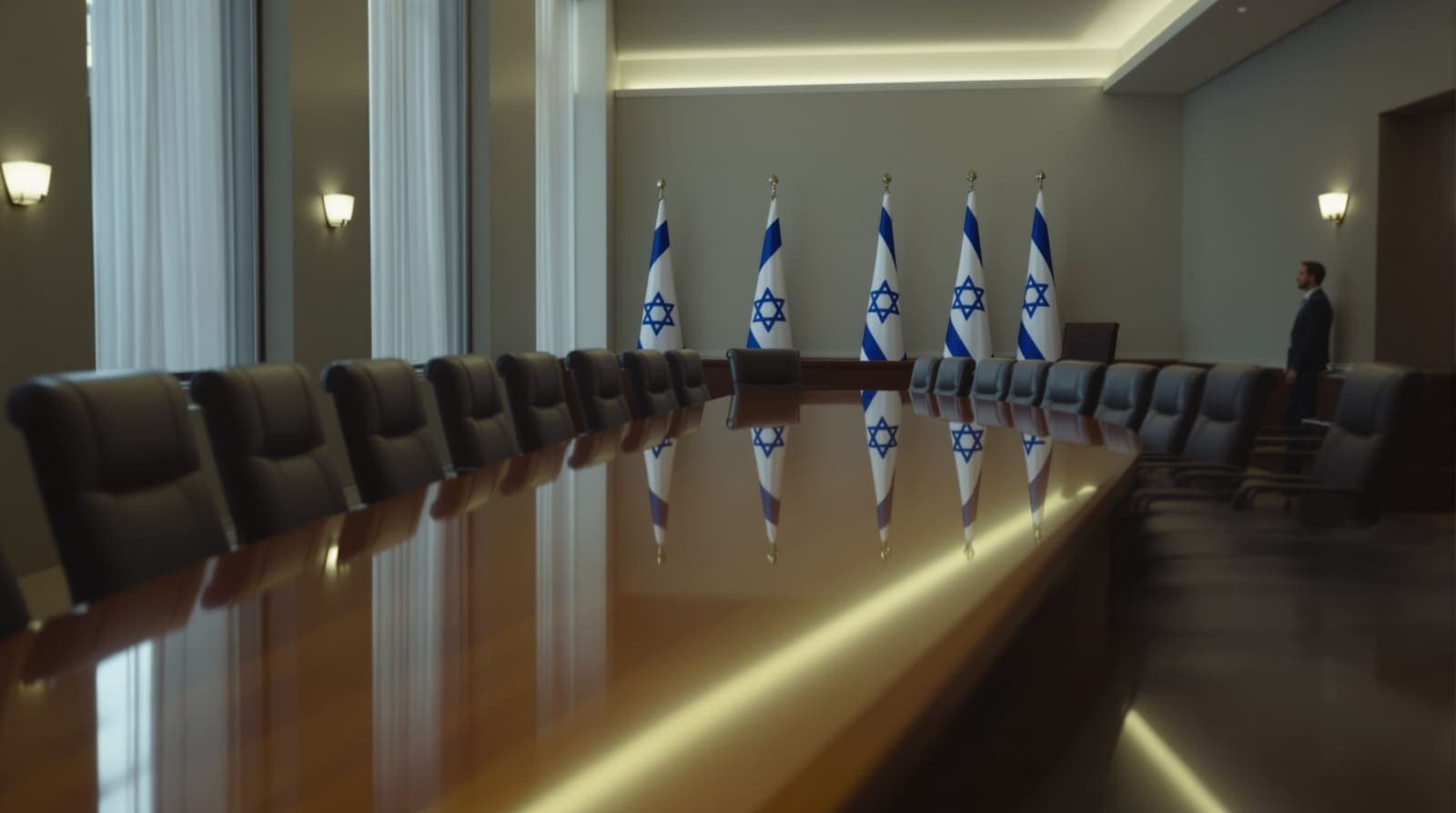
AI illustration, not a photo of the events.
Israeli opposition leaders attacked the government on Monday after the cabinet decided not to establish a state commission of inquiry into Hamas’s attacks of 7 October 2023. “The only meaning of not establishing a state commission of inquiry is that the October 7 disaster will happen to us again and again,” wrote the opposition leader and former prime minister Yair Lapid. “If we don’t investigate what led to the disaster, we won’t be able to draw lessons and ensure that it won’t happen again.” Lapid added that Prime Minister Benjamin Netanyahu had tried to block state inquiries into the Mount Meron disaster and the submarine affair, and that a commission would be established this time as well.
Netanyahu has resisted the demand, saying he opposes what he called a politically biased probe; critics accuse him of delaying an inquiry and seeking to narrow its remit. The decision came against a deadline: after petitions filed by hostages’ families, bereaved families and former members of the Knesset, Israel’s High Court of Justice had ordered the government in February to state its position on such an inquiry by 11 May. Israeli media reported that the cabinet wanted the law on how commissions are appointed changed before it would agree. Benny Gantz, an opposition member of the Knesset, responded: “The public is not stupid. The only reason a state commission of inquiry is not being established is an attempt to escape responsibility.”
What a state commission of inquiry actually is
The argument is not about whether to investigate but about which instrument to use, and the difference is real. Under Israel’s Commissions of Inquiry Law of 1968, the government decides to establish a state commission on a matter of vital public importance, but the members are then appointed by the president of the Supreme Court, and the body must be chaired by a serving or retired judge. According to the Israel Democracy Institute, such a commission can compel witnesses to testify and to hand over documents, take evidence on oath, and impose fines for evasive answers or perjury; refusing to appear without reasonable cause is a criminal offence carrying up to two years in prison. A commission usually has three members and sets its own lines of investigation.
A commission appointed by politicians has none of that architecture. Its members are chosen by political actors, its chair need not be a judge, and the government defines the topics it may examine.
The Meron precedent hanging over the argument
Israel’s last state commission of inquiry examined the crush at the Mount Meron pilgrimage site in which 45 people died, described at the time as the country’s worst civilian disaster. Its final report, published on 6 March 2024, held several public officials personally responsible, Netanyahu among them, Israel Hayom reported. The commission declined to make an operative recommendation against the prime minister because of the elected nature of the office, but recommended that the then public security minister and the then religious services minister not serve as ministers again, and that the police commissioner be removed. Commissions may make personal findings of that kind, and the government is not obliged to act on them.
Israel's week in five stories, every Friday
Sourced and checked by the Israel.com newsroom, with Shabbat times. Free, one-click unsubscribe.
One list, unsubscribe in a click. See our privacy policy.
What the army's own investigations had already found
The military and the Israel Security Agency had completed internal reviews of the failures before and during the attack, but those covered operations, intelligence and command only, not decisions taken by the political leadership. Summaries released in the weeks before the cabinet vote found that some 5,000 fighters from Hamas and Palestinian Islamic Jihad attacked Israeli communities and overran army border positions, that the chain of command broke down in the chaos and that soldiers were outnumbered. The probes also concluded that the army had misread Hamas’s intentions for years, misinterpreted intelligence as the attack approached, and was more focused on Iran and on Hezbollah in Lebanon. At least 1,180 people were killed and 252 Israelis and foreigners taken hostage on 7 October; of the 59 hostages who remained at the time of the statement, 36 were believed to be dead.
What happened after this decision
The dispute did not end there. In November 2025 the cabinet moved to appoint a government-run commission instead of a state one, The Times of Israel reported, forming a ministerial panel to define the scope, topics and timeframe of the probe; bereaved families and opposition leaders called it an attempt by the accused to appoint their own investigators. In April 2026 the High Court declined to order a state commission outright and instead gave the government until 1 July 2026 to produce a suitable framework, the paper reported, with the seven-justice panel saying the time had long since come to begin investigating 7 October.
What is still unclear
The cabinet did not publish a reasoned decision explaining why it declined, and it did not say which legislative changes it wanted before agreeing. It gave no alternative mechanism at the time for examining decisions taken by the political leadership, the one area the army’s internal probes did not touch. Nor did it say how it would answer the High Court by the 11 May deadline.
Read next
All government →
File photo
Government
Report says Netanyahu told diplomats to back Argentina on Falklands talks

Illustration
Government
Paris shops board up and the Louvre shuts as France braces for weekend protests

File photo
Government
US memo on Iranian plots against officials informs Mideast embassy staffing

Illustration
Government
US orders families out of Saudi Arabia and trims embassy staff, CNN says
Sources and further reading
Every link below was opened and checked when this page was written. Official statements are marked as such: they are the subject's own account, not an independent one.
- ReportingIsrael Hayomisraelhayom.comCommission finds Netanyahu among officials personally responsible for deadly Mt Meron disaster
Findings and recommendations of the last state commission of inquiry, March 2024
- ReportingThe Times of Israeltimesofisrael.comGovernment moves to appoint own probe into Oct. 7, nixing state commission of inquiry
The November 2025 decision to create a government-appointed commission instead
- ReportingThe Times of Israeltimesofisrael.comCourt doesn't order state inquiry into Oct. 7, gives government 2 months to decide on probe
The High Court's April 2026 ruling and its 1 July 2026 deadline
- ReferenceIsrael Democracy Instituteen.idi.org.ilState Commissions of Inquiry and the Differences from the Government's Politically Appointed Commission
How a state commission is appointed and what powers it holds under the 1968 law
How we checked this
The cabinet decision, the quotations from Yair Lapid and Benny Gantz, the High Court's February order and the summaries of the army probes are as reported on 5 May 2025 in the original release. The description of how state commissions are constituted was checked against the Israel Democracy Institute, the Meron findings against Israel Hayom, and subsequent developments against Times of Israel reporting from November 2025 and April 2026.
Our sourcing and corrections policy →The week from Israel, in one email
The stories that mattered, sourced and checked by the Israel.com newsroom. Free, weekly, one-click unsubscribe.
One list, unsubscribe in a click. See our privacy policy.

Israel.com is free, and readers like you keep it that way.
The Israel.com newsroom checks every story against its sources and publishes it free. If this one helped, a contribution of any size keeps the next one free too.
One payment, nothing to sign up for. Another amount
Latest
- IDF fires interceptor at suspected aerial target over southern Lebanon
- Soldiers killed near Hebron named and buried as army operation goes on
- Truck driver arrested after fatal crash on Route 465 near Aboud
- IDF says about 220,000 dunams of West Bank olives harvested so far
- Troops detain Palestinian suspected of planning imminent attack in Binyamin area
- Man of about 25 shot dead in Yafia, near Nazareth, during a taxi ride