
Mount Carmel and Haifa Bay
Haifa
Israel's third city climbs a mountain: a World Heritage garden staircase on Mount Carmel, a working port at its foot, and a mixed Jewish and Arab downtown in between.
City population
about 297,000
Israel's third-largest city, 2024
Bahai terraces
19
climbing close to a kilometre up Mount Carmel
Highest point on the ridge
over 500 m
Mount Carmel; published figures for the summit run from 525 m to 546 m
The Carmelit
6 stations
one tunnel, 274 m of climb, open since 1959
Deep-water harbour
opened 1933
still the country's principal seaport
Things to do
11 sites, each with its own page
in Haifa
Restaurants
11 picks
in Haifa
Hotels
10 picks
in Haifa
Getting there
6 routes
in Haifa
When to go
Month by month
in Haifa
חֵיפָה · Mount Carmel and Haifa Bay, northern coast
Haifa is Israel's third city and the country's principal seaport, and the only Israeli city that really has to be described vertically. It climbs the northern slopes of Mount Carmel in three tiers: the port and the industrial bay down at sea level, the older downtown and the Hadar district on the slope above, and the leafy Carmel neighbourhoods along the ridge where the hotels and the views are. Britannica describes exactly that arrangement, and an underground railway has been stitching the layers together since 1959.
Cutting straight down the mountain through all three is the most photographed thing in northern Israel: nineteen garden terraces, kept to a standard that borders on the surgical, with the golden-domed Shrine of the Bab on the terrace at their centre. They belong to the Bahai World Centre, they were given UNESCO World Heritage status in 2008, and, to the surprise of most first-time visitors, they cost nothing to enter.
The rest of Haifa is a working city rather than a resort. Close to 300,000 people live here, Jewish, Muslim and Christian, with the Druze villages of the Carmel just up the ridge, in what is often called Israel's most successfully mixed city, a description the municipality embraces and not every resident accepts. Refineries still smoke in the bay, though the state has voted to take them out. Four Nobel laureates in chemistry have been associated with its institute of technology. And the pine forest above the city burned catastrophically in December 2010.
Geography
A city stacked in three tiers up a mountain
Mount Carmel is a limestone ridge some 39 km long that runs north-west from the Jezreel valley and stops abruptly at the sea. Haifa occupies the last few kilometres of it, the headland and the slope behind, wrapped around the southern shore of a wide bay. The ridge tops out somewhere above 500 m: reference sources disagree, putting the summit at 525 m or at 546 m. The part the city is built on is lower, but steep enough that Haifa's three districts sit at genuinely different altitudes and, in winter, in genuinely different weather.
The lowest tier is the port, the railway and the industrial bay: cranes, tanks, container stacks, the shipyard. Above it is the downtown and Hadar, the dense inter-war and post-war city, where the markets and most of the cheap food are. Highest is Carmel, the ridge itself, where the hotels, the university and the good views cluster along the escarpment. Britannica sets out the same three-tier structure and notes that an underground railway connects them.
The practical consequence for a visitor is that Haifa cannot be done as a flat walk. Every itinerary here is a decision about how to gain or lose the best part of 300 vertical metres (the Carmelit's tunnel alone climbs 274 m) and the answer is usually the funicular, a bus, or a taxi, rather than your legs. The pay-off is that almost every street on the upper slope has a view down the mountain and out over the bay towards Akko and the Galilee headlands beyond it.
- Sea level: port, bay industry, railway, cruise terminal
- Mid-slope: downtown, Wadi Nisnas, Hadar, the German Colony
- Ridge: Carmel Centre, hotels, University of Haifa, Louis Promenade views
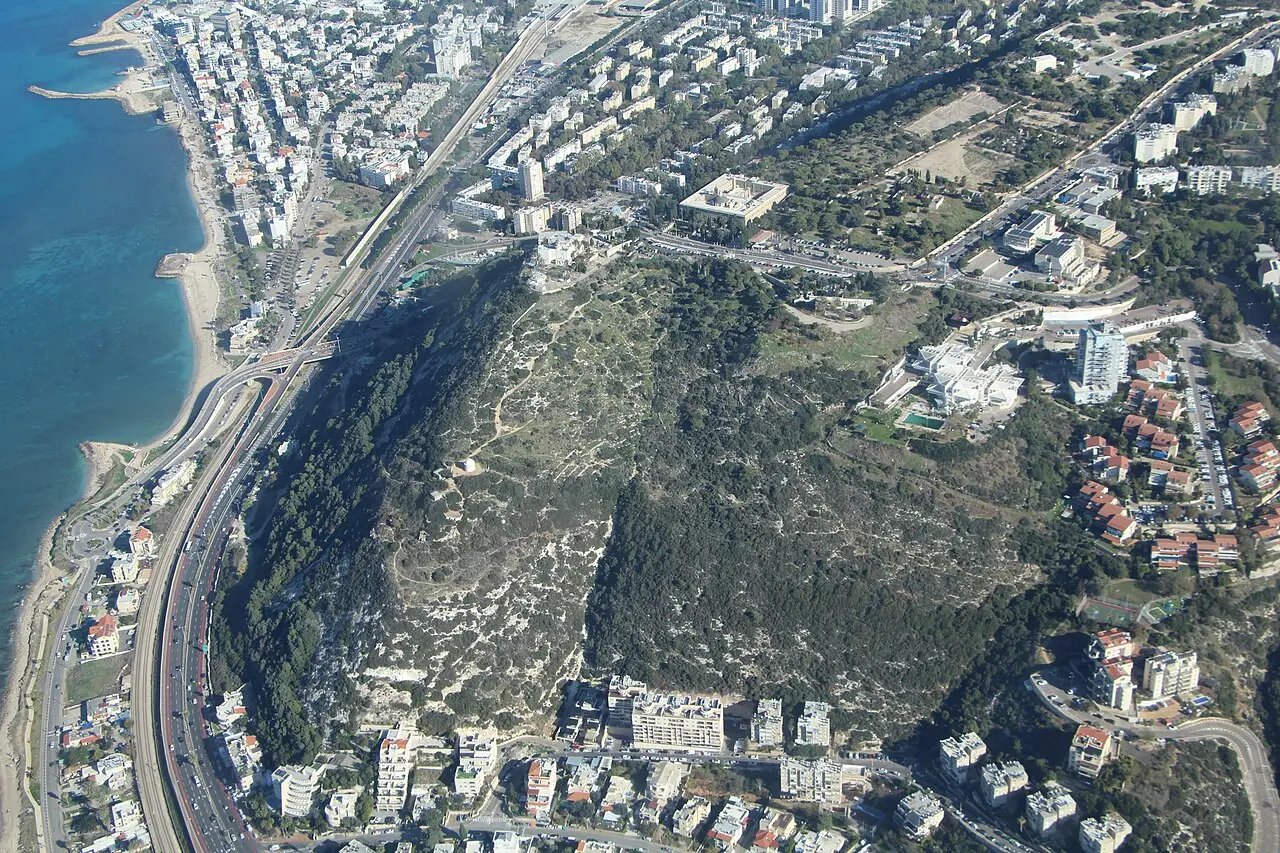
Eldar Eldadi (אלדר אלדדי) / CC BY-SA 4.0 · Wikimedia Commons

World Heritage
The terraces of the Shrine of the Bab
The Bab was a nineteenth-century Iranian religious figure, the herald of the Bahai Faith, executed in a public square in Tabriz on 9 July 1850. His followers hid his remains for about fifty years before bringing them to the Holy Land, where a plain stone building was raised for them on Mount Carmel and later crowned with the monumental superstructure and golden dome you see today. That is the Bahai World Centre's own account of how the shrine came to be here.
The gardens around it were extended into a staircase of nineteen terraces that climbs close to a kilometre up the northern slope, opened to the public in June 2001 to a design by the architect Fariborz Sahba. From the German Colony below, the whole composition reads as a single axis: an avenue, a gate, a rising ladder of hedges, stairs and fountains, and the gold dome set exactly in the middle of it. In 2008 the Bahai holy places in Haifa and the western Galilee went onto the UNESCO World Heritage List, as Britannica records, and both shrines are described by the Bahai World Centre as recognised by UNESCO.
It is a place of pilgrimage first and a sight second, and it is run accordingly. Entrance is free, per the gardens' own site in 2026. Dress covering shoulders and knees is required, with no tears in the fabric. Photography is fine except inside the shrines, water is the only thing you may bring to drink, and there is no smoking, no food and no chewing gum anywhere in the gardens. Paths are pebbled, so the operator's advice to wear shoes with grip is not decorative.
- Entry is free at all three access points
- Balcony viewpoint, 61 Yefe Nof: 09:00-17:00
- Main entrance, 80 Hatzionut: shrine and inner gardens 09:00-12:00, outer gardens to 17:00
- German Colony plaza, 21 Hagefen: 09:00-17:00
- Closed on Bahai holy days and on Yom Kippur, and sometimes in rainy weather

The port
The deep-water harbour that made the modern city
Haifa was a minor place until it had a harbour. The Ottoman-era town was destroyed and rebuilt on its present site by Daher al-Umar, the Arab ruler of Acre and the Galilee, in the 1760s; the German Templers founded their colony at the foot of the mountain in 1868; British forces took the town from the Ottomans in September 1918. What turned it into a city was the deep-water harbour, developed under the British Mandate and formally opened on 31 October 1933 by the High Commissioner, Lieutenant-General Sir Arthur Wauchope. Britannica calls Haifa Israel's principal port, and the harbour it means is that one.
The port complex today is not one operation but several. The historic quays along the city waterfront are run by India's Adani Group, the newer Bay Terminal, inaugurated on 1 September 2021 and built to take container ships of more than 15,000 TEU, is operated by Shanghai International Port Group, and Israel Shipyards runs a smaller facility alongside; the Times of Israel listed all three when reporting on port operations in September 2024. Cruise ships come in beside the city centre, and the railway station is right there, which makes Haifa an unusually convenient port of call.
For a visitor the port is mostly a view rather than a destination, and it is a good one. From the Carmel ridge the whole bay opens out below: the container stacks, the tanks, the breakwaters, the ferries, and the coast running away north towards Akko. It is the least prettified thing in Haifa and a fair share of what the city is actually for.

Mixed city
Wadi Nisnas: a market, a festival and a city that mixed
Wadi Nisnas grew up at the end of the nineteenth century as a Christian Arab quarter outside the walls of the old town. In 1948 most of Haifa's Arab population left or was expelled, and those who stayed were concentrated into this one downtown neighbourhood; Britannica puts the number who remained at around 3,000, out of more than 50,000 before the war, while the Wikipedia account of the neighbourhood gives roughly 3,500. Today the wadi has about 8,000 residents, two-thirds of them Christian and most of the rest Muslim, and it is still the heart of Arab Haifa.
It is also where you eat. The wadi is a warren of narrow streets and stairs with a street market at its centre: greengrocers, spice sellers, bakeries turning out za'atar and cheese pastries, butchers, and hummus counters that are taken extremely seriously by people who have opinions about hummus. Go in the morning, when the market is trading and the queues at the good places have not yet formed.
Since 1993 the neighbourhood has hosted the Holiday of Holidays, run by the Haifa municipality with the Beit Hagefen Jewish-Arab centre and the Wadi Nisnas residents' committee. It falls on December weekends, when Hanukkah, Christmas and, in some years, Ramadan run close together, and it puts a Christmas tree, a menorah and a crescent and star up in the same streets. It is not a neutral thing to do and the city knows it; Haifa's reputation as a working model of coexistence is long-standing, contested, and older than the festival. Reporting from the neighbourhood in December 2024, after months of Hezbollah rocket fire on the city, the Times of Israel found the festival going ahead again, having been cancelled the previous year out of respect for the war.

Technion
The institute that arrived a generation before its students
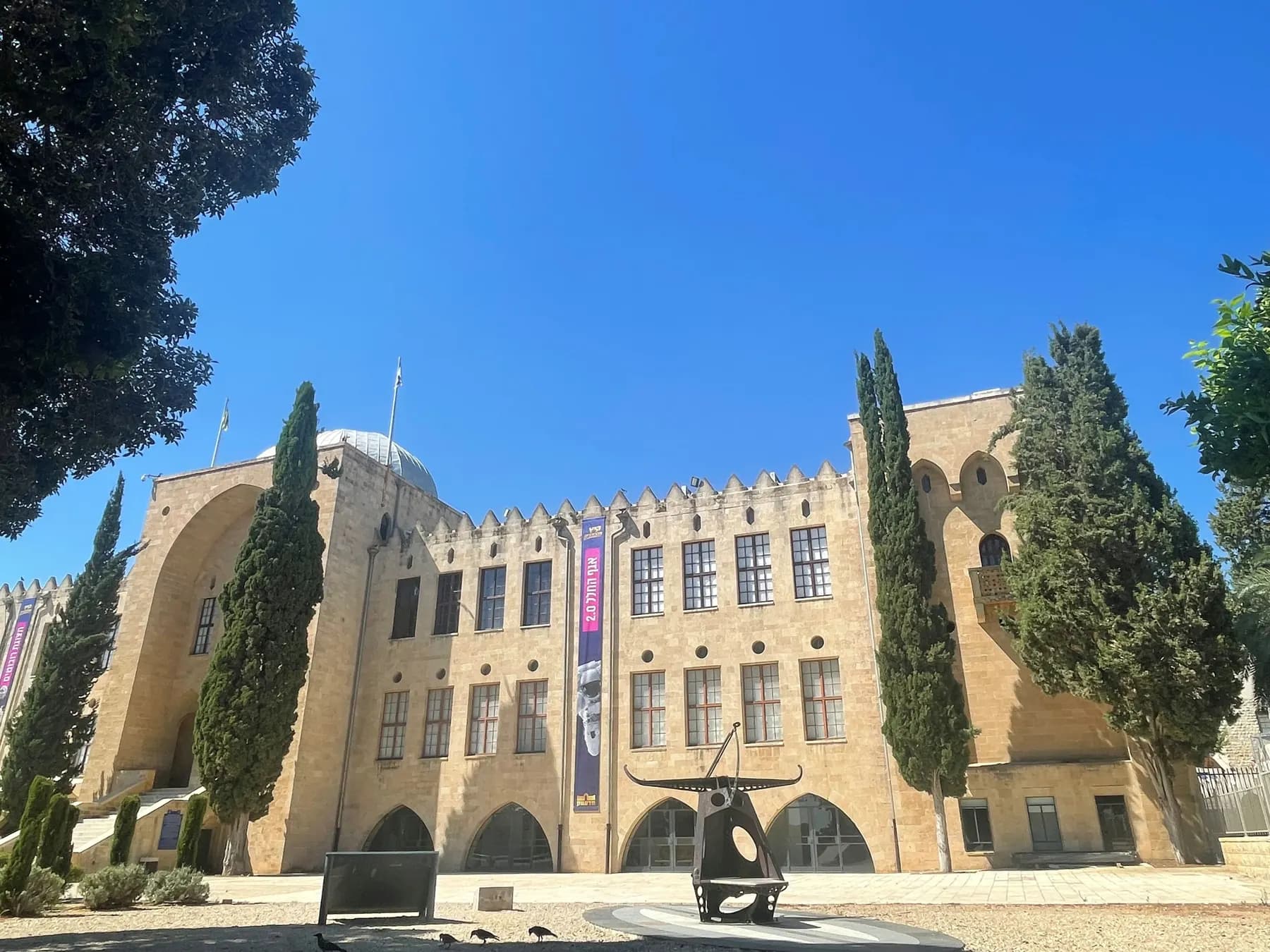
The idea of a Jewish technical college in Palestine was put to the Fifth Zionist Congress in 1901 by Martin Buber, Chaim Weizmann and Berthold Feiwel. The building went up in Haifa long before the teaching did. The cornerstone was laid on Mount Carmel in 1912 (Britannica gives 1912 as the founding date and 1924 as the opening) and in the interval came a public row over the language of instruction: the board chose German in October 1913 and reversed itself in favour of Hebrew in February 1914. Classes in civil engineering and architecture finally began in the winter of 1924-25, and the first cohort of seventeen graduated in 1929. The original building, in Hadar, is now a museum of science.
The Technion has since become the engine room of Israeli engineering, and its record in chemistry is remarkable for an institution of its size: Aaron Ciechanover and Avram Hershko shared the Nobel Prize in Chemistry in 2004 and Dan Shechtman won it in 2011 for quasicrystals, all three on the faculty, while the Technion graduate Arieh Warshel won it in 2013. The institute's own website claims a global ranking of sixth for entrepreneurship and innovation.
Haifa's technology sector grew up around that. The Matam park at the southern entrance to the city was the first dedicated high-tech park in Israel when it opened in the 1970s, and the University of Haifa, founded in 1964, sits higher up the ridge with a view over the Galilee. None of it is a tourist attraction as such, but it explains a good deal about why a mid-sized industrial port city has the bookshops, cafes and lecture audiences that it does.
Industry
The refineries in the bay, and the plan to remove them
Haifa has refined oil since 1939 and, alongside it, has run steel foundries, cement, shipbuilding, food processing, textiles and chemicals; Britannica lists them all. The visible expression of this is the Haifa Bay petrochemical complex, dominated by the Bazan refineries, and for decades the argument about it has been the same argument: it is a large employer, a strategic asset, and a source of air pollution sitting immediately upwind of several hundred thousand people.
In 2022 the cabinet voted to shut the polluting facilities down, along with the fuel storage complex at Kiryat Haim, and set up a state directorate to manage what is a genuinely difficult industrial unpicking. The target date has moved: a 2025 report pushed it to 2031, and at the directorate's annual conference, held at the University of Haifa on 10 June 2026, its head, Yuval Admon, said the refineries and the Kiryat Haim complex would close in 2029, while conceding that the work is complex. The bottlenecks he named are physical ones, chiefly finding somewhere else to put 550,000 tonnes of distillates and 20,000 tonnes of cooking gas.
What is meant to follow is a new quarter of the city: 130,000 homes, a hospital, beaches, and a park of some 6,000 dunams, which the Times of Israel notes is close to twice the area of Central Park, with KKL-JNF committing NIS 100 million over three years towards the planting. Whether Haifa gets that park on that timetable is one of the open questions about the city's next decade, and worth knowing about if you look down at the bay and wonder what all the flare stacks are.
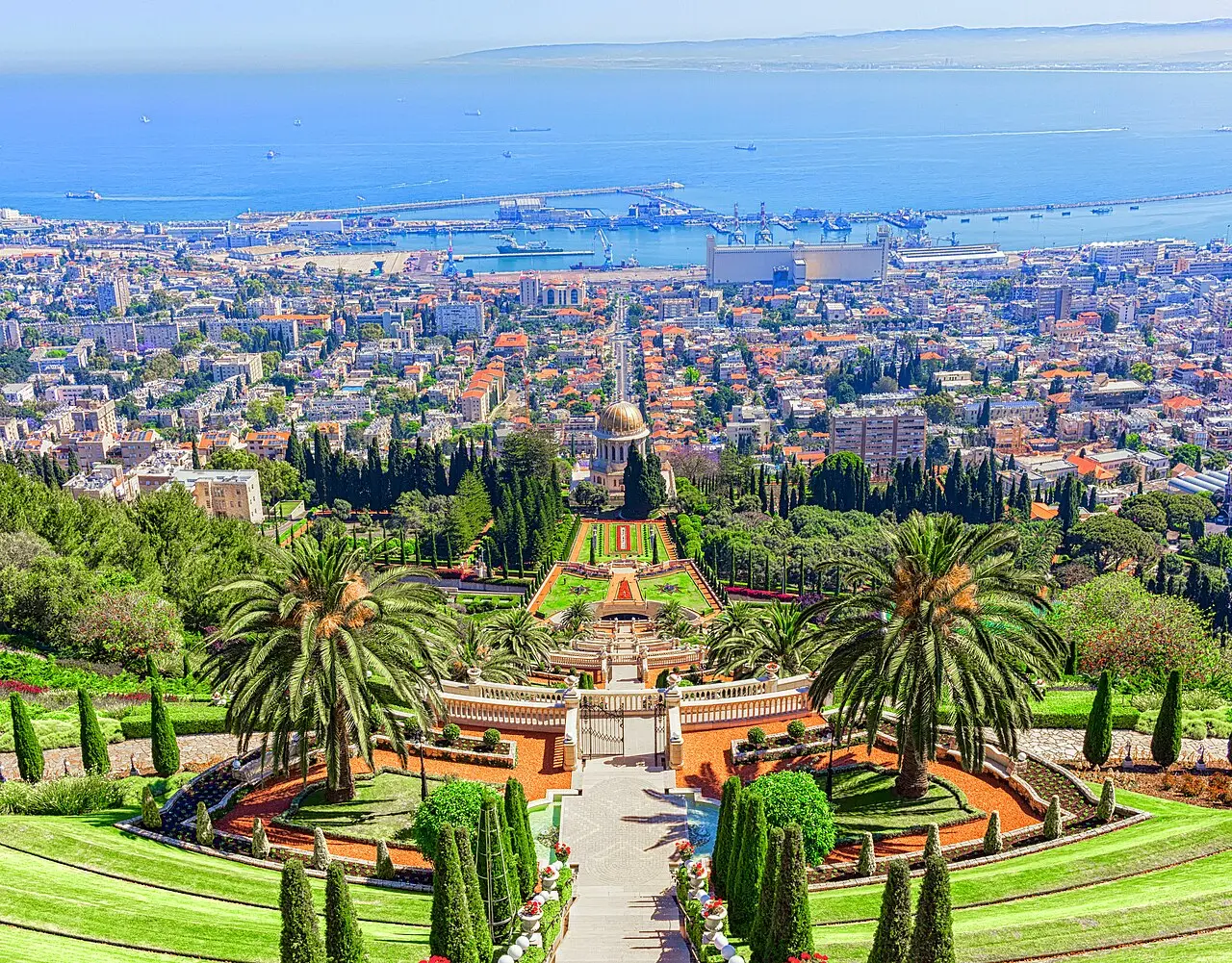
. Ray in Manila / CC BY 2.0 · Wikimedia Commons
Getting around
Six stations, one tunnel: the Carmelit
The Carmelit is an underground funicular: a pair of counterbalanced trains hauled on a cable through a single 1.8 km tunnel bored diagonally into Mount Carmel. It opened on 6 October 1959, has six stations, and lifts you 274 m from the downtown up to the Carmel Centre. Because the tunnel runs at a constant slope, the carriages are built as stepped boxes and their floors are never quite level except at Masada station, halfway up.
It has had a difficult life. It closed in December 1986 and did not reopen until September 1992, closed again in March 2015 with a cable fault, and shut for nearly two years after a fire at the Paris Square station in February 2017, reopening with new Doppelmayr cars in October 2018. It takes the standard Rav-Kav travel card.
It is not a serious commuter railway and it is not trying to be. Wikipedia calls it the smallest subway system in the world, on four cars, six stations and one tunnel. What matters to a visitor is that it saves a long uphill grind at the end of a day in the wadi. The operator's own site gives its hours in 2026 as Sunday to Thursday 06:00 to midnight, Friday 06:00 to 15:00 and Saturday 20:00 to midnight; check there before you plan a day around it.
December 2010
The Carmel fire, and the reckoning fifteen years on
On 2 December 2010 a fire started near the Druze town of Isfiya, on the ridge above Haifa, and, stoked by hot easterly winds, within two hours had become a wall of flame reported at 35 m high. It burned until 5 December. NASA's Earth Observatory recorded more than 12,000 acres, close to 50 square kilometres, of Mediterranean pine and oak forest destroyed (by the Wikipedia account, close to half the Carmel forest reserve), around 250 homes damaged or wrecked in the communities of Beit Oren, Yemin Ord and Ein Hod, and 17,000 people evacuated at the height of it.
Forty-four people were killed. Thirty-six of them were Israel Prison Service personnel, mostly new recruits, caught on a bus on the narrow, steep road up to Damon Prison when a tree fell across it; three senior police officers, three firefighters and the driver also died. The Times of Israel calls it the deadliest wildfire in Israel's history, and Wikipedia's account describes it as the deadliest civil disaster in the country until the Meron crush of 2021.
Fifteen years on, the reckoning is mixed. Reporting in December 2025, the Times of Israel found that of twenty high-risk locations earmarked for buffer zones in the state's pilot scheme only five had been completed, that the relevant five-year budget had been cut from NIS 65 million to NIS 50 million, and that regulations drafted after the disaster were still waiting for funding and approval.
For a visitor, none of this should keep you off the mountain. It should keep you off it with a cigarette. Fires on the Carmel are a summer and autumn hazard, open flame is prohibited in the forest, and the ridge roads can close at short notice when a fire is running.
On the ground
What to see at Haifa
The things worth building a visit around, in the order most people reach them.
The terraces from the Yefe Nof balcony
The viewpoint at 61 Yefe Nof, open 09:00 to 17:00, puts you at the top of the garden axis looking straight down nineteen terraces to the German Colony and the bay. Free, and no booking needed.
The Shrine of the Bab
The golden-domed shrine and the inner gardens are open only in the morning, 09:00 to 12:00, from the main entrance at 80 Hatzionut. Shoulders and knees covered; no photography inside.
The German Colony
The Templer colony founded in 1868 at the foot of the mountain, now a low avenue of restored stone houses and restaurants aligned on the shrine above. Best at dusk, when the terraces light up.
Wadi Nisnas market
A dense, unglamorous street market in the historically Christian Arab quarter, and the best eating in the city: bakeries, spice stalls and hummus counters. Mornings, before the queues.
Riding the Carmelit
Six stations, one diagonal tunnel and 274 vertical metres between downtown and the Carmel ridge, on a funicular that has been running since 1959. Rav-Kav accepted.
The Holiday of Holidays
December weekends in Wadi Nisnas and the German Colony, run since 1993 by the municipality with the Beit Hagefen Jewish-Arab centre. Street art, concerts, food, and three festivals sharing a street.
Go deeper
Every site in Haifa, in full
11 places here have a page of their own: what survives, what it costs, when it opens and how long to give it.
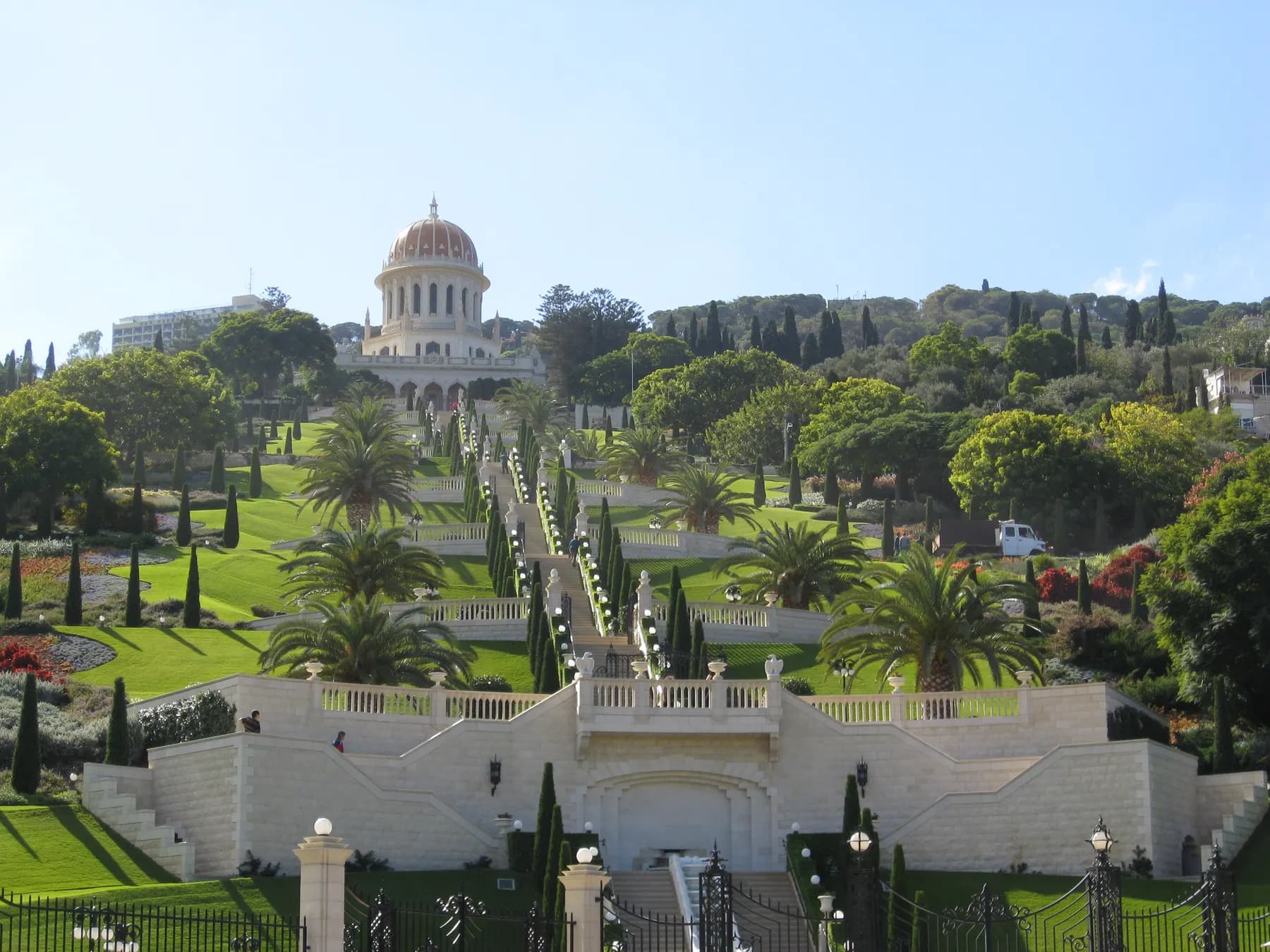
Chris Yunker from St. Louis, United States / CC BY-SA 2.0 · Wikimedia Commons
Religious site
Bahai Gardens and the Shrine of the Bab
Nineteen terraces climb 225 vertical metres of Mount Carmel around a shrine whose stone core was built to receive a body that had been hidden for most of a century.
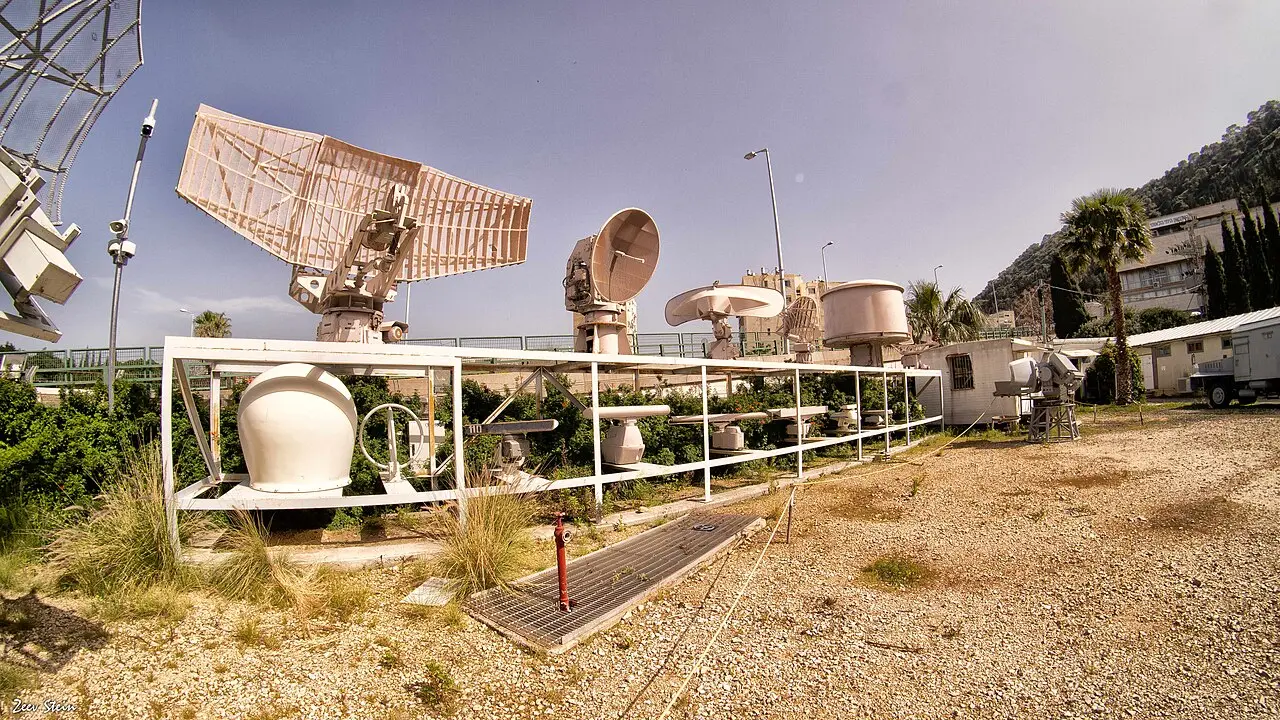
זאב שטיין / CC BY 2.5 · Wikimedia Commons
Museum
Clandestine Immigration and Naval Museum
A Ministry of Defence museum built around Af Al Pi Chen, a Royal Navy tank landing craft that sailed from Italy in September 1947 with 434 Holocaust survivors aboard and was boarded before she reached the coast.
Gal Ben-David / CC BY-SA 4.0 · Wikimedia Commons
Beach
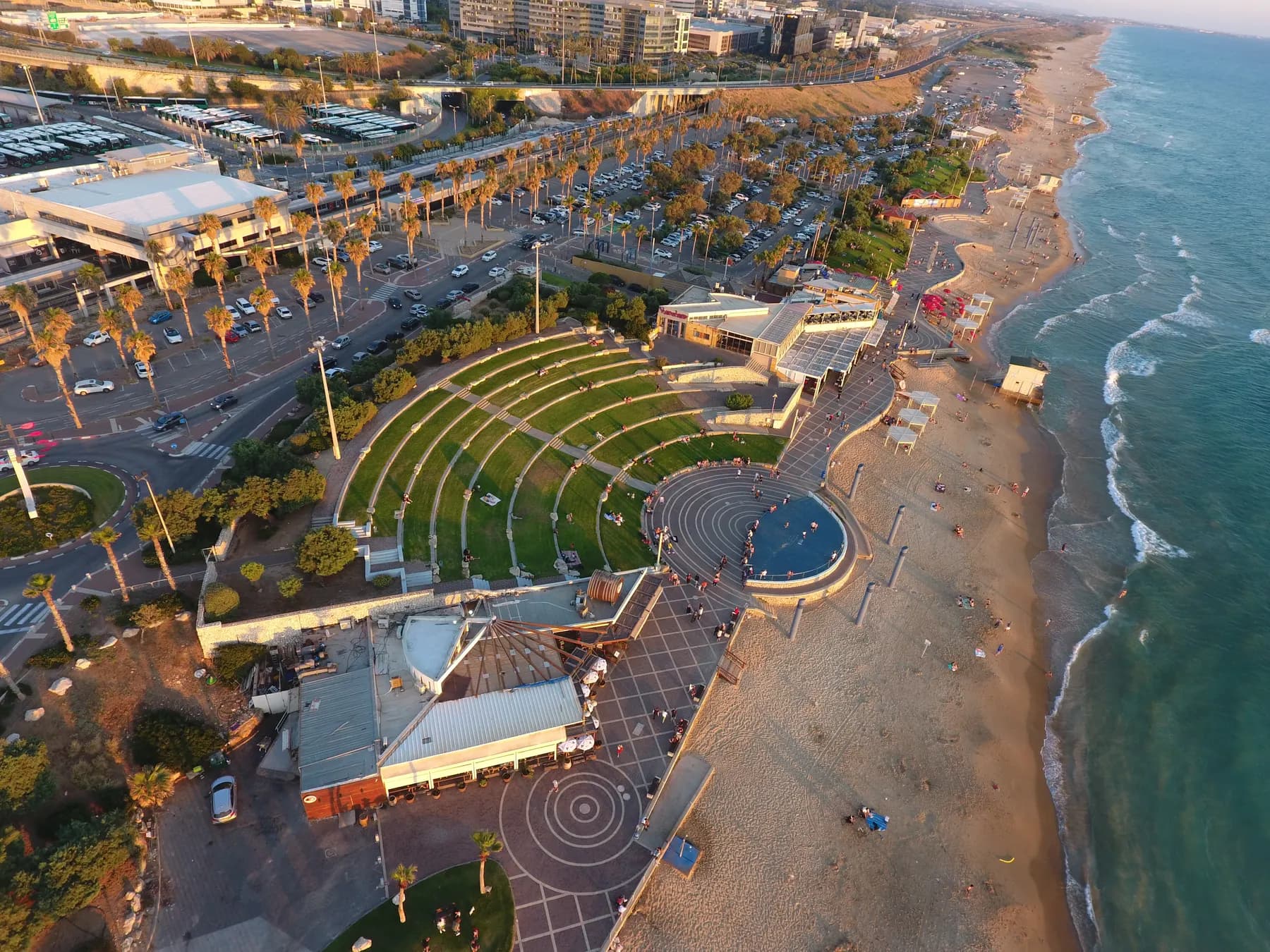
Dado Beach
Haifa's busiest free beach was built by the municipality and opened in the summer of 1979, and it is named for David Elazar, the chief of staff the Agranat Commission blamed for the Yom Kippur War.
מיכל פריימן / CC BY 2.5 · Wikimedia Commons
Religious site
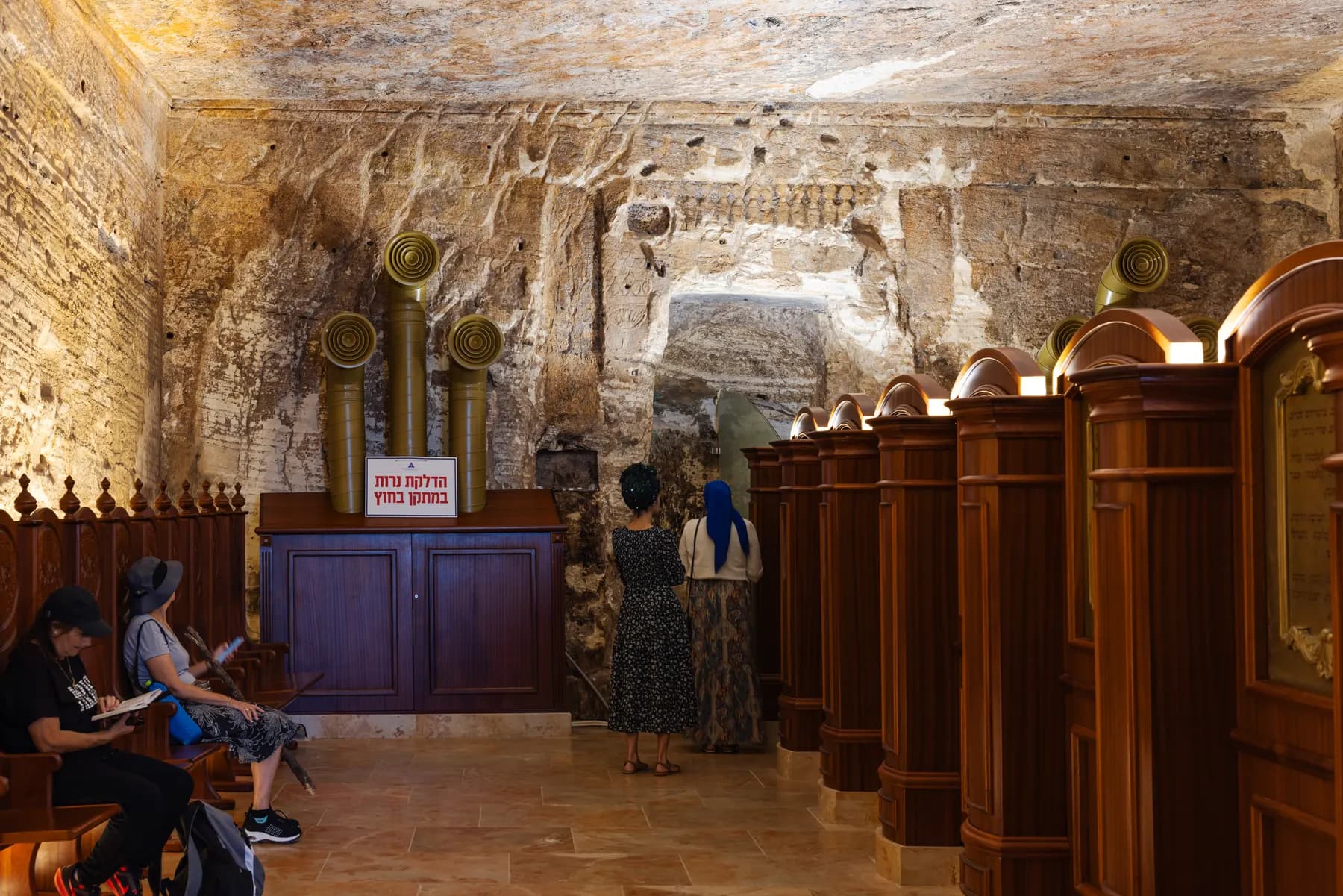
Elijah's Cave
A rock chamber at road level under Cape Carmel, measured by the Israel Antiquities Authority at 13.5 by 8.7 metres, whose walls carry about 150 graffiti in Greek, Latin, Hebrew and Arabic left by pilgrims of four religions.
אושרי רייכר / CC BY 2.5 · Wikimedia Commons
Neighbourhood
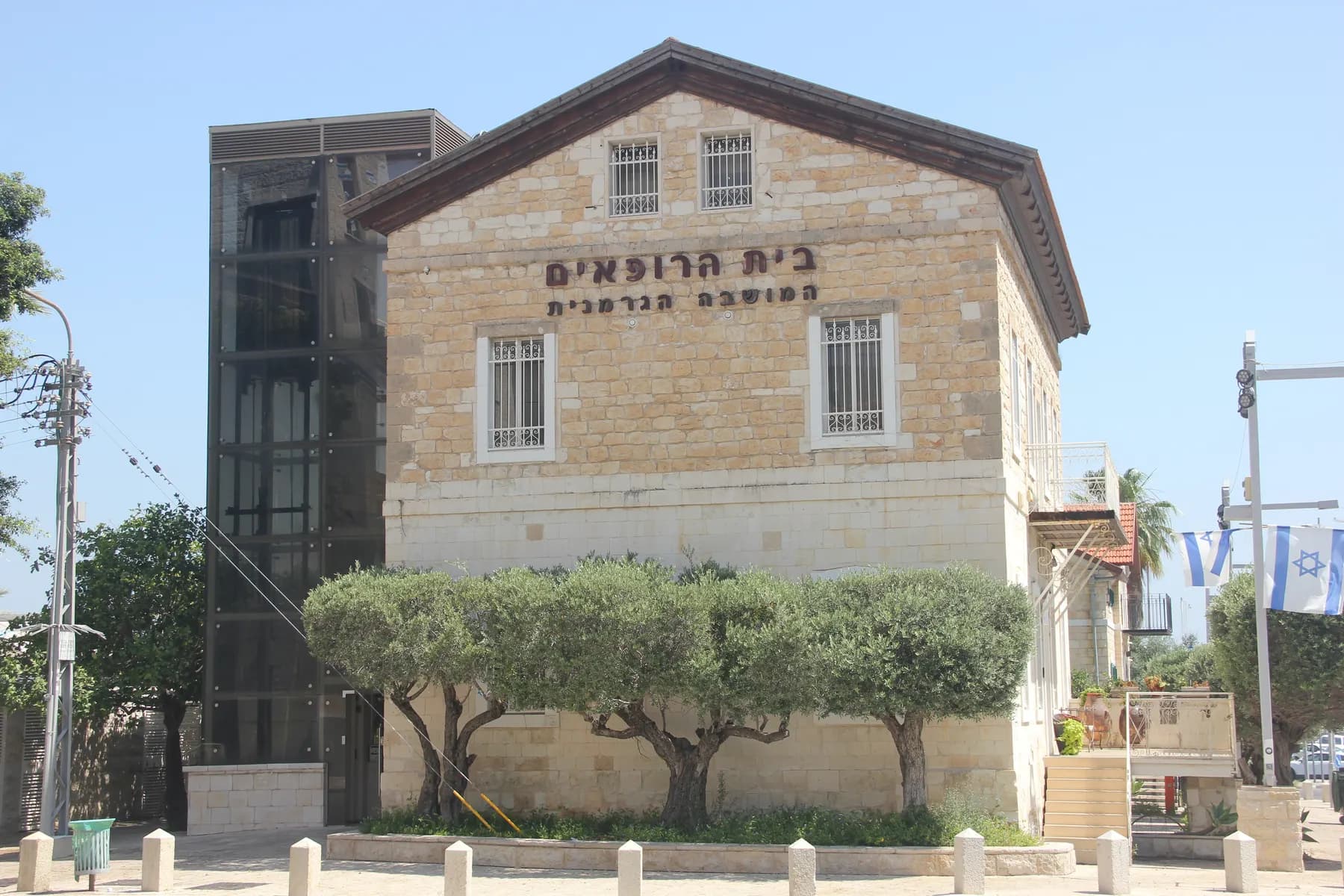
German Colony
A German Templer settlement of 1868 whose main street was laid out 30 metres wide, pointing from the anchorage straight up Mount Carmel at ground that was then the colony's vineyards and is now the Bahai terraces.
Orenshani7 / CC BY-SA 3.0 · Wikimedia Commons
Activity
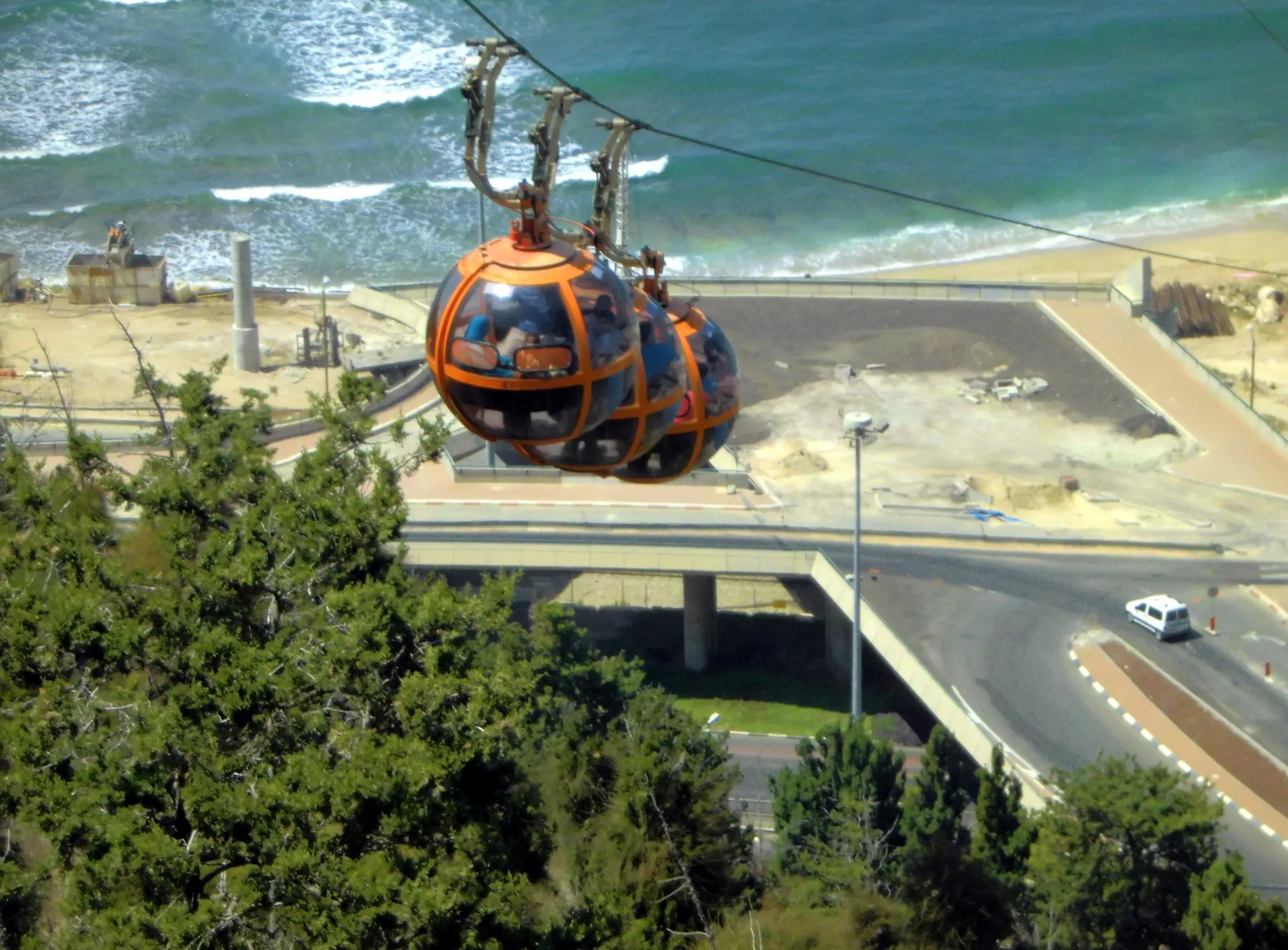
Haifa Cable Car
Six spherical cabins have been running the 355 metres from the Bat Galim promenade up to Stella Maris since 1986, three in each direction, and Haifa still calls them Gurel's eggs.
שועל / CC BY-SA 4.0 · Wikimedia Commons
Museum
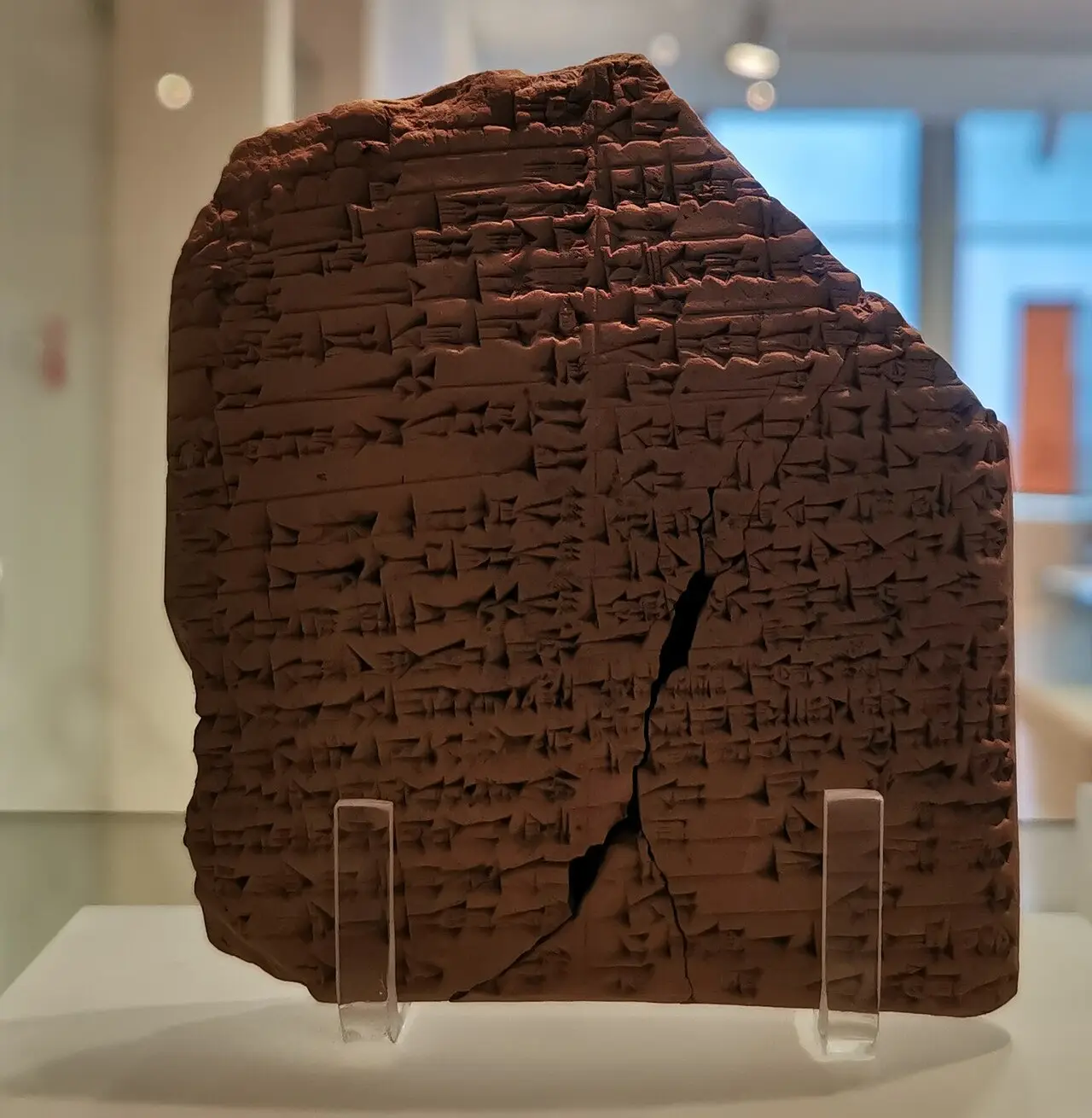
Hecht Museum
A free archaeology and art museum inside the University of Haifa's main building, built around the hull timbers of a merchant ship that sank off Ma'agan Michael in the late fifth century BCE.
אהוד הלפרין / CC BY-SA 4.0 · Wikimedia Commons
Viewpoint
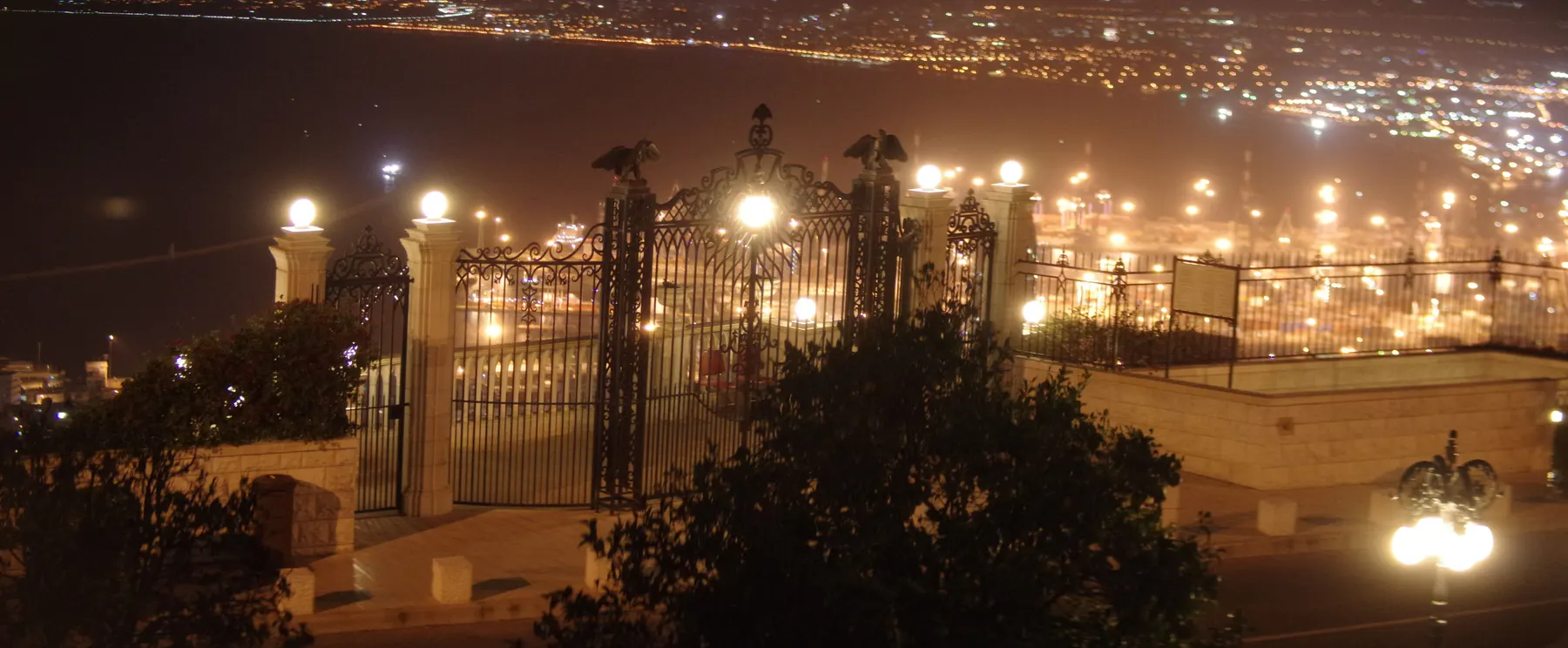
Louis Promenade
A 400-metre clifftop walk on Yefe Nof Street, given to Haifa in 1992 by Paul and May Goldschmidt in memory of their son Louis, and built by the man who was principal contractor of the Bahai gardens on the slope below it.
Oshri Reicher (אושרי רייכר) / CC BY 2.5 · Wikimedia Commons
Museum
MadaTech, the Israel National Museum of Science
Israel's national science museum works out of the building the Technion was born in, a domed block in Hadar whose cornerstone was laid on 11 April 1912, and most of its exhibitions sit in rooms that were lecture halls.
זאב שטיין / CC BY 2.5 · Wikimedia Commons
Religious site
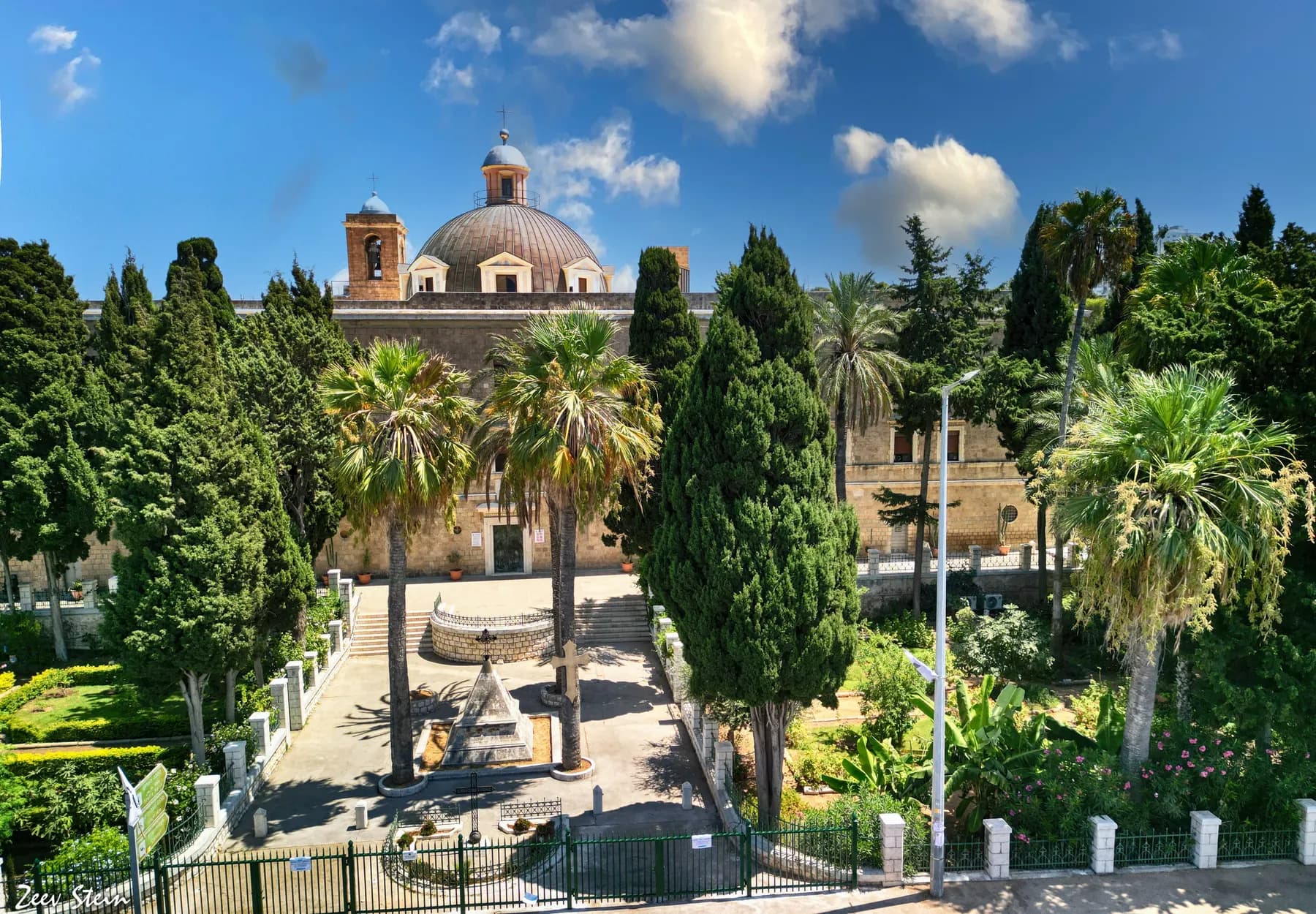
Stella Maris Carmelite Monastery
The mother house of the Discalced Carmelites stands on the seaward end of Mount Carmel over a grotto associated with Elijah, under a dome painted by the Maltese friar Luigi Poggi between 1924 and 1928.
אושרי רייכר / CC BY 2.5 · Wikimedia Commons
Neighbourhood
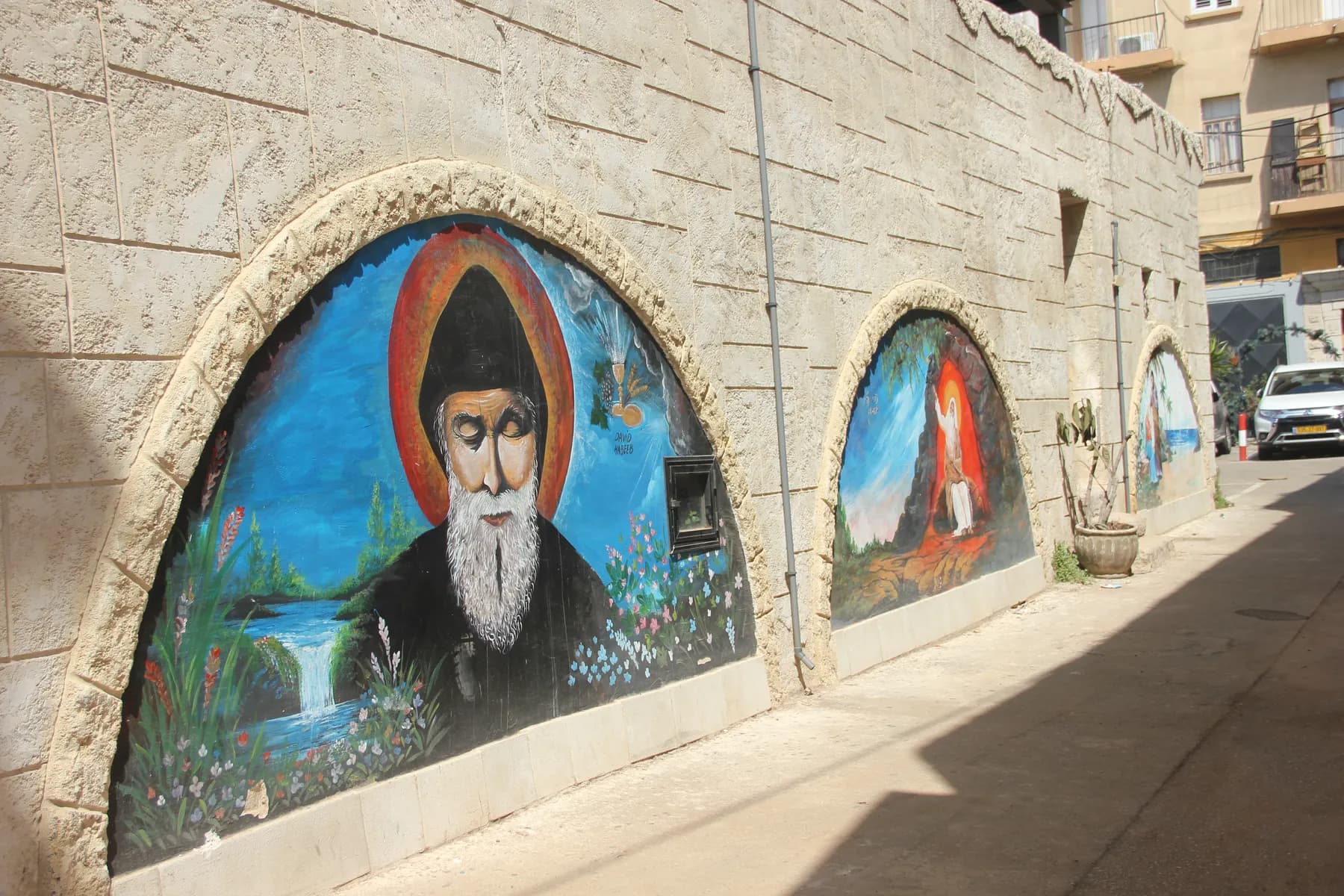
Wadi Nisnas
More than 50,000 Arabs lived in Haifa before the 1948 war and about 3,000 stayed; they were concentrated into this one valley, whose lanes have carried a permanent open-air art exhibition since the 1990s.
The long view
Haifa, in order
1760s
Daher al-Umar, the Arab ruler of Acre and the Galilee, destroys the old settlement and rebuilds Haifa on its present site.
1868
German Templers found their colony at the foot of Mount Carmel, laying out the avenue that still points at the mountain.
Early 1900s
About fifty years after the Bab's execution in Tabriz in 1850, his remains are interred in a stone shrine on Mount Carmel, later given its monumental superstructure and golden dome.
1912-1925
The Technion's cornerstone is laid on Mount Carmel in 1912, more than a decade after the project was put to the Fifth Zionist Congress; after a row over whether to teach in German or Hebrew, classes in civil engineering and architecture begin in the winter of 1924-25. The University of Haifa follows on the ridge in 1964.
1918-1933
British forces take Haifa from the Ottomans in September 1918, and the deep-water harbour developed under the Mandate is formally opened on 31 October 1933 by the High Commissioner, Sir Arthur Wauchope.
1948
Haifa becomes part of Israel. Most of its Arab population leaves or is expelled; those who remain (around 3,000 by Britannica's count, nearer 3,500 by others) are concentrated in the downtown Wadi Nisnas quarter.
6 October 1959
The Carmelit opens, six stations in a single tunnel through the mountain.
1993
The first Holiday of Holidays festival is held in Wadi Nisnas, pairing Hanukkah, Christmas and Ramadan in the same streets.
June 2001
The nineteen terraces around the Shrine of the Bab, designed by Fariborz Sahba, open to the public.
2008
The Bahai holy places in Haifa and the western Galilee are inscribed on the UNESCO World Heritage List.
2-5 December 2010
The Carmel fire kills 44 people and burns more than 12,000 acres of forest above the city; 17,000 people are evacuated.
2022
The cabinet votes to close the Haifa Bay petrochemical facilities and creates a state directorate to redevelop the bay.
Getting there
- By train: Haifa sits on the coastal line and has several stations, with Haifa Centre-HaShmona beside the port and the cruise terminal. Check Israel Railways for current timetables and Shabbat service, which does not run.
- By road: the coastal highway runs into the city from Tel Aviv and Caesarea in the south and from Akko and Nahariya in the north. Parking on the Carmel ridge is tight; parking at the German Colony is easier.
- Getting up the mountain: the Carmelit funicular links downtown to Carmel Centre in one tunnel, and its operator lists 2026 hours of Sunday to Thursday 06:00 to midnight, Friday 06:00 to 15:00 and Saturday 20:00 to midnight. Buses cover the same climb, and the Rav-Kav card works on both.
- By sea: Haifa is northern Israel's cruise port, with the terminal alongside the city centre and the railway station.
Access
Haifa is a steep city and the gardens are a staircase: the guided Upper Terraces tour descends 750 stairs in about 50 minutes on pebbled paths, so the operator asks for shoes with grip and says the tour is not suitable for anyone with walking difficulties. Strollers are admitted only at the main entrance and on the first level of the German Colony plaza. If stairs are not an option, the Yefe Nof balcony and the German Colony plaza both give you the full sightline without the descent, and the Carmelit removes the worst of the climb between downtown and the ridge.
When to go
Spring and autumn. Haifa has a Mediterranean climate: hot, humid summers and mild, wet winters, with an average of about 26C in summer and about 12C in winter and roughly 629 mm of rain a year. The ridge is cooler and breezier than the bay below it. April to early June and October to November give you comfortable walking weather for a city built on a slope. December is the month of the Holiday of Holidays in Wadi Nisnas and the German Colony.
Hours and cost
The Bahai Gardens are the fixed point of any Haifa itinerary and they run on their own clock. Per the Bahai Gardens' own site in 2026: the Yefe Nof balcony and the German Colony plaza are open 09:00 to 17:00; the main entrance at 80 Hatzionut opens the outer gardens 09:00 to 17:00 but the Shrine of the Bab and the inner gardens only 09:00 to 12:00. The gardens close on Bahai holy days and on Yom Kippur, and may close temporarily in rainy weather. Confirm on the operator's page before you go.
Entry to the Bahai Gardens is free, per the operator's site in 2026, and so is the guided Upper Terraces tour, which runs Tuesday to Sunday by reservation or, if there is space, on the day. The guided tour takes individuals and small parties of up to 19 people; groups of 20 or more are handled as a separate large-group tour and must arrange it in advance. The Carmelit takes the standard Rav-Kav travel card.
Opening times and prices change. Both are given as published by the operator and should be checked against its own page before you travel.

Practical
What people wish they had known about Haifa
- Do the gardens in the morning if you want to see inside the shrine: the inner gardens shut at noon while the outer gardens stay open to 17:00.
- Dress for a pilgrimage site, not a park. Shoulders and knees covered, nothing torn. It is enforced.
- Eat in Wadi Nisnas rather than on the Carmel ridge. The market streets are where the bakeries and the hummus counters are, and they trade in the morning.
- Stand on Ben Gurion Avenue in the German Colony at dusk. The terraces are lit and the whole axis lines up from the sea to the dome.
- Water only inside the gardens. No food, no smoking, no chewing gum, and no photography inside the shrines.
- On the Carmel forest roads, treat fire as a live risk in summer and autumn: no open flame, and check for road closures if a fire is burning.
The figures
Haifa by the numbers
Each figure carries the year it belongs to and links the source it came from.
| Measure | Figure | As of | Source |
|---|---|---|---|
| City population | 297,082 | 2024 | en.wikipedia.org |
| Christian residents of Haifa | about 16,500 | 2024 | timesofisrael.com |
| Bahai Gardens admission | free | 2026 | ganbahai.org.il |
| Upper Terraces guided tour | 750 stairs, 50 minutes | 2026 | ganbahai.org.il |
| Deaths in the Carmel fire | 44 | 2010 | timesofisrael.com |
| Forest burned in the Carmel fire | more than 12,000 acres | 2010 | science.nasa.gov |
| People evacuated during the fire | 17,000 | 2010 | science.nasa.gov |
| Park planned for the cleared Haifa Bay | about 6,000 dunams | 2026 | timesofisrael.com |
Where this is
Haifa in the length of the country
Israel runs about 420 km from its northern tip to Eilat. Here is where this one sits on that line.
Nearby
Where to go next

Mediterranean coast
Caesarea
Herod poured a harbour into open water here, using volcanic ash shipped from the Bay of Naples. Most of it now lies more than five metres down.

The southern quarter of Tel Aviv-…
Jaffa
A harbour worked for three and a half thousand years, now the southern quarter of Tel Aviv-Yafo: a tell of stacked ruins, an Ottoman old town, and a flea market still going.

Northern Israel
The Galilee
Israel's green quarter: oak hills and basalt vineyards, a mystics' town high in the north, a Crusader capital buried under an Ottoman port, and half a billion birds passing overhead each year.
Sources and further reading
Every link below was opened and checked when this page was written. Official statements are marked as such: they are the subject's own account, not an independent one.
- OfficialBahai Gardens (Bahai World Centre)ganbahai.org.ilVisit us: Haifa
Free entry, opening hours at all three access points, dress code, rules on food, water and photography, the 50-minute Upper Terraces tour of 750 stairs, the up-to-19 and 20-or-more group tours, stroller policy, and closure on Bahai holy days, Yom Kippur and in rainy weather
- OfficialBahai Gardens (Bahai World Centre)ganbahai.org.ilBahai Gardens in Haifa: gallery and visitor hours
Second confirmation of the hours at the balcony, main entrance and German Colony plaza, and of reservation-only guided tours Tuesday to Sunday
- OfficialBahai Gardens (Bahai World Centre)ganbahai.org.ilA brief history
The Bab's execution in a public square in Tabriz on 9 July 1850, the fifty years his remains were moved and hidden, the simple stone structure on Mount Carmel later completed with a monumental superstructure and golden dome, and UNESCO recognition of the shrines (the page does not give the year)
- OfficialTechnion - Israel Institute of Technologytechnion.ac.ilThe history of the Technion
Buber, Weizmann and Feiwel at the Fifth Zionist Congress in 1901, the cornerstone on Mount Carmel around 1912, first classes in civil engineering and architecture in the winter of 1924-25, the first seventeen graduates in 1929, and the chemistry Nobels of 2004, 2011 and 2013
- OfficialTechnion - Israel Institute of Technologytechnion.ac.ilTechnion - Israel Institute of Technology
The institute's own claim to be ranked sixth worldwide for entrepreneurship and innovation, and its research fields
- OfficialCarmelit Haifa (operator)carmelithaifa.comThe Carmelit
Operator's own 2026 page: six stations serving downtown, Hadar and Central Carmel, and operating hours of Sunday to Thursday 06:00-24:00, Friday 06:00-15:00 and Saturday 20:00-24:00
- ReportingThe Times of Israeltimesofisrael.com15 years after deadly Carmel blaze, state still underfunding wildfire protection
Published 3 December 2025: the fire's start near Isfiya on 2 December 2010, the 35-metre flame front, 44 deaths, the prison service bus on the Damon Prison road, the description of it as the deadliest wildfire in Israel's history, five of twenty pilot buffer zones completed, and the budget cut from NIS 65 million to NIS 50 million
- ReportingThe Times of Israeltimesofisrael.comAfter months of Hezbollah rocket attacks, Haifa's Christians get ready for Christmas
Published 23 December 2024: a city of roughly 290,000 with about 16,500 Christians, Wadi Nisnas as the main Christian neighbourhood, and the Holiday of Holidays run since 1993 by the municipality, Beit Hagefen and the residents' committee, cancelled in 2023 and revived in 2024
- ReportingThe Times of Israeltimesofisrael.comHaifa oil refineries will close in 2029, says head of Haifa Bay development agency
Published 10 June 2026: the 2022 cabinet decision covering the refineries and the Kiryat Haim storage complex, the 2031 and 2029 target dates, Yuval Admon's remarks at the directorate's conference at the University of Haifa, the 550,000 tonnes of distillates and 20,000 tonnes of cooking gas, and the 130,000 homes, 6,000-dunam park and NIS 100 million from KKL-JNF
- ReportingThe Times of Israeltimesofisrael.comDespite rocket fire at Haifa, Israeli seaports operating as usual, authorities say
Published 24 September 2024: the three separate operations at Haifa, the Adani-run Haifa Port, the SIPG-run Bayport and the smaller Israel Shipyards facility
- ReportingThe Times of Israeltimesofisrael.com82-year-old man dies of wounds sustained in Iranian missile attack on Haifa in April
Published 15 July 2026: the Iranian ballistic missile strike on a residential building in Haifa on 5 April 2026 and the five people killed, cited in the FAQ on the security situation
- DataNASA Earth Observatoryscience.nasa.govDeadly forest fire in northern Israel
Fire dates of 2 to 5 December 2010, more than 12,000 acres burned, 250 homes damaged or destroyed at Beit Oren, Yemin Ord and Ein Hod, and 17,000 people evacuated
- ReferenceEncyclopaedia Britannicabritannica.comHaifa
Three-tier city linked by an underground railway, Haifa as the principal port, the deep-water harbour opened 1933, the industries and the 1939 refineries, the Technion founded 1912 and opened 1924, University of Haifa 1964, the 2008 UNESCO designation of the Bahai monuments, and about 3,000 Arab residents remaining after 1948 out of more than 50,000
- ReferenceWikipediaen.wikipedia.orgMount Carmel forest fire (2010)
The breakdown of the 44 dead (36 Israel Prison Service, three police officers, three firefighters and the driver), the tree across the road to Damon Prison, close to half the Carmel forest reserve burned, and the fire as the deadliest civil disaster in Israel until the 2021 Meron crush
- ReferenceWikipediaen.wikipedia.orgTechnion - Israel Institute of Technology
The cornerstone of 1912, the board's choice of German as the language of instruction in October 1913 and its reversal to Hebrew in February 1914, studies beginning twelve years after the cornerstone, and four Nobel laureates associated with the institute
- ReferenceWikipediaen.wikipedia.orgPort of Haifa
Formal opening of the deep-water harbour on 31 October 1933 by Lt Gen Sir Arthur Wauchope, the port as the largest of Israel's three major international seaports, and the Bay Terminal inaugurated on 1 September 2021 for ships of more than 15,000 TEU
- ReferenceWikipediaen.wikipedia.orgCarmelit
Opening on 6 October 1959, six stations, a 1.8 km tunnel, a 274-metre elevation difference, the stepped car floors level only at Masada station, the December 1986 closure and September 1992 reopening, the March 2015 cable fault, the February 2017 Paris Square fire, the October 2018 reopening with Doppelmayr cars, Rav-Kav ticketing, and the claim that it is the world's smallest subway system
- ReferenceWikipediaen.wikipedia.orgTerraces (Bahai)
Nineteen terraces extending almost one kilometre up Mount Carmel over some 200,000 square metres, designed by Fariborz Sahba and opened to visitors in June 2001. Sole source for these figures on this page
- ReferenceWikipediaen.wikipedia.orgWadi Nisnas
Foundation as a Christian Arab quarter at the end of the nineteenth century, about 8,000 residents, 66 per cent Christian and 31.5 per cent Muslim per Central Bureau of Statistics census data, and the concentration of Haifa's roughly 3,500 remaining Arab residents there in 1948
- ReferenceWikipediaen.wikipedia.orgMount Carmel
Ridge length of 39 km and a summit given as 525.4 m, which conflicts with the 546 m figure in the Jewish Virtual Library entry below; the page therefore states the height as a range
- ReferenceJewish Virtual Libraryjewishvirtuallibrary.orgMount Carmel
Gives the summit as 546 m above sea level and the mountain's area as 32 square kilometres; used here as the upper end of the published range for the ridge's height
- ReferenceWikipediaen.wikipedia.orgHaifa
Haifa as Israel's third-largest city with a population of 297,082 in 2024, the destruction and rebuilding of the town by Daher al-Umar in the 1760s, the Templer colony of 1868, the capture from the Ottomans in September 1918, the Matam park as the first dedicated high-tech park in Israel, and average temperatures of 26C in summer and 12C in winter with about 629 mm of rain a year
Haifa: common questions
Do you have to pay to visit the Bahai Gardens?+
No. Entrance is free at all three access points, and so is the guided Upper Terraces tour. The tour runs Tuesday to Sunday and should be booked in advance; it takes up to 19 people, and larger groups book a separate large-group tour.
Can you go inside the Shrine of the Bab?+
Yes, but only in the morning. The shrine and the inner gardens open 09:00 to 12:00 from the main entrance at 80 Hatzionut, while the outer gardens stay open until 17:00. Photography is not permitted inside the shrines.
How much walking do the terraces involve?+
The full guided descent covers 750 stairs on pebbled paths and takes about 50 minutes; the operator says it is not suitable for anyone with walking difficulties. If that is too much, the balcony at 61 Yefe Nof at the top and the plaza at 21 Hagefen at the bottom both give you the whole sightline for nothing more than the walk to the gate.
What is the Carmelit?+
An underground funicular running through a single 1.8 km tunnel inside Mount Carmel, with six stations and a climb of 274 m between the downtown and the Carmel ridge. It opened in October 1959 and reopened in October 2018 after a station fire and a full refit.
Is Haifa genuinely a mixed Jewish and Arab city?+
It is one of Israel's mixed cities and carries a long-standing reputation for coexistence, with a substantial Arab minority, a Jewish-Arab cultural centre in Beit Hagefen and a shared December festival since 1993. That reputation is contested, and it sits on a hard history: most of the city's Arab population left or was expelled in 1948, and only about 3,000 remained, by Britannica's count.
What happened in the 2010 Carmel fire?+
A fire that started near Isfiya on 2 December 2010 burned through the Carmel forest until 5 December. It killed 44 people, thirty-six of them Israel Prison Service personnel on a bus caught on the road to Damon Prison, burned more than 12,000 acres and forced 17,000 people out of their homes.
Are the Haifa Bay refineries closing?+
That is the stated policy. The cabinet voted in 2022 to shut the bay's polluting facilities; a 2025 report moved the date to 2031, and in June 2026 the head of the state directorate for the bay said the refineries and the Kiryat Haim fuel storage would close in 2029. Storage for hundreds of thousands of tonnes of distillates and gas has to be found first.
Why is the Technion in Haifa rather than Jerusalem or Tel Aviv?+
The project was put to the Fifth Zionist Congress in 1901 and built in Haifa, then a growing port town on the coast; the cornerstone was laid in 1912, but a dispute over the language of instruction and the years that followed delayed teaching until the winter of 1924-25. Four Nobel laureates in chemistry have been associated with it.
Is Haifa affected by the security situation?+
It has been. The city was within range of Hezbollah rocket fire from Lebanon through 2024, and an Iranian ballistic missile struck a residential building in Haifa on 5 April 2026, killing five people. The ports kept working through the rocket fire, and the city's December festival ran again in 2024 after being cancelled in 2023. Check your government's current travel advice before booking.
How long do you need in Haifa?+
A full day covers the gardens, the German Colony and Wadi Nisnas comfortably. Two days lets you add the Carmel ridge, the beaches and a museum, and makes Haifa a workable base for Akko, Caesarea and the western Galilee.
Hotels & Stays
See all hotels & stays →Ecce Homo Pilgrim House
Jerusalem
A guesthouse on the Via Dolorosa, over Roman pavement
Jerusalem Hotel
Jerusalem
A stone-vaulted hotel in East Jerusalem, by the Old City
Jungle Jaffa Hostel
Tel Aviv
A social hostel in old Jaffa, ten minutes' walk from the beach
Matmon Barava
Ein Yahav
Desert cabins and a visitor centre in Ein Yahav, deep in the Arava