Netanyahu tours eastern barrier near Kibbutz Massada, tells enemies 'do not test us'
The prime minister visited a barrier under construction along Israel's eastern border, describing a line from the Yarmouk River to Eilat backed by troops and anti-drone plans.
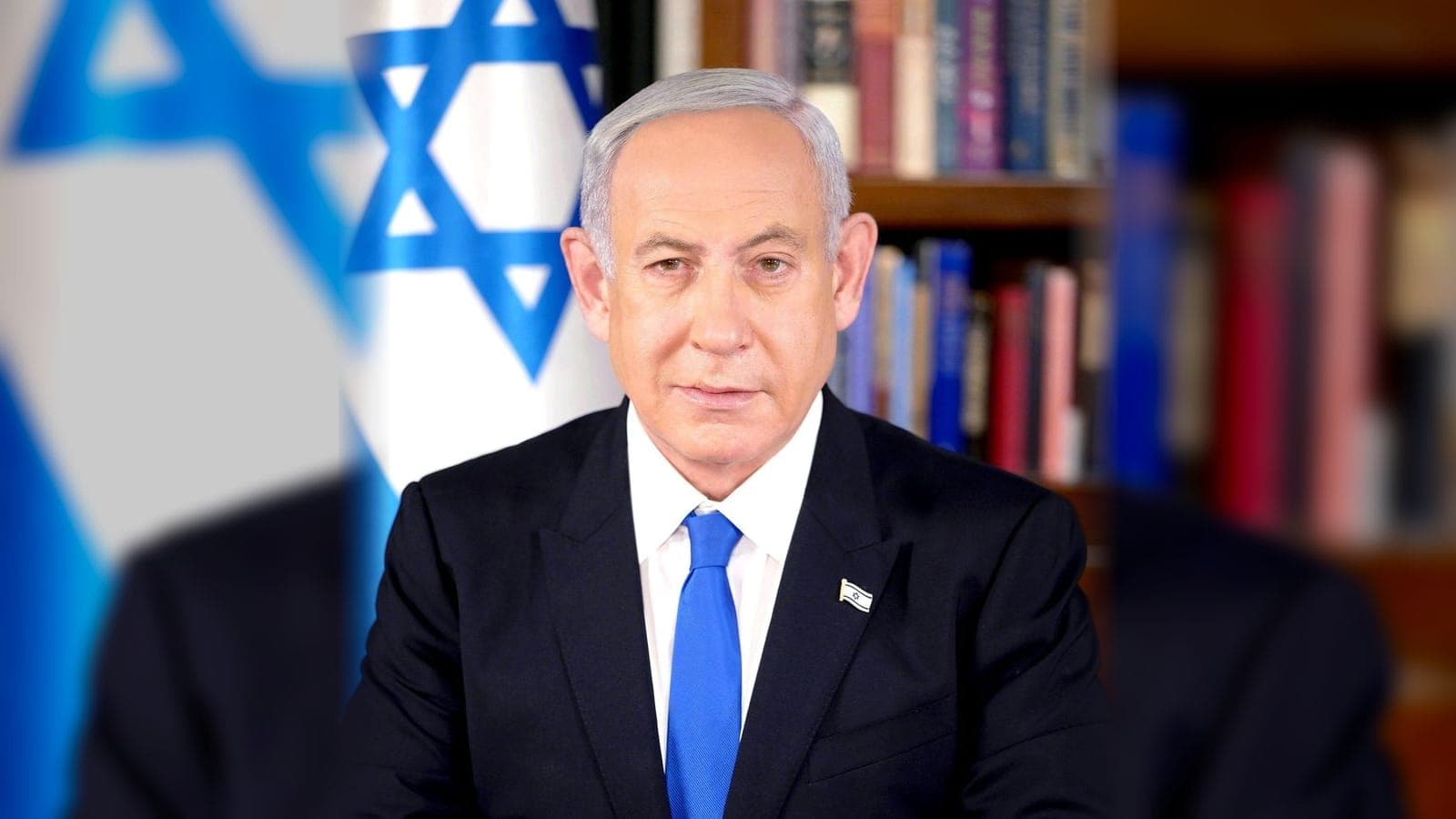
Benjamin Netanyahu. File photo by Avi Ohayon, CC BY-SA 3.0, via Wikimedia Commons.
Prime Minister Benjamin Netanyahu toured a section of a new barrier being built along Israel's eastern border, according to a press release issued by the Israeli government dated 15 October. He was joined by Defense Minister Israel Katz, by Maj. Gen. Eran Ofir, who heads the Borders and Seam Line Administration, by Brig. Gen. Oren Simcha, commander of Division 96, and by other military officers. The government said the prime minister received a briefing on work already finished and work still under way to strengthen defences on that frontier.
Speaking on site, Netanyahu said he was standing in the Jordan Valley close to Kibbutz Massada and described the structure behind him as a barrier running from the Yarmouk River down to Eilat. He presented it as one layer among several, alongside troops, a work plan and anti-drone measures he declined to detail, and closed with a message aimed at Israel's adversaries: "Do not test us," according to the official transcript.
On the ground

Prime Minister Benjamin Netanyahu visited the new barrier area being established along the eastern border, accompanied by Defense Minister Israel Katz, Head of the Borders and Seam Line Administration Maj.-Gen. Eran Ofir, Division 96 Commander Brig.-Gen. Oren Simcha, and other Show more

Netanyahu visited the new section of the security barrier being built along Israel's eastern border on Thursday, which will run from the Yarmouk River at the border between Jordan, Syria, and Israel in the north, all the way to Israel's southernmost city, Eilat. Show more
Where the barrier runs
Israel's eastern border follows the Jordan Valley, a long, low-lying strip that separates Israel and the West Bank from the Kingdom of Jordan. The two endpoints Netanyahu named mark its length. The Yarmouk River lies in the far north, in the area where the borders of Israel, Jordan and Syria come close together. Eilat is Israel's southernmost city, on the Red Sea. A line between the two would therefore cover the eastern frontier from top to bottom.
Kibbutz Massada, the community the prime minister cited as his location, is in the northern Jordan Valley. A kibbutz is a collective farming community, a form of settlement that has been part of Israeli life since before the state was founded. Many kibbutzim sit along Israel's borders.
Who was on the tour
The government release lists the officials who accompanied Netanyahu. Israel Katz is the defence minister in what the release calls the 37th Government, the current governing coalition. The Borders and Seam Line Administration, whose head Maj. Gen. Eran Ofir attended, is the defence body whose name reflects its focus on border lines and the "seam line", an Israeli term for the boundary zone between Israel and the West Bank. Division 96 is the Israel Defense Forces (IDF) formation whose commander, Brig. Gen. Oren Simcha, was present; the release does not describe its area of responsibility.
What Netanyahu and Katz said
In his remarks, Netanyahu framed the barrier as an addition to what he called security zones that Israel holds in Lebanon, Syria and the Gaza Strip. He said the project involved large-scale engineering and logistics work, as well as the mobilisation of the IDF and of reservists. His stated aim was what he called "maximum defense", intended to protect Israeli civilians and to deter anyone from considering an invasion.
Katz described the barrier, the fence, the forces and the security zones as parts of a wider defence plan. He said, however, that these were secondary to what he presented as the main element of Israeli policy: an offensive posture directed at threats both close to Israel and as far away as Iran. In the defence minister's words as published by the government, the priority was offence, followed by strong defence for Israel's citizens.
How this fits the wider picture
The statements place the eastern barrier inside a broader approach that both men described in the same terms: physical barriers along the frontier combined with forward positions beyond it. Netanyahu's reference to security zones in Lebanon, Syria and Gaza indicates that, in the government's account, the eastern project is one part of a ring of defensive measures around the country. He used the image of surrounding Israel with a barrier to describe it.
The visit was presented as a public demonstration as much as an inspection. Both the prime minister and the defence minister used the occasion to deliver messages to Israel's adversaries, and the government distributed the remarks as an official release under its events and speeches category.
What the reports do not say
This account rests on a single source, a press release from the Israeli government, and no independent reporting of the visit was available. Several basic points are absent from it:
- The release gives no length, cost, timetable or completion date for the barrier, and does not say how much of it has been built.
- It does not describe the barrier's design, whether it is a fence, a wall or a combination.
- It does not name any specific threat or incident that prompted the project, beyond general references to enemies and to Iran.
- Netanyahu said he would not detail the anti-drone plans or the work plan, and none are described.
- The release does not mention Jordan by name or include any response from Jordanian officials.
- It gives no figures for the troops or reservists mobilised for the work.
Until other organisations report on the barrier, its scale and progress are known only through the government's own description.
More on Eilat: Places and businesses in Eilat · Shabbat times in Eilat
Sources and further reading
Every link below was opened and checked when this page was written. Official statements are marked as such: they are the subject's own account, not an independent one.
- Officialgov.ilgov.ilIsraeli government press release
How we checked this
This report is based solely on an Israeli government press release; no other organisation's account of the visit was available, so all details, including the barrier's route and the quoted remarks, are attributed to the government.
Our sourcing and corrections policy →
The week from Israel, in one email
The stories that mattered, sourced and checked by the Israel.com newsroom. Free, weekly, one-click unsubscribe.
One list, unsubscribe in a click. See our privacy policy.

Israel.com is free, and readers like you keep it that way.
The Israel.com newsroom checks every story against its sources and publishes it free. If this one helped, a contribution of any size keeps the next one free too.
One payment, nothing to sign up for. Another amount
More in Government
All government →
Latest
- Palestinian driver hits Israeli youth near Ateret; army rules out terror
- IDF fires interceptor at what it calls a false target over southern Lebanon
- Israeli strike in Khan Younis kills two men accused of smuggling weapons into Gaza
- IDF publishes letter from Yahya Sinwar's 10-year-old son to his father
- Two workers die after explosion at Intel's plant in Kiryat Gat
- IDF says engineers destroyed 1.5km Hamas tunnel crossing Gaza's Yellow Line