Eisenkot's Yashar party restarts coalition talks with the Democrats
Negotiations resumed two days after they were broken off, with a dispute over senior ministries still open, Israeli media reported.
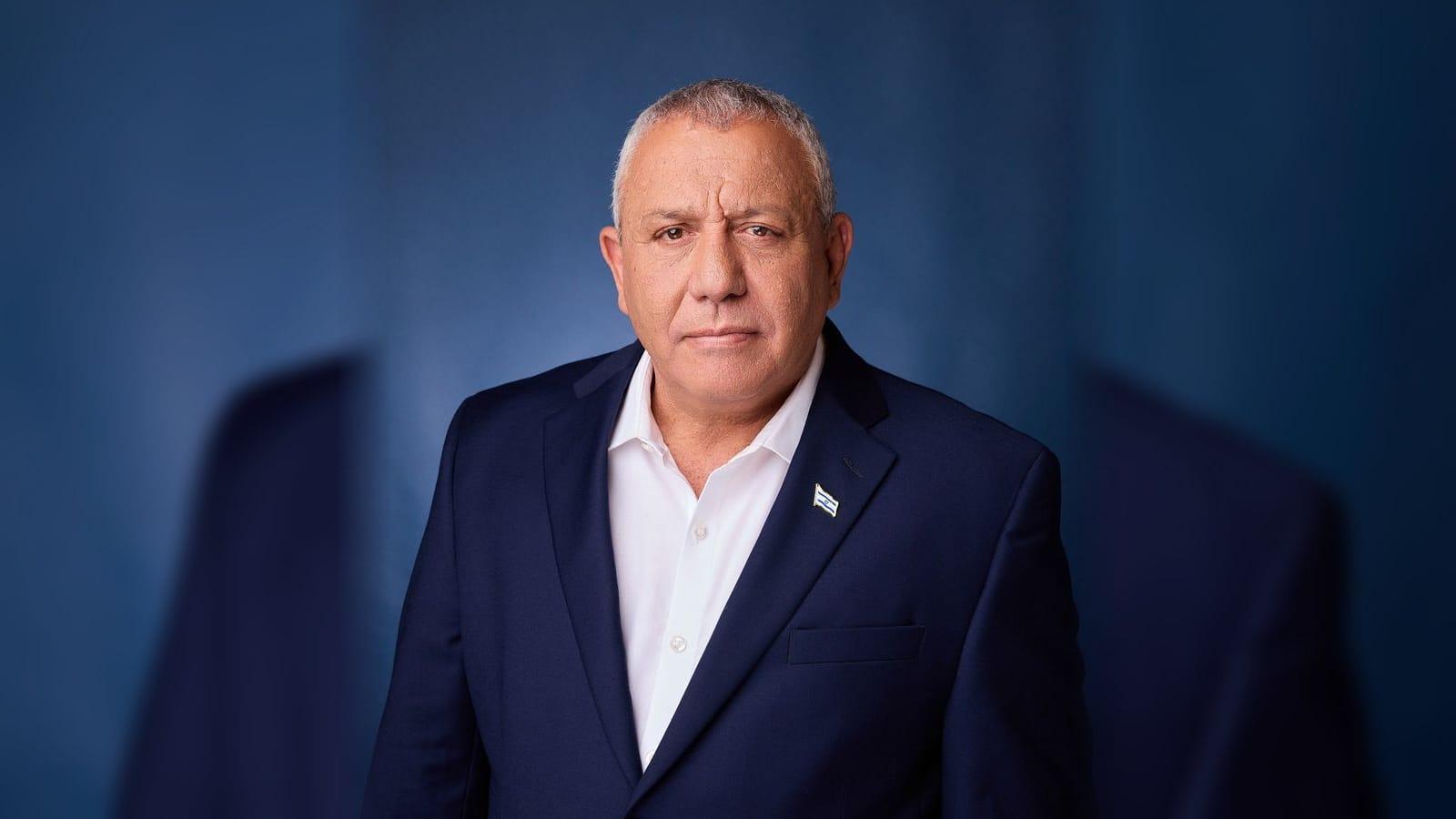
Gadi Eisenkot. File photo by יהב טרודלר (Yahav Trudler - Yahav Studio), CC BY-SA 3.0, via Wikimedia Commons.
Negotiations between Gadi Eisenkot's Yashar party and the Democrats on a coalition agreement have resumed, two days after the talks were frozen. Ynet reported that Eisenkot announced the renewal of what he called a marathon of discussions aimed at signing a coalition agreement, and that he is preparing for a government that would not include Likud.
The announcement came on Thursday morning. Journalist Amit Segal relayed Eisenkot's statement that the negotiating sessions would restart that same morning. The Times of Israel also reported that Yashar had declared the freeze over and the talks back on.
On the ground

Yisrael Beytenu party chairman Avigdor Liberman said Wednesday he believes Yashar party leader Gadi Eisenkot will be able to form a government with a “clear Jewish majority” by the end of next week. Liberman has been pushing for Eisenkot’s bloc to form a coalition with the Show more

Who broke off the talks
The reports frame the earlier breakdown differently. N12 political correspondent Dafna Liel wrote that the talks were restarting two days after Yair Golan, who leads the Democrats, had halted them, and described the episode as a crisis within the change bloc. Ynet referred to the resumption coming two days after an announcement that contacts were being cut off, without saying in its summary which side made that announcement. A separate Ynet alert described the renewed contacts as coming after a crisis between the two parties.
The dispute over ministries
According to Ynet, the disagreement over senior cabinet portfolios has not been settled. In Israeli coalition politics, the allocation of ministries is usually one of the hardest parts of any agreement: parties trade support for the government in exchange for control of ministries they consider important to their voters and their agenda.
Ynet reported that people in the Democrats are questioning why their party should not receive a ministry of significance to its electorate, pointing out that it holds more seats than the party of Avigdor Lieberman. The comparison suggests that the Democrats see the distribution of portfolios among prospective partners as the main point of friction, although the reports do not say which specific ministry the party is seeking or what it has been offered.
Get an email the day Israel has a new government.
Coalition talks can take weeks. When a government is sworn in, Israel.com's newsroom emails who leads it, which parties are in and who got which ministry, then the Friday email each week. Free, and one click unsubscribes.
One list, unsubscribe in a click. See our privacy policy.
How Israeli coalitions are formed
Israel elects its parliament, the Knesset, by national proportional representation, and no single party has ever won a majority on its own. A government can only take office once a candidate for prime minister assembles a coalition of parties that together command a majority in the Knesset. Each partner usually signs a written coalition agreement setting out which ministries it will run, which policy commitments the government will adopt and how parliamentary posts will be shared.
The process often involves public brinkmanship. Parties suspend negotiations, issue ultimatums and then return to the table, and announcements of a freeze are frequently used as leverage over the allocation of ministries. The episode reported this week, a suspension followed by a resumption two days later, follows that familiar pattern.
The parties and the bloc
Yashar is the party led by Eisenkot. The Democrats are led by Yair Golan, according to N12's reporting. The term "change bloc", used by N12, is the Hebrew political shorthand for the grouping of parties opposed to a Likud-led government; the Hebrew is gush hashinui. Likud is the right-wing party that has long been the largest in Israeli politics. Ynet's report that Eisenkot is preparing for a government without Likud indicates that he is assembling a coalition from parties outside it, including the Democrats and, by implication of the Democrats' comparison, the party led by Lieberman.
What the reports do not say
- None of the reports explains what caused the talks to be frozen in the first place, beyond the dispute over senior portfolios.
- The reports do not say which ministries are in contention, or what Yashar has offered the Democrats.
- No public response from Yair Golan or the Democrats to the resumption of talks has been reported.
- There is no reported timetable for signing an agreement, and no indication of whether Lieberman's party has reacted to the Democrats' comparison.
People in this story: Gadi Eisenkot, Amit Segal, Yair Golan, Avigdor Lieberman
Read next
All government →
File photo
Government
Eisenkot's Yashar! reaches coalition deal with Lieberman's Yisrael Beytenu

File photo
Government
Yair Golan's Democrats halt coalition talks with Eisenkot's Yashar party

File photo
Government
Democrats MK Efrat Rayten chosen to chair Knesset attorney general law committee
File photo
Courts & Crime
Hakeem Jeffries says House Democrats will pursue sanctions on violent settlers
See Israel.com first in Google's top stories.Add it as a preferred source on Google
Sources and further reading
Every link below was opened and checked when this page was written. Official statements are marked as such: they are the subject's own account, not an independent one.
- Reportingyediothynet.co.ilYnet
- Reportingyediotht.meYnet alerts
- Reportingtoitimesofisrael.comThe Times of Israel
- Reportingamitsegalt.meAmit Segal
- Reportingkeshett.meN12
How we checked this
The resumption of talks was reported by Ynet, N12, The Times of Israel and journalist Amit Segal, citing Eisenkot's announcement. The account that Yair Golan halted the talks comes from N12, and the Democrats' complaint about portfolios comes from Ynet alone.
Our sourcing and corrections policy →The week from Israel, in one email
The stories that mattered, sourced and checked by the Israel.com newsroom. Free, weekly, one-click unsubscribe.
One list, unsubscribe in a click. See our privacy policy.

Israel.com is free, and readers like you keep it that way.
The Israel.com newsroom checks every story against its sources and publishes it free. If this one helped, a contribution of any size keeps the next one free too.
One payment, nothing to sign up for. Another amountGive monthly
Latest
File photo

Illustration

Illustration

Illustration

Illustration

Illustration