Jewish prayers in Hebrew and English
The text of the prayers with vowel points, grouped by when they are said, with the English beside them.
Prayers are said through the day, the week and the year
Through the day
Beyond the hours of the day
Prayers said on waking
The first words of the day, before the morning service.
- Modeh Aniמודה אניOne sentence of thanks, customarily said on waking, before the day begins.
- Asher Yatzarאשר יצרA blessing of thanks for the body and for its healing, in two wordings.
- Birchot HaShacharברכות השחרThe short blessings of thanks that open the morning, in the Ashkenaz, Sefard and Edot HaMizrach wordings.
- Adon Olamאדון עולםTen lines in five couplets, the wording of Ashkenaz prayer books, with the meaning of each line under it.
Prayers of the daily services
Texts said in the morning, afternoon and evening services.
- Shema Yisraelקריאת שמעThe verses said every morning and evening, with the English under each one.
- Birkat Kohanimברכת כהניםThree verses, fifteen words, with the English under each verse.
- HallelהללThe six psalms of praise, with the English under each verse.
- AshreiאשריPsalm 145 with three verses from other psalms, as it is said in the services.
Blessings after a meal
Thanks said once the meal is over.
Prayers for Shabbat
From the candles on Friday to the songs of the Shabbat table.
- Birkat Kohanimברכת כהניםThree verses, fifteen words, with the English under each verse.
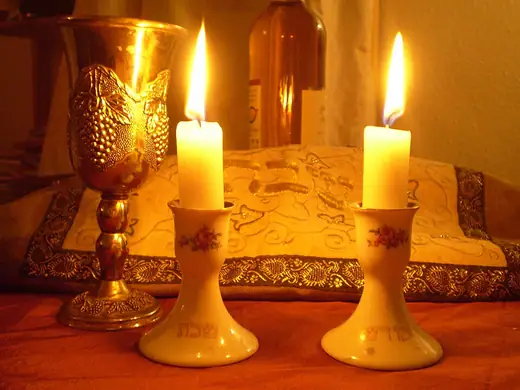
- Shabbat candle lightingהדלקת נרות שבתOne blessing, said on Friday before sunset. The Ashkenaz, Sefard and Edot HaMizrach editions compared for this page all have the same words.
- Eshet Chayilאשת חילThe poem that closes the Book of Proverbs, a verse to a line.
- Adon Olamאדון עולםTen lines in five couplets, the wording of Ashkenaz prayer books, with the meaning of each line under it.
- Shir HaShirimשיר השיריםThe eight chapters of the Song of Songs, with the English under each verse.
Texts for the festivals
What is read and said on Purim, Passover, Hanukkah and the other festivals.
- Megillat Estherמגילת אסתרThe scroll read on Purim, with its vowel points and the English under each verse.
- Shir HaShirimשיר השיריםThe eight chapters of the Song of Songs, with the English under each verse.
- HallelהללThe six psalms of praise, with the English under each verse.
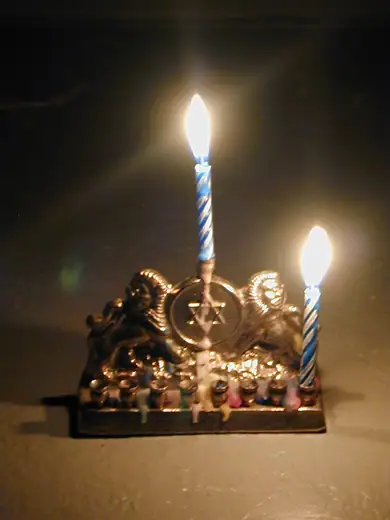
- Hanukkah candle lightingהדלקת נרות חנוכהTwo blessings every night and a third on the first night, in the Ashkenaz, Sefard and Edot HaMizrach wordings.
- Haneirot Halaluהנרות הללוThe short text said right after the candles are lit.
- Maoz Tzurמעוז צורThe Hanukkah song in five stanzas, with a plain English line under every line.
A prayer for a journey
Said at the start of a trip, by road, by sea or by air.
Prayers before sleep
The last words of the day.
Sets of psalms said together
Psalms that are gathered into one prayer.
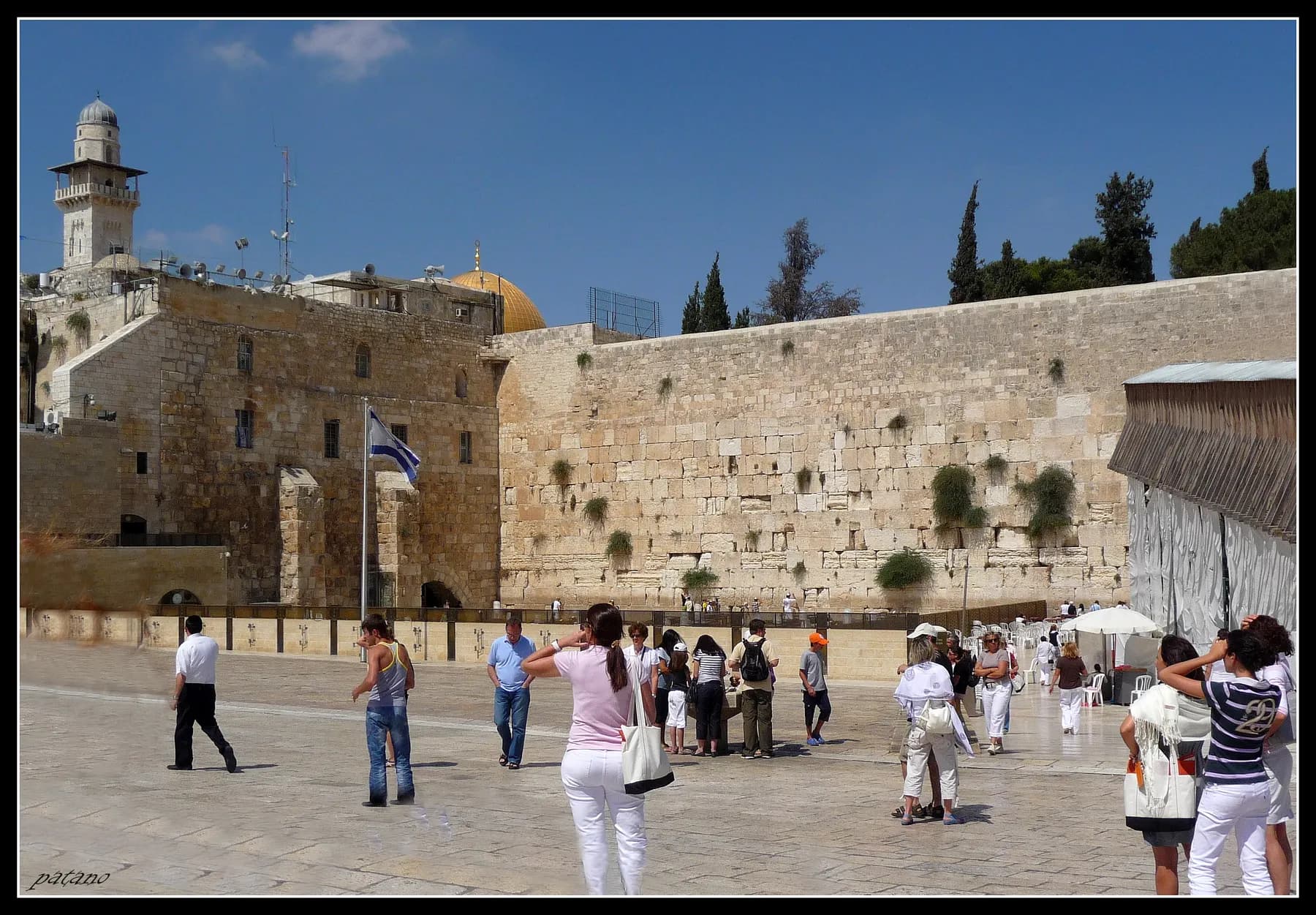
The same words are said at home, in synagogue and at the Western Wall
patano / CC BY-SA 3.0 · Wikimedia Commons
The 150 psalms have a page each
Every psalm in Hebrew with vowel points and in English, and the psalms to read today by the monthly and the weekly cycle.
Many prayers are tied to the sun, such as the morning Shema and the afternoon service. Every place has its times for today.
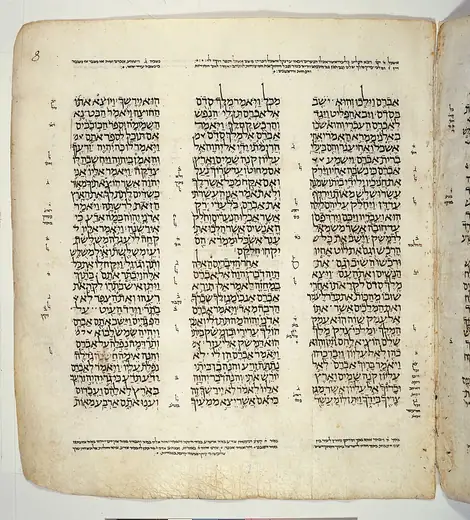 The other books of the Hebrew Bible have a page for every chapter too.The Tanakh in Hebrew and English
Who took these photographs
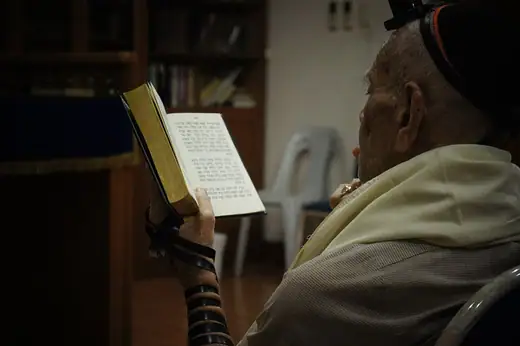
- Morning prayer: Senia L, CC BY 2.0
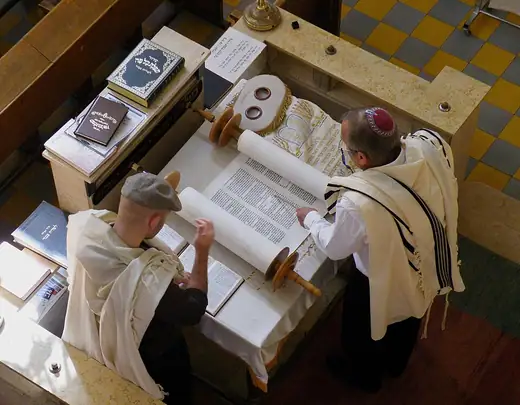
- Reading from the Torah: Roy Lindman, CC BY-SA 3.0
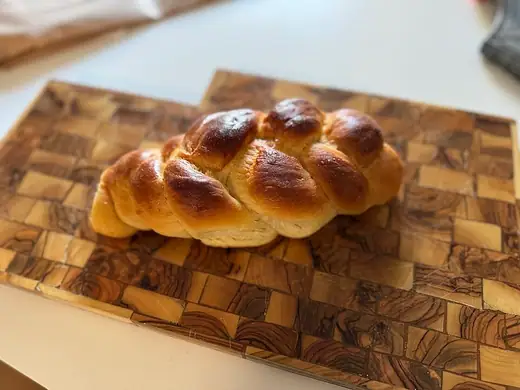
- A challah: Missvain, CC0
- Shabbat candles: Olaf.herfurth, CC BY-SA 3.0
- A Hanukkah menorah: hobvias sudoneighm, CC BY 2.0
- A road in the Negev: Mboesch, CC BY-SA 4.0
- The moon at night: Karthika Manikandan, CC0
- The Leningrad Codex: Scan by USC Dornsife, Public domain
Questions about the prayers
Where does the text of these prayers come from?
Each text comes from a public domain or openly licensed edition, named with its licence under the text, and was compared letter by letter with a second edition. Texts of the Bible are from the Leningrad Codex.
Which wording of a prayer is shown?
Where a prayer is worded differently in the Ashkenaz, Sefard and Edot HaMizrach traditions, a switch above the text chooses the wording shown. A wording that could not be compared with a second edition is not offered.
Can the text be printed?
Yes. Every page has a button to print it or save it as a PDF, and the printed page carries a small label that holy text should be stored respectfully.
Will more prayers be added?
Yes, as each text can be compared with a second edition. A prayer whose wording could not be checked is left out rather than shown with doubt.