IDF raises alert level and freezes soldiers' leave before Knesset election
Chief of Staff Eyal Zamir ordered a leave freeze from Thursday and sent paratrooper reinforcements to the West Bank, saying the army's task is to let the vote proceed safely.
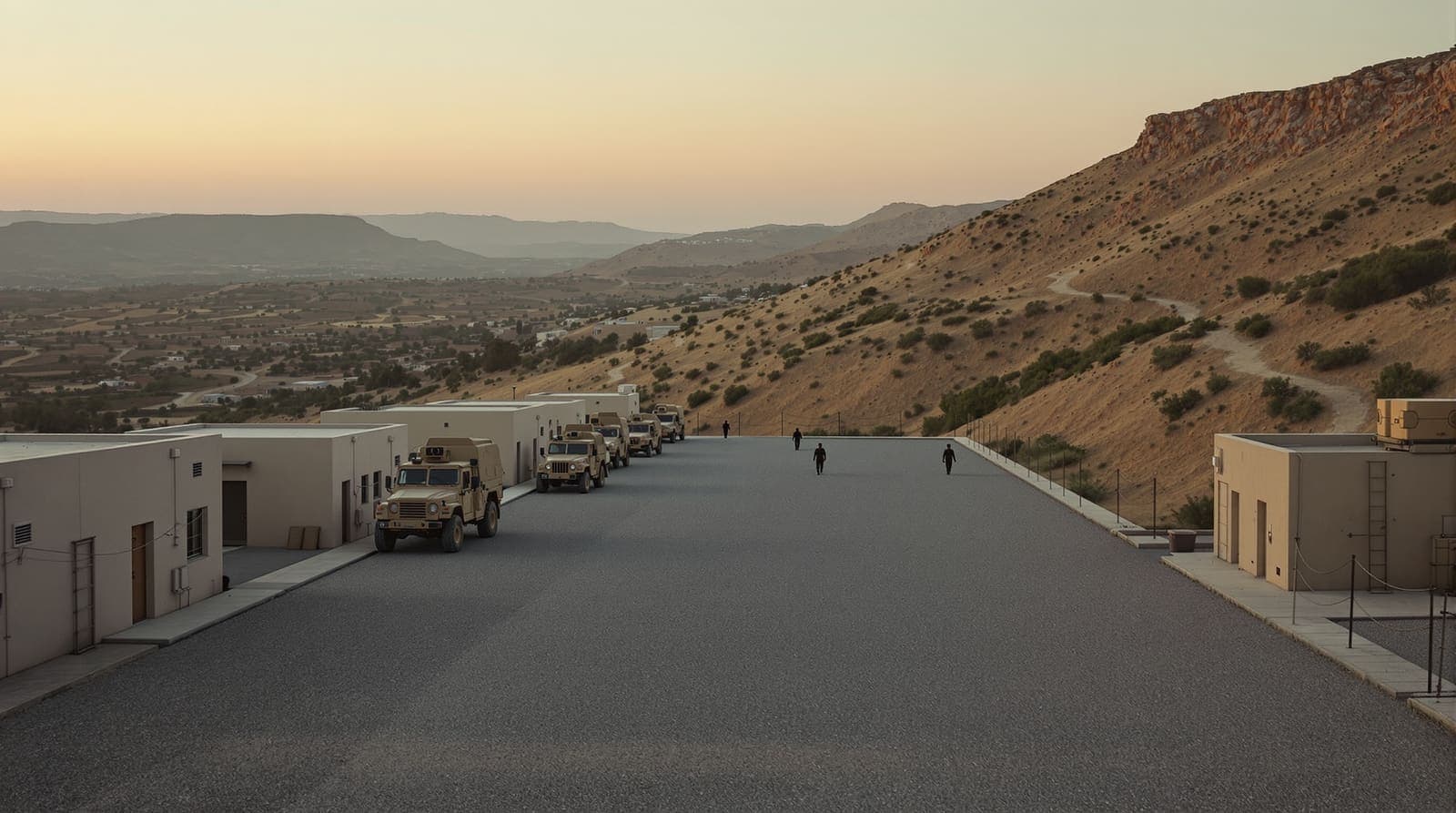
AI illustration, not a photo of the events.
Israel's military chief has put the armed forces on their highest state of alert and ordered soldiers to stay on base from Thursday, in preparation for the Knesset election due next week. According to the Israel Defense Forces (IDF) spokesperson, Chief of the General Staff Lt. Gen. Eyal Zamir led a multi-front situational assessment on Monday morning focused on the army's readiness for the election period.
Zamir told the meeting that the army's job is to make sure the democratic vote is held on time and in safety, The Times of Israel reported, citing a military statement. The newspaper put the election date at October 27. Ynet, the Hebrew news site, described the measure as an unusual leave freeze and said election day falls on Tuesday of next week.
Who was in the room
The IDF spokesperson listed the officers attending the assessment: the head of the Operations Directorate, which plans and runs the army's operations; the head of the Intelligence Directorate, known in Hebrew by the acronym Aman; the commanders of the Northern, Central and Southern Commands, the regional headquarters responsible for Israel's borders and territories; and the commander of the Home Front Command, the body in charge of civil defence and protecting the civilian population.
In the army's account, Zamir said the military would keep up a high level of vigilance and readiness in every sector in the coming period. The statement described the forces as being on the "highest state of alert".
The measures ordered
The IDF statement, as relayed by the Hebrew Telegram channels News.co.il and Abu Ali Express, set out several additional steps to raise readiness:
- A leave freeze across IDF units from Thursday. The Hebrew term used, otzer yetziot, means soldiers remain on their bases rather than going home on scheduled leave. The army said the freeze would be applied in line with ongoing situational assessments, so its length was not fixed.
- More senior commanders on duty. Zamir instructed that the presence of senior officers be thickened in operations rooms, headquarters and units to ensure operational readiness.
- Reinforcement of Central Command. The command, which The Times of Israel noted is responsible for the West Bank, will receive the headquarters of the Paratroopers Brigade and further forces. According to the statement, the paratroopers' headquarters will serve as a task-specific brigade command in the area between Samaria and Binyamin.
- Extra forces elsewhere. Additional troops are to be allocated to the other sectors according to their needs.
The Jerusalem Post reported that beyond the leave restriction, the army would bolster numbers across a wide range of units and brigades, with particular emphasis on the West Bank.
The West Bank terms in the statement
The Hebrew reports refer to the reinforcement as taking place in Judea and Samaria, the name used by the Israeli government and military for the West Bank. Samaria refers to the northern part of the territory, and Binyamin is the name of an Israeli regional district in the area. The IDF's Central Command is the headquarters with responsibility for military activity there, which is why the extra forces are being placed under it.
Political backdrop
The Knesset is Israel's parliament, and the election will decide its makeup. On the same day as the military announcement, Prime Minister Benjamin Netanyahu published a video filmed at an Israeli Air Force base, Ynet reported. In it, according to Ynet, he said Israel has the readiness and the capability to strike its enemies when that becomes necessary. Ynet presented the video alongside its report on the leave freeze; the reports do not say whether the two were coordinated.
How the reports line up
The accounts are broadly consistent because most of them reproduce or summarise the same IDF spokesperson's statement. The Times of Israel and its military correspondent, Emanuel Fabian, gave the date as October 27, while Ynet referred to the coming Tuesday; the reports do not contradict each other on this. Ynet characterised the leave freeze as unusual, a description that does not appear in the IDF's own wording as quoted by other outlets.
What the reports do not say
None of the reports explains what specific threat, if any, prompted the heightened alert, or whether it responds to particular intelligence. The statement gives no end date for the leave freeze, saying only that it depends on continuing assessments. The number of troops being moved to Central Command or to other sectors is not given, nor is it stated which other sectors will receive additional forces. The reports also do not say how the freeze affects reservists, or what arrangements exist for soldiers to vote while confined to base, although The Jerusalem Post's report was illustrated with a photograph of a military polling station.
Sources and further reading
Every link below was opened and checked when this page was written. Official statements are marked as such: they are the subject's own account, not an independent one.
- Officialidft.meIDF spokesperson
- Reportingyediothynet.co.ilYnet
- Reportingyediotht.meYnet alerts
- Reportingtoitimesofisrael.comThe Times of Israel
- Reportingtoit.meEmanuel Fabian, Times of Israel military correspondent
- Reportingjpostjpost.comThe Jerusalem Post
- Reportingabualiexpresst.meAbu Ali Express
- Reportingnewssilt.meNews.co.il
How we checked this
The measures were announced in an IDF spokesperson statement and reported by The Times of Israel, Ynet, The Jerusalem Post and Hebrew Telegram channels relaying the same statement. The description of the freeze as unusual is Ynet's, and Netanyahu's video was reported by Ynet alone.
Our sourcing and corrections policy →The week from Israel, in one email
The stories that mattered, sourced and checked by the Israel.com newsroom. Free, weekly, one-click unsubscribe.
One list, unsubscribe in a click. See our privacy policy.
More in Security
All security →
Latest
- Austrian Airlines says no danger found on diverted Tel Aviv-Vienna flight
- Israeli civilians set fire to storage container in South Hebron Hills village
- Trump's endorsement of Netanyahu meets doubts it will move Israeli voters
- Macron condemns French riots after nearly 2,400 arrests in a single day
- Time documents show Israel helped move about $2 billion from Qatar to Gaza
- Netanyahu unveils security doctrine with 450 billion shekels more for defence