IDF reports 150-plus secured olive harvests as West Bank season winds down
The Israeli military says most coordinated Palestinian olive harvests are done and settler attacks touched only a small share, a claim drawn from its own figures.
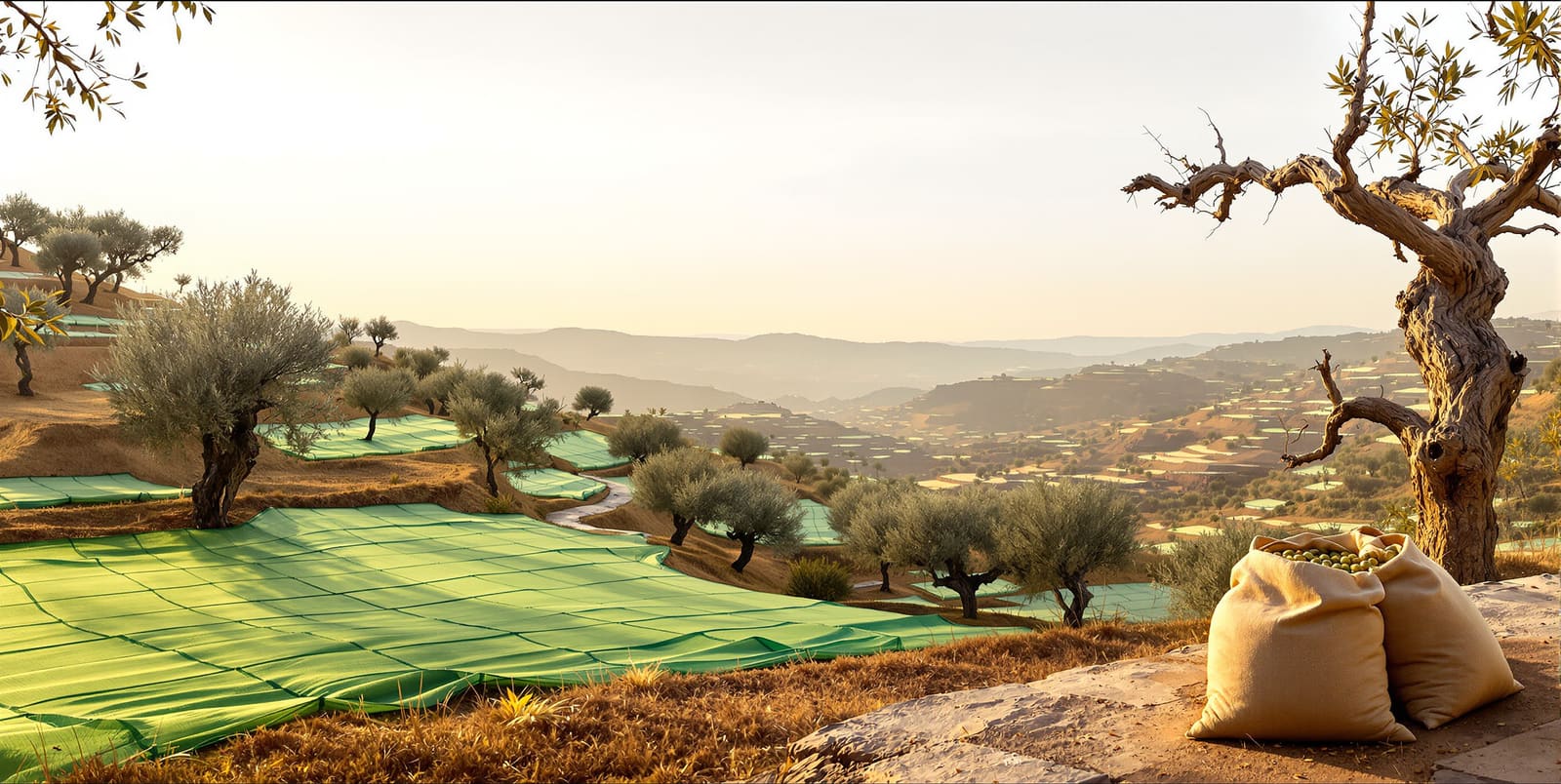
AI illustration, not a photo of the events.
The Israel Defense Forces (IDF) said on Monday that the coordinated olive harvest in the West Bank is nearing its end, and that security forces had secured more than 150 harvest events over the season. In a post on its official account, the IDF said roughly 90% of coordinated harvests had been completed, and cited Civil Administration data putting the crop at between 16,000 and 17,000 tons of olives, enough for about 16 to 17 million liters of oil.
The military also characterised the scale of violence during the season. The Times of Israel reported that, according to the IDF, attacks by Israeli settlers on Palestinians affected only a small minority of the season's harvests. The IDF post, in the portion available to us, says security forces are still working to prevent friction and violence so that residents can harvest their groves.
What the sources posted

🫒 OLIVE HARVEST IN JUDEA & SAMARIA: As the coordinated olive harvest season comes to an end, security forces continue operating to ensure a safe and orderly harvest. So far: • 150+ coordinated harvest events secured by security forces. • ~90% of coordinated harvests Show more


On the ground

A suspected ramming attack occurred in the West Bank near the Tapuach Junction, the IDF announced. jpost.com/israel-news/de…

🔴 Following report of suspected ramming attack in the West Bank, IDF says it was ‘a confrontation between Israeli civilians and Palestinians’
What the IDF figures cover
The numbers the military released describe what it calls coordinated harvests. These are harvests arranged in advance with Israeli security forces, which then provide a presence on the ground while farmers work. The figures therefore speak to the harvests the army was involved in organising, not necessarily to every olive harvest carried out by Palestinian farmers across the territory.
The production estimate is attributed by the IDF to the Civil Administration. That body is part of Israel's Defense Ministry structure and handles civilian matters in parts of the West Bank, including coordination with Palestinian residents. The tonnage and oil volume in the post are presented as ranges and approximations, and that is how they are given here.
Why the olive harvest draws attention
The IDF post refers to the area as Judea and Samaria, the biblical names that the Israeli government and military use for the West Bank. International bodies and most foreign media use the term West Bank.
Israel's week in five stories, every Friday
Sourced and checked by the Israel.com newsroom, with Shabbat times. Free, one-click unsubscribe.
One list, unsubscribe in a click. See our privacy policy.
Olive cultivation is a central part of the agricultural economy and of family and cultural life for many Palestinians in the West Bank. The autumn harvest brings farmers into groves that in some cases lie close to Israeli settlements, and the season has in past years been a recurring point of tension, with reports of confrontations between settlers and Palestinian farmers. That background is why the military publishes figures on the harvest and why the question of how many harvests were disrupted is closely watched.
How the claim was reported
Two reports are available on this event, and they are not independent of each other in substance. The IDF's own post supplies the figures. The Times of Israel item is a brief live blog entry whose headline conveys the military's assessment that settler attacks touched only a small minority of harvests.
There is a gap between the two. The section of the IDF post available to us lists security operations, completion rates and output, but does not itself contain the wording about a small minority of harvests being affected by settler attacks. That characterisation appears in the Times of Israel headline, attributed to the IDF. It may come from a part of the military's statement that is cut off in the version we have, or from separate comments; the material does not say which.
What the reports do not say
- Neither report gives a number for how many harvests were affected by settler attacks, or what share counts as a small minority.
- The IDF does not say what kinds of incidents it counted, whether any arrests followed, or whether the figures include harvests that were not coordinated with security forces.
- No response from Palestinian officials, farmers or human rights organisations appears in the material, so the military's assessment stands here without an outside account to test it against.
- The IDF describes roughly 90% of coordinated harvests as finished; it has not said when the remainder will be completed.
Read next
All security →
Illustration
Security
IDF demolishes West Bank home of Abdallah Khatib, calls move unprecedented
Illustration
Security
IDF says it arrested more than 55 suspects in the West Bank this week
Illustration
Security
Israeli forces clear two illegal West Bank outposts near Atara and Wadi al-Rahim
Illustration
Security
Vehicles set alight at scrapyard in West Bank village of Luban a-Sharqiya
Sources and further reading
Every link below was opened and checked when this page was written. Official statements are marked as such: they are the subject's own account, not an independent one.
- Officialidfx.comIDF on X
- Reportingtoitimesofisrael.comThe Times of Israel
How we checked this
All figures come from the IDF's own post on X, citing Civil Administration data; The Times of Israel reported the military's assessment that settler attacks affected a small minority of harvests. None of these figures or assessments has been independently verified, and no Palestinian or rights group response was in the material.
Our sourcing and corrections policy →
The week from Israel, in one email
The stories that mattered, sourced and checked by the Israel.com newsroom. Free, weekly, one-click unsubscribe.
One list, unsubscribe in a click. See our privacy policy.
Latest
Illustration
File photo
Illustration

File photo
Illustration

Illustration