Iran labels Argentina's air force and navy terrorist organisations
Tehran's move, reported by two Israeli outlets, answers Buenos Aires's designation of the Revolutionary Guards and deepens a long rift between the two countries.
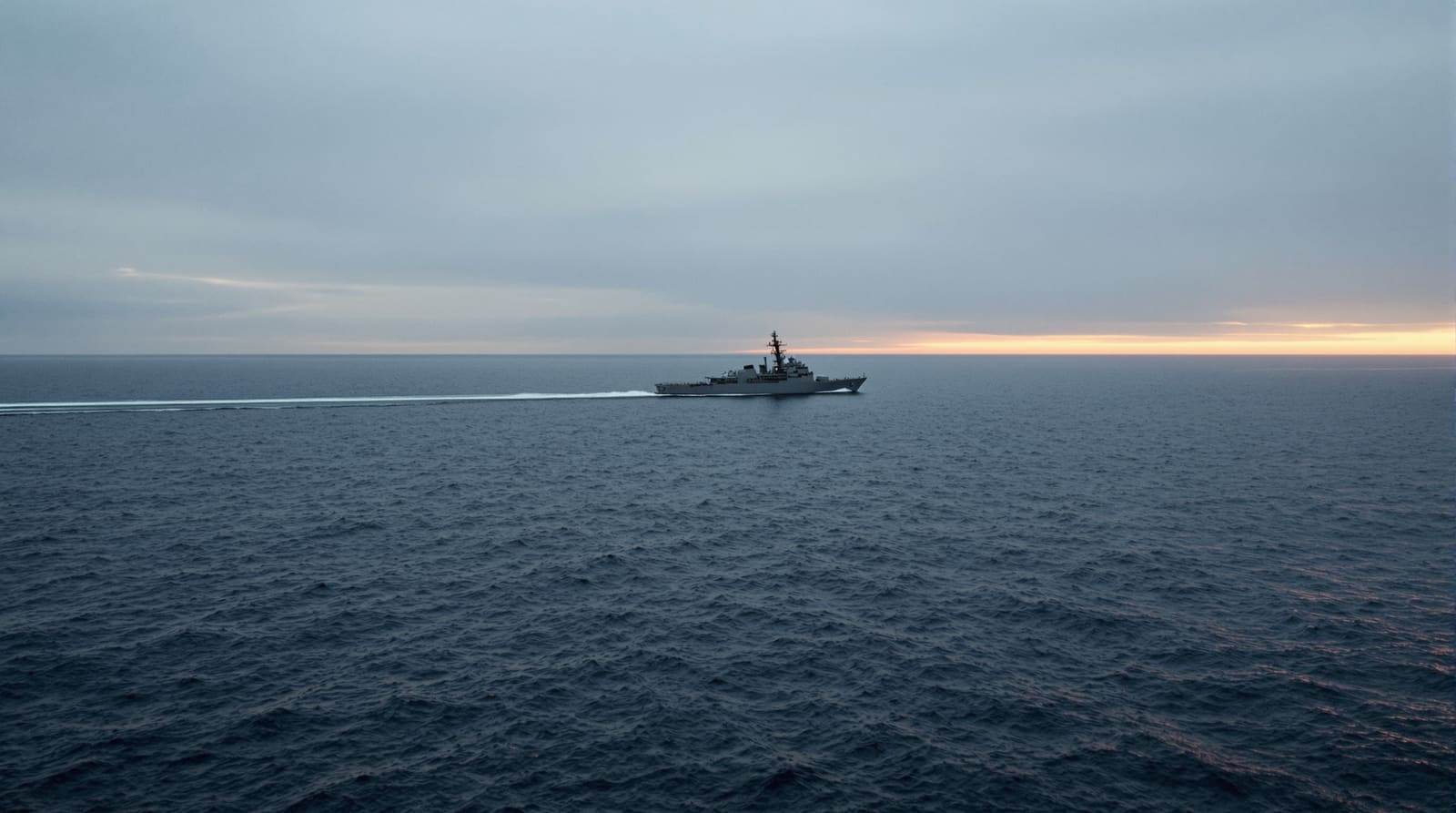
AI illustration, not a photo of the events.
Iran's Foreign Ministry has declared the air force and the navy of Argentina to be terrorist organisations, according to N12 correspondent Asaf Rosenzweig. He reported that the step came in response to a declaration in Buenos Aires designating Iran's Islamic Revolutionary Guard Corps as a terrorist organisation.
Ynet's news alert service carried the same development, attributing the designation of the two Argentine services to Iran. Neither early report carried the wording of an Iranian statement, an explanation of what the listing means in practice, or a reaction from the Argentine government.
A designation answered with a designation
The sequence described in the reports is a reciprocal one. Argentina acted first, placing the Revolutionary Guards on its list of terrorist organisations, and Tehran answered by naming two branches of Argentina's own armed forces. Governments that see a terrorist listing of one of their state bodies as hostile have at times responded in kind, singling out institutions of the country that acted first. The choice of Argentina's air force and navy mirrors the target of the original move: in both cases the listing falls on a part of a national military rather than on a non-state group.
The reports do not say whether Iran's move carries any legal or financial consequence, such as asset freezes or travel restrictions, or whether it is chiefly a political statement.
What the Revolutionary Guards are
The Islamic Revolutionary Guard Corps, often shortened to IRGC, is a branch of Iran's armed forces that exists alongside the regular army. It was created after the Islamic Revolution to protect the clerical system of government, and it has grown into one of the most powerful institutions in the country, with its own ground, naval and air units, a role in Iran's missile programme and wide economic interests. Its external arm, the Quds Force, handles relations with allied armed groups across the Middle East.
Israel's week in five stories, every Friday
Sourced and checked by the Israel.com newsroom, with Shabbat times. Free, one-click unsubscribe.
One list, unsubscribe in a click. See our privacy policy.
Israel regards the Revolutionary Guards as the central organiser of the threats it faces from Iran and its allies, and Israeli officials have for years urged other governments to place the organisation on terrorism lists. A number of Western governments have taken steps against the IRGC, while others have stopped short of a full terrorist designation. For a country to make such a listing is therefore a signal of alignment that Israel welcomes, and one Tehran treats as hostile.
Why Argentina matters in this story
Argentina's relationship with Iran has been strained for decades, and for readers following Israel and Jewish communities abroad the background is significant. Buenos Aires was the scene of two deadly bombings, one against the Israeli embassy and one against the AMIA building, the main Jewish community centre in the city. Argentine prosecutors and courts have attributed those attacks to Iran and to Hezbollah, the Lebanese armed group Iran backs. Iran has denied involvement. Argentina is home to the largest Jewish community in Latin America, and the attacks remain a defining event for it.
Illustration
Next story Security
Iran's military says oil tanker hit a naval mine and caught fire in Hormuz
That history is the backdrop for any Argentine action against Iranian state bodies, and for the sharpness of Tehran's response. The reports seen here do not themselves connect the new designations to the bombings.
How the news reached Israeli audiences
Both items appeared as short bulletins on Telegram channels run by major Israeli news organisations. N12 is the news brand of one of Israel's leading commercial television channels, and Ynet is the website of the Yedioth Ahronoth newspaper group. The N12 item specified that the decision came from Iran's Foreign Ministry and linked it explicitly to the Buenos Aires designation; the Ynet alert, which pointed readers to a fuller article on its site, framed the news more briefly as a declaration by Iran. The two reports do not contradict each other, but only N12 named the issuing body and the reason.
What the reports do not say
- No Iranian statement was quoted, so the stated grounds and the exact scope of the designation are not known from these reports.
- Argentina's response, if any, has not been reported.
- The reports do not say when Argentina's designation of the Revolutionary Guards took effect or which body in Buenos Aires issued it.
- Whether Iran's listing has practical effects beyond the declaration itself is not stated.
Read next
All security →
Illustration
Security
Rafael unveils Super Ice cruise missile with a warhead four times heavier
File photo
Security
Netanyahu's office cites 91 thousand tents in reply to Gaza winter aid criticism

File photo
Security
Bessent's office says he won't be deterred after move to base over Iran threats
Illustration
Security
Vehicles set alight at scrapyard in West Bank village of Luban a-Sharqiya
Sources and further reading
Every link below was opened and checked when this page was written. Official statements are marked as such: they are the subject's own account, not an independent one.
- Reportingkeshett.meN12
- Reportingyediotht.meYnet alerts
How we checked this
The designation was reported separately by N12 and by Ynet's alert service, both Israeli outlets. The attribution to Iran's Foreign Ministry and the link to Argentina's IRGC listing come from N12's report alone; no Iranian or Argentine statement was available to us.
Our sourcing and corrections policy →The week from Israel, in one email
The stories that mattered, sourced and checked by the Israel.com newsroom. Free, weekly, one-click unsubscribe.
One list, unsubscribe in a click. See our privacy policy.
Latest
Illustration
Illustration

Illustration

File photo

File photo