Mansour Abbas says Netanyahu aide sounded him out before attack on Arabs
The Ra'am leader says a Netanyahu confidant asked about his coalition stance, even as the premier publicly branded Arab parties as hostile to Israel.
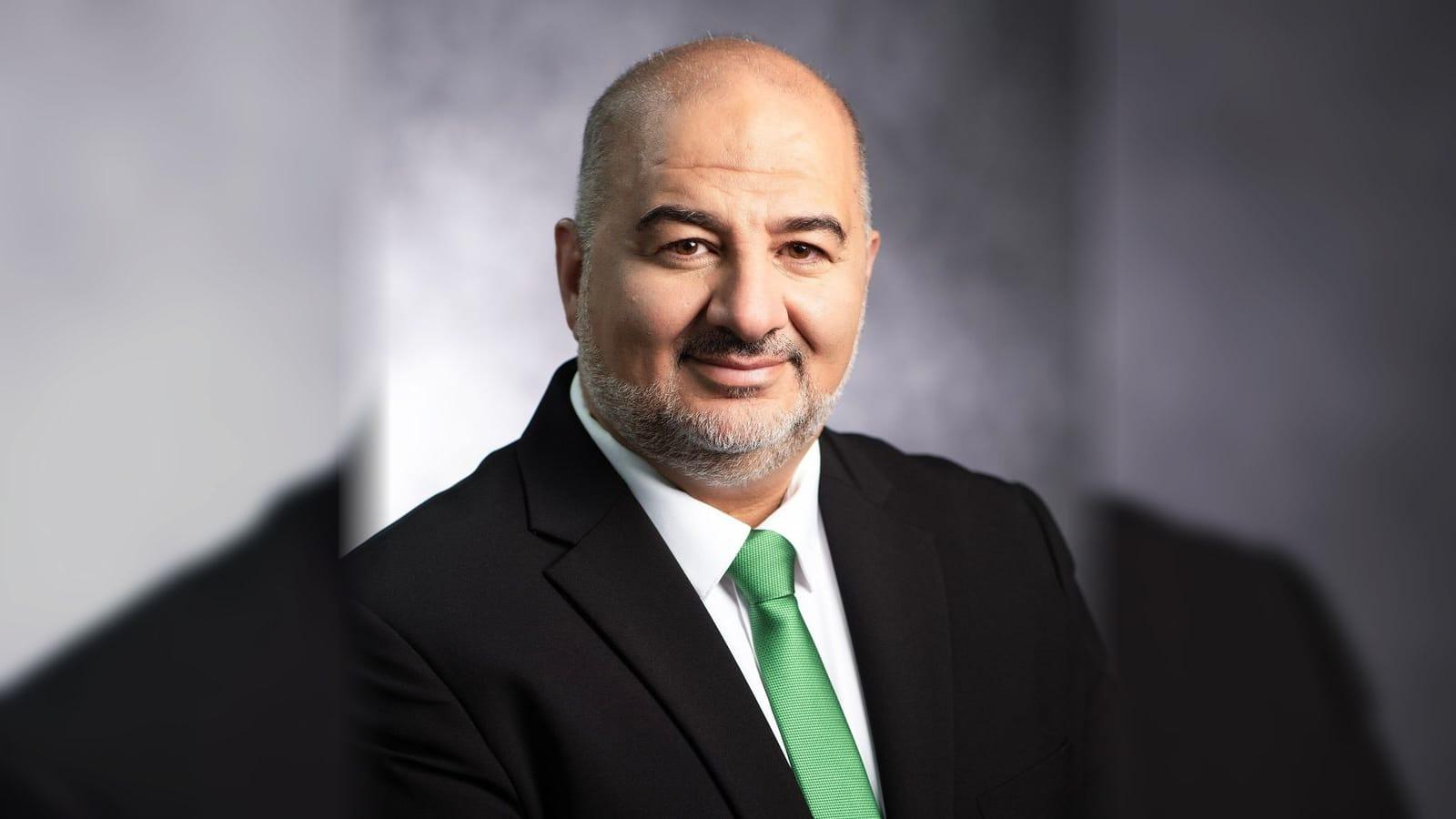
Mansour Abbas. File photo by Sharon Gabay, CC BY-SA 4.0, via Wikimedia Commons.
Mansour Abbas, who leads the Arab party Ra'am, said that a close associate of Benjamin Netanyahu recently contacted him to find out where his party stands, even as Netanyahu was publicly attacking Arab lawmakers. Speaking to Kan, Israel's public broadcaster, Abbas named the go-between as Natan Eshel and said Eshel wrote to him on the premier's behalf, The Times of Israel reported. According to Abbas, the questions concerned a proposed law that would bar anyone facing criminal charges from serving as prime minister, and whether Ra'am would back a coalition to replace Netanyahu's government.
Abbas also criticised a speech Netanyahu gave on the day the new Knesset was sworn in, saying the prime minister had used his official position to stir up hostility toward Arab citizens. Haaretz quoted Abbas as saying on Wednesday that Netanyahu had used someone close to him to make an approach and had engaged him in political discussions, all while publicly calling Arab parties "terror supporters who hate Israel."
On the ground

🔴'Netanyahu is exploiting his position to incite against Arab Israelis,' Ra'am leader Mansour Abbas says following PM's Knesset opening speech
Who Mansour Abbas is and what Ra'am represents
Ra'am is the Hebrew acronym for the United Arab List, the name Haaretz uses in its report. It is one of the parties that represent Arab citizens of Israel in the Knesset, the country's parliament. Abbas is its chairman. His comments came the morning after the swearing in of a new Knesset on November 10, 2026, an occasion at which Netanyahu addressed the chamber. A screenshot from the Knesset's own television channel, published by The Times of Israel, showed Abbas listening as Netanyahu spoke.
The Times of Israel describes Netanyahu as the interim prime minister, while Haaretz refers to him simply as prime minister. The interim label indicates that his government remains in office while the newly sworn in parliament begins its work.
The questions Abbas says he was asked
The two subjects Abbas listed go to the heart of coalition arithmetic after an election. The first is legislation that would prevent a person facing criminal charges from holding the office of prime minister, a measure that would bear on Netanyahu's own position. The second question, as Abbas described it, was whether Ra'am would take part in a coalition formed to replace the government Netanyahu heads.
Get an email the day Israel has a new government.
Coalition talks can take weeks. When a government is sworn in, Israel.com's newsroom emails who leads it, which parties are in and who got which ministry, then the Friday email each week. Free, and one click unsubscribes.
One list, unsubscribe in a click. See our privacy policy.
In the account given to Kan, Abbas quoted Eshel's message as expressing interest in both points. He did not, in the reported excerpts, say how he answered. Natan Eshel is described in the reports as a confidant of Netanyahu.
The two outlets characterise the contact slightly differently. The Times of Israel describes a message sent to gauge Ra'am's position. Haaretz describes Netanyahu as having conducted political talks with Abbas via the associate. The available excerpts do not make clear whether this was a single exchange or a longer conversation.
File photo
A dispute over a remark about Sinwar
Abbas also responded to a denial from Likud, Netanyahu's party, concerning an earlier claim of his. Abbas has said that Netanyahu once told him privately that he and Yahya Sinwar, who was then the leader of Hamas, "understand each other." Likud has rejected that account.
Abbas told Kan he was prepared to undergo a polygraph test, and that Netanyahu could do the same, so that it could be established which of them was being truthful. He added that other people had been present in the room at the time. The reports do not identify who those people were.
The speech at the centre of the row
According to Haaretz, Netanyahu's public remarks cast Arab parties as supporters of terrorism who are hostile to Israel. Abbas's complaint is that the prime minister used a state platform to do so. The core of his argument is the contrast between that public message and what he says was a private approach from Netanyahu's circle seeking Ra'am's views on coalition questions.
For readers following Israeli politics from abroad, the episode reflects a recurring tension. Arab parties are often attacked in political rhetoric, while their seats can matter when either camp tries to assemble a majority. Abbas is presenting the contact as evidence of that gap between rhetoric and practice.
What the reports do not say
Neither report includes a response from Netanyahu, his office or Natan Eshel to Abbas's account of the message, and Abbas has not, in the reported excerpts, published the message itself. The reports also do not say how Ra'am answered the two questions, or who the other people present for the alleged Sinwar remark were.
Read next
All elections →
File photo
Security
Ra'am's Mansour Abbas backs Eisenkot for prime minister, says Hamas must disarm
File photo
Elections
Yair Golan confirms coalition talks with Ra'am leader Mansour Abbas
File photo
Elections
Jim Jordan beats Steve Scalise 106-73 to lead House Republicans in minority
File photo
Elections
Joint List vows to work to oust Netanyahu after his new-Knesset speech
Sources and further reading
Every link below was opened and checked when this page was written. Official statements are marked as such: they are the subject's own account, not an independent one.
- Reportingtoitimesofisrael.comThe Times of Israel
- Reportinghaaretzhaaretz.comHaaretz
How we checked this
The account of the contact with Natan Eshel was reported by The Times of Israel and Haaretz, both citing Abbas himself; it rests on his word, and no response from Netanyahu or Eshel appears in either report. Likud's denial of the Sinwar remark is reported only by The Times of Israel.
Our sourcing and corrections policy →The week from Israel, in one email
The stories that mattered, sourced and checked by the Israel.com newsroom. Free, weekly, one-click unsubscribe.
One list, unsubscribe in a click. See our privacy policy.

Israel.com is free, and readers like you keep it that way.
The Israel.com newsroom checks every story against its sources and publishes it free. If this one helped, a contribution of any size keeps the next one free too.
One payment, nothing to sign up for. Another amountGive monthly
Latest

Illustration

Illustration
File photo
File photo

Illustration
File photo