Satellite images show cleanup and traffic at Iran's bombed Minzadehei site
A Washington think tank says imagery shows debris cleared and vehicles back at an underground Iranian nuclear facility that Israel struck in March 2026.
Illustration
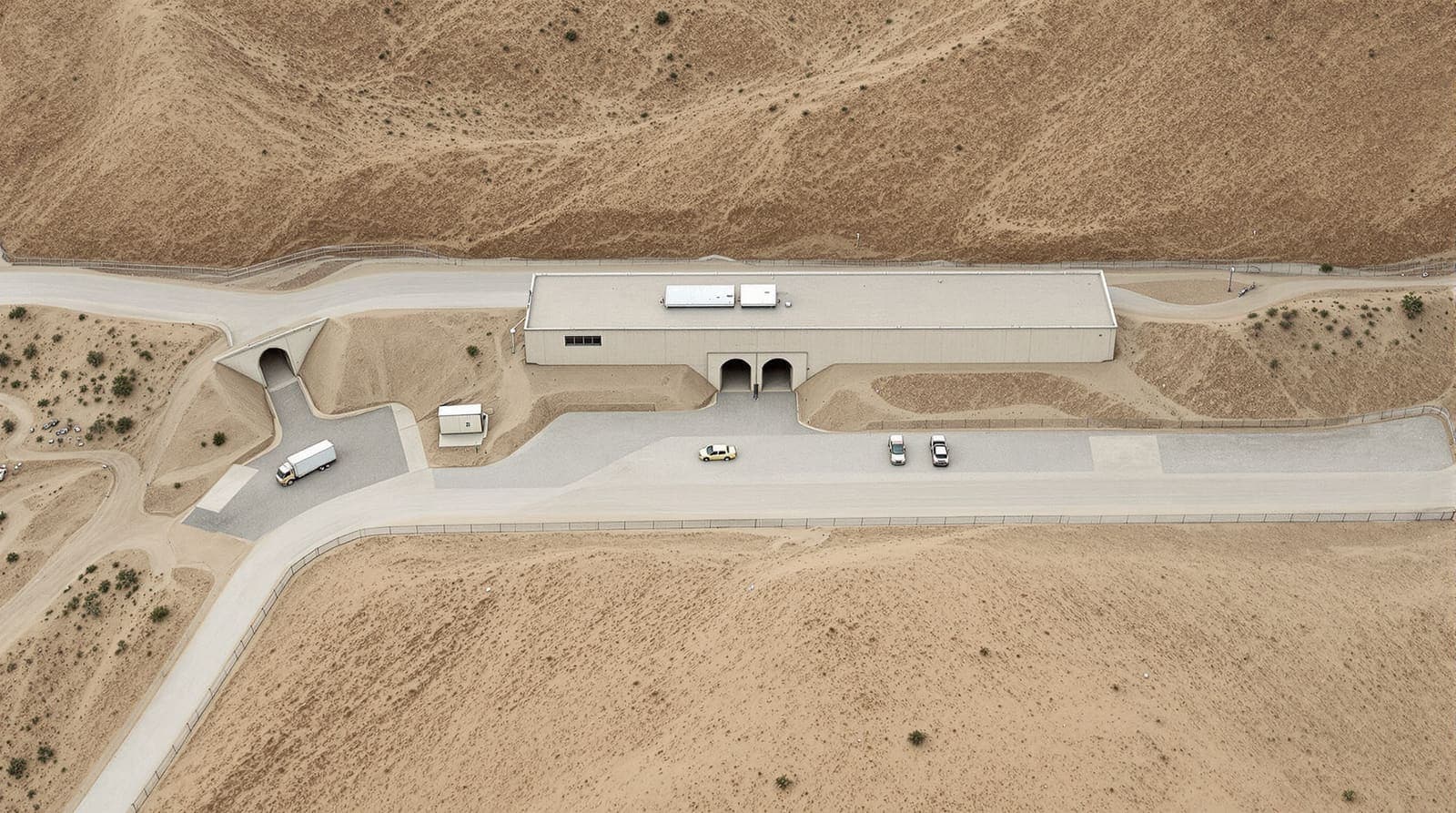
An underground Iranian nuclear facility near Tehran that the Israel Defense Forces (IDF) bombed earlier this year is busy again, according to new satellite imagery analysed by the Institute for Science and International Security. The Times of Israel reported that the think tank, which is based in Washington, published its findings on Tuesday and described the activity at the Minzadehei site as "significant renewed activity".
According to the institute, the images show that rubble and debris were cleared from the site and that damage on the hillside was repaired, after which regular vehicle traffic returned. The think tank said many vehicles were visible across the compound between early September and early October 2026, with cars in a parking lot outside the security perimeter and both passenger vehicles and trucks inside it. The Israeli news site Ynet reported that the work, coming after buildings both above and below ground were destroyed, may point to an Iranian effort to rebuild a capacity to develop nuclear weapons and to recover what was lost in the strike.
What the Minzadehei site is
The facility sits near Tehran and is built underground, according to the reports. Hebrew-language coverage in Ynet renders the name slightly differently in transliteration, but it refers to the same compound. The Jerusalem Post described it as a secret Iranian nuclear site, and a photo caption it carried, credited to the IDF Spokesperson's Unit, called it a secret Iranian nuclear weapons development site that the IDF destroyed on March 3, 2026.
The reports do not describe in detail what work was carried out at the site before the strike, beyond the Israeli military's characterisation of it as connected to weapons development.
The strike and the war with Iran
The site was hit during the war between Israel and Iran this year. Ynet reported that the compound was attacked in March 2026 as part of the operation Israel called "Roaring Lion", a translation of its Hebrew name, Sha'agat HaAri. Israeli military operations are typically given code names of this kind, and Israeli media refer to the campaign by that name.
According to Ynet, the strike destroyed structures on the surface and beneath it. The new imagery does not, on the institute's account, show what is happening underground; it shows cleanup work, repairs to the hillside and the movement of vehicles in and around the perimeter.
Who produced the imagery and the analysis
The Institute for Science and International Security is a think tank in Washington that studies nuclear programmes and frequently publishes analysis of commercial satellite imagery. The Times of Israel noted that the institute has released several studies in recent months. The annotated image accompanying its latest findings, showing the locations of the IDF strikes and the reconstruction that followed, was credited to the institute and to Vantor Technologies, a commercial satellite imagery provider. The Jerusalem Post also cited imagery from Vantor.
Commercial satellite pictures of this kind can show changes at the surface over time, such as cleared debris, vehicle counts and construction, but they generally cannot reveal activity inside buried facilities. That limitation applies to Minzadehei, which the reports describe as underground.
How the reports differ
The three news organisations agree on the basic facts: renewed activity at an underground site near Tehran that Israel bombed this year. They differ in emphasis. The Times of Israel and The Jerusalem Post present the findings as the think tank's observations of vehicles and cleanup. Ynet goes further in its framing, saying the activity may indicate an attempt to restore a weapons development capability. That interpretation is presented in Ynet's report as a possibility, not as a confirmed conclusion, and none of the reports attributes a statement about Iranian intentions to an Iranian or Israeli official.
What the reports do not say
The reports do not say what Iran is doing inside the facility, or whether any equipment or nuclear material has been brought back. They do not include a response from the Iranian government, nor a comment from the Israeli government or the IDF on the new imagery. They do not say whether the International Atomic Energy Agency or any other inspection body has visited the site since the strike. They also do not explain how extensive the repairs are, how long reconstruction might take, or whether the vehicle activity reflects rebuilding, salvage or some other purpose.
Sources and further reading
Every link below was opened and checked when this page was written. Official statements are marked as such: they are the subject's own account, not an independent one.
- Reportingyediothynet.co.ilYnet
- Reportingyediotht.meYnet alerts
- Reportingtoitimesofisrael.comThe Times of Israel
- Reportingjpostjpost.comThe Jerusalem Post
How we checked this
The renewed activity was reported by The Times of Israel, The Jerusalem Post and Ynet, all drawing on satellite analysis by the Institute for Science and International Security using Vantor imagery; we have not examined the imagery ourselves. The suggestion that Iran may be restoring a weapons capability appears in Ynet's report and is not confirmed by any official.
Our sourcing and corrections policy →The week from Israel, in one email
The stories that mattered, sourced and checked by the Israel.com newsroom. Free, weekly, one-click unsubscribe.
One list, unsubscribe in a click. See our privacy policy.
More in Transport
All transport →


Latest
- Man around 40 seriously hurt in Givat Hen stabbing, taken to Meir hospital
- Israel's army, police and Shin Bet chiefs meet ahead of October 27 election
- Netanyahu warns Hamas against trying to influence elections, claims 4,000 killed
- Haredi crowd in Modiin halts arrest of draft deserter, policewoman hurt
- Jerusalem car bomb hurts crime figure and son, 13, days before bar mitzvah
- IDF holds 06:29 memorial ceremonies across all sectors, three years after October 7