Washington Post photographer Heidi Levine has surgery after West Bank settler attack
Heidi Levine was beaten near Ramallah while photographing the olive harvest, and the Jerusalem Post reports that US lawmakers have condemned settler violence.
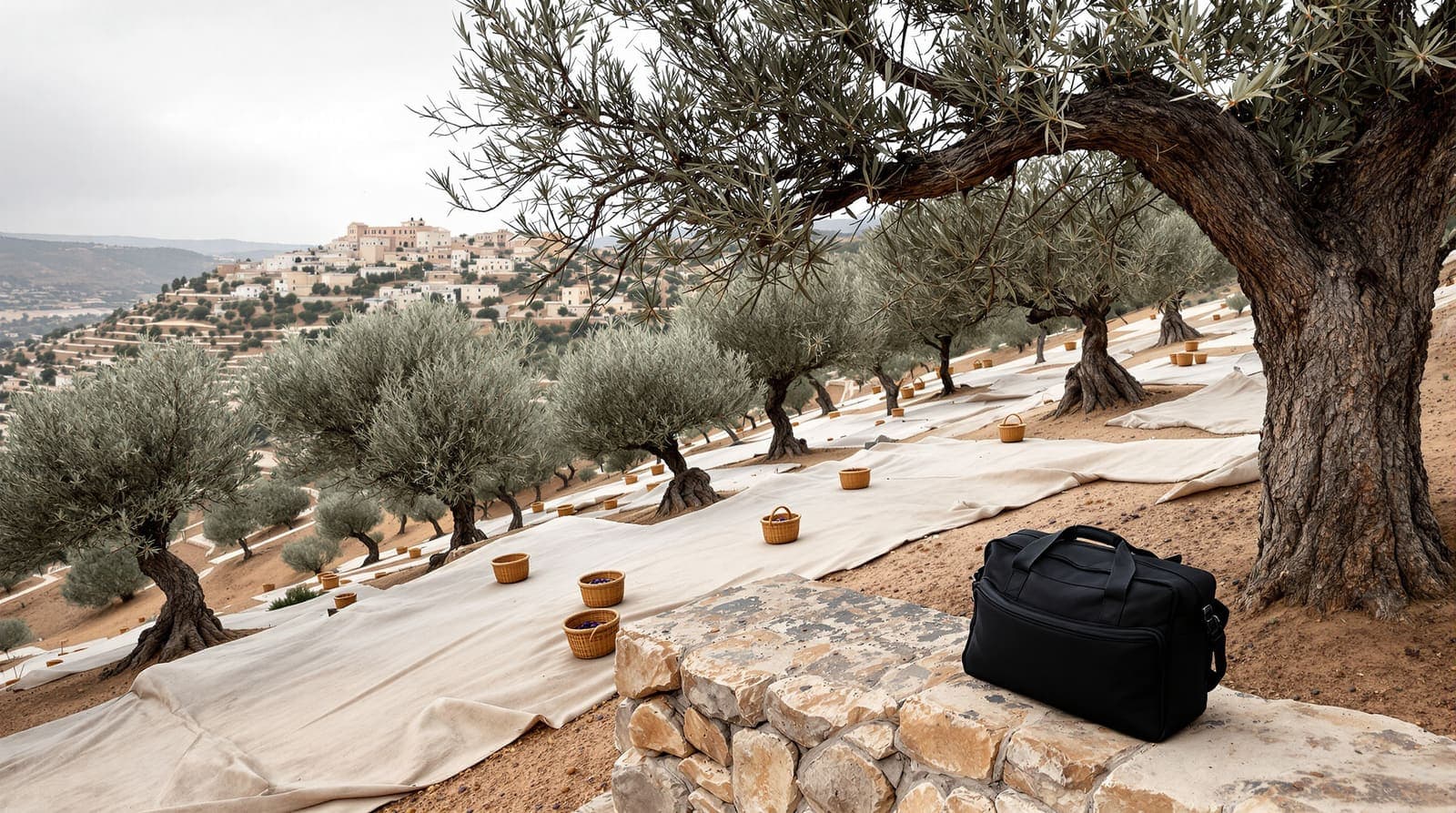
AI illustration, not a photo of the events.
Heidi Levine, an American photographer working for the Washington Post, was undergoing surgery on a finger that was nearly severed after Israeli settlers beat her in the West Bank, her daughter said. The Times of Israel, citing an interview the daughter, Ashley Milner, gave to The Associated Press, reported that the cut on Levine's left hand went down to the bone and exposed a tendon. Milner said her mother also has a broken rib, several broken vertebrae and cuts over much of her body.
According to a photo caption carried by The Times of Israel, the attack happened on October 16, 2026, in the Palestinian village of Abu Falah, where Levine was photographing farmers picking olives, and she was afterwards treated at the government hospital in Ramallah. Levine said her attackers carried bottles and slingshots and that they kicked her for around 10 minutes. The Jerusalem Post reported that US lawmakers have condemned settler violence following the incident, though the material available does not name them or quote their statements.
On the ground

Masked Israeli settlers attacked Palestinian villagers on Friday, setting olive groves on fire and slinging rocks. Caught in the attack was Post photographer Heidi Levine. “They just kept kicking me and kicking me, like probably 50 times,” Levine said. wapo.st/4yt6dHY
Video from The Washington Post. Tap to play. Nothing from it is shown until you do.

Washington Post photojournalist Heidi Levine was hospitalized after settlers brutally beat and robbed her while she covered the West Bank olive harvest. The attack drew condemnation from the U.S. Embassy, press freedom groups and Israel's journalists' union. Levine described a Show more
Video from Haaretz. Tap to play. Nothing from it is shown until you do.
A wider day of attacks
The Times of Israel described the assault on Levine as one part of a broader wave of settler attacks on Palestinian villages across the West Bank that day, in which cars and trees were set on fire and residents were beaten. It placed the violence in the context of repeated disruption to this month's olive harvest. Ynet, the news site of the Israeli daily Yedioth Ahronoth, reported the same injuries in Hebrew, referring to the attackers as Jewish rioters, and also quoted Levine's account of being kicked for about 10 minutes. A Ynet news alert repeated the daughter's description of a nearly amputated finger and broken vertebrae and ribs.
Where this took place
The West Bank is the territory between Israel and the Jordan River that Israel has held since the Six Day War. Ramallah, a city north of Jerusalem, is the administrative centre of the Palestinian Authority. Many Palestinian villages around it sit close to Israeli settlements, and Israelis often refer to the northern part of the West Bank by its biblical name, Samaria.
The autumn olive harvest is a central part of the agricultural and economic year for Palestinian farming families. In recent years it has regularly been accompanied by friction with nearby settlers, and Israeli and international activists, as well as journalists, often accompany farmers to their groves.
A disputed account from the local council
Not every report frames the event the same way. Abu Ali Express, an Israeli Telegram channel that covers Arab and Palestinian affairs, reported that the spokesperson's office of the Binyamin Regional Council had warned about the gathering in advance. The Binyamin Regional Council is the Israeli municipal body that administers settlements in the area around Ramallah. According to that report, the council described the arrival of hundreds of Palestinians and anarchists, accompanied by journalists, as a deliberate provocation planned ahead of time, and claimed the event had been directed by others. The excerpt available is cut off before it says by whom.
The Jerusalem Post's photo caption, by contrast, describes an altercation in which extremist Israeli settlers confronted Palestinians harvesting olives. The council's account and the descriptions in the other reports are not reconciled in the material.
What the reports do not say
- None of the reports names the US lawmakers who condemned the violence or quotes what they said.
- There is no statement in the material from the Israel Defense Forces, the Israel Police or the Washington Post.
- The reports do not say whether anyone has been arrested or questioned over the attack on Levine.
- It is not stated how many Palestinians were hurt in the wider attacks that day or how many villages were affected.
- The Binyamin council's claim about who organised the gathering is incomplete in the available excerpt and is not addressed by the other outlets.
Sources and further reading
Every link below was opened and checked when this page was written. Official statements are marked as such: they are the subject's own account, not an independent one.
- Reportingyediothynet.co.ilYnet
- Reportingyediotht.meYnet alerts
- Reportingjpostjpost.comThe Jerusalem Post
- Reportingabualiexpresst.meAbu Ali Express
- Reportingtoitimesofisrael.comThe Times of Israel
How we checked this
Levine's injuries are reported by Ynet and The Times of Israel, both relying on her daughter's account, with the latter citing The Associated Press. The condemnation by US lawmakers comes from The Jerusalem Post alone, and the Binyamin Regional Council's description of a planned provocation is reported only by Abu Ali Express.
Our sourcing and corrections policy →The week from Israel, in one email
The stories that mattered, sourced and checked by the Israel.com newsroom. Free, weekly, one-click unsubscribe.
One list, unsubscribe in a click. See our privacy policy.

Israel.com is free, and readers like you keep it that way.
The Israel.com newsroom checks every story against its sources and publishes it free. If this one helped, a contribution of any size keeps the next one free too.
One payment, nothing to sign up for. Another amount
More in Health
All health →

Latest
- Israeli hurt in road accident near Beit Lid after clash, reports say
- Iran gives Houthis targeting intelligence for Saudi strikes, WSJ reports
- Iran's Guards say tanker carrying 2 million barrels hit mine in Hormuz
- Met Police assess Sarah Helm post backing Palestine Action, a banned group
- Katie Zacharia out as White House press secretary after 5 days in the job
- Italy widens flotilla abuse probe to Katz, IDF chief Zamir and police head