CENTCOM says it diverted 150 vessels trying to break Iran blockade
US Central Command released figures on its naval blockade of Iran, citing turned-back ships, blocked oil exports and escorted tankers in the Strait of Hormuz.
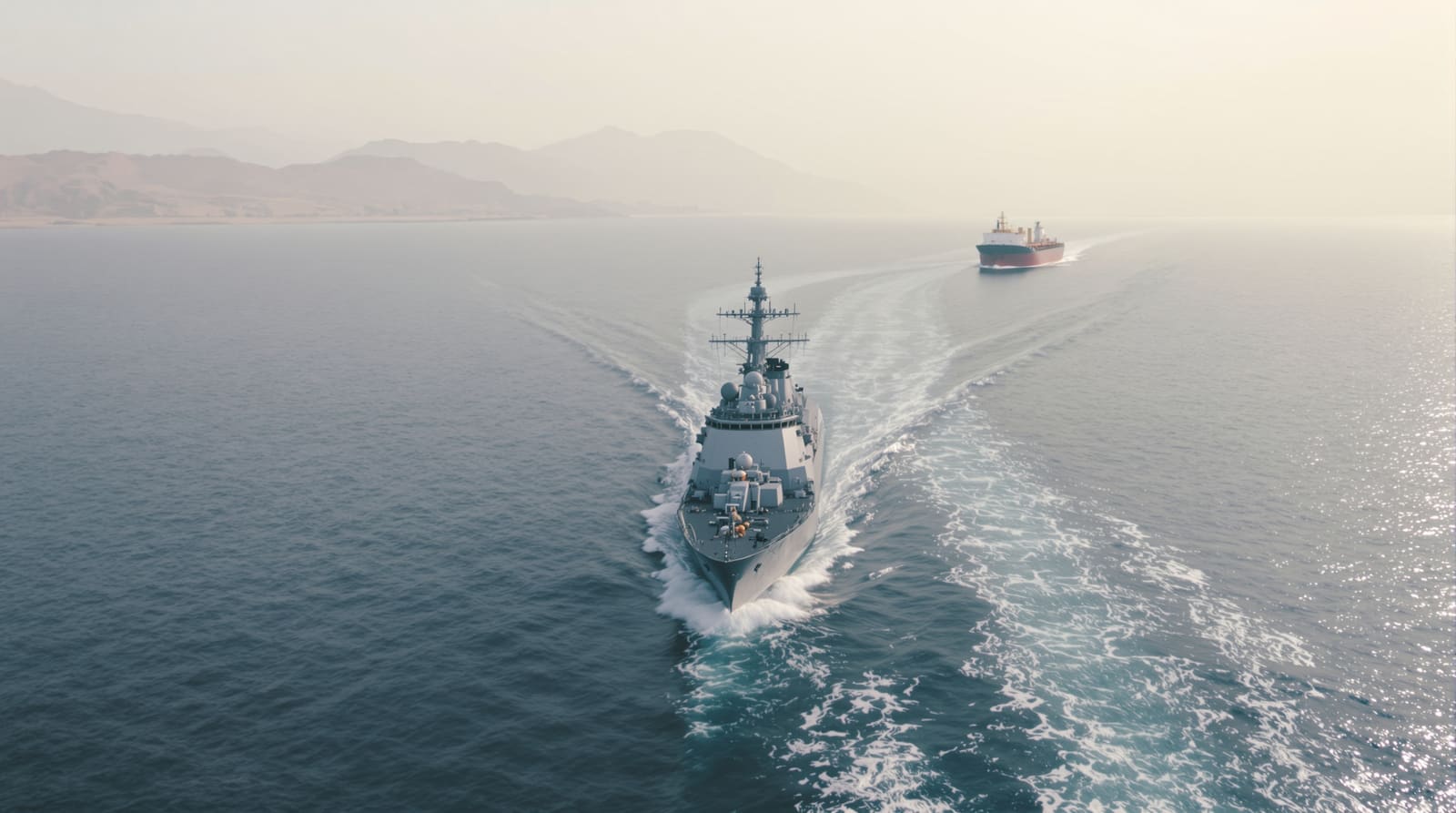
AI illustration, not a photo of the events.
United States Central Command, the American military headquarters responsible for the Middle East, has released new figures on its naval blockade of Iran. According to the command's update as relayed by the Hebrew-language channel Abu Ali Express, American forces have turned back 150 vessels that tried to break the blockade since July, and have prevented Iranian oil exports worth $30 billion.
The same update said about 4,000 ships had crossed the Strait of Hormuz with American help, and that 1.7 billion barrels of oil had moved through the strait under American protection. News.co.il reported that CENTCOM described its forces as working around the clock both to keep shipping lanes in the strait open and to enforce the maritime blockade, and said they were also blocking Iranian attempts to move weapons and restricted goods by land and across the Caspian Sea.
What CENTCOM is and what it says it is doing
Central Command, usually shortened to CENTCOM, is one of the regional commands of the US military. Its area covers the Middle East, including Iran and the Gulf waters around it, which is why announcements on the blockade come from this headquarters rather than from Washington directly.
The update, as both Israeli outlets presented it, has two strands. The first is the blockade itself: stopping ships that try to reach or leave Iran in defiance of it, and with that, cutting off oil sales. The second is protection of commercial traffic that is not bound for Iran, with CENTCOM presenting the thousands of escorted or assisted transits as evidence that the waterway remains usable for shipping.
News.co.il's account adds a third element. It said American forces were working to frustrate efforts by Iran's Islamic Revolutionary Guard Corps, the elite military body that answers directly to Iran's supreme leader and runs much of the country's weapons and smuggling activity, to move advanced weapons systems, dual-use technology and sanctioned materials. Dual-use refers to goods and technology with both civilian and military applications. According to that report, the aim is also to deny Iran smuggling routes that could bring in off-the-books revenue.
Israel's week in five stories, every Friday
Sourced and checked by the Israel.com newsroom, with Shabbat times. Free, one-click unsubscribe.
One list, unsubscribe in a click. See our privacy policy.
Why the Strait of Hormuz matters
The Strait of Hormuz is the narrow sea passage between Iran to the north and Oman to the south that links the Persian Gulf to the open ocean. Tankers carrying oil from Gulf producers have to pass through it, which makes it one of the most closely watched shipping routes in the world. Iran's position along its northern shore has long given Tehran the ability to threaten traffic there, and keeping the strait open is a stated priority of the American naval presence in the region.
The figure of 1.7 billion barrels, as reported, refers to oil that passed through the strait under American protection, not to Iranian oil. The $30 billion figure, by contrast, refers to Iranian exports that CENTCOM says it stopped.

Illustration
The Caspian route
The mention of the Caspian Sea points beyond the Gulf. The Caspian is an inland sea on Iran's northern border, shared with Russia, Azerbaijan, Kazakhstan and Turkmenistan. A naval blockade in the Gulf does not reach it directly, so CENTCOM's reference to land routes and Caspian shipping, as reported by News.co.il, indicates that American efforts against Iranian smuggling extend to routes that bypass the southern sea lanes. The report did not say what methods are used there.
Why this matters to Israeli readers
Iran is Israel's principal regional adversary, and the Revolutionary Guard is the arm of the Iranian state most associated with arming groups hostile to Israel. Israeli media therefore follow closely any measure that limits Iran's income or its ability to move weapons. Both reports here came from Israeli Telegram news channels relaying the American statement, and News.co.il framed the update as a sign that the blockade on Iran is tightening.
What the reports do not say
Neither report links to or quotes the original CENTCOM statement, so its full wording and any detail beyond these figures are not available here. The reports do not say which year's July marks the start of the count, how the $30 billion value was calculated, what happened to the 150 diverted vessels or their cargo, or which countries' ships were involved. No Iranian response to the figures has been reported, and none of the numbers has been independently confirmed.
Read next
All security →
File photo
Security
IDF chief Zamir tours Jordan border, tells troops to expect surprise on all fronts
File photo
Security
Trump tells Arlington crowd the US has won the Iran war but wants 'total victory'

File photo
Security
Iran's Ghalibaf says Strait of Hormuz will not go back to its pre-war state

File photo
Security
Ex-Mossad chief Barnea calls Trump's Iran decision right for generations
Sources and further reading
Every link below was opened and checked when this page was written. Official statements are marked as such: they are the subject's own account, not an independent one.
- Reportingabualiexpresst.meAbu Ali Express
- Reportingnewssilt.meNews.co.il
How we checked this
The figures and operational claims come from US Central Command as relayed by two Israeli Telegram news channels, Abu Ali Express and News.co.il; we have not seen the original statement, and the numbers have not been independently verified.
Our sourcing and corrections policy →The week from Israel, in one email
The stories that mattered, sourced and checked by the Israel.com newsroom. Free, weekly, one-click unsubscribe.
One list, unsubscribe in a click. See our privacy policy.
Latest

File photo

Illustration

File photo

Illustration

File photo
File photo