Eisenkot says coalition talks are progressing a week into his mandate
Gadi Eisenkot says talks with partners are advancing toward a stable government he would lead, while bloc figures describe contacts so far as only initial soundings.
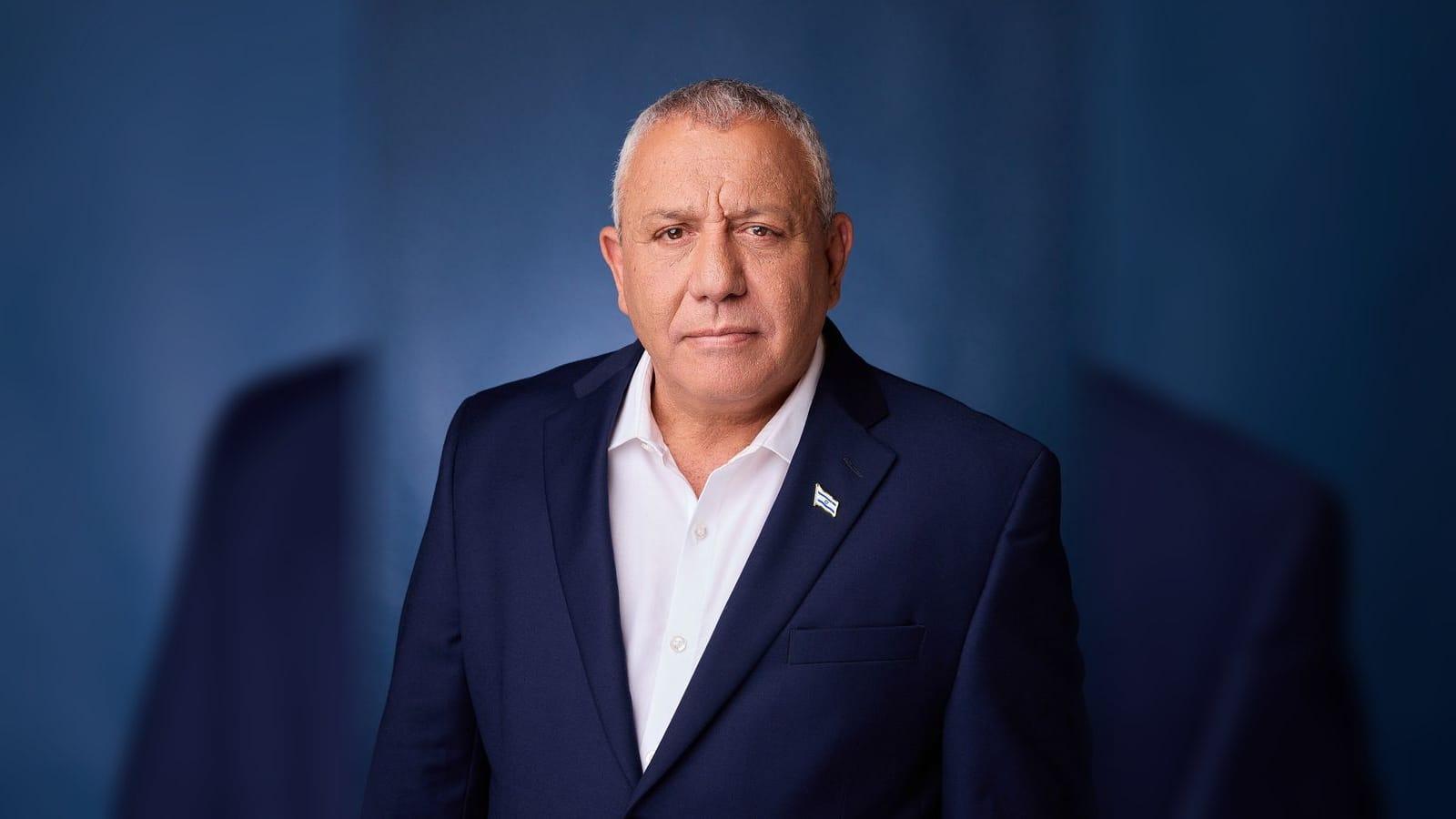
Gadi Eisenkot. File photo by יהב טרודלר (Yahav Trudler - Yahav Studio), CC BY-SA 3.0, via Wikimedia Commons.
Gadi Eisenkot, the chairman of the Yashar! party, said that his negotiations with prospective coalition partners are moving forward, roughly a week after he was handed the mandate to try to form Israel's next government. In a statement published on the Telegram channel of political commentator Amit Segal, Eisenkot said he was glad to report progress in talks with partners, and that he was at the same time working to exhaust every available option so that a good and stable government under his leadership could be established. He added that there was no other alternative.
Eisenkot also said he intended to leave no stone unturned and to speak with any elected official who accepts what he called his four principles, with the aim of forming a stable government quickly. He described this as both the need of the moment and the mandate voters had given him, and said it would be a bitter mistake not to pursue it. Ynet reported that the negotiations are running along two parallel tracks, and that alongside the coalition contacts, Eisenkot has also had to concentrate on moves aimed at gaining control of the Knesset, Israel's parliament.
On the ground

Netanyahu, Eisenkot hold two-hour security briefing amid Iran tensions Yashar! leader was briefed on Israel’s security and diplomatic challenges after demanding updates during coalition talks; the two agreed to continue sharing inf... ynetnews.com/article/bkufgo…

What the mandate means
In Israel's parliamentary system, no party has historically won a majority on its own, so governments are built from coalitions. After an election, the president consults the parties represented in the Knesset and then assigns one member the task of assembling a coalition that can command a majority. That assignment is commonly referred to as the mandate. The holder has a limited period to complete the task, which the president can extend, and if it fails, the process can pass to another candidate. Eisenkot, a former chief of staff of the Israel Defense Forces, now holds that mandate.
Competing accounts of the progress
The two reports present different pictures of how far the talks have advanced. Eisenkot's own statement speaks of progress with partners and of efforts to consolidate the partnership and widen the options. Ynet, however, reported that within the political bloc, people are saying that only preliminary feelers have taken place so far. The reports do not make clear which parties or which officials are behind that assessment.
According to Ynet, Eisenkot has also set out a sequence for his plans, saying he would first establish an emergency government and then do everything possible to broaden it. The report did not detail what an emergency government would look like, which parties it would include, or how long it would be intended to last.
Get an email the day Israel has a new government.
Coalition talks can take weeks. When a government is sworn in, Israel.com's newsroom emails who leads it, which parties are in and who got which ministry, then the Friday email each week. Free, and one click unsubscribes.
One list, unsubscribe in a click. See our privacy policy.
The Haredi question and Netanyahu
Ynet pointed to two further threads in the negotiations. One is concern about the exposure of contacts with the Haredi, or ultra-Orthodox, parties. Haredi parties have been frequent coalition partners in Israeli governments, and any talks between them and a candidate from outside their usual alliances tend to be politically sensitive for both sides.
The second is a joint announcement issued by Eisenkot and Benjamin Netanyahu, the leader of Likud. Ynet raised the question of whether that joint statement suggests any prospect of a unity government, a broad coalition spanning rival camps. The report framed this as an open question rather than as a development under way, and neither report gave the contents of the joint announcement.
The four principles
Eisenkot has made acceptance of four principles a condition for joining talks with him. His statement, as published, refers to them without listing them, and neither report sets them out. He presented his approach as a deliberate method for running the negotiation: building up the partnership first, expanding the options, and advancing cooperation.
What the reports do not say
- Which parties Eisenkot is negotiating with, and whether any has agreed to join a government he leads.
- What the four principles are.
- What the joint announcement with Netanyahu said, and whether Likud has responded to the idea of unity.
- What the moves to gain control of the Knesset involve.
- Any response from the Haredi parties to the reported contacts.
Read next
All government →
File photo
Elections
Eisenkot calls Netanyahu's attacks on Arab citizens racist, plays down defection threat
File photo
Elections
Eisenkot says he told Netanyahu the government needs tight oversight
File photo
Government
Turkey and Qatar sign mutual defense pact as Erdogan hosts emir in Istanbul

File photo
Government
France's foreign minister calls Israel's entry ban on Melenchon 'demagogic'
Sources and further reading
Every link below was opened and checked when this page was written. Official statements are marked as such: they are the subject's own account, not an independent one.
- Reportingamitsegalt.meAmit Segal
- Reportingyediothynet.co.ilYnet
How we checked this
Eisenkot's statement on progress was relayed on Amit Segal's Telegram channel; the description of parallel tracks, bloc skepticism, Haredi contacts and the joint statement with Netanyahu comes from Ynet alone.
Our sourcing and corrections policy →The week from Israel, in one email
The stories that mattered, sourced and checked by the Israel.com newsroom. Free, weekly, one-click unsubscribe.
One list, unsubscribe in a click. See our privacy policy.

Israel.com is free, and readers like you keep it that way.
The Israel.com newsroom checks every story against its sources and publishes it free. If this one helped, a contribution of any size keeps the next one free too.
One payment, nothing to sign up for. Another amountGive monthly
Latest

Illustration

File photo

Illustration

File photo

Illustration

Illustration