Iran building about 50 ballistic missiles a month, Western estimate says
A Western intelligence estimate cited by Bloomberg says Iran is producing missiles at roughly half its prewar pace and may still hold at least 1,700 of them.
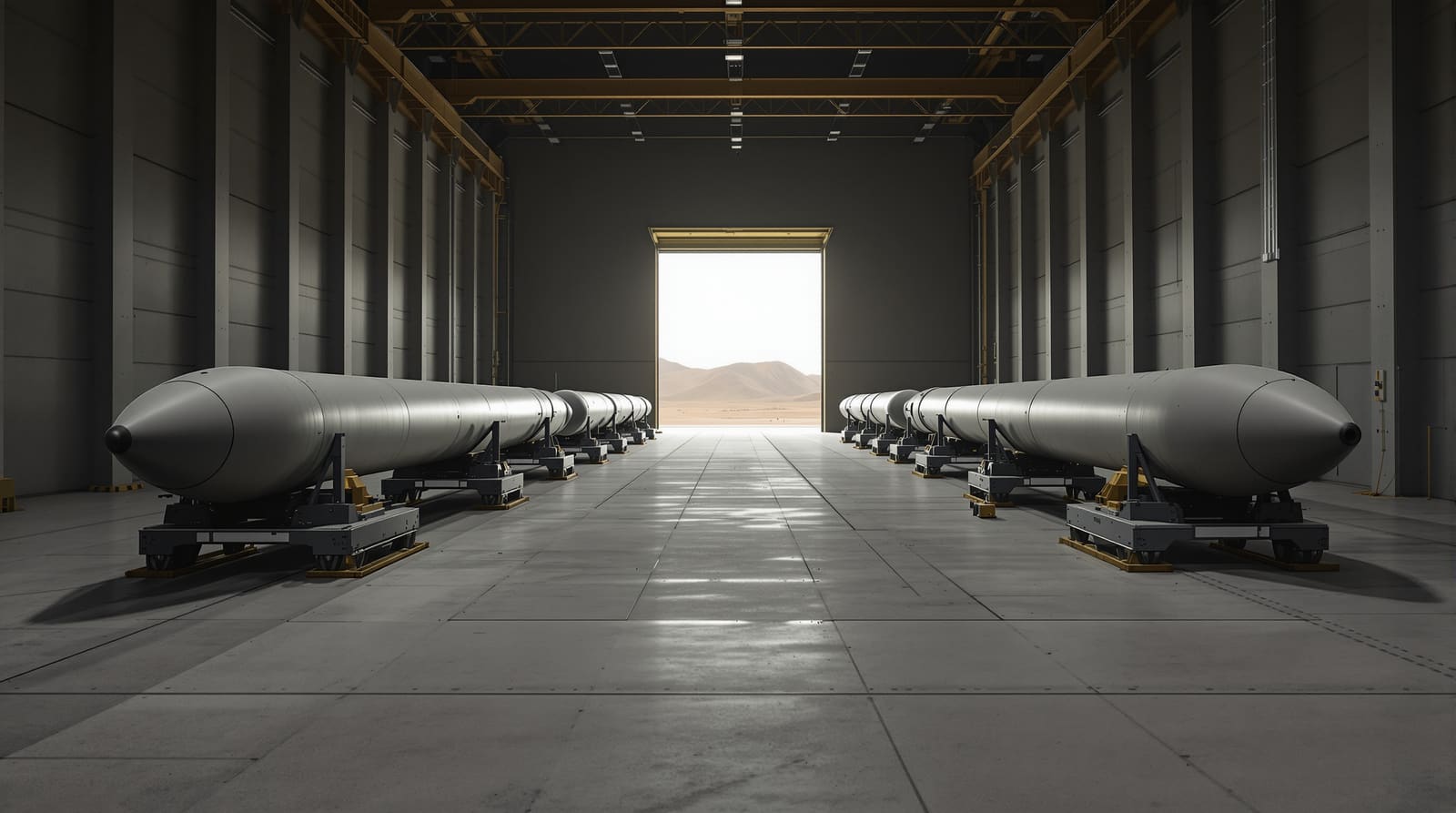
AI illustration, not a photo of the events.
Iran is manufacturing roughly 50 ballistic missiles each month, around half of what it could produce before the war, according to a Western intelligence estimate that Bloomberg reported on Wednesday. Israel Hayom, citing the Bloomberg report, said the figure shows Tehran has kept a meaningful production capacity despite months of airstrikes.
An unnamed Western official who spoke to Bloomberg pointed to intelligence assessments finding that most of Iran's conventional military had been destroyed by the joint air campaign the United States and Israel launched in February. Even so, The Times of Israel reported, the same assessments concluded that Iran probably still holds at least 1,700 ballistic missiles and continues to add to that number.
Where the figures come from
Neither Israeli outlet obtained the intelligence directly. Both are relaying a Bloomberg report, and Bloomberg in turn relied on a single Western official who was not named and on intelligence estimates that have not been published. The country or agency behind the estimate has not been identified in the reports.
The two Israeli accounts describe the production rate in slightly different terms. The Times of Israel headline says Iran is producing "up to" 50 missiles a month, while its text and the Israel Hayom report put the figure at about 50. Israel Hayom also noted the official's caveat that Iran's exact missile inventory is difficult to determine, and described the remaining stockpile as 1,700 or more.
Why the production rate matters
Ballistic missiles have been Iran's main tool for striking at distant targets, including Israel and US forces stationed across the Middle East. Israel Hayom wrote that the continuing output leaves Tehran with a serious option for retaliation should fighting break out again.
Israel's week in five stories, every Friday
Sourced and checked by the Israel.com newsroom, with Shabbat times. Free, one-click unsubscribe.
One list, unsubscribe in a click. See our privacy policy.
The estimate suggests that while the air campaign badly damaged Iran's broader armed forces, its missile industry has kept working at a reduced level. A stockpile in the high hundreds or thousands, replenished each month, is the kind of capability that air defence planners in Israel and the Gulf have to account for.
The cost on the defending side
The Bloomberg report, as summarised by The Times of Israel, also looked at American stocks. It found that, contrary to accounts of the war leaving the US short of weapons, Washington still has large reserves of precision-guided bombs and cruise missiles. Drawing on those reserves, however, has thinned out supplies held for other regions.
Illustration
Iranian missile fire at US forces and their allies in the region consumed at least 1,000 Patriot interceptors, according to the report. The Patriot is a US-made air and missile defence system used by the American military and several partner countries. About 650 of these interceptors are produced each year, at a cost of $4 million apiece, the report said. On those figures, the interceptors fired during the conflict exceed what US industry turns out in a year.
Bloomberg also estimated that Iran launched more than 4,900 Shahed weapons, a family of Iranian-designed attack drones, though the available excerpt of the Times of Israel article is cut off at that point and gives no further detail.
Iran's leadership
A photograph carried with the Times of Israel report, taken at a military exhibition in Tehran on September 28, 2026, shows Iranian missiles on display beneath a banner bearing the portrait of Supreme Leader Ayatollah Mojtaba Khamenei. The display of missiles in public exhibitions has long been part of how Tehran presents its military strength.
What the reports do not say
The reports do not identify which government or agency produced the estimate, and they offer no evidence beyond the unnamed official's account. There is no reported response from Iran, from the Israel Defense Forces or from the US government. The reports also do not explain how the prewar production rate was measured, where the remaining missiles are believed to be stored, or what period the interceptor and drone figures cover.
Read next
All security →
Illustration
Security
Saudi Arabia says it destroyed 3 Houthi cruise missiles fired at Riyadh

Illustration
Security
Three Palestinians killed in two Israeli strikes in Gaza City on a roof and a tent

Illustration
Security
Undercover Border Police arrest three in Urif and Qabalan, two tied to Hamas

Illustration
Security
Italy evacuates about 300 schools after emailed bomb threats
Sources and further reading
Every link below was opened and checked when this page was written. Official statements are marked as such: they are the subject's own account, not an independent one.
- Reportingtoitimesofisrael.comThe Times of Israel
- Reportingisraelhayomisraelhayom.comIsrael Hayom
How we checked this
The Times of Israel and Israel Hayom both reported the estimate, but each relies on the same Bloomberg report, which cites a single unnamed Western official and unpublished intelligence. We have not independently verified any of the figures.
Our sourcing and corrections policy →The week from Israel, in one email
The stories that mattered, sourced and checked by the Israel.com newsroom. Free, weekly, one-click unsubscribe.
One list, unsubscribe in a click. See our privacy policy.
Latest

File photo

File photo

File photo

Illustration

Illustration

File photo