Israeli exit polls show Netanyahu coalition losing majority, no bloc at 61
Television exit polls after Israel's October 27 vote project neither Benjamin Netanyahu's bloc nor Gadi Eisenkot's reaching a Knesset majority.
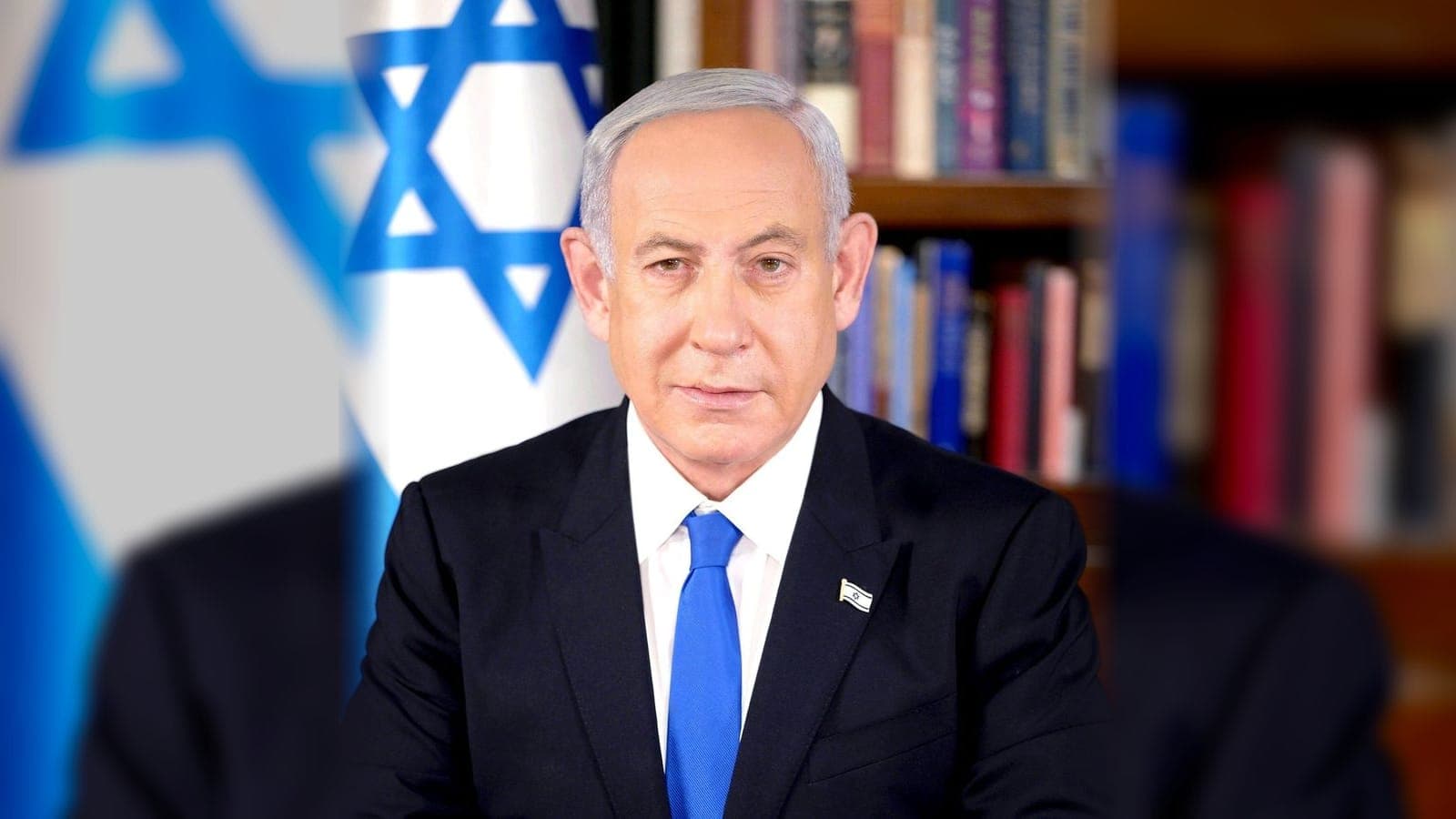
Benjamin Netanyahu. File photo by Avi Ohayon, CC BY-SA 3.0, via Wikimedia Commons.
Exit polls broadcast by Israeli television networks after voting ended on Tuesday night project that Prime Minister Benjamin Netanyahu's governing coalition will lose its majority in the Knesset, Israel's parliament. Barak Ravid of Axios reported that the bloc led by his challenger, Gadi Eisenkot, also falls below the 61 seats needed to govern, and The Jerusalem Post described the two camps as deadlocked, with neither reaching a majority.
Polling stations closed at 10 p.m., and the networks published their projections for the 26th Knesset shortly afterwards, Israel Hayom reported, noting that turnout during the day had been notably high. The Times of Israel characterised the early numbers as a rejection of the present coalition, while leaving open what kind of government might replace it.
What the sources posted

🚨🚨🚨Israeli Prime Minister Benjamin Netanyahu's far-right coalition is projected to lose its parliamentary majority, but his opponent Gadi Eisenkot's bloc is short of 61 seats, according to Israeli exit polls. My report on @axios axios.com/2026/10/27/net…
On the ground

"The bottom line is that Netanyahu failed, though I assume he will claim some kind of victory because he's still got the largest party in parliament." Aviv Bushinsky, who previously served as Netanyahu's chief of staff, tells @SkyYaldaHakim after exit polls suggested there was Show more

Celebrations erupted in Lod, Kafr Manda and Tayibe after Israeli media exit polls projected a combined 18 Knesset seats for the Joint Arab List and United Arab List. The projected result marked a potentially significant moment for Arab political representation in Israel.
What an exit poll is, and what it is not
Israeli exit polls are projections produced for television channels on election night, based on surveys of voters. They are released as soon as polls close and set the tone for the first hours of coverage, but they are estimates. The binding figures are the official vote counts, which come in over the following hours and days. Seat projections for smaller parties are especially sensitive, because a party that falls just short of the electoral threshold receives no seats at all, and its votes effectively drop out of the calculation for everyone else.
Forming a government in Israel requires a coalition commanding a majority of 61 in the Knesset. Because no single party has ever won that many seats alone, the arithmetic of blocs, and of which parties are willing to sit together, matters as much as which party finishes first.
How the parties are projected to fare
The Jerusalem Post published a series of party-by-party projections drawn from the exit polls:
Israel's week in five stories, every Friday
Sourced and checked by the Israel.com newsroom, with Shabbat times. Free, one-click unsubscribe.
One list, unsubscribe in a click. See our privacy policy.
- Arab parties: Ra'am and the Joint List were projected to win a combined 19 seats, which the Post linked to high turnout. Joint List chairman Yousef Jabareen gathered with supporters at the party's headquarters in Nazareth, a city in northern Israel.
- Haredi (ultra-Orthodox) parties: Shas and United Torah Judaism (UTJ) were projected in a range of 12-15 seats, according to the Post.
- B'Yachad: Naftali Bennett's party was projected at 12-13 seats, the Post reported.
- The Democrats: Yair Golan's party was projected to win nine seats, according to the Post, and party members were photographed celebrating in Tel Aviv.
- Yisrael Beytenu: Avigdor Liberman's party was projected at 7-8 seats, the Post reported.
A different reading of the Arab vote
Not every outlet gave the same figure for the Arab parties. The Hebrew-language Telegram channel Abu Ali Express, summarising what it called the clear conclusions across all the polls, put the Arab parties at roughly 17 seats, describing this as an increase of about 70% on their previous strength. That is lower than the 19 seats cited by The Jerusalem Post. The gap may reflect differences between individual network polls, but the reports do not explain it, and both figures are projections rather than results.
The same channel said Likud remained the largest single party, and that the parties associated with Winter and with Zelicha and Hendel did not clear the electoral threshold in the polls. It cautioned that it was too early to declare which camp had won and that, on most other questions, readers should wait for the real results.
Where this leaves the two camps
Taken together, the reports describe an outcome in which the current coalition no longer holds a majority, but the opposition camp led by Eisenkot does not reach one either. Parties outside both blocs, including the Arab parties and others whose alignment is not settled, may therefore carry more weight in any coalition negotiations. The reports themselves do not say which parties have committed to which camp.
What the reports do not say
- None of the material gives a full seat count for each bloc, so it is not possible to say from these reports how far short of 61 either side falls.
- The reports do not say which television networks produced which figures, or how much the individual polls differed from one another.
- The Jerusalem Post's range of 12-15 seats for Shas and UTJ does not make clear whether it refers to the two parties together or to each separately.
- Only one source, Abu Ali Express, reported that Likud is the largest party and that the Winter and Zelicha-Hendel lists fell below the threshold; no seat figure for Likud appears in the material.
- No official turnout percentage is given, only descriptions of it as high.
- Official results had not been published at the time of these reports, and exit polls in past Israeli elections have at times shifted once the count was complete.
Read next
All elections →
File photo
Elections
Netanyahu claims right-wing majority as Likud awaits final election count
File photo
Courts & Crime
Netanyahu warns of long queues in Arab towns, accuses Ra'am of election theft
File photo
Elections
Eisenkot claims exit poll edge, urges Netanyahu to step down and quit politics
Illustration
Elections
Israel election turnout reaches 77.7%, the highest figure since 2001
Sources and further reading
Every link below was opened and checked when this page was written. Official statements are marked as such: they are the subject's own account, not an independent one.
- Reportingtoitimesofisrael.comThe Times of Israel
- Reportingjpostjpost.comThe Jerusalem Post
- Reportingjpostjpost.comThe Jerusalem Post
- Reportingjpostjpost.comThe Jerusalem Post
- Reportingjpostjpost.comThe Jerusalem Post
- Reportingjpostjpost.comThe Jerusalem Post
- Reportingjpostjpost.comThe Jerusalem Post
- Reportingisraelhayomisraelhayom.comIsrael Hayom
- Reportingabualiexpresst.meAbu Ali Express
- Reportingaxiosx.comBarak Ravid, Axios
How we checked this
The overall finding that neither bloc reaches 61 seats was reported by Axios's Barak Ravid, The Jerusalem Post and The Times of Israel. Claims that Likud is the largest party and that certain lists missed the threshold come from Abu Ali Express alone, and all figures are exit poll projections, not official results.
Our sourcing and corrections policy →The week from Israel, in one email
The stories that mattered, sourced and checked by the Israel.com newsroom. Free, weekly, one-click unsubscribe.
One list, unsubscribe in a click. See our privacy policy.

Israel.com is free, and readers like you keep it that way.
The Israel.com newsroom checks every story against its sources and publishes it free. If this one helped, a contribution of any size keeps the next one free too.
One payment, nothing to sign up for. Another amount
Latest
- US told Gulf states to prepare for short Iran campaign after midterms, WSJ says
- Pentagon puts the cost of the US war with Iran above $47 billion
- Israel's elections committee rejects Likud bid to keep polls open past 22:00
- Flavio Bolsonaro heads for the US as Brazil cancels his passport, reports say
- Turnout reaches 66.7% by 18:00, Israeli outlets report, up 9% on last vote
- Shekel climbs to a three-week high against the dollar on election day