Kinneret Falls 6.5 cm to -213.530 m, Now 0.53 m Below the Lower Red Line
The lake dropped again this week and sits beneath the -213 m threshold where pumping is restricted, 4.73 meters short of full.

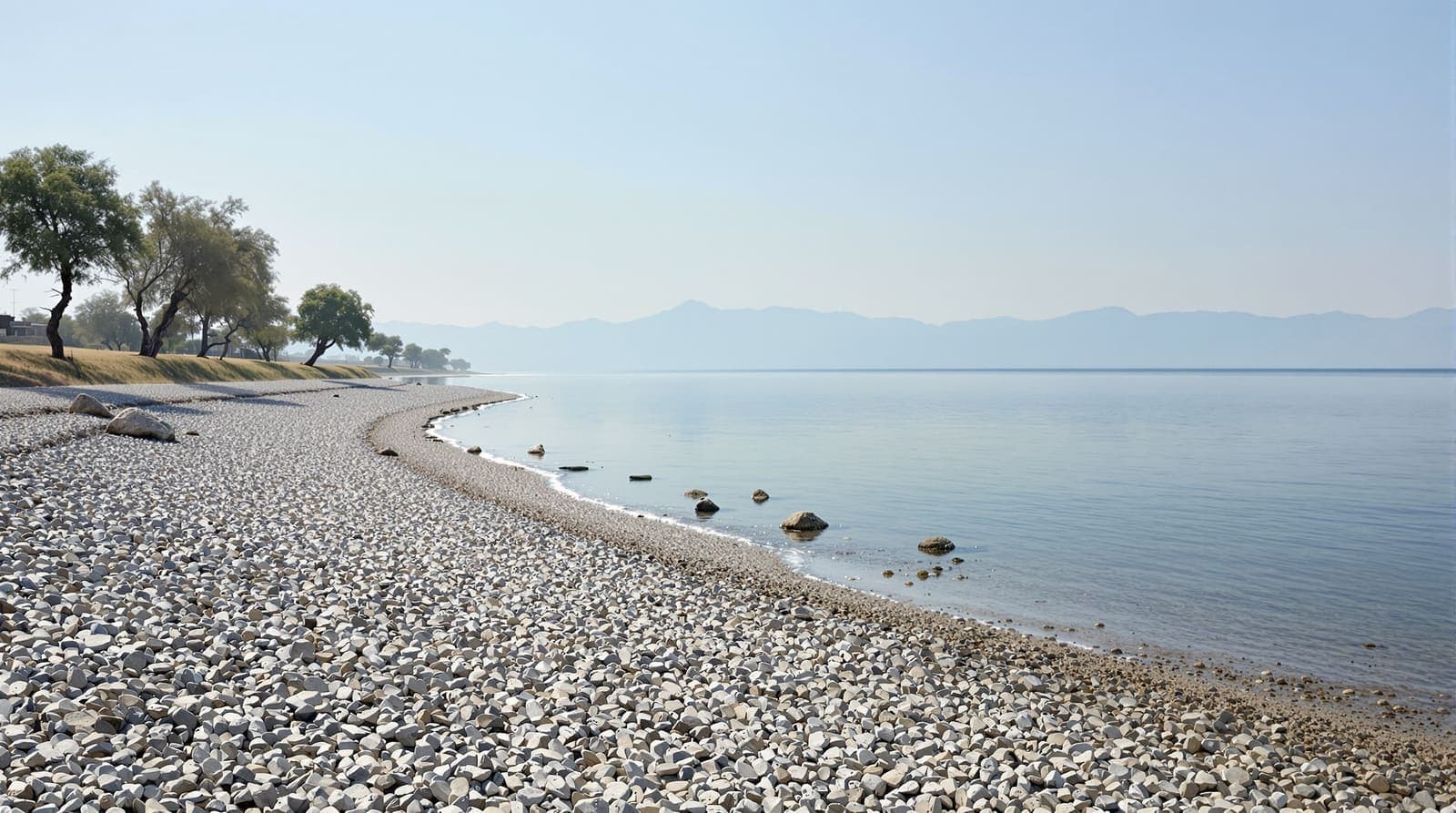
File photo · Nick Karvounis / Unsplash
Lake Kinneret fell another 6.5 centimeters this week, settling at -213.530 meters below sea level on 2026-09-23, according to Israel Water Authority data. The reading leaves the lake below the lower red line, the threshold Israel uses to signal that its largest freshwater reservoir is under strain.
The lake now stands 4.73 meters from full capacity, which is defined by the upper red line at 208.80 meters below sea level. At the other end of the scale, it has slipped beneath the lower red line of 213 meters, the level at which salinity rises and the ecosystem begins to suffer.
The weekly drop is part of a steady slide. Over the past 30 days the level has moved down 30.5 centimeters, from -213.225 meters on 2026-08-24. Measured against the same point twelve months ago, when the lake stood at -213.005 meters, it is down 52.5 centimeters.
Looking back at the same week in recent years puts the current figure in context. The level stood at -213.03 m in 2025, -210.84 m in 2024, -211.26 m in 2023, -209.97 m in 2022 and -210.28 m in 2021.
Where this sits in the record
The series published by the Israel Water Authority on the national open-data portal runs from 1966-09-01 to 2026-09-23, with 11,336 readings in all. The highest level on file is -208.20 meters, recorded on 1969-01-27. The lowest is -214.87 meters, recorded on 2001-11-25. Today's reading sits between those extremes, but on the wrong side of policy: 0.53 meters below the lower red line.
What the red lines mean
Israel manages the Kinneret between two administrative thresholds. The upper red line, 208.80 meters below sea level, marks the point at which the lake is considered full. When it is reached, the Degania dam is opened to prevent flooding around the shore.
The lower red line, 213 meters below sea level, is the point below which pumping is restricted. The reason lies beneath the surface: saline springs on the lake bed feed salt into the water, and as the volume of fresh water above them falls, salinity rises and the ecosystem deteriorates. Keeping the lake above this line is meant to protect both water quality and the life the lake supports.
Neither line is a natural feature. Both are policy, set to balance the lake's role as a water source against the need to keep it healthy. That is why a reading below the lower red line matters: it is the point at which managers have agreed the lake needs protection from further drawdown.
The full daily series, with charts back to 1966, is on the Israel.com Kinneret water level tracker, and the raw dataset is published by the Water Authority through data.gov.il.
Sources and further reading
Every link below was opened and checked when this page was written. Official statements are marked as such: they are the subject's own account, not an independent one.
- OfficialIsrael Water Authority via data.gov.ildata.gov.ilKinneret water level, daily readings
- OfficialIsrael.comisrael.comKinneret water level tracker
How we checked this
Every figure in this report is computed in code from the Israel Water Authority's daily Kinneret series as published on data.gov.il, read on 2026-09-27. No number here is estimated, and none was written by AI: an AI model polished the sentences around the figures, and the arithmetic was done in code.
The account of the incident itself rests on the official statement and has not been independently confirmed by Israel.com. Where the statement is silent, this page says so rather than filling the gap.
Our sourcing and corrections policy →The week from Israel, in one email
The stories that mattered, sourced and checked by the Israel.com newsroom. Free, weekly, one-click unsubscribe.
One list, unsubscribe in a click. See our privacy policy.
More in Environment
All environment →
Latest
- Man, 21, seriously hurt with penetrating wounds in Shibli, Lower Galilee
- Five opposition leaders meet at Lapid's home, pledge not to attack each other
- MDA medic clears sukkah decoration from eight-month-old's throat in Netivot
- IDF says Gaza strikes in Nuseirat and Khan Younis killed two Hamas members
- IDF strikes Hezbollah weapons store in Sejoud area of southern Lebanon
- Trump publicly rejects Iran's ceasefire offer, eyes strikes after midterms