Knesset backs repeal of judicial selection panel change, 63 to 47
A bill undoing the change to how Israel's Judicial Selection Committee is composed cleared its first Knesset vote, eight months after that change became law.
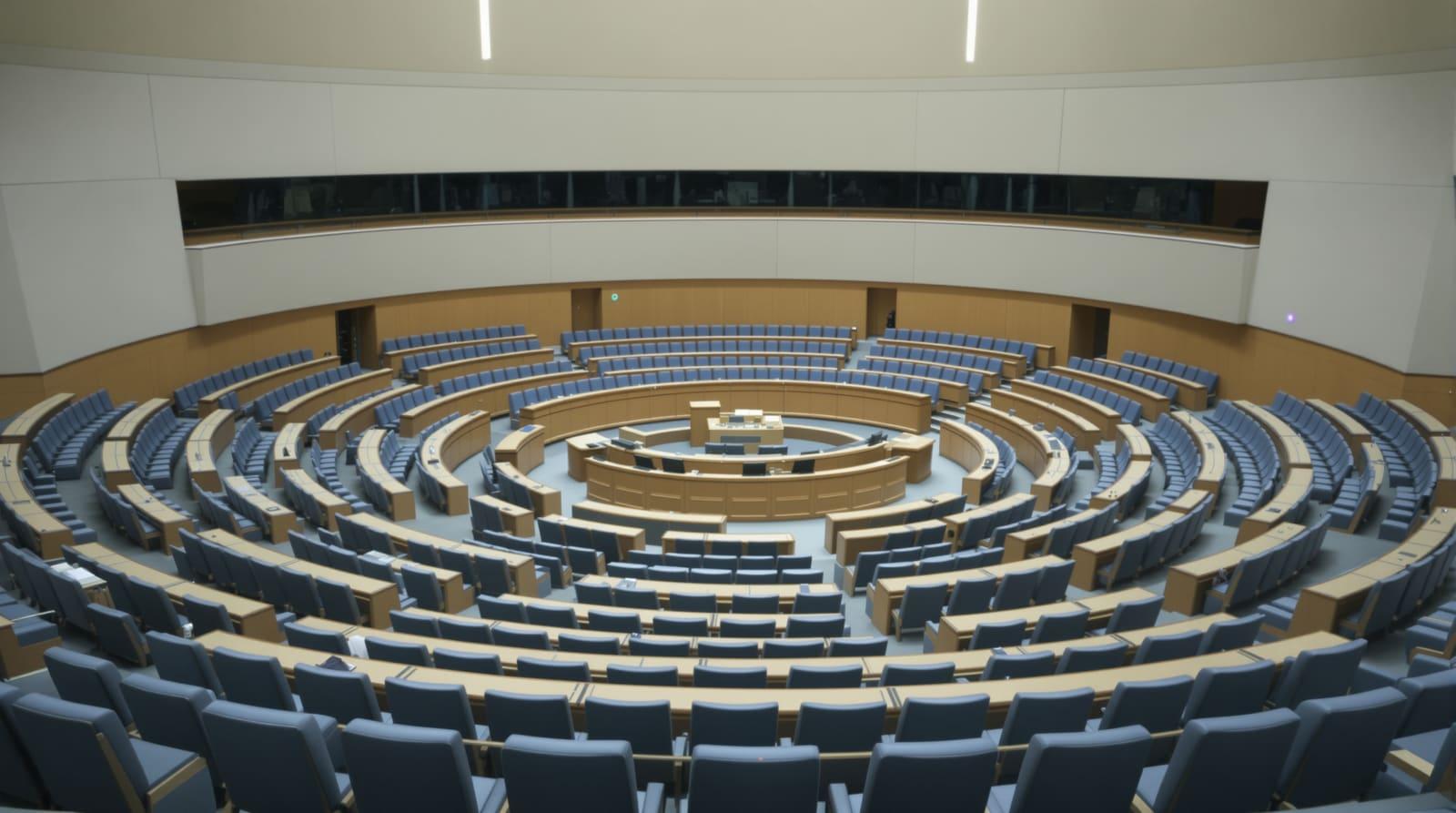
AI illustration, not a photo of the events.
Israel's parliament, the Knesset, has approved in a preliminary reading a bill that would cancel the recent change to the make-up of the Judicial Selection Committee, the panel that appoints the country's judges. According to N12's political correspondent Dafna Liel, 63 members of the Knesset voted for the proposal and 47 voted against it.
Ynet reported that the vote came 8 months after the law altering the committee's composition was passed, and described it as the start of a process to undo that law. Both outlets framed the vote as an early move by what they call the "change bloc", the group of parties behind the repeal. N12 headlined it as the bloc's first step.
On the ground

Eisenkot bloc begins push to reverse Netanyahu's laws with judicial overhaul repeal Lawmakers vote 63-47 to advance repeal of legislation giving politicians greater control over judicial appointments, marking the first step in reve... ynetnews.com/article/hjmw6x…


The Knesset began voting on preliminary readings of a series of bills seeking to repeal key components of the judicial overhaul passed by Netanyahu’s outgoing coalition. Reports @keshet_neev jpost.com/israel-news/po…
What the Judicial Selection Committee does
The Judicial Selection Committee is the body that chooses judges for Israel's courts, including the Supreme Court. Because it decides who sits on the bench, who sits on the committee itself has been one of the most contested questions in Israeli politics. Changing its composition was a central element of the government's plan to reshape the judiciary, which Ynet referred to as "the revolution" in asking whether this vote was a first step toward shelving it.
The reports do not lay out the full membership the repeal would restore. However, remarks made in the chamber and reported by Ynet indicate that one effect would be to bring representatives of the Israel Bar Association, the national lawyers' body, back onto the panel.
What a preliminary reading means
In the Knesset, a bill proposed by individual lawmakers must first pass a preliminary reading before it goes to a committee for drafting and then returns to the full chamber for further votes. Only after the final vote does a bill become law. A preliminary reading is therefore an early stage: it signals that a majority supports advancing the proposal, but on its own it does not change the law.
Get an email the day Israel has a new government.
Coalition talks can take weeks. When a government is sworn in, Israel.com's newsroom emails who leads it, which parties are in and who got which ministry, then the Friday email each week. Free, and one click unsubscribes.
One list, unsubscribe in a click. See our privacy policy.
That distinction matters here because the first reports were worded differently. A Ynet news alert said the law changing the committee's make-up had been cancelled in the preliminary reading, and N12's initial post used similar language. N12 then issued an edited version stating that the bill to repeal the change had been approved in a preliminary reading, which is the more precise description of what took place. As things stand, the existing law remains in force until the repeal completes its passage.
Reactions in the chamber
Justice Minister Yariv Levin, the architect of the original change, attacked members of the change bloc, according to Ynet. He was reported as saying that bringing back the Bar Association representatives "is corruption". Levin's comment reflects the position held by supporters of the overhaul that the lawyers' representatives gave the legal establishment too much say over judicial appointments.
File photo
Next story Government
Bennett walks into Netanyahu's Knesset office as Eisenkot is left uninformed
On the other side, MK Reitan, a member of the Knesset, welcomed the result, calling it "the beginning of the healing", Ynet reported. Neither remark is a statement of fact about the committee; each is a politician's characterisation of the vote.
How this fits the wider fight over the courts
The government's judicial overhaul divided Israeli society deeply, and the composition of the selection panel was one of its most closely watched pieces. The change to the committee was one of the parts of that programme to reach the statute book. A move to reverse it, eight months on, marks a shift in which camp holds a majority on this question in the Knesset, with 63 lawmakers now backing the repeal at this stage.
For readers following Israel from abroad, the practical point is that the rules for appointing judges have not yet changed back. The proposal must still go through committee work and further votes in the full Knesset, and its wording could be amended along the way.
What the reports do not say
The reports do not say when the bill will be taken up in committee or brought for its next readings, nor which committee will handle it. They do not set out the full composition of the selection panel that the repeal would restore beyond the reference to the Bar Association representatives. They do not identify who sponsored the bill or how individual parties voted, and they do not report any response from the Israel Bar Association or from the judiciary.
Read next
All government →
Illustration
Government
Six Thai Shiite clerics recruited for Bangkok embassy plot, report says

File photo
Government
Attorney general blocks Netanyahu plan to name Amir Ohana a minister

Illustration
Government
Iran hardens US talks stance after midterms, NYT says; intelligence split

File photo
Government
Putin lands in China and meets Xi ahead of APEC talks with Trump
Sources and further reading
Every link below was opened and checked when this page was written. Official statements are marked as such: they are the subject's own account, not an independent one.
- Reportingyediothynet.co.ilYnet
- Reportingyediotht.meYnet alerts
- Reportingkeshett.meN12
- Reportingkeshett.meN12
- Reportingkeshett.meN12
How we checked this
The vote and its outcome were reported by Ynet and N12; the 63 to 47 tally comes from N12's correspondent, and the remarks by Yariv Levin and MK Reitan were reported only by Ynet. Early alerts from both outlets described the law as cancelled, which N12 later corrected to say the repeal bill passed a preliminary reading.
Our sourcing and corrections policy →The week from Israel, in one email
The stories that mattered, sourced and checked by the Israel.com newsroom. Free, weekly, one-click unsubscribe.
One list, unsubscribe in a click. See our privacy policy.

Israel.com is free, and readers like you keep it that way.
The Israel.com newsroom checks every story against its sources and publishes it free. If this one helped, a contribution of any size keeps the next one free too.
One payment, nothing to sign up for. Another amountGive monthly
Latest

Illustration

Illustration

Illustration

Illustration

Illustration

Illustration