Netanyahu Invokes Tisha B'Av to Call for a Unity Government
In an eve-of-fast message, the Israeli prime minister linked the ancient lesson of internal hatred to a pledge to form a broad national government after the election.
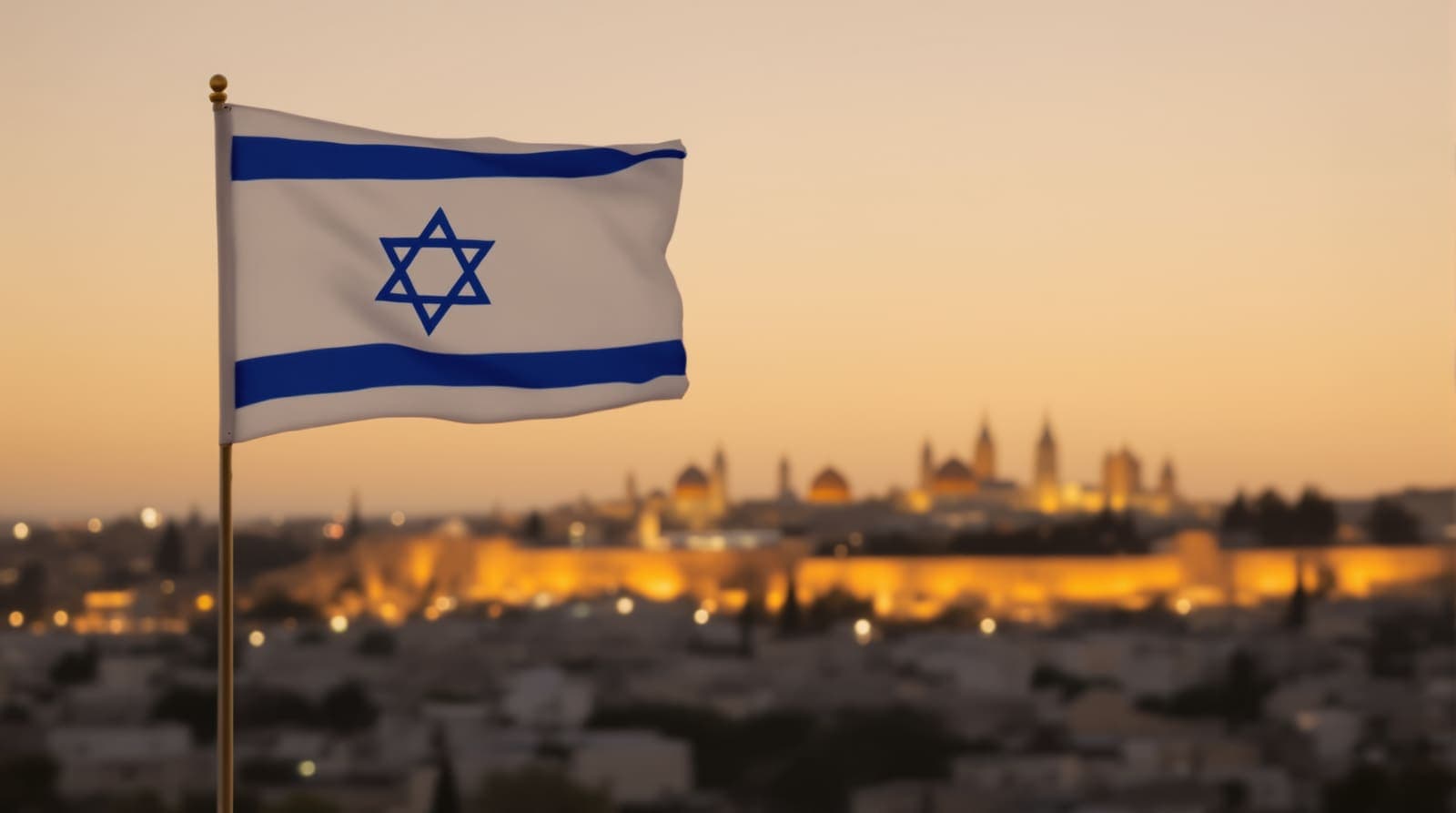
Illustration
Israel's Prime Minister Benjamin Netanyahu marked the eve of Tisha B'Av with a statement recalling the destruction of the Temple and what he called the terrible price of hatred and boycotts among Jews. The message was issued on 22 July 2026, the evening the fast began.
In it, Netanyahu said that over the previous three years joint effort had prevented what he called the destruction of the Third Temple: instead of a civil war, he said, Israelis had fought shoulder to shoulder against those who sought their lives, and together had saved the state. He said the work was not finished and many challenges remained, but that he intended to deepen unity and would act to establish a broad national government - a stable one that would attend to Israel's security and its future. He acknowledged that an election period would bring arguments that made this hard to see, but said he believed Israelis were far more united than they appeared, and closed with the formulation that in baseless hatred the nation was destroyed and in love of Israel it arose.
The day he was speaking on
Tisha B'Av, the ninth day of the Hebrew month of Av, is the principal day of mourning in the Jewish calendar. It commemorates the destruction of the First Temple in 587 or 586 BCE and of the Second Temple in 70 CE, and by tradition a series of later catastrophes as well, among them the fall of Bethar in 135 CE and the expulsions of Jews from England in 1290 and Spain in 1492. As Britannica sets out, observant Jews keep a fast from sunset to sunset, refrain from washing and from wearing leather, and hear the Book of Lamentations chanted. In 2026 the fast ran from the evening of 22 July to nightfall on 23 July.
The phrase at the centre of the message
The idea Netanyahu invoked is sinat chinam, usually translated as baseless or causeless hatred. The Talmudic sages attributed the loss of the Temples and other calamities to hatred between Jews rather than to external enemies alone, a teaching set out by My Jewish Learning, which traces it through the rabbinic story of Kamtza and Bar Kamtza.
The three years he was referring to
The reference to averting civil war points to the political crisis that preceded the war. Through the first half of 2023 Israel saw months of mass protest against the government's plan to curb the powers of the Supreme Court, culminating in a general strike. NBC News reported at the end of July 2023 that President Isaac Herzog had warned in March of the danger of a real civil war and that a Channel 13 poll found 56 per cent of Israelis feared the crisis could turn into one; Netanyahu, interviewed at the time, said flatly that there would be no civil war.
The election he was speaking before
The pledge to build a broad government was made in the opening weeks of a campaign. The 25th Knesset dissolved on 17 July 2026 and Israel is due to vote for the 26th on 27 October 2026, according to the timetable set out by the Jerusalem Post, with party lists due by 9 September and official results confirmed on 4 November. It is the first Israeli election to follow a full four-year parliamentary term since 1988.
What the statement did not say
Netanyahu did not say which parties a broad national government might include, nor on what terms. He did not specify what he meant by the boycotts he referred to, and the statement offered no policy commitments beyond the pledge itself. It also made no mention of the election date or of his own candidacy.
Sources and further reading
Every link below was opened and checked when this page was written. Official statements are marked as such: they are the subject's own account, not an independent one.
- ReportingNBC Newsnbcnews.comNetanyahu denies Israel is heading toward civil war as he calls judicial overhaul 'necessary'
The 2023 protest crisis and civil war warnings the statement alludes to
- ReportingJerusalem Postjpost.comWhen are Israel's 2026 elections? Full timeline and key dates explained
Dissolution of the Knesset and the election timetable
- ReferenceBritannicabritannica.comTisha be-Av
What Tisha B'Av commemorates and how it is observed
- ReferenceHebcalhebcal.comTish'a B'Av 2026
The Gregorian dates of the 2026 fast
- ReferenceMy Jewish Learningmyjewishlearning.comWhat Is Sinat Chinam, or Baseless Hatred?
The rabbinic teaching Netanyahu invoked
How we checked this
The content of the message is taken from the prime minister's statement of 22 July 2026. The explanation of Tisha B'Av and of sinat chinam comes from Britannica, Hebcal and My Jewish Learning; the account of the 2023 protests is NBC News reporting from July 2023 and the election timetable is the Jerusalem Post's of July 2026.
Our sourcing and corrections policy →The week from Israel, in one email
The stories that mattered, sourced and checked by the Israel.com newsroom. Free, weekly, one-click unsubscribe.
One list, unsubscribe in a click. See our privacy policy.
More in Government
All government →


Latest
- IDF says Khan Younis strike killed Nukhba operative tied to Steinberg's death
- Yair Golan sues Sara Netanyahu for millions over Channel 14 remarks
- Ariel man, 53, found alive after entering Palestinian village overnight
- Houthi forces reported streaming into Yemen's port city of Mocha
- Israel says three Hamas weapons depots destroyed in strikes across Gaza
- Advisers warned Trump the Iran war could outlast his presidency