Satellite images show fortified complex in a mountain between Natanz and Isfahan
A Washington research institute says Iran is rapidly building an underground site 62 km from two nuclear facilities, possibly for missiles or nuclear work.
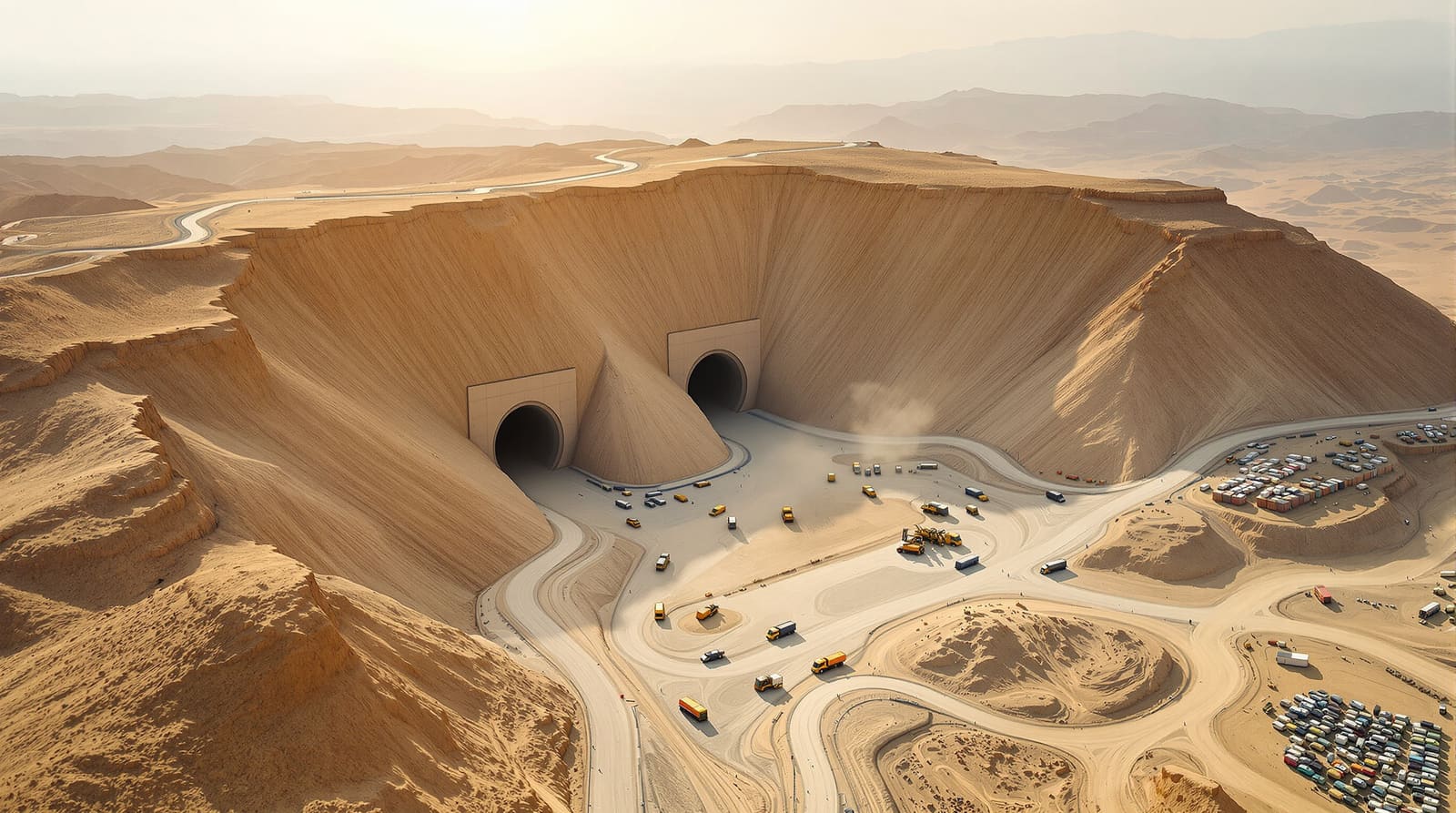
AI illustration, not a photo of the events.
A Washington-based research institute has released satellite images of what it describes as a fortified underground complex being dug into a mountain in central Iran, located 62 kilometres between the nuclear facilities at Natanz and Isfahan. Ynet reported that the images were published by the Institute for Science and International Security, and that the institute first identified accelerated building work at the site at the end of 2025.
According to Ynet's account of the institute's findings, the work has advanced at an unusual pace since then. The institute's assessment is that the facility is meant, at a minimum, to house missiles or weapons systems, and that it may also serve Iran's nuclear programme. Ynet's headline quoted the description that the site was being built with suspicious speed. News.co.il also reported on the new satellite pictures, saying they show Iran building the complex at an exceptional rate in the centre of the country, and that experts warn a connection to the nuclear programme cannot be ruled out.
Who published the images
The Institute for Science and International Security is a private research organisation in Washington that studies nuclear proliferation and regularly analyses commercial satellite imagery of sites in Iran and other countries of concern. Its reports are widely cited by journalists and governments, but it is not an official intelligence body, and its conclusions are its own analysis of what can be seen from above. Neither report indicates that any government has confirmed the institute's reading of the site.
The Hebrew-language reports refer to the organisation by a translated name; we use its English title here.
Why Natanz and Isfahan matter
Natanz, in central Iran, is the country's best known uranium enrichment site, where centrifuges spin uranium gas to raise the share of the isotope that can sustain a nuclear chain reaction. Isfahan, to the south, is home to a large nuclear technology complex that has been central to converting uranium into forms used in enrichment. Both sites have long been at the centre of international concern over Iran's nuclear activities and were among the locations targeted during the recent war between Israel and Iran.
Israel's week in five stories, every Friday
Sourced and checked by the Israel.com newsroom, with Shabbat times. Free, one-click unsubscribe.
One list, unsubscribe in a click. See our privacy policy.
A new site positioned between them, according to the institute's description, would sit in the same corridor of Iran's nuclear infrastructure. The reports do not say whether the complex is physically connected to either facility.
Why mountains and tunnels
Building inside a mountain is a familiar pattern in Iran's military and nuclear planning. Deep rock cover is intended to protect equipment and personnel from air strikes, and Iran has previously placed sensitive activities, including enrichment, in hardened underground sites for that reason. Iran has also built underground bases for its ballistic missile forces. The institute's view that the new complex could be for missiles or weapons systems, with a possible nuclear role, fits within that broader pattern, though the reports present it as an assessment rather than an established fact.

File photo
Next story Security
Kushner presses Netanyahu by phone to advance Trump's Gaza plan
How the reports framed it
The two Israeli outlets covered the same findings with different emphasis. Ynet focused on the institute's specific claims: the location, the distance, the timing of when building sped up and the range of possible purposes. News.co.il, posting on its Telegram channel, gave fewer details and framed the story more dramatically, describing a giant, mysterious facility revealed in the heart of the mountains and asking in its headline whether the discovery brings an Israeli strike closer. That question is the outlet's own framing; it did not cite any Israeli official or decision on the matter.
The two reports also differ slightly on the nuclear link. Ynet attributes to the institute an assessment that the site is intended at least for missiles or weapons, and possibly also for the nuclear programme. News.co.il attributes to unnamed experts the more cautious statement that a nuclear connection cannot be excluded.
What the reports do not say
- Neither report includes any response from Iran, from the Israeli government or the Israel Defense Forces, or from the United States.
- The International Atomic Energy Agency, the UN nuclear watchdog, is not quoted, and there is no indication whether its inspectors have any knowledge of or access to the site.
- The reports give no estimate of the complex's size, depth or expected completion date, and do not say what, if anything, is visible at the entrances.
- The purpose of the facility remains an assessment by the institute and unnamed experts; no direct evidence of missiles, weapons or nuclear material at the site is described.
Read next
All security →
Illustration
Security
Italian paper says Ukrainian drone hit Iranian ship carrying arms to Libya
Illustration
Security
Houthi projectile strikes Saudi port of Jazan, coalition reports no injuries

File photo
Security
IDF chief Zamir tells Western Negev mayors their security will not be cut
Illustration
Security
North Korean experts aiding Iran's underground missile sites, outlet says
See Israel.com first in Google's top stories.Add it as a preferred source on Google
Sources and further reading
Every link below was opened and checked when this page was written. Official statements are marked as such: they are the subject's own account, not an independent one.
- Reportingyediothynet.co.ilYnet
- Reportingnewssilt.meNews.co.il
How we checked this
The existence of the satellite images and the rapid construction were reported by both Ynet and News.co.il; the location details, the 62 km figure and the assessment of the site's purpose come from the Institute for Science and International Security as relayed by Ynet. We have not independently examined the imagery.
Our sourcing and corrections policy →The week from Israel, in one email
The stories that mattered, sourced and checked by the Israel.com newsroom. Free, weekly, one-click unsubscribe.
One list, unsubscribe in a click. See our privacy policy.
Latest
Illustration
Illustration
Illustration

File photo

File photo

File photo