Saudi Arabia shuts East-West oil pipeline after drone strikes
Riyadh says the drones that hit its Red Sea export pipeline were launched from Iraq, as reports describe casualties and damage of an extent not yet established.

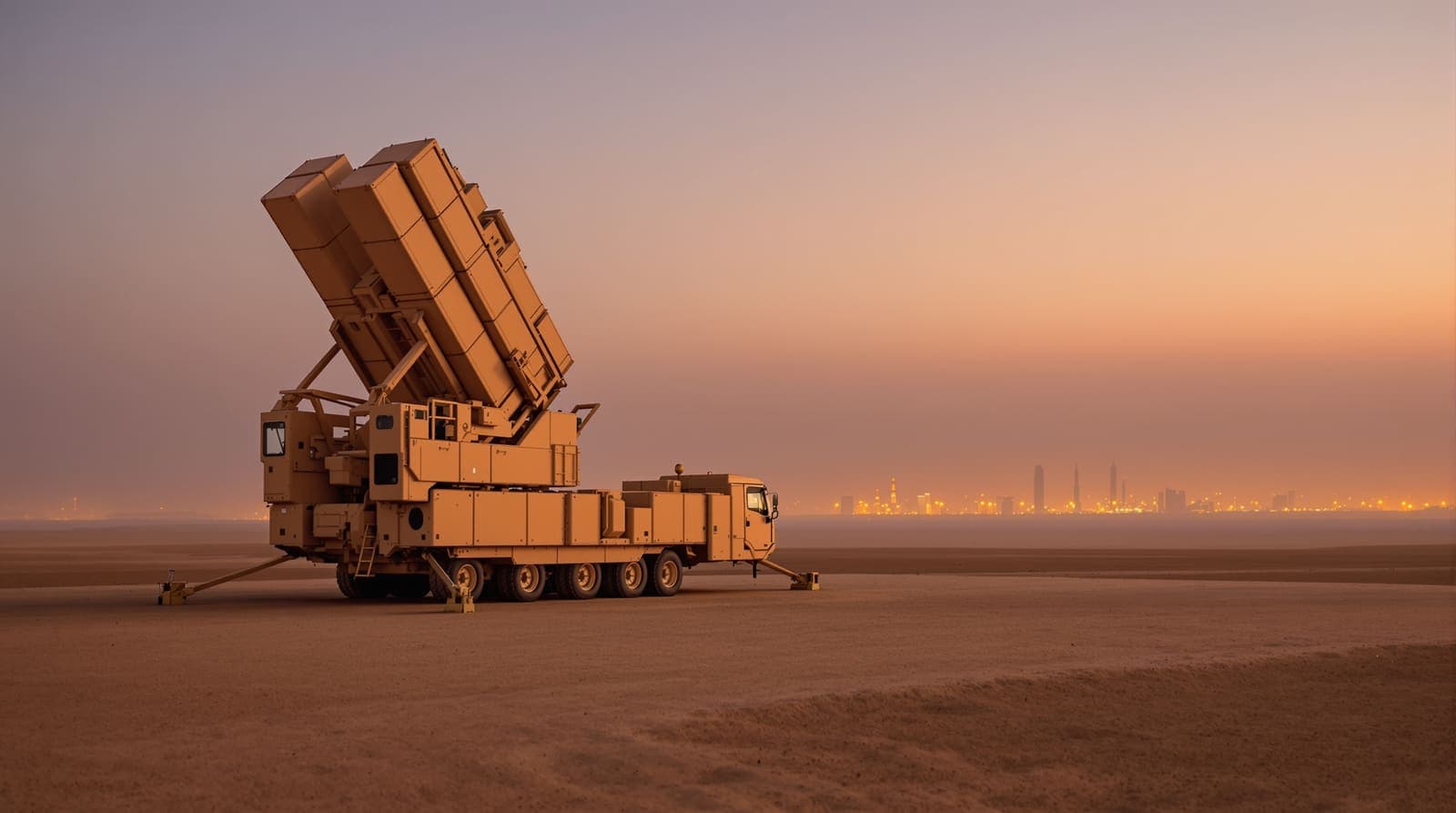
AI illustration, not a photo of the events.
Saudi Arabia halted the flow of oil through its East-West pipeline, the line that carries crude from the kingdom's eastern oil fields to the Red Sea coast, after a series of drone strikes hit the pipeline at several points. The Saudi energy ministry said the shutdown was temporary and followed strikes on Thursday that damaged the line in the areas of Riyadh and Medina, according to a report by the Israeli Arabic-affairs monitor Abu Ali Express.
The closure was carried out as a precaution, Haaretz reported on Friday, citing Reuters and The Associated Press, in the same dispatch that said Iran-aligned Houthi forces in Yemen had taken a strategically placed island at the southern approach to the Red Sea. The Israeli broadcaster N12 published a satellite image supplied by Reuters showing black smoke rising from the area of the pipeline.
On the ground

Saudi Arabia has shut down its crucial East-West pipeline after it was attacked on Thursday. ft.trib.al/znsPFSq


BREAKING: Saudi Arabia's Foreign Ministry says the East-West oil pipeline was attacked by drones launched from Iraq. Saudi has chosen not to retaliate at this stage, the ministry’s statement said. 🔴 LIVE updates: aje.news/n1clfz
Video from Al Jazeera English. Tap to play. Nothing from it is shown until you do.
What the East-West pipeline does
The pipeline runs across Saudi Arabia from the oil-producing east of the kingdom to the Red Sea in the west. Its strategic value is that it lets Saudi Arabia load crude for export without sending tankers through the Strait of Hormuz, the narrow waterway at the mouth of the Gulf that has repeatedly been the focus of confrontation between Iran and its adversaries. N12's Arab world desk described the line as strategic and said it moves millions of barrels a day. Abu Ali Express put the figure at roughly 7 million barrels a day.
Because the pipeline exists specifically to bypass Hormuz, damage to it removes one of the alternatives Saudi Arabia relies on when shipping through the Gulf becomes risky. The energy ministry's statement, as reported, framed the stoppage as temporary rather than open-ended.
Who Saudi Arabia says carried out the attack
The Saudi foreign ministry issued a statement overnight saying the drones that struck the pipeline had been launched from Iraq. Abu Ali Express, reporting that statement, noted that the Saudi attribution pointed to Iraq rather than to the Houthis in Yemen. The same report said that casualties and damage had been reported as a result of the strikes.
Israel's week in five stories, every Friday
Sourced and checked by the Israel.com newsroom, with Shabbat times. Free, one-click unsubscribe.
One list, unsubscribe in a click. See our privacy policy.
N12's Assaf Rosenzweig reported the Saudi announcement in similar terms: drones launched from Iraq hit several points along the line that runs from the east of the kingdom to the west and allows crude to be exported from the Red Sea, bypassing the Strait of Hormuz. That report said the flow through the pipeline had been suspended temporarily, that the extent of the damage had not yet been established, and that there were several casualties.
Where the accounts differ
The material does not present a single agreed account of responsibility. Haaretz, drawing on the international wire services, placed the pipeline attack inside a wider escalation involving the Houthis and described the Yemeni group's seizure of an island at the southern entrance to the Red Sea in the same breath. Abu Ali Express, in its first post, summarised the event as the Houthis having shut down a Saudi pipeline that bypasses Hormuz. Its later post reported the Saudi foreign ministry's formal position that the drones came from Iraq, and flagged the distinction explicitly.
Next story Government
US orders families out of Saudi Arabia and trims embassy staff, CNN says
None of the reports in this material contains a claim of responsibility by any group for the strikes on the pipeline itself. The attribution to Iraq is a Saudi government statement, not an independently established finding.
Why Iraq features in this
Iraq hosts armed factions aligned with Iran, and a launch point in Iraq would place the attack outside Yemen, where the Houthis are based. That is the significance of the Saudi foreign ministry singling it out, and it is why Abu Ali Express drew attention to the wording. The reports here do not name any specific group in Iraq, and they do not describe how Saudi authorities determined the launch location.
The Houthis and the Red Sea
The Houthi movement controls much of northern Yemen and has been aligned with Iran. Haaretz reported that the group captured an island at the southern entrance to the Red Sea, the stretch of water through which a large share of global shipping passes between the Suez Canal and the Gulf of Aden. Its report described the combination of the pipeline shutdown and the island seizure as an escalation threatening regional oil exports and shipping.
What the reports do not say
The material does not give a number of people killed or injured, and does not say whether the casualties were pipeline workers or others. It does not give an estimate of the physical damage, how many strike points there were, or how long the shutdown is expected to last. It does not say how much of Saudi Arabia's export capacity is affected in practice, nor whether crude has been rerouted.
No group is named in this material as having claimed the pipeline attack. The island taken by the Houthis is not named in the reporting available here, and there is no detail on how it was captured. There is also no Iraqi or Iranian response to the Saudi statement in the material, and no indication of what Saudi Arabia intends to do in response.
Read next
All security →
File photo
Security
Trump says Israel has helped Saudi Arabia against Yemen's Houthis
Illustration
Security
Houthis hit Aramco offices in eastern Saudi Arabia; four hurt in Riyadh
Illustration
Security
Saudi Arabia, Turkey and Pakistan agree to send forces to Saudi soil under Mecca pact

File photo
Courts & Crime
Netanyahu says pilot stabbed co-pilot on Dubai flight, plane diverted to Saudi Arabia
Sources and further reading
Every link below was opened and checked when this page was written. Official statements are marked as such: they are the subject's own account, not an independent one.
- Reportinghaaretzhaaretz.comHaaretz
- Reportingabualiexpresst.meAbu Ali Express
- Reportingabualiexpresst.meAbu Ali Express
- Reportingkeshett.meN12
- Reportingkeshett.meN12
How we checked this
The shutdown and the drone strikes were reported by Haaretz, citing Reuters and The Associated Press, and by the Israeli outlets N12 and Abu Ali Express relaying Saudi ministry statements. The claim that the drones were launched from Iraq rests on a Saudi foreign ministry statement and has not been independently verified here; responsibility for the attack is described differently across the reports.
Our sourcing and corrections policy →The week from Israel, in one email
The stories that mattered, sourced and checked by the Israel.com newsroom. Free, weekly, one-click unsubscribe.
One list, unsubscribe in a click. See our privacy policy.
Latest
- Shekel climbs to a three-week high against the dollar on election day
- Shin Bet head Zini says elections safe as turnout rises, urges it be protected
- Netanyahu warns of long queues in Arab towns, accuses Ra'am of election theft
- Netanyahu and party leaders vote as 26th Knesset election gets under way
- Israel's voter turnout reaches 16.68% by 10:00, highest early figure in decades
- Israel votes for its 26th Knesset with 36 lists and over 7.3 million eligible voters