Israel votes for its 26th Knesset with 36 lists and over 7.3 million eligible voters
Israelis cast paper ballots for a new parliament as election officials describe a manual, envelope-based system staffed by nearly 300 thousand workers.
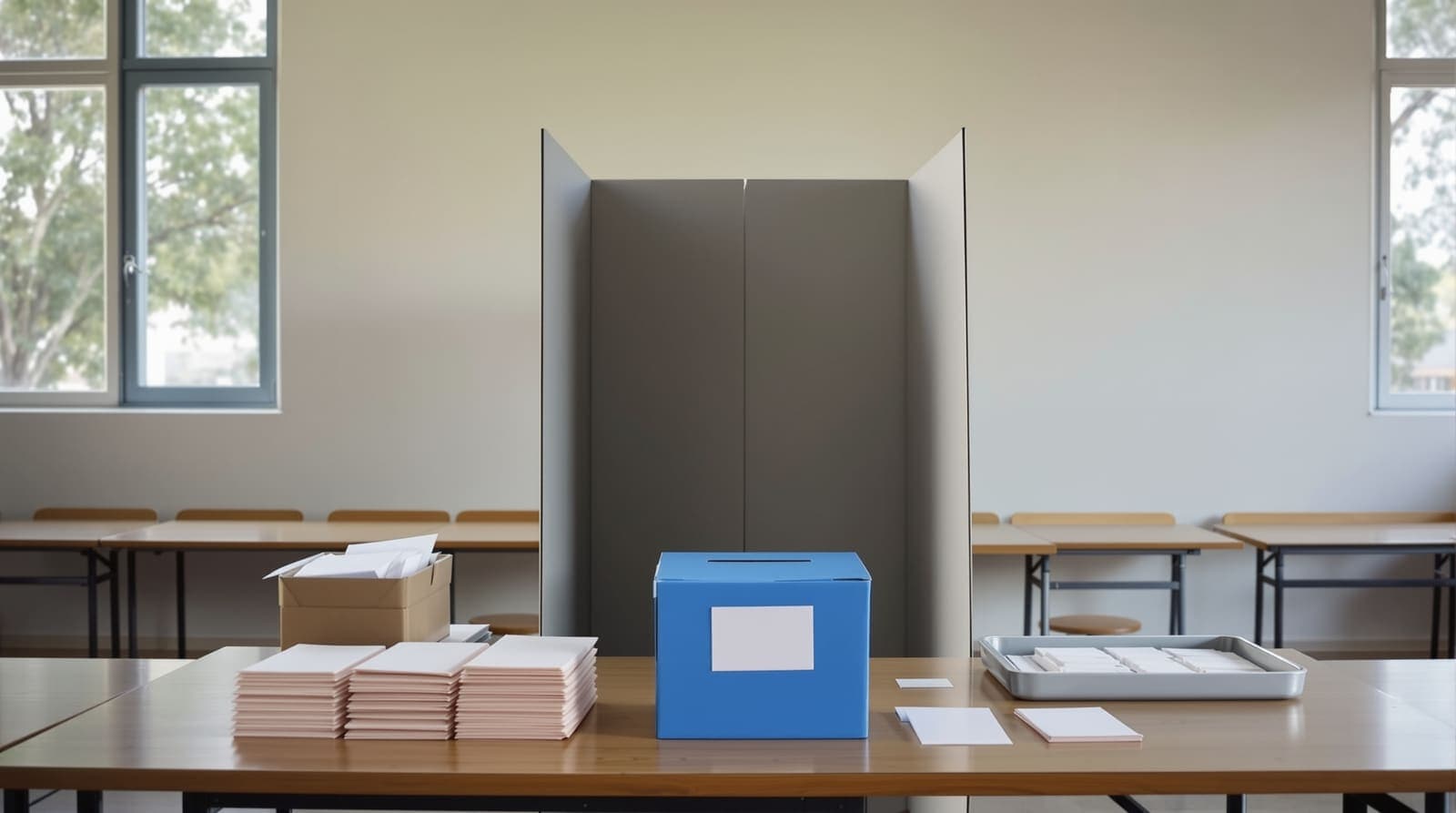
AI illustration, not a photo of the events.
Israelis are voting to elect the 26th Knesset, the country's parliament, in a contest featuring 36 party lists. According to Ynet's election-day guide, 7,331,981 people are eligible to vote, and the outcome will determine the makeup of the next parliament. The same guide covered which public transport is running free of charge, the forecast for rain, the schedule for the day and when final results are expected.
A separate Ynet report, built around an interview with the acting director-general of the Central Elections Committee, lawyer Din Livne, described the scale of the operation. That report said the committee had prepared roughly 250 tons of paper and close to 300 thousand staff for a vote open to about 7.3 million citizens. On the eve of the vote, Israel's Foreign Ministry posted on X that Israeli mobile service providers had swapped their network names for the message "GO VOTE".
What the sources posted


Tomorrow, Israelis head to the polls to elect the 26th Knesset. This election gives citizens across the country, from different cultures, religions and communities, a part in shaping Israel’s future. 🇮🇱
How many polling stations
The two Ynet reports give different totals for ballot boxes. The first guide puts the number at 12,018, while the report featuring Livne cites 12,335 and uses a rounded figure in its headline. The reports do not explain the gap, and we have not been able to establish which figure reflects the final count.
What the Central Elections Committee does
The Central Elections Committee is the body responsible for running national elections in Israel: preparing polling stations, recruiting staff, printing ballots and overseeing the count. In the Ynet interview, Livne described how the committee readies itself for election day, what happens to ballot envelopes once voting closes, and how the integrity of the vote is protected.
Ynet noted that despite the technology available today, the Israeli system has stayed manual. Voters place a paper slip into an envelope, and the counting is carried out by representatives of the parliamentary factions rather than by machines.
Israel's week in five stories, every Friday
Sourced and checked by the Israel.com newsroom, with Shabbat times. Free, one-click unsubscribe.
One list, unsubscribe in a click. See our privacy policy.
Practical guidance for voters
Several outlets published guides aimed at helping voters on the day. Israel Hayom's guide set out what voters can expect at their polling station and explained the double-envelope voting system, which the paper indicated can sometimes cause difficulties.
Ynet's guide addressed how voters can find their polling place if they did not receive the official notice mailed to voters, and who is entitled to cast a ballot at an accessible polling station. It also flagged the free public transport on offer for the day, though the summary available to us does not list which services are included.
Next story Elections
Rabbi Abergil's Ahi party quits the Knesset race and backs Likud
The parties and the stakes
The Jerusalem Post published a guide to the competing parties and their platforms, illustrated with a photograph of campaign posters showing Prime Minister Benjamin Netanyahu and Gadi Eisenkot in Tel Aviv on October 22, 2026. The Times of Israel also ran a guide to the election and to the coalition negotiations expected to follow it.
In Israel's system, voters choose a party list rather than an individual candidate, and seats are allocated to parties nationally. Because no single party has historically won a majority on its own, a government is usually formed through coalition talks after the results are in, which is why the Times of Israel framed its guide around the battle to form a government.
The Foreign Ministry, in a separate post on X, said the election gives citizens from different cultures, religions and communities a role in shaping the country's future.
What the reports do not say
The material available does not resolve the discrepancy between the two polling station figures. It does not specify which public transport lines are free, how much rain is forecast or where, or the exact hours polls are open. The reports summarised here do not give a time for final results, list the 36 parties, or include any polling data or turnout figures. Nor do they identify which mobile providers changed their network names.
Read next
All elections →
Illustration
Security
IDF raises alert level and freezes soldiers' leave before Knesset election

File photo
Courts & Crime
Convicted MK Ofer Cassif risks losing Knesset seat, Haaretz reports

File photo
Courts & Crime
Israel's top court lets Ra'am, the Joint List and MK Ofer Cassif run for Knesset

File photo
Courts & Crime
Balad leader Sami Abu Shehadeh drops Knesset bid after High Court hearing
Sources and further reading
Every link below was opened and checked when this page was written. Official statements are marked as such: they are the subject's own account, not an independent one.
- Officialmfax.comIsrael Foreign Ministry on X
- Officialmfax.comIsrael Foreign Ministry on X
- Reportingyediothynet.co.ilYnet
- Reportingyediothynet.co.ilYnet
- Reportingtoitimesofisrael.comThe Times of Israel
- Reportingisraelhayomisraelhayom.comIsrael Hayom
- Reportingjpostjpost.comThe Jerusalem Post
How we checked this
Voter numbers, the 36 lists and logistics figures come from two Ynet reports, which disagree on the number of polling stations; the network-name change is reported only by the Foreign Ministry on X. We have not independently verified these figures.
Our sourcing and corrections policy →The week from Israel, in one email
The stories that mattered, sourced and checked by the Israel.com newsroom. Free, weekly, one-click unsubscribe.
One list, unsubscribe in a click. See our privacy policy.

Israel.com is free, and readers like you keep it that way.
The Israel.com newsroom checks every story against its sources and publishes it free. If this one helped, a contribution of any size keeps the next one free too.
One payment, nothing to sign up for. Another amount
Latest
- Trump denies Netanyahu pressured him into a second endorsement
- Jordan strikes southern Syria after Karak church attack, Syria says 8 killed
- Trump calls Brazil's presidential vote 'another rigged election' after Lula win
- Netanyahu pushed for Iran strike over IDF chief's objection, reports say
- Hezbollah rebuilding drones and explosives stock with Iranian money, Reuters says
- Iranian official tells Reuters nuclear file is off the table at regional talks