Saudi export oil stocks seen running out in 5 to 7 days after pipeline fire
Reuters reported Saudi export reserves could be exhausted within a week if the damaged East-West pipeline stays shut, with up to 4% of global oil supply at risk.
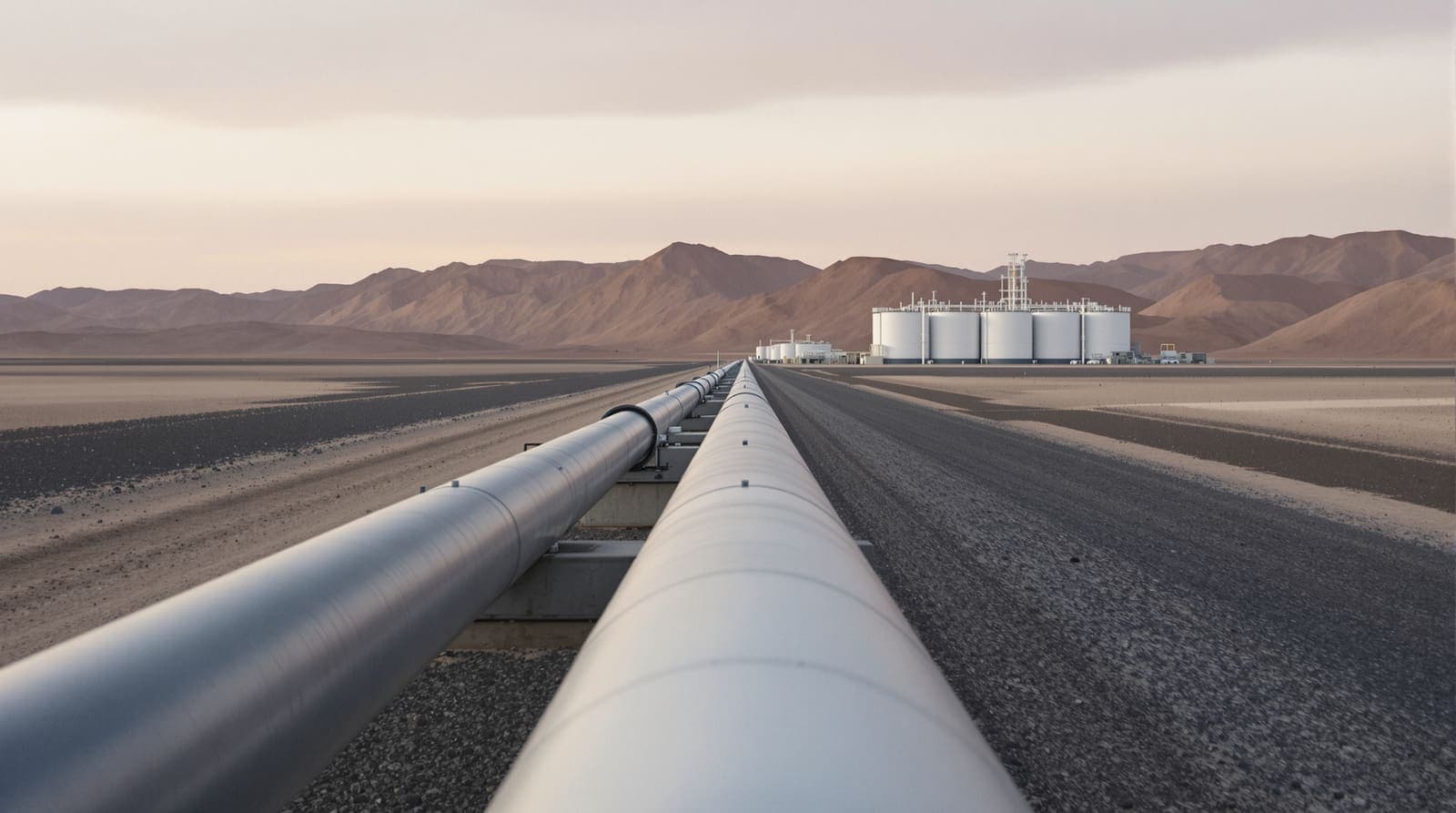
Illustration
Saudi Arabia is at risk of exhausting the crude oil it holds for export unless it can restart its main pipeline to the Red Sea within days, according to Saudi oil buyers and traders cited by news organisations following the outage. The Times of Israel reported that a prolonged shutdown would mean the loss of up to 4% of global oil supply.
An alert issued by Ynet, citing the Reuters news agency, put the timeline more precisely, saying Saudi Arabia's oil reserves earmarked for export would run out within five to seven days. The kingdom shut the pipeline on Friday after drone attacks, and Riyadh has not released full details of the damage or said when the route will return to service.
What the East-West pipeline does
The pipeline at the centre of the disruption, known as Petroline, carries crude from Saudi Arabia's oil-producing east across the country to the Red Sea coast. That route matters because it allows Saudi barrels to reach buyers without passing through the Strait of Hormuz, the narrow waterway at the mouth of the Gulf through which much of the world's seaborne crude otherwise moves. When the line is down, Saudi export capacity is constrained regardless of how much oil is in the ground or in storage tanks in the east.
Satellite imagery has been the main public window into the damage. The Times of Israel published a handout image taken by the commercial operator Planet Labs on September 11, 2026, showing an infrastructure site southeast of Medina, along the general path of the pipeline, after it was damaged by fire. The Jerusalem Post carried a separate satellite image, credited to the European Union's Copernicus Sentinel-3 programme and distributed by Reuters, showing black smoke rising from an area of the pipeline south of Medina on September 10, 2026.
Where the damage is
Medina, in the Hejaz region of western Saudi Arabia, sits inland from the Red Sea coast. The two satellite images place the affected infrastructure to the south and southeast of the city, which is consistent with a point along the western stretch of the pipeline rather than at the eastern production fields. The Jerusalem Post and the Times of Israel describe the same event and use the same headline framing about the threat to 4% of global supply, but the images they published are dated a day apart and credited to different satellite operators, so the reports do not amount to a single confirmed account of the extent of the damage.
Why the market impact is being described as global
The Times of Israel reported that any further fall in Saudi flows would deepen a supply crunch that is already under way, one that has driven global fuel prices to record highs and fed inflation in multiple countries. The same report said United States bond yields have reached their highest levels since the financial crisis of 2008.
The mechanism is straightforward enough: oil is priced on a global market, so a shortfall in one large exporter's shipments raises the price paid by every importer, not only those who buy from that exporter. Saudi Arabia is one of the few producers with the scale to move the world price on its own. Fuel costs then work through transport, food and manufacturing prices, which is the route from a pipeline fire to broader inflation. Higher inflation expectations, in turn, tend to push up the yields investors demand to hold government debt.
What Riyadh has and has not said
According to the Times of Israel, Saudi authorities have not given a full public account of the scale of the damage or an estimate of how long the pipeline will remain offline. That silence is why the timelines circulating come from buyers, traders and news agencies rather than from the Saudi government or the state oil company. The figure of five to seven days in the Ynet alert is attributed to Reuters, and the 4% supply figure is attributed in the Times of Israel report to Saudi oil buyers and traders rather than to an official source.
What the reports do not say
The material available does not identify who carried out the drone attacks that forced the shutdown, and no party is named as claiming responsibility. It does not say whether there were casualties at the site, nor how many points along the pipeline were struck.
There is no official Saudi statement quoted in any of the reports, no repair timetable, and no figure for how much crude Saudi Arabia currently holds in export storage. The reports also do not describe any Israeli connection to the incident beyond the fact that Israeli outlets are covering it. Nor do they set out what alternative routes, if any, Saudi Arabia could use to move barrels to market while the line is shut, or how buyers are responding to the prospect of curtailed shipments.
Sources and further reading
Every link below was opened and checked when this page was written. Official statements are marked as such: they are the subject's own account, not an independent one.
- Reportingyediotht.meYnet alerts
- Reportingtoitimesofisrael.comThe Times of Israel
- Reportingjpostjpost.comThe Jerusalem Post
How we checked this
The outage and the 4% supply figure were reported by both The Times of Israel and The Jerusalem Post, drawing on Saudi oil buyers and traders and on satellite imagery from Planet Labs and the EU Copernicus programme. The five to seven day estimate for export reserves comes from a Ynet alert citing Reuters and is not confirmed by any official Saudi statement in the material.
Our sourcing and corrections policy →The week from Israel, in one email
The stories that mattered, sourced and checked by the Israel.com newsroom. Free, weekly, one-click unsubscribe.
One list, unsubscribe in a click. See our privacy policy.
More in Emergency
All emergency →

Latest
- IDF says off-duty soldier fired at stone-throwers near Ramallah village
- Two killed in drone strike on a car in Gaza City's Tel al-Hawa
- Iranian state TV blames US for ship strike near Strait of Hormuz
- Kinneret Falls 8.5 cm in a Week to 213.41 Meters, Now 41 cm Below the Lower Red Line
- Burned car with three dead was in open area outside Baka al-Garbiyeh
- Army checking if soldier broke open-fire rules in Faqoua shooting