Kinneret Falls 8.5 cm in a Week to 213.41 Meters, Now 41 cm Below the Lower Red Line
The lake has shed 31 centimeters in a month and 53.5 centimeters in a year, leaving it 4.61 meters short of full and deeper into the zone where salinity climbs.

File photo · Chris Gallimore / Unsplash
Lake Kinneret fell another 8.5 centimeters this week, settling at -213.410 meters below sea level on 2026-09-10, according to Israel Water Authority data. The drop pushes Israel's only large freshwater lake further into territory that water managers would rather it did not occupy.
The lake now sits 4.61 meters below full capacity, the mark set by the upper red line at 208.80 meters below sea level. More pressing is the other threshold: the Kinneret is now 0.41 meters beneath the lower red line of 213 meters, the depth at which salinity rises and the ecosystem begins to suffer.
The decline is not a one-week anomaly. Over the past 30 days the level has slipped 31.0 centimeters, down from -213.100 meters on 2026-08-11. Measured against the same date twelve months ago, when the lake stood at -212.875 meters, the surface is 53.5 centimeters lower.
The multi-year comparison tells a similar story. In the same week of 2025 the lake read -212.91 m. In 2024 it was -210.68 m, in 2023 -211.13 m, in 2022 -209.81 m and in 2021 -210.19 m. Every one of those readings was higher than today's, and the two most recent summers before this one were higher by more than two meters.
Where this sits in the record
The series published by the Israel Water Authority on the national open-data portal runs from 1966-09-01 to 2026-09-10 and contains 11,329 readings in all. The highest level anywhere in that record is -208.20 meters, logged on 1969-01-27. The lowest is -214.87 meters, recorded on 2001-11-25 during the drought years that prompted Israel's turn toward large-scale desalination. Today's reading falls between those extremes, and 0.41 meters below the lower red line.
What the red lines mean
Israel manages the Kinneret between two administrative thresholds. The upper red line, 208.80 meters below sea level, marks the point at which the lake is considered full and the Degania dam is opened to prevent flooding around the shore. The lower red line, 213 meters below sea level, is the point below which pumping is restricted. As the volume of fresh water above the saline springs on the lake bed falls, salinity from those springs rises and water quality deteriorates along with the habitat that depends on it.
Neither line is a natural feature of the lake. Both are policy, drawn by regulators as operating limits rather than by geology, which is why crossing one is a management signal rather than an immediate emergency. Still, the direction of travel matters: late summer is typically when the Kinneret bottoms out, with evaporation and pumping running ahead of any inflow, and the recovery depends on what the coming rainy season delivers to the Jordan River and the Golan catchment.
The full daily series, with charts back to 1966, is on the Israel.com Kinneret water level tracker, and the raw dataset is published by the Water Authority through data.gov.il.
Sources and further reading
Every link below was opened and checked when this page was written. Official statements are marked as such: they are the subject's own account, not an independent one.
- OfficialIsrael Water Authority via data.gov.ildata.gov.ilKinneret water level, daily readings
- OfficialIsrael.comisrael.comKinneret water level tracker
How we checked this
Every figure in this report is computed in code from the Israel Water Authority's daily Kinneret series as published on data.gov.il, read on 2026-09-13. No number here is estimated, and none was written by AI: an AI model polished the sentences around the figures, and the arithmetic was done in code.
The account of the incident itself rests on the official statement and has not been independently confirmed by Israel.com. Where the statement is silent, this page says so rather than filling the gap.
Our sourcing and corrections policy →The week from Israel, in one email
The stories that mattered, sourced and checked by the Israel.com newsroom. Free, weekly, one-click unsubscribe.
One list, unsubscribe in a click. See our privacy policy.
More in Environment
All environment →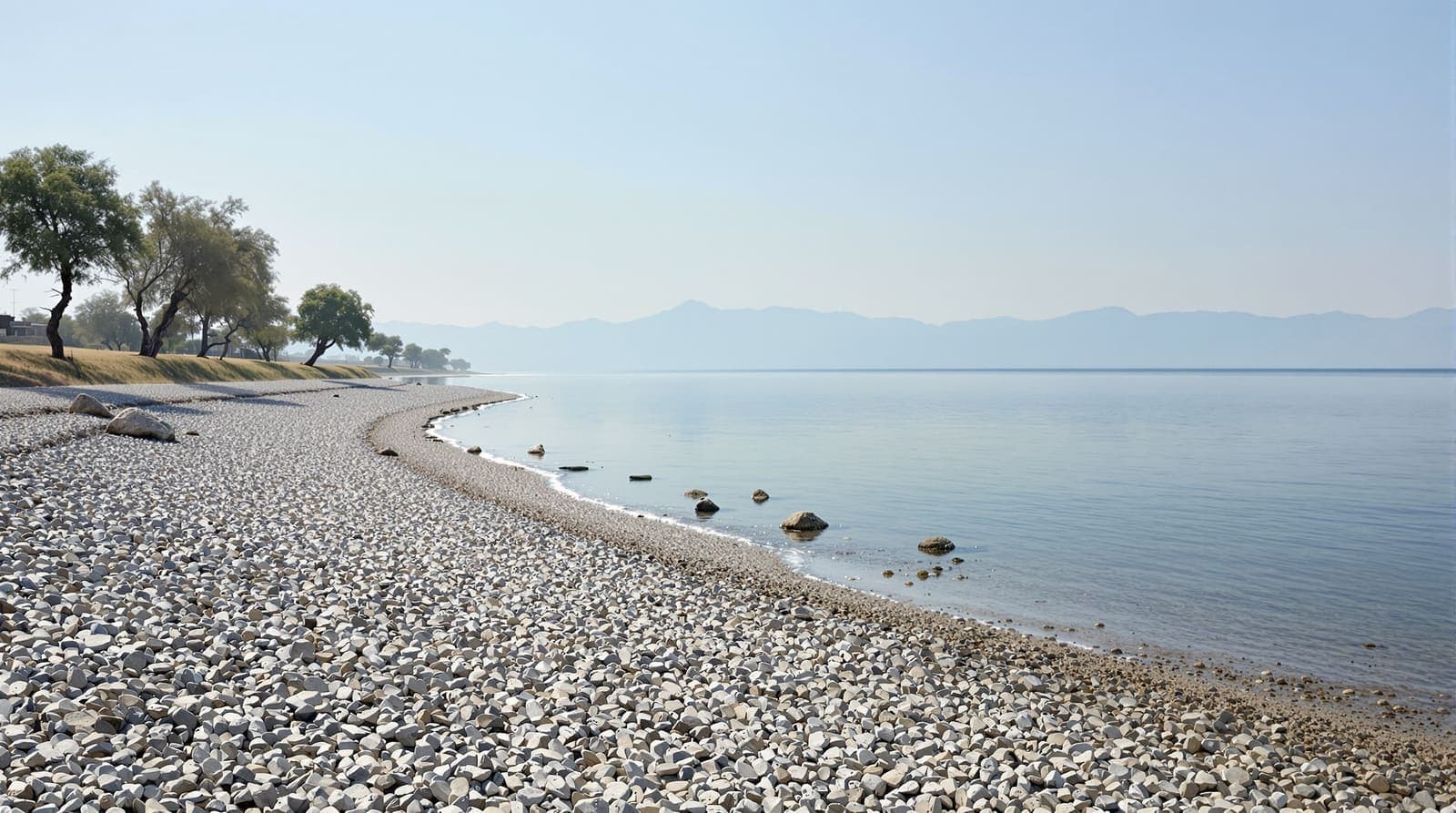
Latest
- Burned car with three dead was in open area outside Baka al-Garbiyeh
- One killed after Iranian commercial ship struck off Qeshm, state media says
- Army checking if soldier broke open-fire rules in Faqoua shooting
- Israeli documentary 'NAZA' on AI-assisted killing in Gaza takes Venice jury prize
- Six strikes reported in south Lebanon within an hour, monitors say
- Reports: four US troops wounded as well as three killed in Jordan strike