Settlers beat a 50-year-old olive picker in Osarin, near Nablus, Palestinians say
A Palestinian farmer was taken to hospital and cars were smashed in a West Bank village; the army says the attackers fled and police have opened an investigation.
Illustration
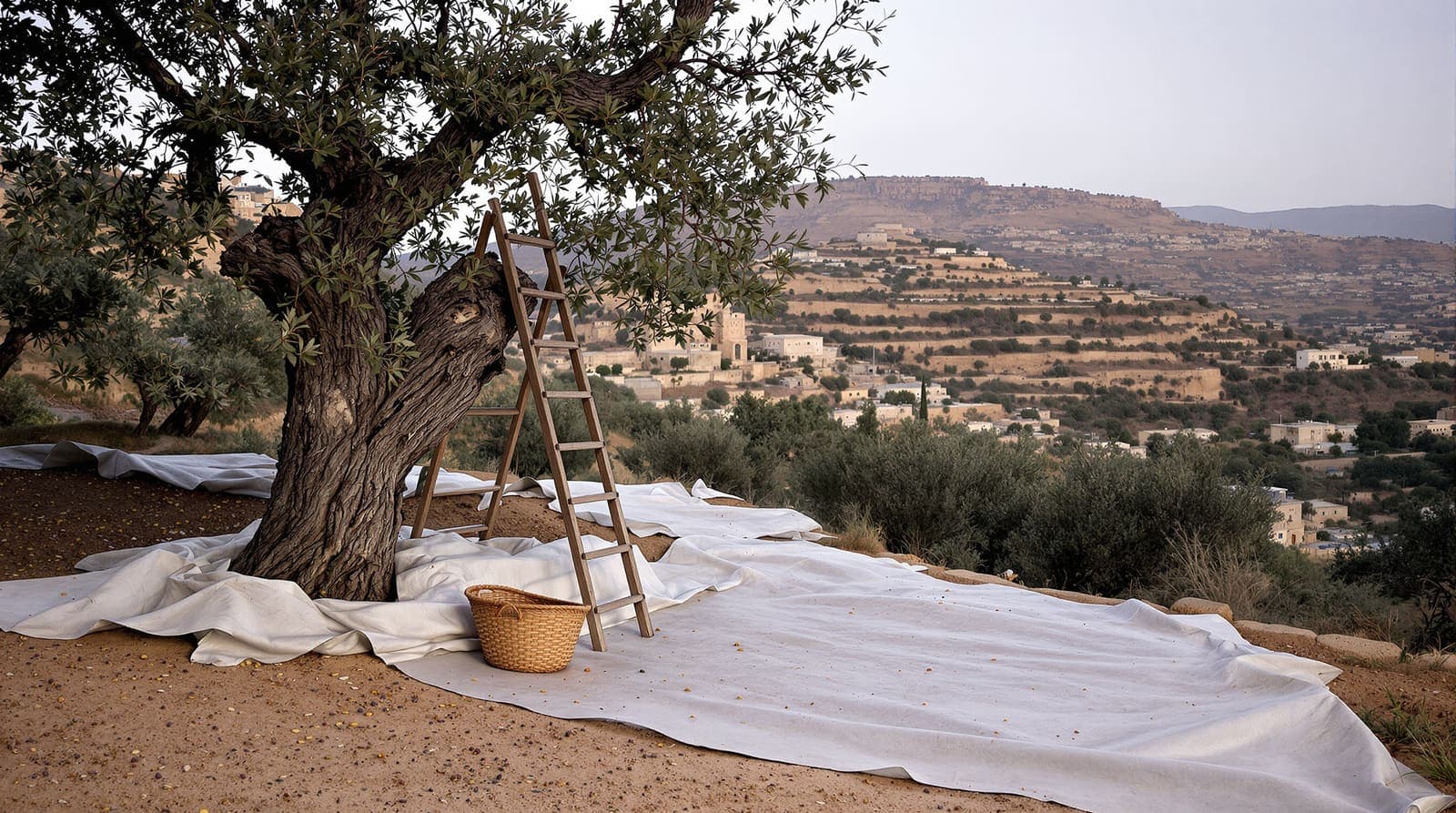
A Palestinian man aged 50 was hurt on Saturday in the village of Osarin, near the West Bank city of Nablus, after being beaten by Israeli settlers while harvesting olives, according to Palestinian accounts. The Times of Israel reported that the Palestinian Red Crescent Society said it took the man to hospital, and that video showed him being carried into the village on a ladder he had reportedly been using to pick olives. Ynet reported that Palestinians published a photograph of the man lying on the ground and bleeding, saying the settlers had used clubs and then run off.
Palestinian reports also described damage in the village itself. WAFA, the official news agency of the Palestinian Authority, said settlers threw stones at houses and vehicles, according to The Times of Israel, and footage circulated online appeared to show more than a dozen people identified as settlers wrecking a car parked beside a home. The Abu Ali Express Telegram channel also noted that Palestinian media had published video of settlers vandalising vehicles in the village.
What the army and police said
The Israel Defense Forces (IDF) confirmed that an assault had taken place. In its statement, carried by The Times of Israel, the military said soldiers were sent to Osarin after receiving footage and reports that Palestinians and their property were under attack by what it called "Israeli rioters". The troops found damage left by the settlers and searched for those responsible, but the army said the attackers had already left by the time soldiers arrived. Ynet carried a similar account from the army, which said its forces were called to the scene but the assailants escaped before they got there.
The IDF added that it "strongly condemns such incidents" and said attacks of this kind interfere with its defensive operations in the area. Israel Police said it had opened an investigation after a complaint of assault and property damage, and that officers, escorted by soldiers, had entered the village to collect evidence and take statements. A later Ynet alert said police and the army were searching for the perpetrators.
Where Osarin is
Osarin is a small Palestinian village in the northern West Bank. The Times of Israel placed it south of Nablus, while Abu Ali Express described it as lying southeast of the city. Hebrew outlets spell the name in different ways in transliteration, and it may also appear in English as Osrin or Usarin.
The Times of Israel said the village sits in Area B. Under the interim agreements of the Oslo process, the West Bank was divided into Areas A, B and C. In Area B, the Palestinian Authority runs civilian affairs while Israel retains overall security control, which is why the Israeli army and police, rather than Palestinian forces, responded and opened the investigation here.
The olive harvest
The autumn olive harvest is a central event in Palestinian rural life, and for many families in villages around Nablus the groves are a main source of income. The Times of Israel described the incident as coming at the start of a tense harvest season. In recent years the harvest has repeatedly been accompanied by reports of confrontations between Palestinian farmers and residents of nearby Israeli settlements, and The Times of Israel referred to more than one incident in the area on the same morning, noting that the army had not at first commented on any of them.
A note on terms
Hebrew-language reports used two words for the attackers. Ynet used mitnachalim, the standard Hebrew word for settlers, while Abu Ali Express used mityashvim, a term some Israelis prefer as a more neutral description of residents of West Bank communities. The army's statement used porim, translated in English reports as "rioters", a word the IDF commonly uses for Israelis involved in violent incidents against Palestinians.
How the accounts differ
Early reports differed on the army's position. The Times of Israel's first entry said the IDF had not immediately commented; the army's confirmation followed in later updates by both The Times of Israel and Ynet. The description of the weapon also varies: Ynet's report referred to clubs, while The Times of Israel's account said the man was beaten without specifying how.
What the reports do not say
None of the reports names the injured man or describes the nature or severity of his injuries beyond the images of him bleeding and being carried. No report gives the number of attackers involved in the assault in the groves, says where they came from, or identifies any suspect. There is no word of any arrests. The reports do not say how many homes or vehicles were damaged, and they do not explain what Abu Ali Express meant when it said it would describe events that preceded the vandalism.
Sources and further reading
Every link below was opened and checked when this page was written. Official statements are marked as such: they are the subject's own account, not an independent one.
- Reportingyediothynet.co.ilYnet
- Reportingyediotht.meYnet alerts
- Reportingtoitimesofisrael.comThe Times of Israel
- Reportingtoitimesofisrael.comThe Times of Israel
- Reportingabualiexpresst.meAbu Ali Express
- Reportingyediotht.meYnet alerts
How we checked this
The incident was reported by Ynet, The Times of Israel and Abu Ali Express, and the IDF and Israel Police confirmed an attack and an investigation. Details of the injury and the stoning of homes come from Palestinian sources, the Red Crescent and WAFA, as cited by Israeli outlets.
Our sourcing and corrections policy →The week from Israel, in one email
The stories that mattered, sourced and checked by the Israel.com newsroom. Free, weekly, one-click unsubscribe.
One list, unsubscribe in a click. See our privacy policy.
More in Security
All security →


Latest
- Trump posts TikTok video thanking Yaniv Hayun over flydubai flight
- UAE says flydubai co-pilot attacked captain with cockpit axe on Flight 1073
- Oman had grounded flydubai co-pilot over radicalisation fears, WSJ reports
- Netanyahu, Herzog and US envoy honour passengers who subdued flydubai pilot
- Israeli investigators expected to question flydubai copilot in the UAE
- Israel's top court lets Ra'am, the Joint List and MK Ofer Cassif run for Knesset