Shin Bet finds no evidence of vote bribery large enough to sway the election
Justice Noam Sohlberg says no result-changing vote buying was found in the 26th Knesset election, as commentator Amit Segal calls it an embarrassment for the Shin Bet.
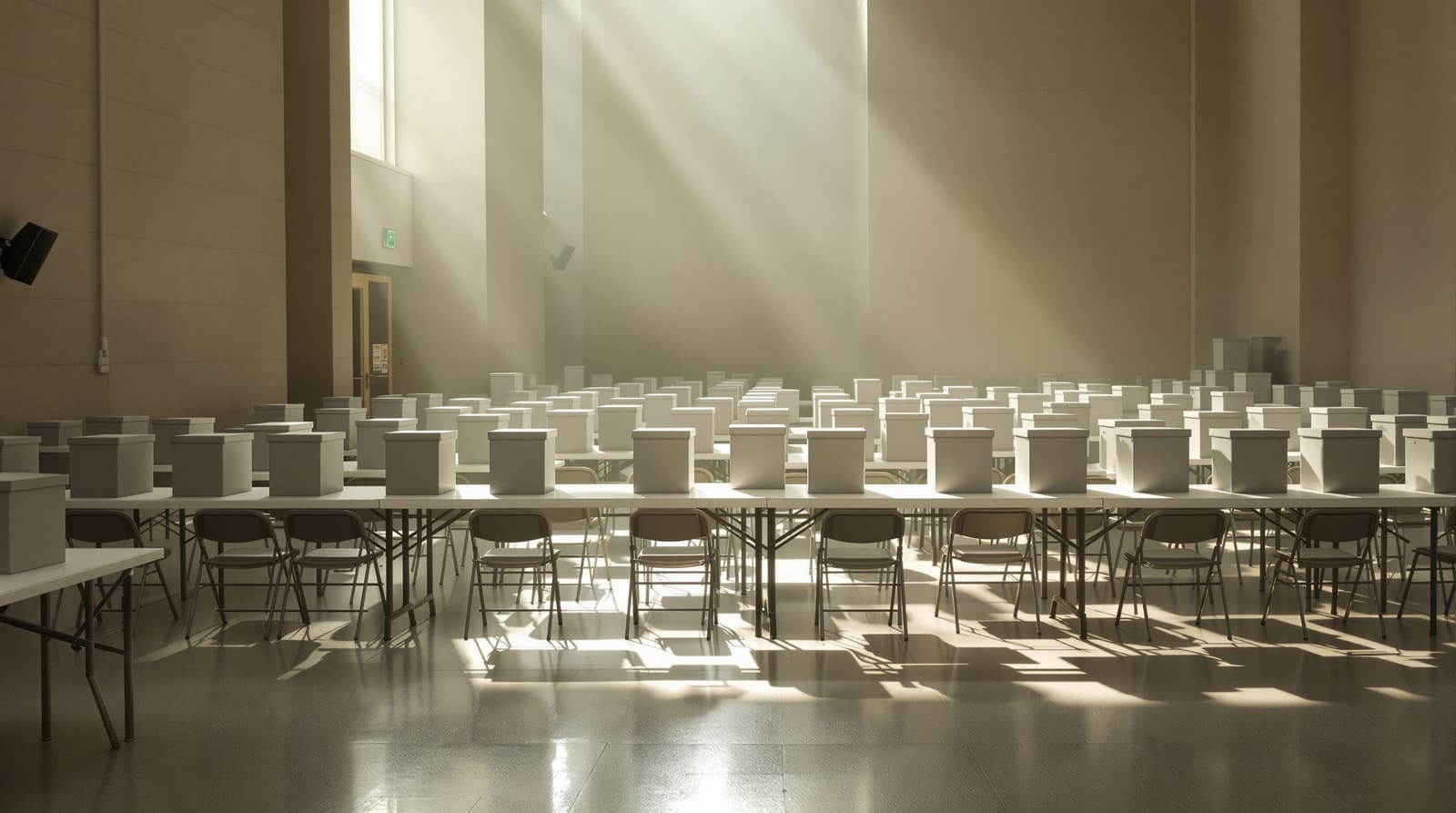
AI illustration, not a photo of the events.
One update since publication
- Commentator Amit Segal calls the statement an embarrassment for the Shin Bet; officials named as Justice Noam Sohlberg and David Zini.
This story is being added to as it develops. Earlier text is kept below the updates rather than rewritten, so what this page said at each point is still on it.
Update, 17 November, 20:07 Israel time
Political commentator Amit Segal has criticised the security service over the episode, the first reaction to the statement to appear in our reports. In a post on his Telegram channel, Segal wrote that the committee chair's announcement is a major embarrassment for the Shin Bet and that it obliges Zini, at the very least, to carry out a deep and public reckoning. He did not set out in that post what he considered embarrassing about the findings.
English-language outlets have also supplied fuller identification of the two officials. Israel Hayom reported that the committee chair is Supreme Court Justice Noam Sohlberg, whose name has also been transliterated as Solberg, and that the Shin Bet chief who briefed him is David Zini. The paper said the finding concerns the results of the elections to the 26th Knesset.
On the ground

Did Israel's Shin Bet and police interfere in the election on orders from Netanyahu's office? Haaretz police reporter @JoshBreiner breaks down the allegations 🔗Read more at link in bio

Shin Bet finds no evidence of vote-buying that could sway Israeli election Election chief Noam Sohlberg says investigators have uncovered numerous suspicions but no evidence of vote-buying on a scale that could affect the results; ... ynetnews.com/article/s1vkmb…

The Jerusalem Post, which dates that vote to October 27, 2026, framed the statement as finding no evidence of vote buying through bribery so far, and stressed that the Shin Bet is still investigating. The Times of Israel described the announcement as a statement by Sohlberg that Zini had approved, consistent with earlier reporting that it was issued with his agreement.
None of the new reports name who alleged bribery or identify any suspects, and none describe the foreign influence strand of the inquiry in more detail.
The story as first reported
The head of the Shin Bet, Israel's domestic security service, has told the chair of the Central Elections Committee that investigators have so far found no evidence that voters were paid bribes on a scale that could have changed the outcome of the election. The committee chair, Solberg, made the finding public in a statement that Ynet reported was issued with the agreement of the Shin Bet chief, Zini, and in which Solberg again stated that the election had not been stolen.
Israel's week in five stories, every Friday
Sourced and checked by the Israel.com newsroom, with Shabbat times. Free, one-click unsubscribe.
One list, unsubscribe in a click. See our privacy policy.
According to the wording of the statement as published by N12, the Shin Bet chief briefed the committee chair the previous evening on what the investigation had found to date. The central sentence, carried in near-identical form by every outlet, was that at this stage there is no evidence of election bribes being paid to voters in a volume that might affect the results. Ynet's alerts channel described the announcement as another joint statement by the two men, indicating it was not the first time they had addressed the matter together.
Where the investigation goes next
The reports agree that the inquiry is not closed, but they describe its new direction in slightly different terms. Ynet reported that the investigation will now concentrate on questions of "subversion and foreign influence". Political commentator Amit Segal and the outlet News.co.il both carried a version saying the focus is moving to aspects that are more security-related and that lie outside the core of the electoral process and its results. The two descriptions are compatible, but neither names a country, a group or a specific suspected operation.
Who the two officials are
The Shin Bet, formally the Israel Security Agency, is responsible for counter-terrorism, counter-espionage and protecting the state against internal threats. It does not normally speak publicly about its work, which is part of why a statement involving its chief on an electoral matter draws attention. In this case the public announcement came from the elections committee chair rather than directly from the agency, with Ynet noting that it was issued with the Shin Bet chief's consent.

Illustration
Next story Security
Shin Bet questioned Joint List activists about rival Ra'am, Channel 12 says
The Central Elections Committee is the body that runs elections to the Knesset, Israel's parliament. It registers party lists, oversees polling and counting, and certifies the official results. Its chair is traditionally a justice of the Supreme Court, which gives the post a judicial character separate from the political parties that sit on the committee. A statement from the chair that an election was not stolen therefore carries institutional weight on the question of whether the count can be trusted.
Why the statement matters
The wording of the announcement is careful. It does not say that no bribery occurred. It says that, at this stage, investigators have no evidence of bribes paid to voters on a scale capable of affecting the results. That leaves open the possibility of smaller, isolated cases, while addressing the question that matters most for the legitimacy of the vote: whether any wrongdoing could have changed who won.
Ynet's framing, that Solberg once again made clear the election was not stolen, indicates that claims to the contrary have been circulating and that the committee has felt the need to respond to them more than once. The reports do not identify who made those claims.
The shift toward subversion and foreign influence moves the matter away from the mechanics of the ballot and into national security territory, which is the Shin Bet's core remit. Concerns about foreign actors trying to influence elections through online campaigns and other means have been raised in many democracies, and this statement signals that Israeli investigators are now treating that as the main line of inquiry.
What the reports do not say
None of the reports describe what originally prompted the bribery investigation, who was suspected of paying voters, or whether any individuals have been questioned or arrested. The statement gives no detail on what evidence, if any, has been found of smaller-scale vote buying. The suspected subversion and foreign influence are not described, and no foreign state or organisation is named. The reports also carry no response from political parties or from those who have alleged that the election was stolen, and they give no timetable for when the security-focused phase of the investigation might conclude or whether its findings will be made public.
Read next
All security →
File photo
Security
Lieberman says he will call Shin Bet chief and police commissioner to Knesset panel

File photo
Security
Joint List asks Knesset Speaker Kahana to stop 'terrorist' labels for Arab MKs

Illustration
Security
Border Police undercover unit arrests two Hamas suspects in Samaria

Illustration
Security
Protesters chant against Iran's leadership in Abdanan after 12 oil workers die
Sources and further reading
Every link below was opened and checked when this page was written. Official statements are marked as such: they are the subject's own account, not an independent one.
- Reportingyediothynet.co.ilYnet
- Reportingyediotht.meYnet alerts
- Reportingamitsegalt.meAmit Segal
- Reportingnewssilt.meNews.co.il
- Reportingkeshett.meN12
- Reportingkeshett.meN12
- Reportingtoitimesofisrael.comThe Times of Israel
- Reportingjpostjpost.comThe Jerusalem Post
- Reportingisraelhayomisraelhayom.comIsrael Hayom
- Reportingamitsegalt.meAmit Segal
How we checked this
The core finding is carried consistently by Ynet, N12, The Times of Israel, The Jerusalem Post and Israel Hayom, all citing the committee chair's statement. The criticism of the Shin Bet is the opinion of commentator Amit Segal alone, and no outlet has described the suspected foreign influence.
Our sourcing and corrections policy →The week from Israel, in one email
The stories that mattered, sourced and checked by the Israel.com newsroom. Free, weekly, one-click unsubscribe.
One list, unsubscribe in a click. See our privacy policy.
Latest

Illustration

File photo

Illustration

Illustration

File photo

Illustration