Tanker hit by unidentified projectile in Strait of Hormuz off Oman
A tanker was struck near Khasab in the Strait of Hormuz with no injuries reported, while one outlet says two vessels were hit within an hour.
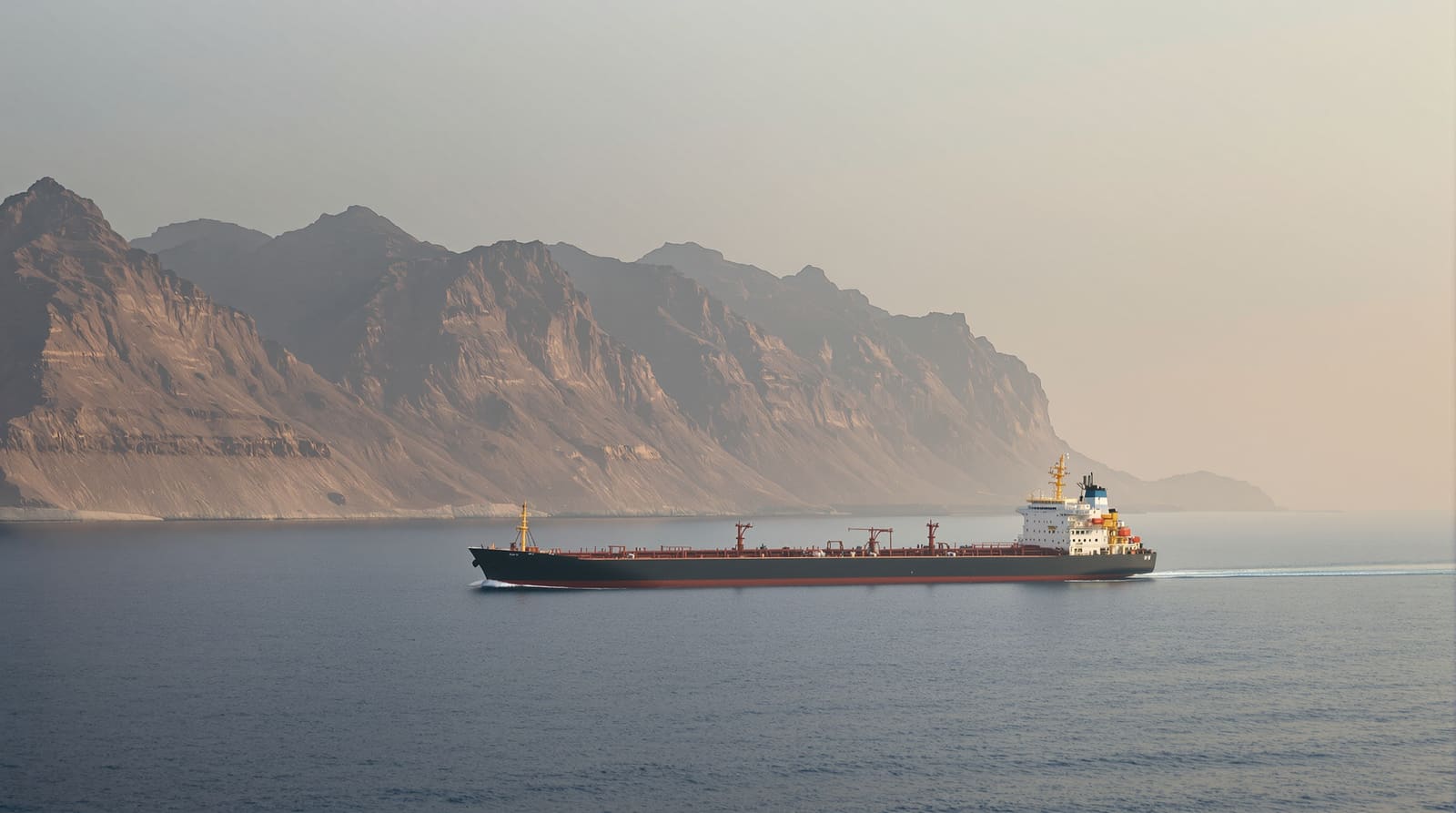
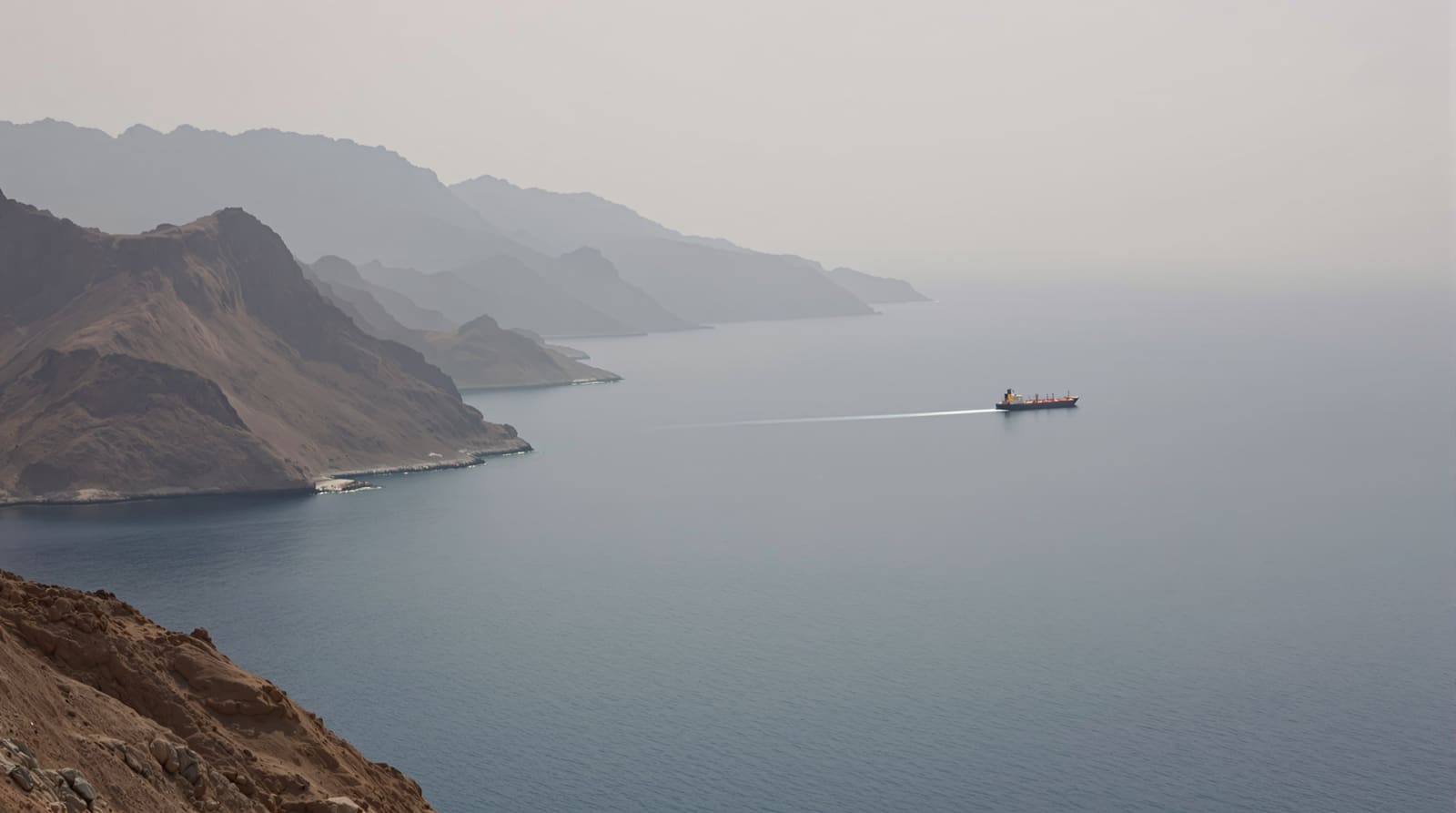
AI illustration, not a photo of the events.
A tanker was struck by an unidentified projectile in the Strait of Hormuz, the narrow waterway between the Persian Gulf and the Gulf of Oman. The Times of Israel reported, citing a maritime monitor, that no one was hurt. The Israeli news site Ynet carried the same development in a brief alert, describing the vessel as having been hit by what it called unidentified munitions.
The Jerusalem Post gave a fuller and somewhat different account. According to The Jerusalem Post, two tankers, not one, were hit by unidentified projectiles off the Omani town of Khasab, and both incidents took place within the space of an hour. None of the three outlets identified who fired the projectiles, what kind of weapon was involved, or which ships were affected.
Where the incident took place
The Strait of Hormuz separates Iran to the north from the Arabian Peninsula to the south. Its southern shore at its narrowest point belongs to Musandam, a rocky peninsula that is part of Oman but cut off from the rest of the country by territory of the United Arab Emirates. Khasab is the main town of Musandam and sits on the strait itself, which is why the Jerusalem Post used it as the reference point for locating the attacks.
The strait is the only sea route out of the Persian Gulf, and tankers carrying crude oil and gas from Gulf producers pass through it in a steady stream. Because so much traffic is funnelled through such a confined space, any attack on shipping there draws immediate attention from governments, insurers and energy markets far beyond the region.
Why Israeli outlets are following it
All three reports came from Israeli news organisations, which track security incidents across the wider region closely. Shipping in and around the Gulf has been a recurring arena of tension involving Iran, and Israeli media routinely flag maritime incidents there as they emerge. The reports available to us, however, do not connect this incident to any particular actor or dispute, and we are not drawing that link on their behalf.
Israel's week in five stories, every Friday
Sourced and checked by the Israel.com newsroom, with Shabbat times. Free, one-click unsubscribe.
One list, unsubscribe in a click. See our privacy policy.
The phrase used in the Ynet alert, unidentified munitions, and the Jerusalem Post's unidentified projectiles both indicate that, at the time of reporting, the nature of the weapon had not been established. That could cover anything from a missile or drone to another kind of explosive device; the outlets did not specify, and neither do we.
What a maritime monitor is
The Times of Israel attributed its information to a monitor. Maritime monitoring bodies, which may be run by navies, governments or private security firms, collect reports from ships and issue advisories to vessels transiting sensitive waters. They are often the first to make an incident at sea public, sometimes before the ship's owner or any government comments. The material available to us does not name the monitor the Times of Israel relied on.
Illustration
Next story Security
ADNOC vessel hit in the Strait of Hormuz, one crew member missing
Where the reports differ
The main discrepancy is the number of vessels. The Times of Israel and Ynet each referred to a single tanker. The Jerusalem Post, which published somewhat later than the other two, reported that two tankers had been hit within an hour of each other. It is possible the later report reflected a second incident that had not yet emerged when the earlier items were published, but the outlets do not say so, and the difference is unresolved in the material.
The statement that nobody was injured comes from the Times of Israel's report, which in turn relied on the monitor. It is not clear from the material whether that assessment covers one ship or both of the vessels named in the Jerusalem Post account.
What the reports do not say
- Who launched the projectiles, and whether any group or state has claimed responsibility.
- The names, flags, owners or cargoes of the tanker or tankers involved.
- Whether one ship or two was struck, given that the outlets differ.
- The extent of any damage, and whether the vessels were able to continue their voyages.
- Any response from Oman, from other governments in the region, or from the shipping companies.
- The name of the maritime monitor cited by the Times of Israel.
Read next
All security →
Illustration
Security
Iran says tankers struck mines in the Strait of Hormuz and caught fire
Illustration
Security
Iran's Revolutionary Guards say a tanker struck a naval mine in the Strait of Hormuz
Illustration
Security
Tanker struck by unidentified projectile off Khasab, Oman, UKMTO says

File photo
Government
Iran's Foreign Minister Araghchi expected in Oman on Tuesday amid Gulf tension
Sources and further reading
Every link below was opened and checked when this page was written. Official statements are marked as such: they are the subject's own account, not an independent one.
- Reportingyediotht.meYnet alerts
- Reportingtoitimesofisrael.comThe Times of Israel
- Reportingjpostjpost.comThe Jerusalem Post
How we checked this
Ynet, The Times of Israel and The Jerusalem Post all reported a tanker being struck in the Strait of Hormuz; the account of two tankers comes only from The Jerusalem Post, and the no-injuries report rests on an unnamed monitor cited by The Times of Israel. We have not independently verified any of these details.
Our sourcing and corrections policy →The week from Israel, in one email
The stories that mattered, sourced and checked by the Israel.com newsroom. Free, weekly, one-click unsubscribe.
One list, unsubscribe in a click. See our privacy policy.
Latest

Illustration

File photo

File photo

Illustration

Illustration
Illustration