
Caesarea · Best time to visit
The best time to visit Caesarea
The national park keeps two timetables: the gate closes at 17:00 from April to October and at 16:00 from November to March, and entry stops an hour before either.
Warmest sea
30.3°C
Mean daily maximum in August off the park, in 2023 and 2024, as far back as the sea record goes
Wettest month
148 mm
January, falling across about thirteen days with a millimetre or more
Winter closing
16:00
November to March, with the last entry an hour earlier, as the Caesarea Corporation publishes it
Shark dives
Nov to Mar
The season the Old Caesarea Diving Center gives for the warm-water outflow at Hadera
Caesarea is a long, thin, treeless walk beside open water, and that single fact decides almost everything about when to come. There is very little shade between the Roman theatre at the southern end and the Crusader walls at the northern, the ground is pale stone and sand that throws the light back up, and the sea breeze that makes the place feel bearable is also what hides how much sun a visitor is taking. In July and August the honest advice is to be at the gate when it opens and to be finished by eleven.
The other half of the answer is the clock rather than the thermometer. The Caesarea Corporation publishes the park on two schedules: 08:00 to 17:00 from April to October, and 08:00 to 16:00 from November to March, with Fridays and holiday eves an hour shorter again. The Israel Nature and Parks Authority stops admitting visitors an hour before whichever closing time applies. So a winter afternoon at Caesarea is not a short visit, it is no visit at all, and the switch on 1 April and 1 November moves the useful end of the day by a full hour.
What is left, once heat and hours are accounted for, is two windows that work well and a festival calendar that can wreck either of them. This page takes the two windows first, then the calendar, then the weather hazard that catches people out on this particular coast, which is not the summer at all.
The year
What the weather actually does in Caesarea
Monthly normals computed from daily reanalysis at this destination's own coordinates, 2015 to 2024. Not a forecast and not an impression.
Month by month
When to go to Caesarea
January
Mixed17.1°C by day, 10.5°C at night, sea 20°C, 13.1 wet days
The wettest month of the year at Caesarea and the shortest visiting day: the gate shuts at 16:00 and the parks authority stops admitting an hour before that, so January is a morning visit or nothing. What the rain buys is a nearly empty site on a weekday and a theatre you can have to yourself. This is also the heart of the shark season at the Hadera outflow just south, which the Old Caesarea Diving Center runs from November to March for experienced divers only. Swimming is a plunge rather than a swim.
February
Mixed18.2°C by day, 10.7°C at night, sea 18.1°C, 9.3 wet days
The sea is at its coldest of the year now, colder than the air above it, because the Mediterranean lags the land by roughly two months in both directions. Rain is easing off but the winter clock still applies, and Friday closing is 15:00 with the last entry at 14:00. Israeli crowds are thin outside weekends and coastal hotel rates are at their lowest. A clear February morning walking north from the theatre is one of the better arguments for coming out of season.
March
Good20.1°C by day, 12.5°C at night, sea 18.6°C, 8.5 wet days
Rain drops away sharply and the site starts to be genuinely pleasant, but the park stays on its winter hours to the end of the month: last entry at 15:00 through 31 March, then an hour later from 1 April. The first sharav days of the year can arrive now, and the meteorological service notes that spring is when coastal fog is relatively common, cool sea air trapped under warm air over the land, usually clearing by mid-morning. Purim falls in March in most years and is a school holiday rather than a national shutdown, so expect Israeli families midweek.
April
Best23.4°C by day, 14.6°C at night, sea 20.5°C, 4.3 wet days
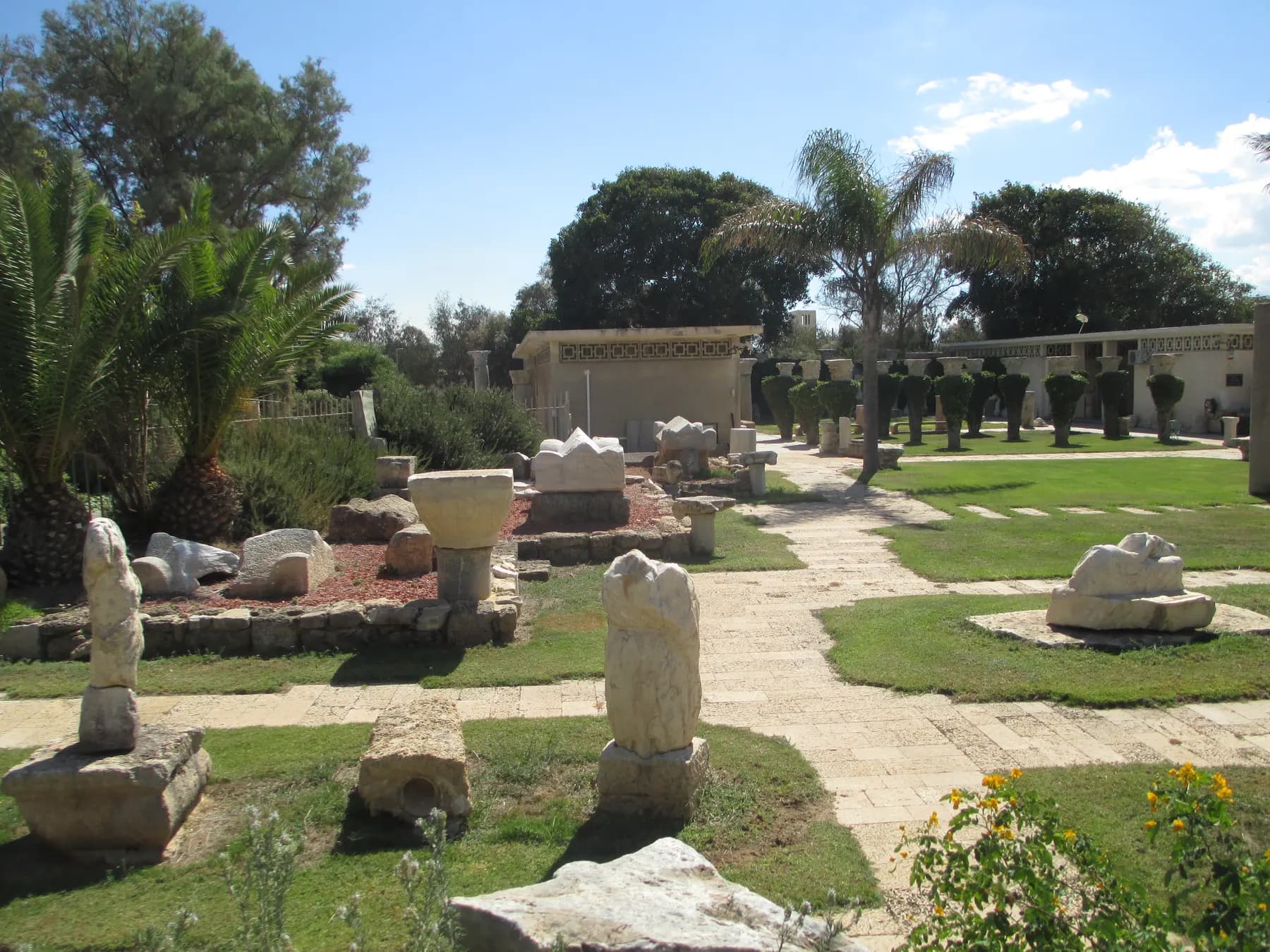
The best month here in an ordinary year, and the one most easily ruined by bad timing. Hours move to the April to October schedule on the 1st, closing at 17:00, and the late-afternoon light off the water is the reason to walk the site from south to north. Passover is the catch: in 2027 it runs 21 to 29 April, and the intermediate days fill every parks authority site in the country while coastal accommodation goes to its annual peak. The fortnight before or the week after is close to perfect.
Dr. Avishai Teicher / CC BY 2.5 · Wikimedia Commons
May
Best26.7°C by day, 18.1°C at night, sea 22.7°C, 2.9 wet days
Warm without being punishing, the sea has climbed past 22°C, and the jellyfish swarm has usually not built yet. This is peak sharav season, which is the month's real hazard: a hot low can push a single day well above the seasonal figure before the wind swings west and breaks it, and the sea breeze is at its strongest of the year for the same reason, which makes the sunburn deceptive. Yom HaAtzmaut and Lag BaOmer are one-day school holidays rather than shutdowns, so they crowd the site without closing it.
June
Good28.6°C by day, 21°C at night, sea 26.4°C, 1 wet day
Early June is still spring at Caesarea: dry, warm, and long, with the sun setting close to 19:50 at the solstice. Two things then change within the month. The nomad jellyfish that swarm this coast each summer build towards their peak, and Israeli schools break up at the end of June, after which every beach between Netanya and Haifa fills. Get here in the first fortnight and June behaves like May with warmer water.
July
Hard going30.7°C by day, 23.6°C at night, sea 29.4°C, effectively no rain
Effectively no rain falls and the sea is at bathing temperature, so the swimming is the reason to be here and the ruins are the endurance test. The walk from the theatre to the harbour is almost entirely unshaded, and there is no version of doing it at midday in July that is pleasant: be at the gate for the 08:00 opening or leave the site for another month. Every school in the country is on holiday and the coast is at its busiest. Jellyfish are the other July fact on this coast, numerous enough in summer to block the cooling intakes at the power stations along it.
August
Hard going31.4°C by day, 24.5°C at night, sea 30.3°C, effectively no rain
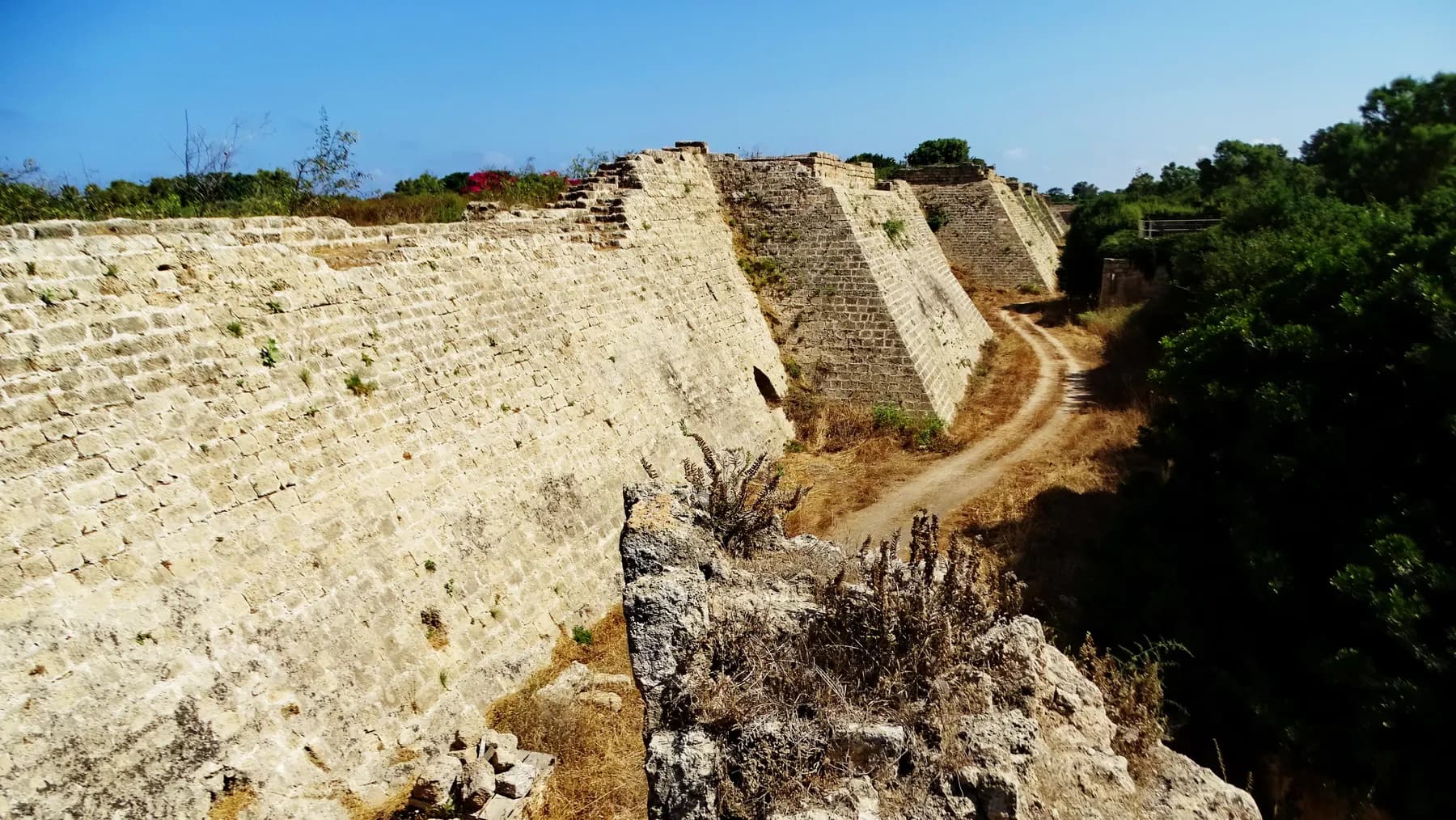
The hottest and most crowded month of the year, with the warmest sea and rainfall that rounds to nothing. Herod's harbour front is a fine place at seven in the evening and the ruins are a poor one at any hour with the sun up, which is an awkward combination at a site whose whole point is the walk between them. Israeli schools are out for the entire month. If August is the only month available, treat the park as an early start, the harbour as the afternoon, and the aqueduct beach as the evening.
israel zeller ישראל זלר / CC BY 2.5 · Wikimedia Commons
September
Mixed30.6°C by day, 23.6°C at night, sea 29.5°C, effectively no rain
The first fortnight is August in everything but name, and then the festival calendar takes the month over. In 2026 Rosh Hashanah begins on the evening of the 11th, Yom Kippur on the evening of the 20th and Sukkot on the evening of the 25th, which packs two holiday weeks and one total national shutdown into four weeks. Yom Kippur closes the country including the airport, and the park publishes a 13:00 closing on the eve. The sea stays warm and, as autumn sets in, it is the night breeze rather than the day breeze that cools this coast.
October
Best28.5°C by day, 20.8°C at night, sea 27.3°C, 3.4 wet days
The other clear window, and often the calmer of the two. Heat has fallen back to roughly April levels, the sea is still warm enough to swim in without thinking about it, and monthly rainfall over the decade to 2024 averaged 13 mm. The qualification in 2026 is that Sukkot runs to 2 October and Simchat Torah to the 4th, so the first week is a holiday week with entry subject to available space. From about the 8th until the hours revert on 1 November, this is the month to book.
November
Good24.3°C by day, 16.6°C at night, sea 24.2°C, 6.7 wet days
The month splits in two. Until 31 October the park is on summer hours; from 1 November it closes at 16:00 with the last entry at 15:00, which takes a real hour out of a Caesarea day. Rain returns but not heavily, the sea holds its warmth into the month better than the air does, and the shark dives at the Hadera outflow start again. Crowds fall back to weekends and Israeli day trippers, and the harbour restaurants are easier to get into.
December
Mixed19.6°C by day, 12.7°C at night, sea 21.9°C, 10.9 wet days
Second wettest month and the shortest daylight of the year: the sun sets at about 16:39 around the solstice and the park has already closed. Winter systems on this coast can be serious enough that Israel, Greece and Cyprus name the significant ones jointly, and the meteorological service's account of the December 1991 coastal plain storm records more than 300 mm at some stations in six days. Hanukkah, 4 to 12 December in 2026, is a school holiday that fills sites midweek without closing anything, and the diving club moves to its shorter December to March hours.
The table
Every month in figures
| Month | Average high | Average low | Sea | Rain | Wet days |
|---|---|---|---|---|---|
| January | 17.1°C | 10.5°C | 20°C | 148 mm | 13.1 |
| February | 18.2°C | 10.7°C | 18.1°C | 93 mm | 9.3 |
| March | 20.1°C | 12.5°C | 18.6°C | 56 mm | 8.5 |
| April | 23.4°C | 14.6°C | 20.5°C | 33 mm | 4.3 |
| May | 26.7°C | 18.1°C | 22.7°C | 9 mm | 2.9 |
| June | 28.6°C | 21°C | 26.4°C | 3 mm | 1 |
| July | 30.7°C | 23.6°C | 29.4°C | 1 mm | 0.3 |
| August | 31.4°C | 24.5°C | 30.3°C | 1 mm | 0.2 |
| September | 30.6°C | 23.6°C | 29.5°C | 2 mm | 0.8 |
| October | 28.5°C | 20.8°C | 27.3°C | 13 mm | 3.4 |
| November | 24.3°C | 16.6°C | 24.2°C | 54 mm | 6.7 |
| December | 19.6°C | 12.7°C | 21.9°C | 110 mm | 10.9 |
2015 to 2024 averages at 32.5008, 34.8917, elevation 9 m. Source: European Centre for Medium-Range Weather Forecasts (IFS, ERA5). A wet day has 1 mm of rain or more.
Sea temperatures: Copernicus Marine Service, averaged from 23 November 2022.
The windows
Two months do most of the work, and Passover sits inside one of them
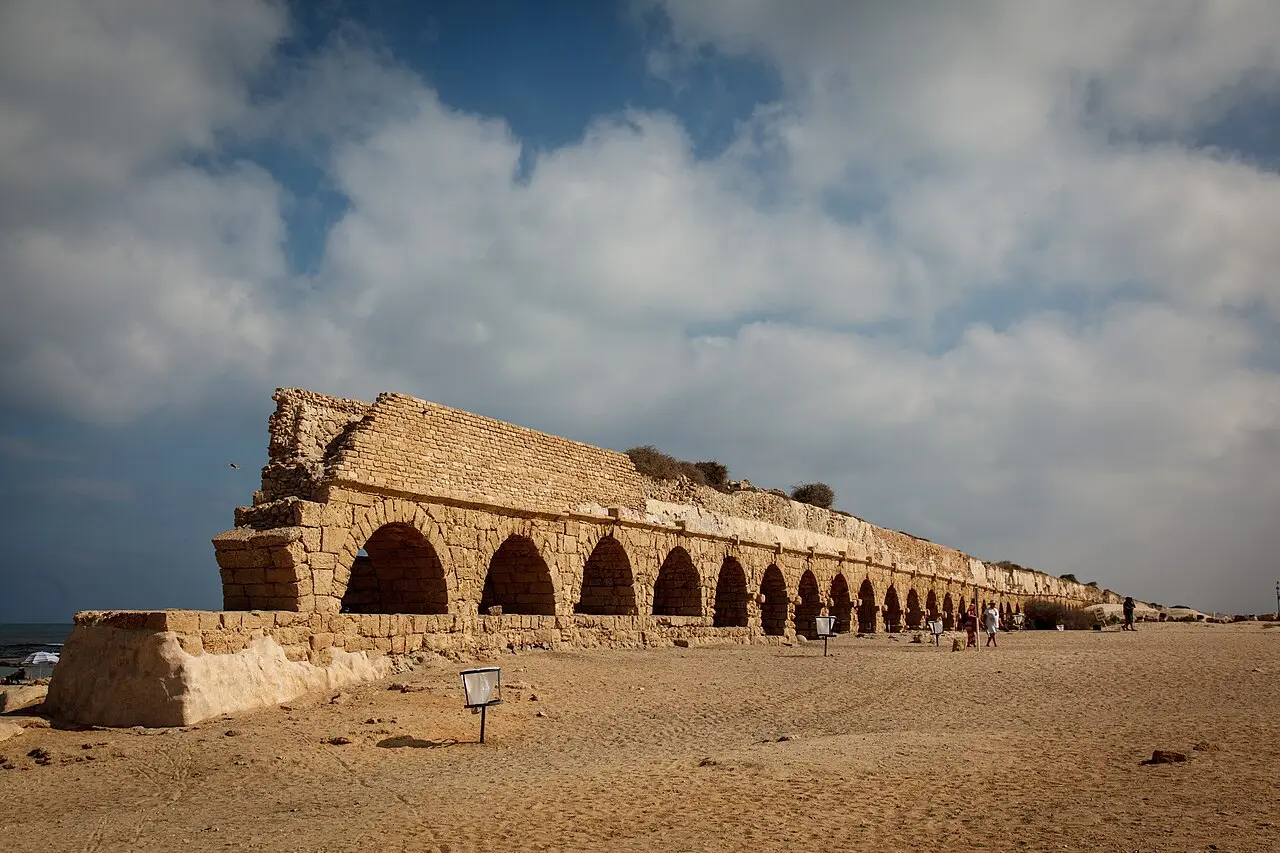
April to early June is the first window and the better one. The park has moved to its longer hours, rain has effectively stopped, the sea has climbed out of its winter trough, and the late-afternoon light comes off the water into the theatre and along the aqueduct arcade in a way it simply does not at midday. The catch is that Passover falls inside this window every year, and the intermediate days are a national school holiday that fills parks authority sites across the country. The parks authority's own note on the Caesarea page is that on holidays and Saturdays it recommends arriving early, because entry is on the basis of available space.
October is the second window, and in most years it is the cleaner one. Heat has dropped back to roughly April levels, the sea is still warm enough to swim in without deciding to, rainfall over the decade to 2024 averaged 13 mm across the whole month, and the Israeli summer holiday crowd has gone back to school. The qualification is the festival calendar again: Sukkot moves around the Gregorian year, and in 2026 it runs to 2 October with Shemini Atzeret and Simchat Torah immediately after, which turns the first week into a holiday week. From about the second week of October until the hours revert on 1 November, this is as good as Caesarea gets.
There is a third window that suits a narrower visitor. From November to March the site is quiet on a weekday, and the Old Caesarea Diving Center runs boat dives to the warm-water outflow at the Hadera power station, where it says dozens of dusky and sandbar sharks gather each year over exactly those months. The dive is not a beginner's outing: the club asks for at least thirty logged dives and two Mediterranean shore dives, and caps the ratio at two divers to an instructor. Everything above water in those months runs on the short winter clock.
Ruby1619 / CC BY-SA 3.0 · Wikimedia Commons
The calendar
What Passover, Sukkot and Yom Kippur actually do to a day here
The Jewish festival calendar is the thing visitors most often get wrong about Israel, because it runs on a lunar-solar year and lands on different Gregorian dates every time. Two festivals matter most for a site like this. Passover and Sukkot each run about a week, and the intermediate days between the opening and closing holidays are a school holiday and, for many Israelis, collective paid leave. That combination sends families to national parks in numbers no ordinary weekend produces, and it pushes accommodation demand along the coast to its annual peak. Booking a hotel in Caesarea, Netanya or Zichron Ya'akov for those weeks and expecting ordinary rates is the standard mistake.
The dates to plan around: Rosh Hashanah begins on the evening of 11 September 2026, Yom Kippur on the evening of 20 September 2026, Sukkot on the evening of 25 September 2026 running to 2 October, and Shemini Atzeret and Simchat Torah from 2 to 4 October. Purim is 22 and 23 March 2027, Passover 21 to 29 April 2027, Yom HaAtzmaut 11 and 12 May 2027, and Shavuot 10 to 12 June 2027. Hanukkah, 4 to 12 December 2026, is a school holiday rather than a shutdown, so it fills sites midweek without closing anything.
Yom Kippur is different in kind rather than in degree. The country stops: no public transport, no broadcasting, shops and businesses closed nationwide, and the airport shut for roughly a day and a half. Nothing at Caesarea is open on the day itself, and the parks authority publishes a 13:00 closing on Yom Kippur eve, the same early closing it applies to other holiday eves. A traveller who books a flight into or out of Israel across that date is not going to fly.
The smaller effect is Shabbat, every week. Friday and holiday eves close the park an hour earlier than the rest of the week, which in winter means 15:00 with the last entry at 14:00, and Saturday is the day the parks authority singles out in its warning about available space. Concert nights at the Roman theatre are a third, irregular disturbance: the Caesarea Corporation publishes the amphitheatre schedule, and a show changes access to the southern end of the park entirely.
DerHexer , Wikimedia Commons / CC BY-SA 4.0 · Wikimedia Commons
The hazard
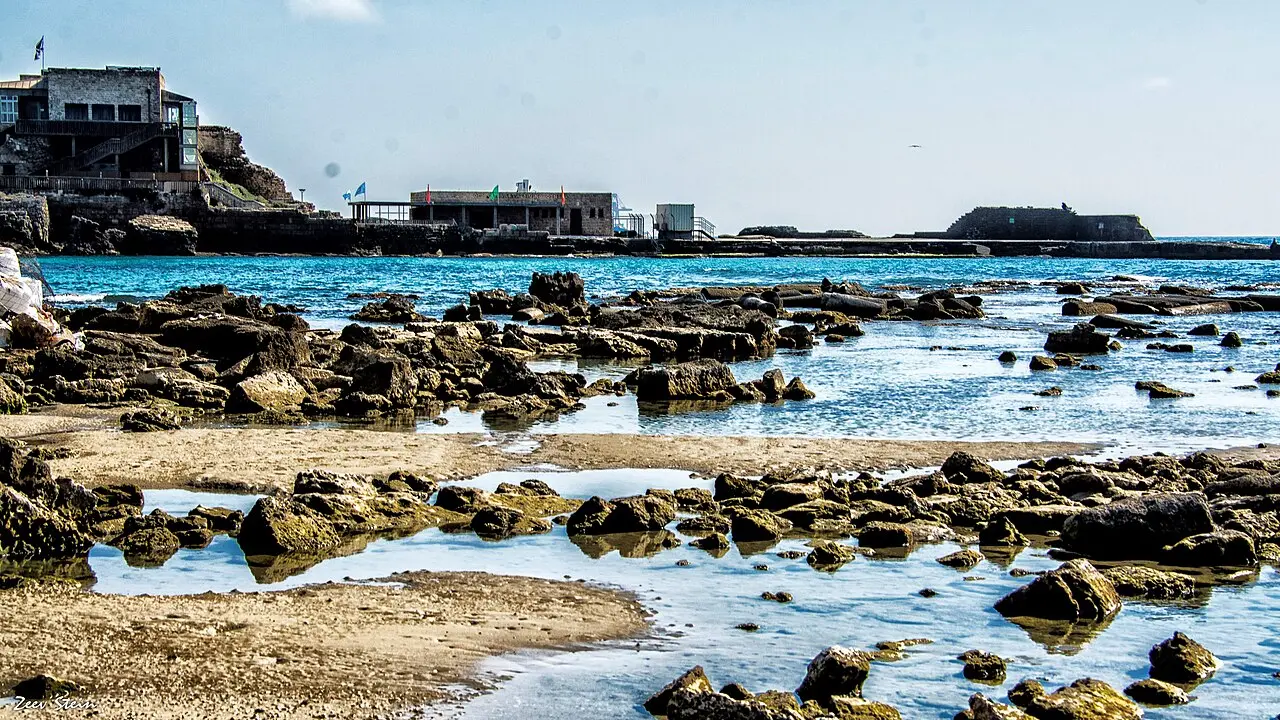
The hottest day of the year on this coast is usually in spring
The climate table on this page shows August as the warmest month at Caesarea, and it is, on the monthly mean. But the single hottest days on the Israeli coastal plain do not come in August. The Israel Meteorological Service puts it plainly: because of the way sharav lows move, the extreme temperatures recorded each year in western Israel, the coastal plain and the Shfela among them, fall in spring rather than in summer. A sharav low forms over North West Africa between March and mid-June, sometimes as early as February, and drags hot, dry, hazy air up from the south ahead of it.
The service has had a formal definition since 1994: a sharav day is one where the maximum temperature exceeds the long-run figure for that date by at least 5°C and passes 27°C, with relative humidity under 30% on the coastal plain. Ten degrees above and it is classified as heavy. The spells are short, a day to a day and a half, and they end abruptly when the low moves northeast and the wind swings west, a change Israelis call the breaking of the sharav, which can arrive with strong winds and a wall of Saharan haze that cuts visibility on the coast in minutes.
The same spring mismatch between a hot land surface and a sea that has not caught up produces two other Caesarea effects. It drives the sea breeze to its annual peak, which is why a spring afternoon here feels mild and sunburns anyway. And it makes coastal fog relatively common at night and early morning, cool sea air trapped under warmer air over the land. In autumn the pattern inverts: the night breeze is the significant one, because the sea holds its heat while the land cools fast.
At the other end of the year the hazard is the sea itself. Winter systems on this coast can be severe enough that Israel, Greece and Cyprus now name them jointly, working through an agreed list in alphabetical order for events with the potential for widespread impact. The meteorological service's own account of the coastal plain storm of 13 to 18 December 1991 records more than 300 mm at some coastal stations in six days. Nothing at Caesarea is dangerous in that weather, but the diving stops, the harbour front empties, and a day planned around a long walk beside open water becomes a day indoors.
זאב שטיין / CC BY 2.5 · Wikimedia Commons
The hour
The gate shuts before the light gets good, so plan around it
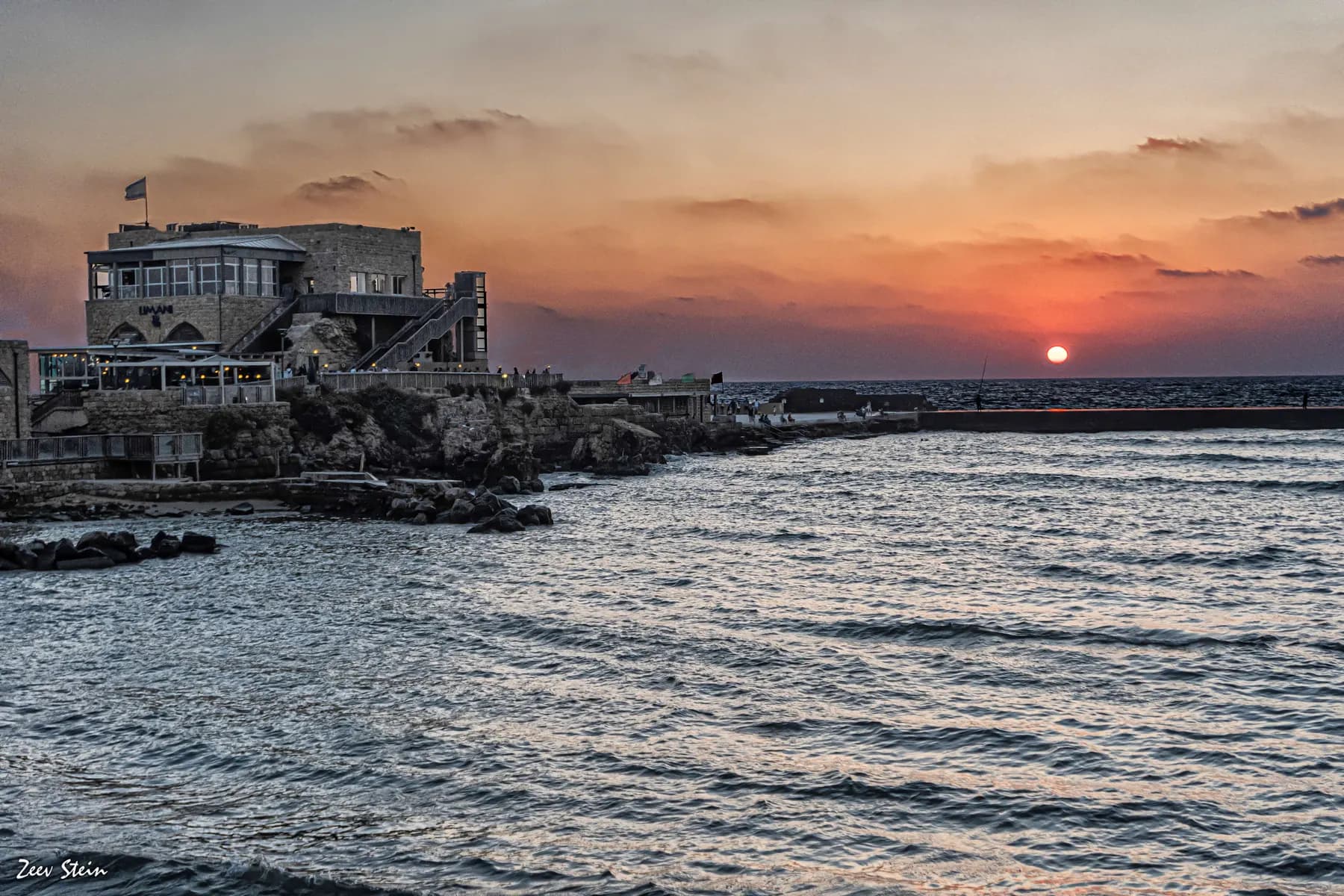
Caesarea faces west, which means the photograph everyone wants is a late one and the ticket office is closed by then in every month of the year. At the winter solstice the sun sets here at about 16:39, after the park has already shut. In midsummer it sets close to 19:50, more than two and a half hours after the gate. There is no season in which a visitor can stand inside the ruins at sunset on an ordinary ticket.
Two things get round it. The aqueduct on the sand lies north of the ticketed park, on its own beach, reached separately by road, so the arcade is available in the low evening light that suits it and costs nothing. And the harbour, as the Caesarea Corporation states, is open every day until late, with payment taken during park hours. A workable summer day is therefore the ruins at 08:00, the harbour or a beach through the heat, and the aqueduct at seven.
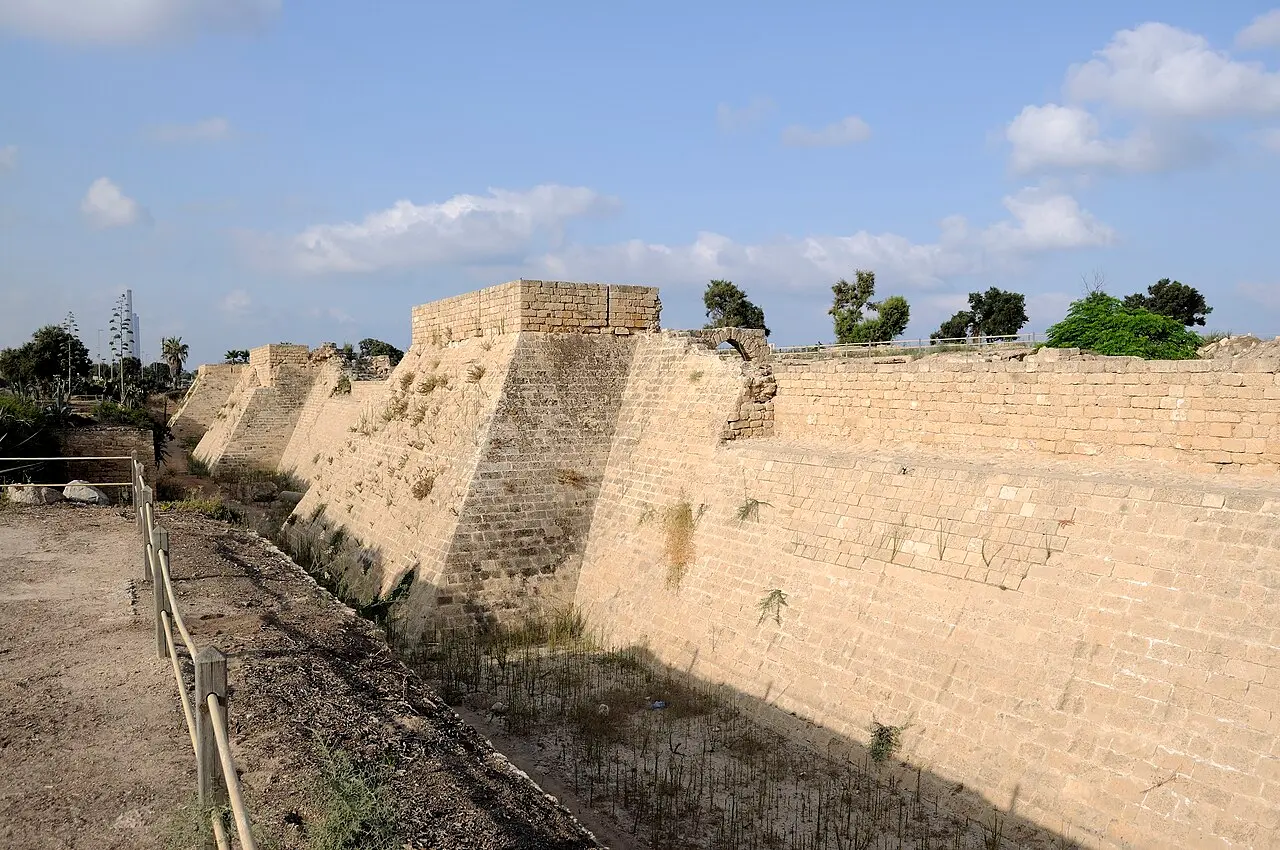
One more timing note that is easy to miss. The harbour visitor centre inside Herod's vaults keeps shorter hours than the park around it: the Caesarea Corporation gives 08:30 until half an hour before the national park closes. A visit there takes roughly twenty-five minutes, so arriving at the northern end of the site an hour before closing means choosing between the vaults and the Crusader walls rather than doing both.
זאב שטיין / CC BY 2.5 · Wikimedia Commons

Practical
What to know before you go
- Between June and September, aim for the 08:00 opening. The stretch between the theatre and the harbour has almost no shade, and the sea breeze disguises how much sun you are taking.
- Check which timetable applies before fixing an afternoon. The gate closes at 17:00 from April to October and 16:00 from November to March, an hour earlier on Fridays and holiday eves, and the last entry is an hour before that.
- The harbour front runs on a different clock from the ruins. The Caesarea Corporation says the harbour is open every day until late, with payment taken during park hours, so an evening meal there works in any month.
- Book around Passover and Sukkot rather than during them. The parks authority's own instruction for holidays and Saturdays is to arrive early, because entry is on the basis of available space.
- Nothing runs on Yom Kippur, the airport included. In 2026 it falls on 20 and 21 September, and the park closes at 13:00 on the eve.
- For the aqueduct, go late and go separately. It lies north of the ticketed park on its own beach, faces west, and is still there long after the gate has shut.
- Divers should assume the sea decides the day. The Old Caesarea Diving Center says dives depend on sea conditions and asks for advance booking, and its own hours change on 1 December and 1 April.
- Leave more than an hour for the northern end. The harbour visitor centre closes half an hour before the park does and takes about twenty-five minutes to walk through.
The figures
Numbers behind this page
Each figure carries the year it belongs to and links the source it came from.
| Measure | Figure | As of | Source |
|---|---|---|---|
| Mean daily high at Caesarea, August | 31.4°C | 2015-2024 | cds.climate.copernicus.eu |
| Mean daily maximum sea temperature, August | 30.3°C | 2023-2024 | data.marine.copernicus.eu |
| Mean daily maximum sea temperature, February | 18.1°C | 2023-2024 | data.marine.copernicus.eu |
| Mean January rainfall, and days with a millimetre or more | 148 mm across 13.1 days | 2015-2024 | cds.climate.copernicus.eu |
| Mean July rainfall | 1 mm across 0.3 days | 2015-2024 | cds.climate.copernicus.eu |
| Sunset at Caesarea on the winter solstice, Israel Standard Time | 16:39 | 2024 | gml.noaa.gov |
| Israel Meteorological Service threshold for a sharav day on the coastal plain | 5°C above the long-run figure and over 27°C, humidity under 30% | 1994 | ims.gov.il |
| Rain at some coastal plain stations, 13 to 18 December 1991 | over 300 mm | 1991 | ims.gov.il |
The rest of the Caesarea guide
Sources and further reading
Every link below was opened and checked when this page was written. Official statements are marked as such: they are the subject's own account, not an independent one.
- OfficialIsrael Nature and Parks Authorityen.parks.org.ilCaesarea National Park
Summer and winter hours, the 13:00 closing on holiday eves and Yom Kippur eve, the one-hour last-entry rule, and the advice that entry on holidays and Saturdays is subject to available space
- OfficialThe Caesarea Corporationcaesarea.comOpening Hours
The April to October and November to March split, the harbour staying open until late every day with payment during park hours, and the visitor centre closing half an hour before the park
- OfficialThe Caesarea Corporationcaesarea.comMusic and Performances
The amphitheatre as a working venue of about 4,000 seats, with the schedule published by the corporation
- OfficialIsrael Meteorological Serviceims.gov.ilBetween Khamsin and Sharav
The 1994 forecasting definition of a sharav day, the humidity thresholds for the coastal plain, and the distinction between sharav and the Egyptian khamsin wind
- OfficialIsrael Meteorological Serviceims.gov.ilAbout the Sharav low
Sharav lows forming from March to mid-June, the day-and-a-half cycle, the breaking of the sharav, and the finding that annual extreme temperatures on the coastal plain fall in spring rather than summer
- OfficialIsrael Meteorological Serviceims.gov.ilIt's so hot outside, so why is the sea so cold?
The thermal lag between sea and land, the spring peak in the sea breeze, the autumn night breeze, spring fog on the coastal plain, and sea temperatures near 30 degrees by late summer
- OfficialIsrael Meteorological Serviceims.gov.ilNames of significant weather events for the 2025/26 season
The joint Israeli, Greek and Cypriot naming list for events with the potential for widespread impact, effective from September each year
- OfficialIsrael Meteorological Serviceims.gov.il30 years have passed since the great storm in the coastal plain and the recurring flooding of the Ayalon River
More than 300 mm at some coastal plain stations between 13 and 18 December 1991, and the record December totals of 1991 and 1992
- OfficialOld Caesarea Diving Centercaesarea-diving.comStream of Sharks
Dusky and sandbar sharks at the Hadera power station outflow between November and March, the Morris Kahn Marine Research Station's study of it, and the club's thirty-dive and two-to-one requirements
- OfficialOld Caesarea Diving Centercaesarea-diving.comOpening hours
The April to November and December to March schedules, and the statement that execution of dives depends on sea conditions
- DataHebcalhebcal.comJewish Holidays 2026-2027
Gregorian dates for Rosh Hashanah, Yom Kippur, Sukkot, Simchat Torah, Hanukkah, Purim, Passover, Yom HaAtzmaut and Shavuot across 2026 and 2027
- DataCopernicus Marine Servicedata.marine.copernicus.euGlobal ocean physics analysis: sea surface temperature
The mean daily maximum sea temperatures on this page, averaged over 2023 and 2024 at the nearest sea point. The record there starts in late November 2022.
- ReferenceWikipediaen.wikipedia.orgPublic holidays in Israel
Which festivals close schools, government and transport, the status of the intermediate days of Passover and Sukkot, and the scale of the Yom Kippur shutdown
- ReferenceWikipediaen.wikipedia.orgEducation in Israel
The school year running from 1 September to 30 June for primary pupils and 20 June for secondary, which sets the Israeli summer holiday
- ReferenceJournal of Marine Science and Engineeringmdpi.comLong-Term Population Genetic Features of the Rhopilema nomadica Jellyfish from the Israeli Mediterranean Coasts
Swarms off Israel each summer since the mid-1980s, the summer peak in numbers and body size, and the blocking of seawater cooling intakes at power stations
The best time to visit Caesarea: common questions
What is the best month to visit Caesarea?+
April and October, with the second half of October the single safest bet. Both give the longer opening hours, warm sea, negligible rain and light that works on a west-facing site, and both avoid the summer heat on an unshaded walk. The difference is that Passover always falls inside April, while Sukkot only sometimes reaches into October.
Is Caesarea worth visiting in winter?+
Yes, on a dry morning, provided you accept that it is a morning. From November to March the park closes at 16:00 with the last entry at 15:00, so an afternoon arrival is wasted. January averages 148 mm of rain across about thirteen days, which leaves plenty of clear ones, and the site is quiet on a winter weekday in a way it never is in spring.
Can you swim at Caesarea, and when?+
Yes, at the bathing and diving beach the parks authority lists at the site and at the aqueduct beach north of the ticketed park. The sea is warmest from July to September and coldest in February, when it is colder than the air, because the Mediterranean lags the land by roughly two months. Late spring and early autumn are the compromise most people prefer.
How bad is Caesarea in August?+
Genuinely difficult, and the page will not pretend otherwise. The walk from the Roman theatre to the harbour is long and almost entirely unshaded, over pale stone that reflects the light back, in the hottest month of the year with the sea at its warmest. Go at 08:00 when the gate opens, or plan the day round the harbour and the beach instead of the ruins.
What happens at Caesarea during Passover and Sukkot?+
It fills, and so does everywhere to sleep within an hour of it. The intermediate days of both festivals are a national school holiday and, for many Israelis, paid leave, which sends families to parks authority sites in numbers no ordinary weekend produces. The parks authority's own advice for holidays is to arrive early, because entry is granted on the basis of available space.
Is anything open on Yom Kippur?+
No. The country closes: no public transport, no broadcasting, shops and businesses shut nationwide, and the airport suspends flights for roughly a day and a half. Caesarea National Park closes at 13:00 on the eve, the same early closing it applies to other holiday eves, and does not open on the day.
Are there jellyfish at Caesarea?+
In summer, often. The nomad jellyfish, a Red Sea species that entered the Mediterranean through the Suez Canal, has swarmed the Israeli coast most summers since the mid-1980s, with numbers and body size peaking in the summer months. The swarms are dense enough to block the seawater cooling intakes at the power stations along this coast, and the stings are painful. Ask locally before planning a swimming day between late June and August.
Can you watch the sunset from the ruins?+
Not on an ordinary ticket, in any month. The sun sets at about 16:39 here at the winter solstice, when the park has already closed, and close to 19:50 at midsummer, more than two hours after the gate. The aqueduct north of the ticketed park is the workaround: it faces west, it is outside the paid site, and the low light is what makes the arcade.
When do the opening hours change?+
On 1 April and 1 November. From April to October the park runs 08:00 to 17:00, and from November to March 08:00 to 16:00, with Fridays and holiday eves an hour shorter in each case. Entry closes one hour before the stated closing time in every season, which is the rule most visitors are caught by.
Is there really a shark dive near Caesarea?+
Yes, between November and March, run from the Caesarea dive centre rather than from the shore. The warm water discharged by the Hadera power station just south draws dusky and sandbar sharks in growing numbers each winter, a phenomenon studied by the Morris Kahn Marine Research Station at the University of Haifa. The club requires at least thirty logged dives and at least two Mediterranean shore dives, caps the group at two divers to an instructor, and cancels on sea conditions.