Houthis blame Saudi jets for deadly Taiz market strike; toll ranges 20 to 30
Yemen's Houthi movement says a Saudi air strike hit a market in Taiz province, while local authorities deny any air operation and blame the Houthis.
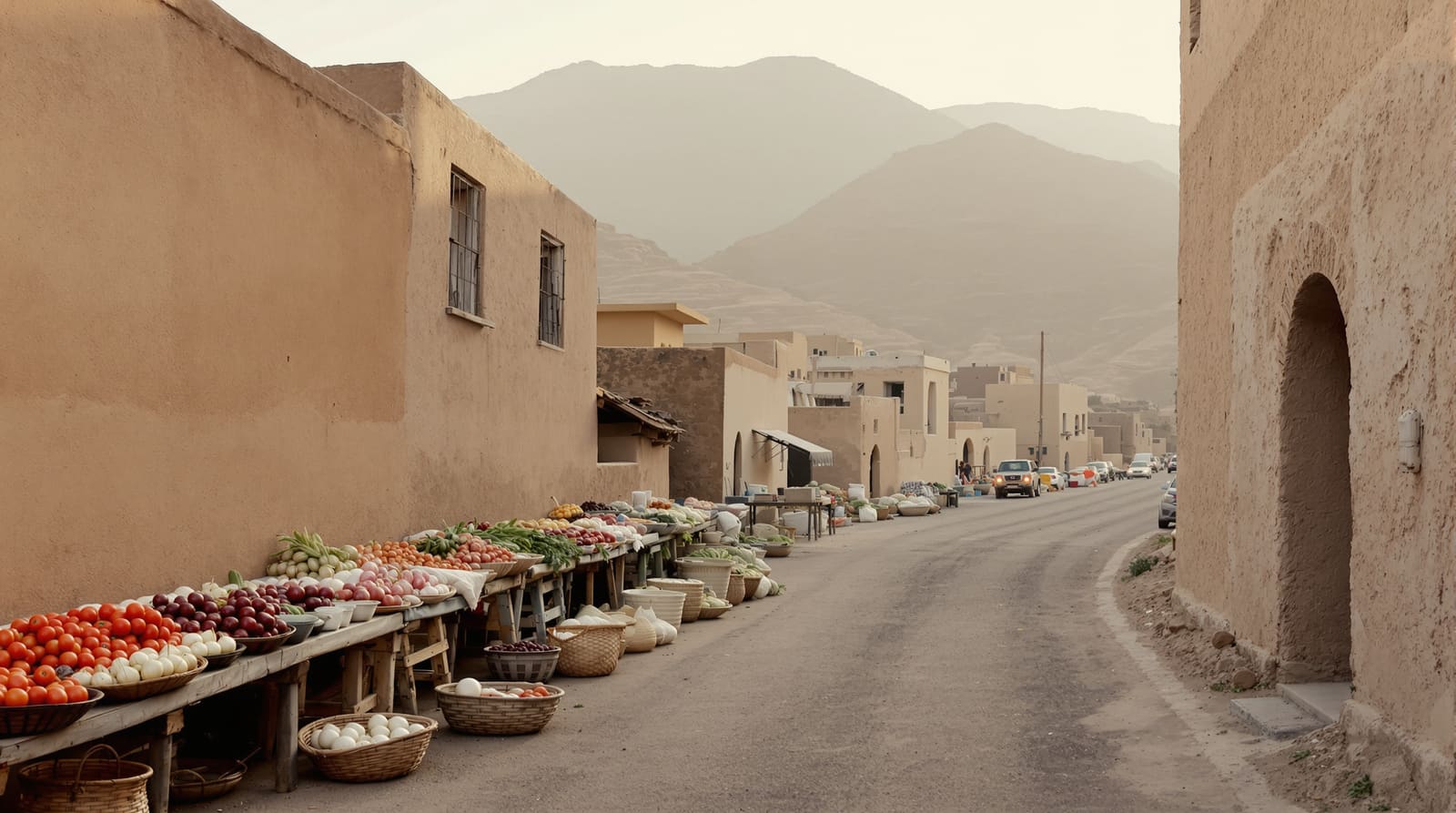
AI illustration, not a photo of the events.
An attack on a market in Yemen's Taiz province on Friday killed at least 20 people, according to Yemen's Houthi movement, which blamed the deaths on Saudi aircraft. The Times of Israel reported that a Houthi health ministry spokesman, Anis al-Asbahi, said Saudi warplanes fired several missiles at a vegetable market in the city of Al-Waziya, killing 20 people and wounding 10. His remarks were carried by Saba, the news agency run by the Houthis.
Local authorities in the area gave a different account. According to the same Times of Israel report, they held the Houthis responsible for the attack and said that "military aircraft did not launch any aerial operations." Other reports circulating in Israeli media on Friday carried higher casualty figures attributed to the Houthi side, and no figure has been confirmed by any party not involved in the conflict.
On the ground

🔴 The Houthi militia struck al-Hadara market in the district of al-Wazi’iyah in the governorate of Taiz with a ballistic missile, Yemen’s armed forces say 🔴 The attack resulted in dozens of civilian casualties, they added

Casualty figures differ between reports
The death toll given in the three reports reviewed for this article is not consistent. The Israeli Telegram channel Abu Ali Express, citing media outlets identified with the Houthis, reported 25 dead and 40 wounded in a Saudi strike on a market it named as al-Hadhara, in Taiz province. A later alert from Ynet, the news site of the Israeli daily Yedioth Ahronoth, quoted the Houthis as saying that at least 30 people had been killed and that the attack was carried out by a Saudi F-15 fighter jet.
The Times of Israel, publishing after both alerts, gave the figure from the Houthi health ministry spokesman as 20 dead and 10 injured. The reports also name the location differently: one refers to a market called al-Hadhara, the other to a vegetable market in Al-Waziya. It is not clear from the material whether these describe the same site or whether the toll was revised over the course of the day. All of the figures trace back to Houthi sources.
Who the Houthis are
The Houthis, formally known as Ansar Allah, are an armed Zaydi Shiite movement that controls Yemen's capital, Sanaa, and much of the country's north. They are backed by Iran, which is why Israeli and Western outlets routinely describe them as part of the regional network of groups aligned with Tehran. The movement runs its own government institutions, including a health ministry, and its own media, among them the Saba news agency, which uses the name of Yemen's official state agency.
Israel's week in five stories, every Friday
Sourced and checked by the Israel.com newsroom, with Shabbat times. Free, one-click unsubscribe.
One list, unsubscribe in a click. See our privacy policy.
For Israeli readers the Houthis are a familiar adversary. The group has launched missiles and drones toward Israel and attacked shipping in the Red Sea, and Israel has struck Houthi targets in Yemen in response. That is part of why Yemeni events of this kind are tracked closely by Israeli news services, even when Israel is not involved.
Saudi Arabia and the war in Yemen
Saudi Arabia has led a military coalition against the Houthis in support of Yemen's internationally recognised government, which the Houthis drove from Sanaa. The coalition's air campaign has been accused over the years of hitting civilian sites, including markets, while the Houthis have in turn been accused of attacks on civilian areas held by their rivals. Fighting has eased at times through truces and talks, but the country remains divided between the Houthis and forces aligned with the government.
Next story Government
Houthis seek $51 billion and recognition from Saudi Arabia in truce talks
Why Taiz matters
Taiz province lies in southwestern Yemen and has been one of the most contested areas of the war. Control of the province is split, with front lines running close to populated areas, so incidents there are often claimed and counter-claimed by both sides. The denial attributed to local authorities, who said no aircraft had flown any operation, fits that pattern: each side's account places responsibility on the other.
The Abu Ali Express post also included commentary from the channel asking how Saudi Arabia, Europe, the United Nations and Arab states would react if Israel had struck a civilian market in Gaza with similar results. That remark is the channel's own opinion and not part of the factual account of the attack.
What the reports do not say
- Saudi Arabia has not responded to the Houthi accusation in any of the reports reviewed.
- No independent body, such as a hospital outside Houthi control or a United Nations agency, is cited confirming the number of dead or wounded.
- The local authorities say the Houthis were behind the attack but are not quoted describing what weapon was used.
- The reports do not establish whether the al-Hadhara market and the vegetable market in Al-Waziya are the same place.
Read next
All security →
Illustration
Security
Saudi Arabia reports two drones downed near Riyadh as Houthis claim Dammam strike
Illustration
Security
Iran gives Houthis targeting intelligence for Saudi strikes, WSJ reports

File photo
Security
Trump says Israel has helped Saudi Arabia against Yemen's Houthis
Illustration
Security
Yemen's government says Houthis fired ballistic missiles at Aden airport and palace
Sources and further reading
Every link below was opened and checked when this page was written. Official statements are marked as such: they are the subject's own account, not an independent one.
- Reportingyediotht.meYnet alerts
- Reportingabualiexpresst.meAbu Ali Express
- Reportingtoitimesofisrael.comThe Times of Israel
How we checked this
The attack was reported by Ynet, Abu Ali Express and The Times of Israel, but every casualty figure and the claim of Saudi responsibility come from the Houthis or Houthi-linked media. The denial and counter-accusation by local authorities is reported only by The Times of Israel, and no figures have been independently confirmed.
Our sourcing and corrections policy →The week from Israel, in one email
The stories that mattered, sourced and checked by the Israel.com newsroom. Free, weekly, one-click unsubscribe.
One list, unsubscribe in a click. See our privacy policy.
Latest
- Iran's security chief Mohsen Rezaei hands Putin a letter from Tehran
- Seafarer killed after suspected missile strike on Greek tanker MT Velos in Gulf
- Trump discusses renewed Iran strikes, with a November 9 new moon in view
- Tel Aviv stocks jump, TA-35 up 2.5% to 3% as the shekel firms
- Tel Aviv stocks open about 0.5% higher after global sell-off as shekel slips
- Rubio denies reports he will quit Trump administration ahead of 2028