Houthis claim drone strike on Saudi pipeline's Pumping Station No. 7
Yemen's Houthi movement says it hit a Saudi oil pipeline station and a Yanbu oil facility, a claim with no Saudi response reported so far.
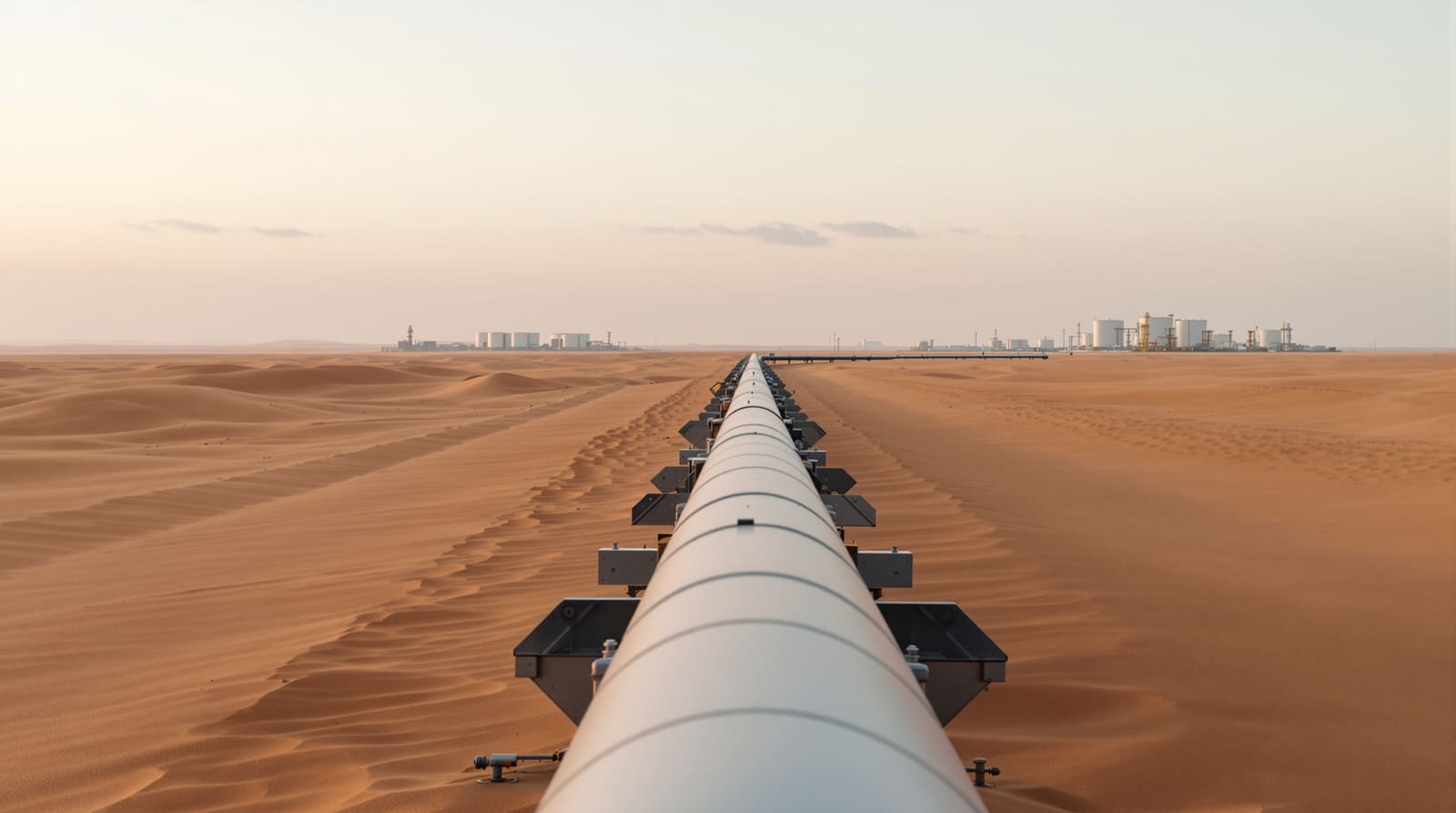
AI illustration, not a photo of the events.
Yemen's Houthi movement has claimed responsibility for attacks on Saudi Arabian oil infrastructure, saying its forces struck a pumping station on the kingdom's East-West pipeline. The Israeli broadcaster N12 reported, through its Arab world desk, that the Houthis announced they had attacked a pumping station on the Saudi pipeline.
According to The Times of Israel, Houthi military spokesman Yahya Saree described two separate operations in a post on X. In the first, he said, a drone was used against "Pumping Station No. 7" on the pipeline. In the second, he said, a ballistic missile was fired at an oil facility in Yanbu, a Saudi port city on the Red Sea. Saree said both attacks succeeded. That assessment is his own; neither report carries independent confirmation of any damage.
Who the Houthis are
The Houthis are an armed movement in Yemen, the country on Saudi Arabia's southern border at the tip of the Arabian Peninsula. The group controls a large part of the country, including the capital, Sanaa, and has fought a long war against a Saudi-led coalition backing the rival internationally recognised Yemeni government. Israel and Western governments regard the movement as aligned with Iran.
Yahya Saree is the movement's public military spokesman. His statements, usually issued on social media and Houthi-run television, are the standard channel through which the group announces operations. Such announcements are claims by a party to the conflict, and outside news organisations typically report them as such until they can be checked against other evidence.
The pipeline and the port
The East-West pipeline is one of Saudi Arabia's main pieces of energy infrastructure. It carries crude oil across the country from the oil-producing east to the Red Sea coast, giving the kingdom a way to export oil without sending tankers through the Strait of Hormuz in the Gulf. Pumping stations along its route keep the oil moving over the long distance, which makes them potential points of vulnerability.
Israel's week in five stories, every Friday
Sourced and checked by the Israel.com newsroom, with Shabbat times. Free, one-click unsubscribe.
One list, unsubscribe in a click. See our privacy policy.
Yanbu is the pipeline's western end point and a major Red Sea oil port and industrial hub. Facilities there handle export loading and refining. An attack on both a pumping station and Yanbu, as the Houthis describe it, would touch two parts of the same export chain.
Why this matters to Israel watchers
Both reports appeared in Israeli outlets because the Houthis are also a direct adversary of Israel. The movement has launched missiles and drones toward Israeli territory and has threatened shipping in the Red Sea, the route that links the Suez Canal to the Indian Ocean and serves Israel's southern port of Eilat. Developments that suggest the group is widening its targets, or retains the capacity for long-range drone and missile strikes, are followed closely in Israel for that reason.
Illustration
Next story Security
Saudi Arabia lobbies EU to list Yemen's Houthis as a terrorist group
The claim of strikes on Saudi territory is notable in its own right. Houthi attacks on Saudi oil sites were a recurring feature of the war in Yemen, and the movement's statements framed this latest action in the same operational terms it uses for its other campaigns.
How the two reports differ
The two reports agree that the Houthis say they attacked a pumping station on the East-West pipeline. They differ in detail. The N12 item mentions only the pumping station. The Times of Israel account, citing Saree's post directly, adds a second target, the Yanbu oil facility, and specifies the weapons the spokesman said were used: a drone for the pumping station and a ballistic missile for Yanbu. The N12 item does not mention Yanbu or name the weapons. This is a difference in what each outlet included rather than a direct contradiction, but the Yanbu strike claim rests on The Times of Israel's account of the spokesman's post alone.
What the reports do not say
Neither report includes any response from Saudi Arabia, so it is not known whether Saudi authorities confirm or deny that the attacks took place, whether anything was intercepted, or whether there was any damage, injury or disruption to oil flows. Neither report gives a time for the alleged strikes or says where along the pipeline Pumping Station No. 7 is located. No evidence for the spokesman's claim that both operations were successful has been reported, and no reason for the attacks is given in either account.
Read next
All security →
Illustration
Security
Houthis blame Saudi jets for deadly Taiz market strike; toll ranges 20 to 30

Illustration
Government
Houthis seek $51 billion and recognition from Saudi Arabia in truce talks

Illustration
Security
Saudi Arabia reports two drones downed near Riyadh as Houthis claim Dammam strike

Illustration
Security
Houthis claim strikes on Riyadh financial centre, Aramco site and airport
Sources and further reading
Every link below was opened and checked when this page was written. Official statements are marked as such: they are the subject's own account, not an independent one.
- Reportingtoitimesofisrael.comThe Times of Israel
- Reportingkeshett.meN12
How we checked this
The Times of Israel and N12 both reported that the Houthis claimed an attack on an East-West pipeline pumping station; the Yanbu strike and weapon details come from The Times of Israel's account of Yahya Saree's post. All attack claims are the Houthis' own and have not been independently verified.
Our sourcing and corrections policy →The week from Israel, in one email
The stories that mattered, sourced and checked by the Israel.com newsroom. Free, weekly, one-click unsubscribe.
One list, unsubscribe in a click. See our privacy policy.
Latest

Illustration

File photo

File photo

Illustration

File photo

File photo