IDF chief Zamir warns Hezbollah against entrenching near northern border
At a Northern Command assessment, Lt. Gen. Eyal Zamir said any Hezbollah attempt to rebuild or threaten northern towns would meet an immediate, forceful response.
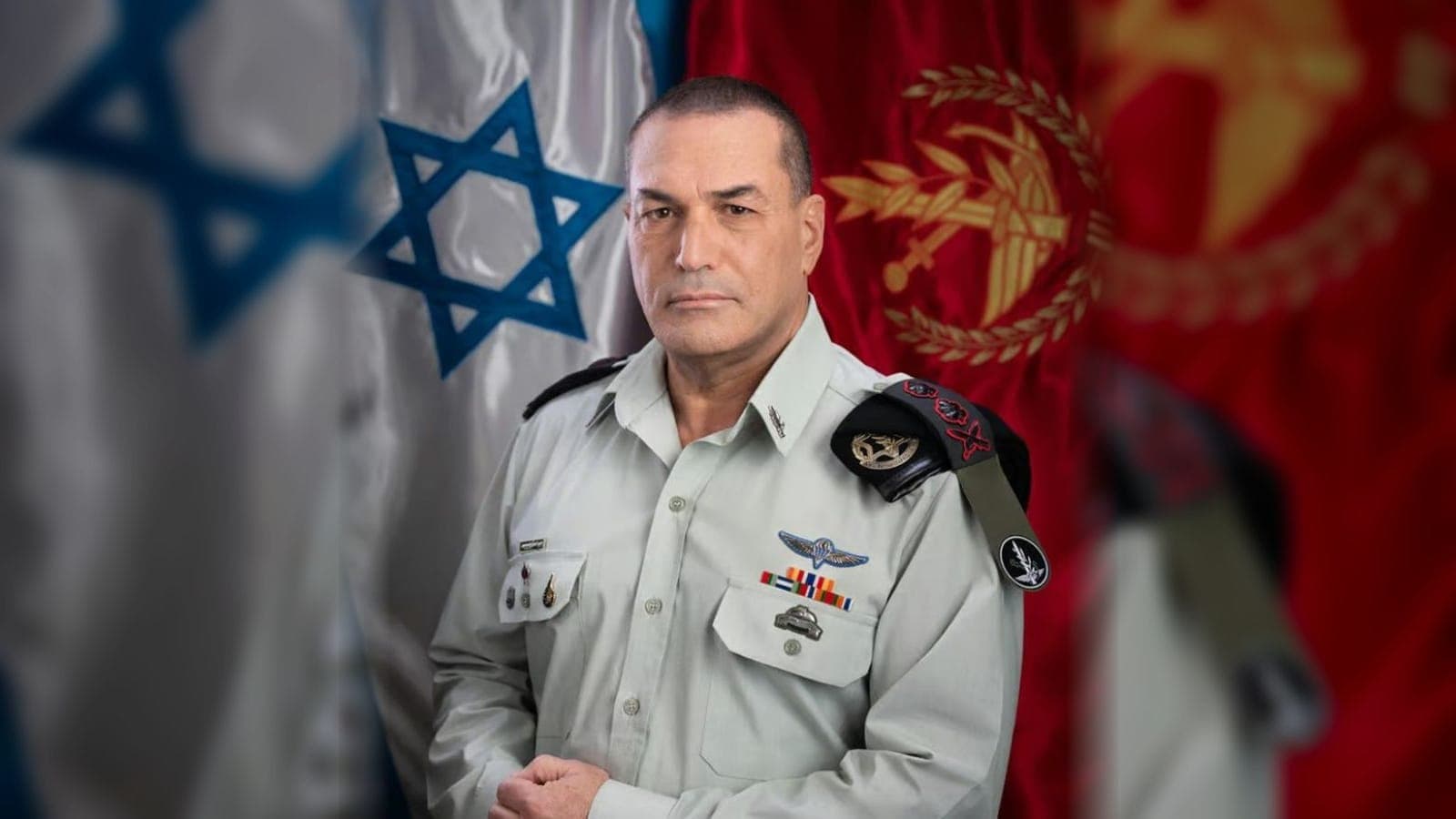
Eyal Zamir. File photo by IDF Spokesperson's Unit photographer, CC BY-SA 3.0, via Wikimedia Commons.
Israel's military chief, Lt. Gen. Eyal Zamir, told commanders during a situational assessment at the Northern Command that the army would not let Hezbollah rebuild a foothold near Israel's northern frontier. In remarks released by the Israel Defense Forces (IDF) spokesperson, Zamir said the military would not allow the Lebanese group to set up terrorist infrastructure in the area, and that any effort by the enemy to dig in, strengthen its capabilities or endanger communities in the north would be "met immediately and forcefully."
He added that the IDF "remains alert to developments in near and distant arenas" and stands ready to hit any enemy that tries to harm Israel, "as we have done in the past." The Times of Israel reported that the comments were made during a visit to the northern border and noted that they followed an IDF strike in south Lebanon, which it described as the first in weeks.
What the sources posted

IDF Chief of Staff Lt. Gen. Eyal Zamir during a visit to the northern border today says the military "will not allow Hezbollah to establish terror infrastructure" in southern Lebanon. "Any attempt by the enemy to entrench itself, build up its capabilities, or threaten northern Show more

On the ground

WATCH: IDF Chief of Staff Lt.-Gen. Eyal Zamir visited the Northern Command and Division 91 on Wednesday to highlight the use of robots in combat to reduce risks to IDF troops. ✍️ @Jeremybob1 jpost.com/israel-news/de…
Who Zamir is and what the Northern Command does
The Chief of the General Staff, often shortened in Hebrew to Ramatkal, is the most senior officer in the IDF and answers to the defence minister and the government. Zamir holds the rank of lieutenant general, the highest in the Israeli military.
The Northern Command is one of the IDF's regional commands. It is responsible for Israel's borders with Lebanon and Syria, and for the defence of the towns, villages and kibbutzim in the Galilee and the Golan Heights. A situational assessment, a routine term in Israeli military reporting, is a meeting in which senior officers review the threat picture in a sector and the readiness of forces there. Statements issued after such meetings are often aimed as much at the other side of the border as at the troops in the room.
Why entrenchment is the word that matters
Hezbollah is a Shiite armed movement and political party in Lebanon, backed by Iran, which Israel and a number of other countries designate as a terrorist organisation. Its forces have long been concentrated in southern Lebanon, the strip of territory between the Israeli border and the Litani River.
Israel's week in five stories, every Friday
Sourced and checked by the Israel.com newsroom, with Shabbat times. Free, one-click unsubscribe.
One list, unsubscribe in a click. See our privacy policy.
The vocabulary in Zamir's statement is the language Israeli officials use for Hezbollah rebuilding: positions, weapons stores and fighters moving back toward the border. The Hebrew original, as circulated by commentator Amit Segal, uses forms of the verb lehitbases, to establish oneself or take root, and lehitatzem, to build up strength. In Israeli usage, the message is that the army intends to act against such activity before it matures rather than wait for an attack.
The reference to communities in the north points to the residents of Israeli border towns, whose security has been a central political issue in Israel for years. The phrase about near and distant arenas is a standard IDF formula covering fronts close to Israel's borders as well as more remote adversaries; the statement did not name any country beyond Lebanon's Hezbollah.
Next story Security
IDF chief Eyal Zamir says army must lead globally in AI and robotics
Where the reports differ on detail
The accounts agree on the substance of what Zamir said. They differ slightly on location. The IDF's own text speaks only of preventing infrastructure "in the area," while the Times of Israel and its military correspondent Emanuel Fabian placed the warning explicitly in southern Lebanon.
The Israeli outlet News.co.il added that the IDF used the same occasion to unveil, for the first time, a model it called a "robotic combat team," which pairs advanced robotic systems with fighting units in the field. The IDF's own post appears to refer to a presentation of this kind, but the available text is cut off, and no other report described the system.
The Hebrew news site Ynet carried the headline quote in a brief alert, without further detail.
What the reports do not say
None of the reports describe the target or outcome of the strike in south Lebanon that the Times of Israel linked to the remarks, and no other outlet mentioned that strike at all. No response from Hezbollah or from the Lebanese government has been reported. The reports also give no specifics about the robotic combat team, such as which units would use it, what systems it includes or when it would be deployed, and only one outlet reported the unveiling.
Read next
All security →
File photo
Security
IDF says its decisions are purely professional after reports of Zamir clash
File photo
Security
Defense Minister Katz denies rift with IDF chief Zamir over Iran strike
File photo
Security
Italy widens flotilla abuse probe to Katz, IDF chief Zamir and police head
Illustration
Security
IDF says 769th Brigade found weapons and a Hezbollah-themed children's room in Al-Khiam
Sources and further reading
Every link below was opened and checked when this page was written. Official statements are marked as such: they are the subject's own account, not an independent one.
- Officialidft.meIDF spokesperson
- Reportingyediotht.meYnet alerts
- Reportingtoitimesofisrael.comThe Times of Israel
- Reportingtoit.meEmanuel Fabian, Times of Israel military correspondent
- Reportingamitsegalt.meAmit Segal
- Reportingnewssilt.meNews.co.il
- Reportingtoix.comEmanuel Fabian on X
How we checked this
Zamir's remarks were published by the IDF spokesperson and carried by the Times of Israel, its military correspondent, Ynet, Amit Segal and News.co.il. The strike in south Lebanon is reported only by the Times of Israel, and the robotic combat team only by News.co.il.
Our sourcing and corrections policy →The week from Israel, in one email
The stories that mattered, sourced and checked by the Israel.com newsroom. Free, weekly, one-click unsubscribe.
One list, unsubscribe in a click. See our privacy policy.
Latest
- Eisenkot's Yashar! finishes first round of talks with three change-bloc parties
- Iran's Mohsen Rezai claims a double 'defeat' for Trump after US midterms
- Vance, on X, ties Republican midterm losses to Iran war and Israel ties
- Israel says Gaza City strike killed Hamas commander who held Omer Shem Tov
- Trump weighing Hegseth's future as Defense Secretary, CBS News reports
- Deri asked to quit after Shas fell to 6 seats; rabbis reportedly told him to stay