Iran's Revolutionary Guards unveil a new underground missile city
Iran has displayed a new underground missile base belonging to the Revolutionary Guards' air arm, at a ceremony attended by its top military commanders.
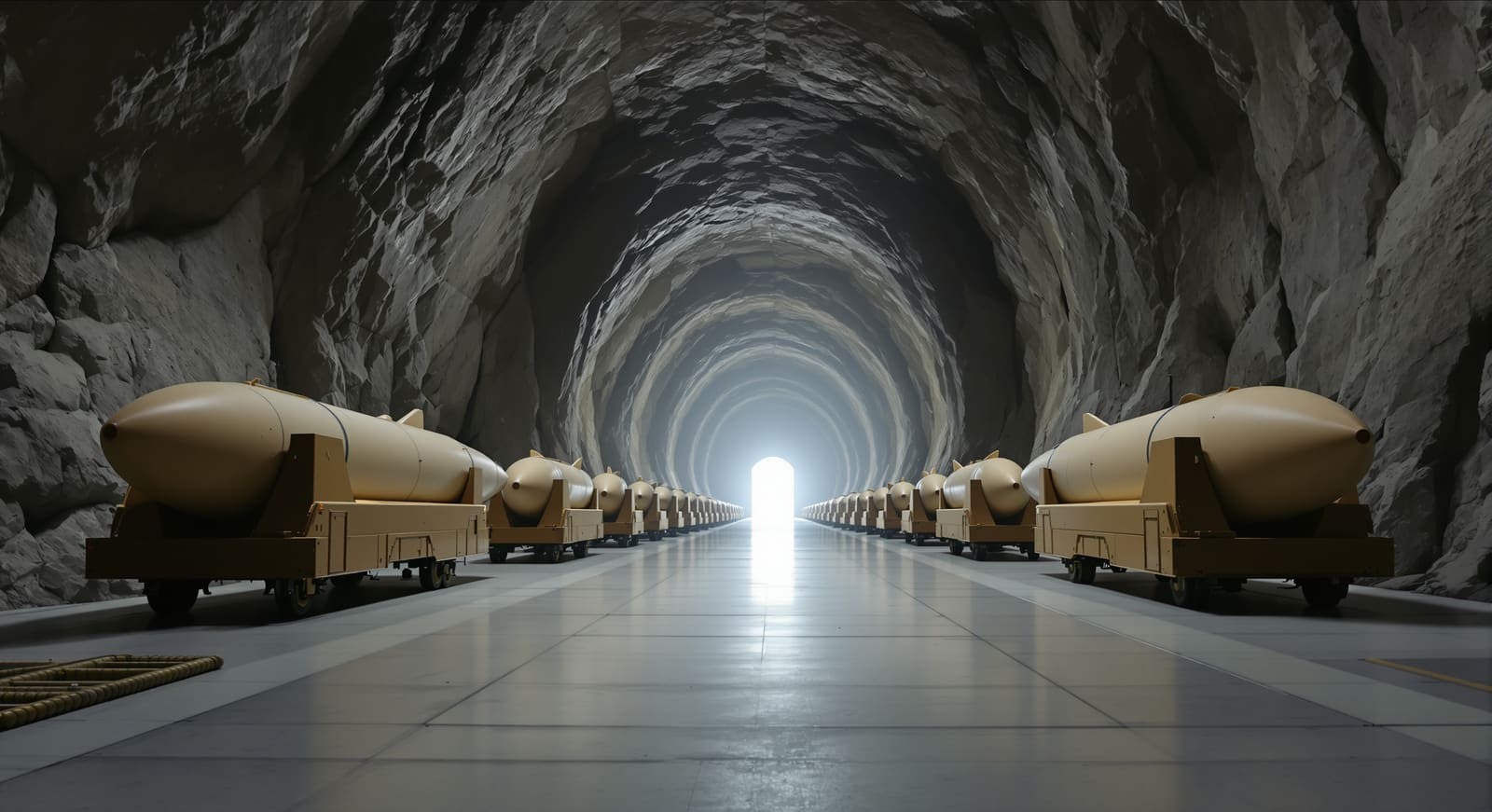
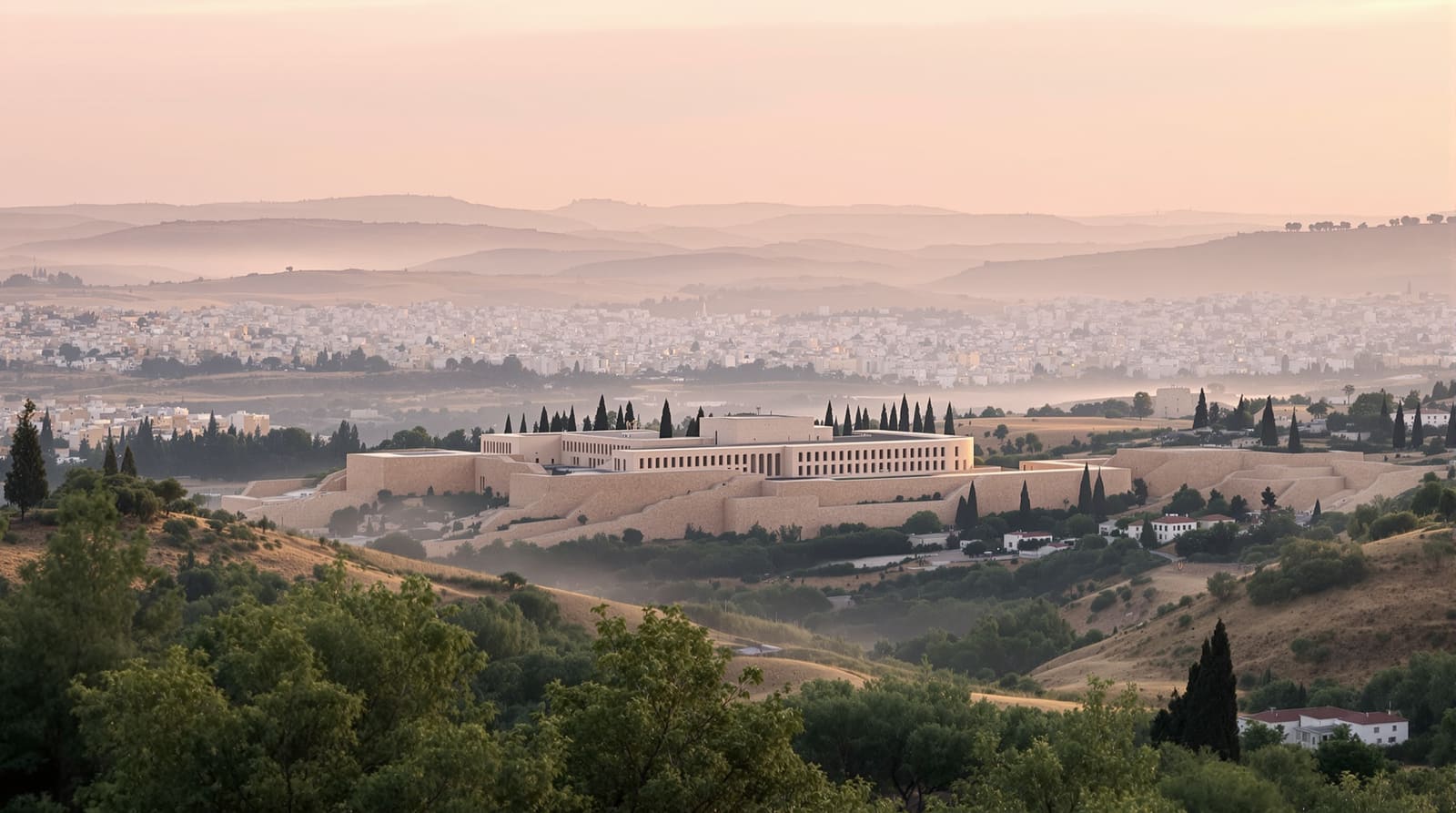
AI illustration, not a photo of the events.
Iran has unveiled a new underground missile facility, which Iranian officials describe as a "missile city", belonging to the Aerospace Force of the Islamic Revolutionary Guard Corps. The Israeli Telegram channel Abu Ali Express, citing Iran's Tasnim news agency, reported that the site was revealed at a ceremony attended by Major General Abdollahi, chief of the general staff of Iran's armed forces, and by Seyyed Majid Mousavi, who commands the Guards' Aerospace Force.
The Israeli news outlet News.co.il also reported the launch, naming the same two commanders as present at the ceremony. Neither report gave the location of the new site, its size, or which missiles it is said to hold.
Who unveiled it
The Islamic Revolutionary Guard Corps, often shortened to IRGC, is a military force that exists alongside Iran's regular army and answers to the country's supreme leader. Its Aerospace Force is the branch responsible for Iran's ballistic missile programme as well as its drones and air defence units. Majid Mousavi, named in both reports as the branch's commander, oversees that arsenal.
The presence of the chief of the general staff, the most senior officer across all of Iran's armed forces, signals that the event was treated as a significant occasion rather than a routine display. Both reports identify him as Abdollahi; the Hebrew spelling of the commander of the Aerospace Force differs slightly between the two outlets, but they refer to the same officer.
What a "missile city" is
"Missile city" is the term Iranian officials and state-linked media use for large underground bases, typically tunnels built into mountains, where missiles and launchers are stored and from which they can be moved out to fire. Iran has publicised such sites before through footage released by state-affiliated outlets, presenting them as protected from air attack. Tasnim, the agency both reports trace the announcement to, is a news agency widely regarded as close to the Revolutionary Guards and frequently carries their announcements first.
Israel's week in five stories, every Friday
Sourced and checked by the Israel.com newsroom, with Shabbat times. Free, one-click unsubscribe.
One list, unsubscribe in a click. See our privacy policy.
Unveilings of this kind serve a dual purpose: they showcase capability to a domestic audience and send a message to foreign governments about Iran's ability to absorb a strike and respond. The reports do not include any technical detail that would allow an outside assessment of the new site.
How the two reports frame it
The two Israeli outlets place the announcement in slightly different contexts. Abu Ali Express presented the unveiling as part of Iranian efforts to dissuade the United States and Israel from attacking Iran. News.co.il described it as reflecting Iran's continuing investment in expanding its missile and deterrence systems, set against wider regional tension in the Middle East.

Illustration
Next story Security
France blames Iran's Revolutionary Guards for hack on supermarket fridges
These are the outlets' own readings of Iran's motives rather than statements attributed to Iranian officials, and neither report quotes the commanders who attended. The two framings are compatible, but neither is supported in the material by a direct Iranian statement of intent.
Why it matters to Israel
Iran's missile arsenal is the central concern in Israeli security planning regarding Tehran. Israel and the United States have both treated Iranian ballistic missiles as a direct threat, and underground facilities of this type are built specifically to make that arsenal harder to target. Any new hardened site therefore draws close attention from Israeli defence officials and analysts, even when, as here, Iran releases few verifiable details.
Both Abu Ali Express, a Telegram channel that tracks Arab and Iranian media, and News.co.il relayed the Iranian announcement within minutes of each other, which is consistent with both drawing on the same Iranian source rather than on independent information.
What the reports do not say
- Where the new missile city is located, or when it was built.
- What types of missiles or launchers it is said to contain, and in what quantity.
- Whether Iran released images or video of the facility, and whether any of it has been independently assessed.
- Any reaction from Israel, the United States or other governments; none has been reported.
- What, if anything, Abdollahi or Mousavi said at the ceremony.
Read next
All security →
Illustration
Security
Iran's Revolutionary Guards call US Task Force Iron Gate 'wordplay'
Illustration
Security
Iran's Revolutionary Guards say three tankers caught fire in Hormuz
Illustration
Security
Iran's Revolutionary Guards call US Task Force Iron Gate mere 'wordplay'
Illustration
Security
Iran's Revolutionary Guards say two tankers caught fire near Hormuz
Sources and further reading
Every link below was opened and checked when this page was written. Official statements are marked as such: they are the subject's own account, not an independent one.
- Reportingabualiexpresst.meAbu Ali Express
- Reportingnewssilt.meNews.co.il
How we checked this
The unveiling was reported by two Israeli outlets, Abu Ali Express and News.co.il, both relaying an Iranian announcement, with Abu Ali Express citing Tasnim; we have not independently verified the site. The interpretations of Iran's motives are each outlet's own.
Our sourcing and corrections policy →The week from Israel, in one email
The stories that mattered, sourced and checked by the Israel.com newsroom. Free, weekly, one-click unsubscribe.
One list, unsubscribe in a click. See our privacy policy.
Latest

File photo

File photo
Illustration

Illustration

File photo

Illustration