Liberman says talks with Haredi party are advancing, eyes government next week
The Yisrael Beytenu leader said a government with a Jewish majority could be unveiled within days, opening the door to backing a coalition propped up by ultra-Orthodox votes.
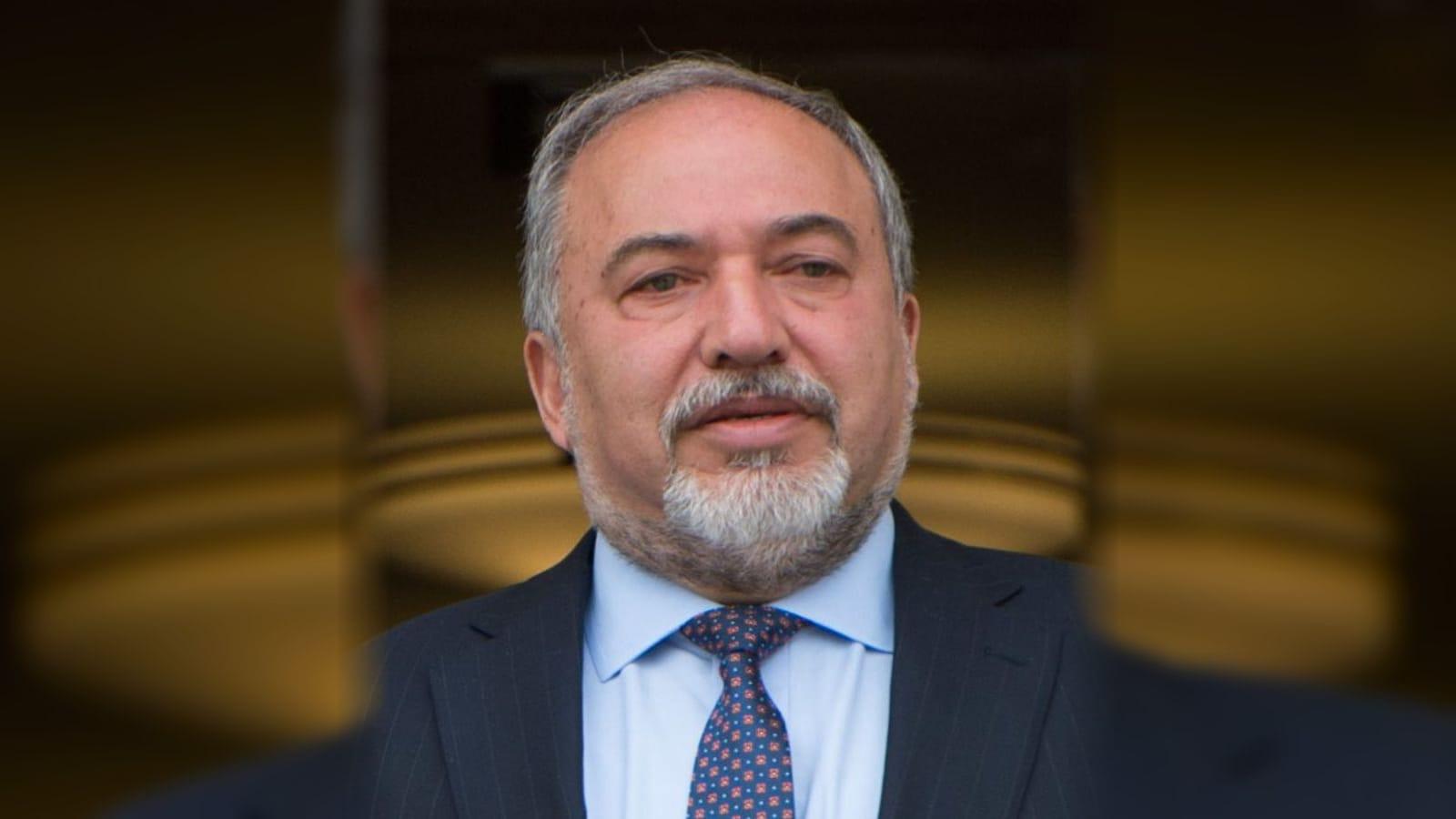
Avigdor Liberman. File photo by Jim Mattis, public domain, via Wikimedia Commons.
Avigdor Liberman, chairman of the Yisrael Beytenu party, said on Wednesday morning that negotiations with the Haredi (ultra-Orthodox) parties were moving forward and that a new government could be presented by the end of next week. Speaking in an interview with Reshet Bet, the radio news station of Israel's public broadcaster Kan, he said every side was prepared to take far-reaching decisions, according to N12.
Liberman described the emerging arrangement as one resting on a Jewish majority rather than a minority government. Ynet reported that he said the ultra-Orthodox had received a green light from their rabbis and that matters were progressing very well. The Times of Israel framed his remarks as confidence that Gadi Eisenkot would be the one presenting such a coalition.
What a 'Jewish majority' government means here
In Israeli coalition politics, a government needs the backing of a majority in the Knesset, the country's parliament, to be sworn in and to survive. Parties that cannot assemble that majority among themselves sometimes look to a minority government, which governs with outside help: other parties agree not to vote it down, either by abstaining or by supporting it from outside the cabinet.
The phrase Liberman used, a government with a Jewish majority, refers to a coalition whose support from Jewish parties alone adds up to a majority, so that it does not depend on the votes of Arab parties to stand. The distinction has political weight in Israel, where right-wing critics have attacked governments that relied on Arab party support.
According to Ynet, Liberman for the first time signalled openness to a government sworn in with the backing of United Torah Judaism, an Ashkenazi ultra-Orthodox party, and Ra'am, an Arab Islamist party. Amit Segal, a political commentator, wrote on his Telegram channel that Liberman was now opening the possibility of supporting a government that leaned only on United Torah Judaism, alongside either outside abstention by the Arab parties or support from Ra'am.
Get an email the day Israel has a new government.
Coalition talks can take weeks. When a government is sworn in, Israel.com's newsroom emails who leads it, which parties are in and who got which ministry, then the Friday email each week. Free, and one click unsubscribes.
One list, unsubscribe in a click. See our privacy policy.
A shift from his position days earlier
Both Ynet and Segal presented the remarks as a change of direction. Segal noted that 5 days earlier Liberman had said a minority government backed by Arab parties would hand Benjamin Netanyahu seventy seats, and that he would therefore oppose one. Now, Segal wrote, Liberman was saying he would back a minority government provided United Torah Judaism was part of it.
Segal also offered his own reading of the understanding between Liberman and Eisenkot: a push for a government made up of the change bloc and United Torah Judaism, assisted from outside by Arab parties, with Shas, the Sephardi ultra-Orthodox party, brought in at a later stage. That is Segal's characterisation; Liberman's own reported comments did not set out such a sequence.
File photo
Opposition to a unity government
Liberman also spoke against the negotiations under way over a national unity government, which would include Netanyahu's camp. Ynet quoted him as saying that such talks amount to "giving legitimacy to Netanyahu."
Asked about his own coalition agreement with Eisenkot, Liberman deflected. According to Ynet, he said he did not remember which minister he was supposed to be.
Why the Haredi parties matter
Ultra-Orthodox parties have frequently been pivotal in forming Israeli governments, and their decisions are often guided by councils of senior rabbis. Liberman's reference to a rabbinic green light points to that structure. His reliance on Haredi support is notable because he has long clashed with the ultra-Orthodox parties over issues of religion and state, which is part of why commentators read his comments as a turn.
What the reports do not say
None of the reports carries a response from United Torah Judaism, its rabbis, Ra'am, Shas or Eisenkot confirming the progress Liberman described. The rabbinic green light is attributed only to Liberman, and no report specifies what the ultra-Orthodox parties have agreed to, what decisions he meant by far-reaching, or what the terms of his agreement with Eisenkot are. Whether Ra'am would support the government or the Arab parties would abstain remains unclear in the reporting.
People in this story: Gadi Eisenkot, Amit Segal, Benjamin Netanyahu
Read next
All government →
Illustration
Security
Haredi protesters gather outside military police chief's home in Ashkelon
File photo
Religion
Smotrich tells Haredi parties a pact with the left would be a mistake
File photo
Government
Netanyahu tells Likud lawmakers Haredi parties belong in a unity government

Illustration
Courts & Crime
Haredi parties push bills to halt draft arrests until a new government forms
See Israel.com first in Google's top stories.Add it as a preferred source on Google
Sources and further reading
Every link below was opened and checked when this page was written. Official statements are marked as such: they are the subject's own account, not an independent one.
- Reportingyediothynet.co.ilYnet
- Reportingyediotht.meYnet alerts
- Reportingtoitimesofisrael.comThe Times of Israel
- Reportingamitsegalt.meAmit Segal
- Reportingamitsegalt.meAmit Segal
- Reportingamitsegalt.meAmit Segal
- Reportingkeshett.meN12
- Reportingkeshett.meN12
How we checked this
Liberman's interview remarks were reported by Ynet, N12 and The Times of Israel. The rabbinic green light rests on Liberman's word alone, and the description of a Liberman-Eisenkot plan to bring in Shas later is commentator Amit Segal's interpretation.
Our sourcing and corrections policy →The week from Israel, in one email
The stories that mattered, sourced and checked by the Israel.com newsroom. Free, weekly, one-click unsubscribe.
One list, unsubscribe in a click. See our privacy policy.

Israel.com is free, and readers like you keep it that way.
The Israel.com newsroom checks every story against its sources and publishes it free. If this one helped, a contribution of any size keeps the next one free too.
One payment, nothing to sign up for. Another amountGive monthly
Latest

Illustration
File photo

Illustration

Illustration
File photo
Illustration
Courts & Crime
Huawei convicted in US criminal trial on 10 of 12 counts